
10 Pieces 30 Outfits Maximizing Your Wardrobe Potential
Introduction
We have all stood in front of a closet bursting with clothes and felt the distinct, sinking realization that we have absolutely nothing to wear. This paradox usually stems from a lack of cohesion rather than a lack of volume. As a stylist, I see clients buying individual “hero” pieces that look beautiful in the store but refuse to play nice with anything else they own.
The solution lies in a capsule approach, but not the boring, restrictive kind you often hear about. By curating ten high-quality, architectural pieces, you can mathematically unlock over thirty distinct looks. This method reduces decision fatigue and ensures you always look polished, whether you are heading to a client meeting or the farmer’s market.
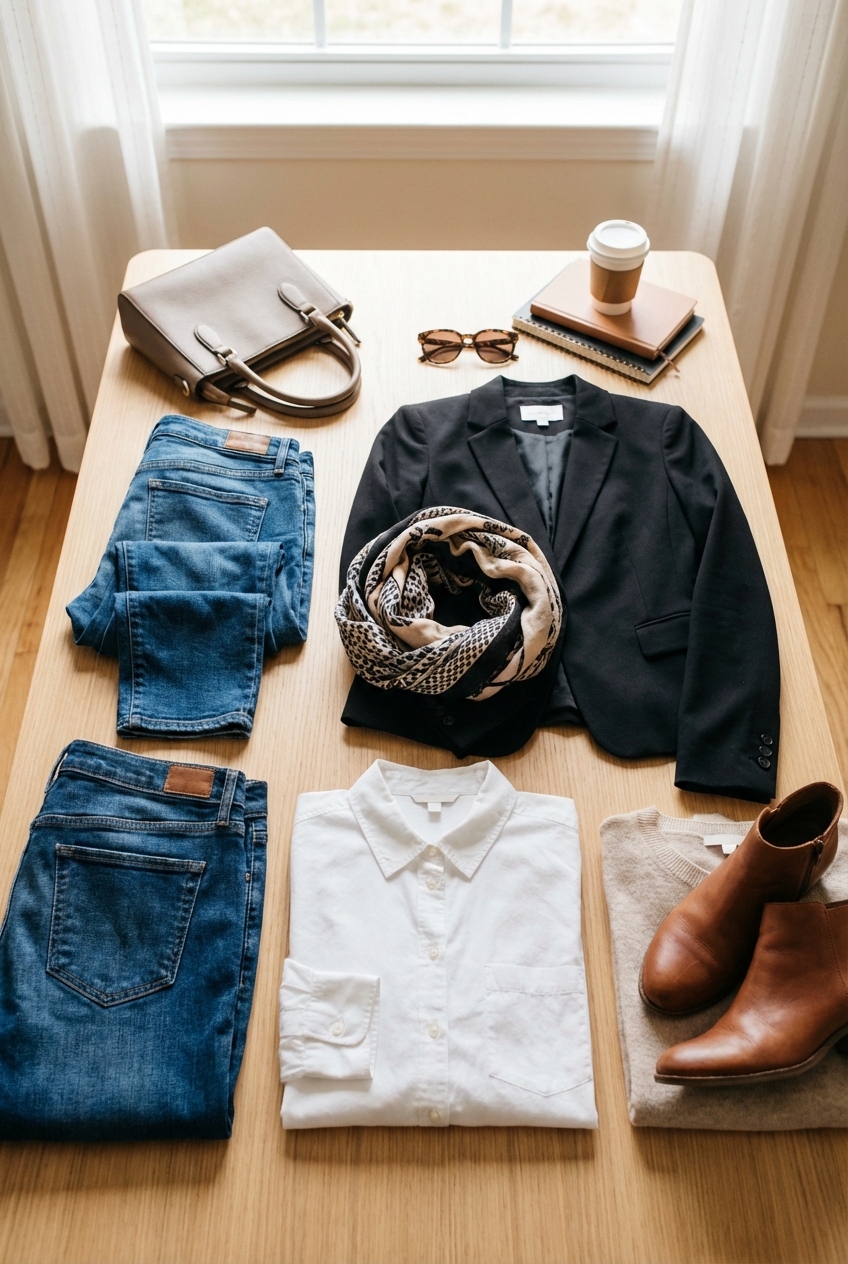
My journey with this concept began years ago when a luggage malfunction left me with only a carry-on for a two-week fashion week trip to Milan. Forced to rely on essentials, I realized I looked chicer with those few tailored items than I ever did with my full arsenal. I have compiled a comprehensive Picture Gallery at the end of this post to visualize these combinations.
The Philosophy of the Core Ten
To make ten pieces do the work of a hundred, you must prioritize fabric quality and fit over trends. In high-end fashion, we look for “workhorse” fabrics—materials that resist pilling, hold their shape, and drape elegantly. You want natural fibers like merino wool, cotton poplin, and silk.
The color palette is equally critical. You do not have to stick to black and white, but your tonal range must be harmonious. I usually recommend anchoring the capsule in three neutrals—such as navy, cream, and camel—and allowing texture to provide the visual interest.
Designer’s Note: The “Rule of Three”
In interior design, we use the rule of three for accessories; in fashion, we use it for outfit construction. A “look” generally feels finished when a third element is added. This could be a blazer over a tee and jeans, or a sweater draped over the shoulders of a dress. Your ten pieces must be layerable to achieve this depth.
The Four Essential Tops
Your upper body draws the most attention, so variety here is key. For this capsule, we select four specific tops: a white button-down, a cashmere crewneck, a striped Breton tee, and a silk camisole.
The white button-down should be 100% cotton poplin. Look for a slightly oversized cut rather than a fitted darted shirt, as the extra volume feels more modern. The shoulder seam should sit exactly at the edge of your shoulder bone; if it droops, it looks sloppy, not intentional.
For the cashmere crewneck, opt for a mid-weight gauge. It needs to be thin enough to tuck into trousers without creating bulk at the waistline, but thick enough to wear alone. A neutral grey or oatmeal color acts as a perfect light reflector for the face.
Common Mistakes + Fixes
Mistake: Buying synthetic blends for your core tops. Polyester traps heat and retains odors, limiting how many times you can wear it before washing.
Fix: Invest in natural fibers. They breathe better and require less frequent laundering, extending the life of the garment.
The Three Fundamental Bottoms
The lower half of your outfit provides the structure. We need a pair of tailored trousers, dark wash straight-leg denim, and a slip skirt.
The tailored trouser is your power player. I prefer a high-waisted, wide-leg cut in a tropical wool. This fabric works in all four seasons. The hem is crucial here: it should graze the top of your shoe without breaking (buckling) too much. If you are wearing heels, the hem should be 1/4 inch off the floor.
Your denim should be free of distressing. A clean, mid-to-dark blue wash mimics the formality of a trouser but offers the comfort of casual wear. Ensure the pockets are placed high on the back to provide a lifting visual effect.
What I’d Do in a Real Project
- Hemming: I always instruct clients to bring the shoes they wear most frequently to the tailor. A hem meant for flats will look awkward with a 3-inch heel.
- Waist Fit: I ensure the waistband fits snugly enough that two fingers can slide in, but no more. This prevents gaping at the back when sitting.
The Two Layers and The One Dress
To round out the ten items, we add a structured blazer, a trench coat, and a midi dress. The blazer is the jacket that pulls everything together. A navy or black double-breasted blazer creates a “V” shape that elongates the torso.
The trench coat serves as your outer shell. It adds instant sophistication to even the simplest denim and tee combination. Look for a trench with raglan sleeves (sleeves that extend to the collar) rather than set-in sleeves, as this allows you to wear chunky sweaters underneath without feeling restricted.
Finally, the dress. A bias-cut slip dress or a structured shift dress in a solid color is incredibly versatile. You can layer the sweater over it to make it look like a skirt, or wear the blazer over it for the office.
Constructing the Looks: The Math of Style
Now that you have your pieces, mixing them is about balancing proportions. The general rule is “tight with loose.” If you are wearing the wide-leg trousers, pair them with the slim silk camisole or the tucked-in tee. If you are wearing the oversized shirt, pair it with the straight-leg jeans to keep the silhouette grounded.
You can create casual looks by pairing the denim with the striped tee and trench. Elevate that same base by swapping the tee for the silk camisole and adding the blazer.
Layering transforms the dress entirely. By throwing the cashmere sweater over the dress and belting it at the waist, you create a completely new silhouette that functions as a skirt and top combo.
Finish & Styling Checklist
Before you walk out the door, run through this quick professional checklist to ensure the outfit looks intentional.
- The Cuff Roll: If wearing the button-down or blazer, roll the sleeves to expose the wrist bone. It is the thinnest part of the arm and creates a slimming effect.
- The Half-Tuck: For sweaters and tees, tuck just the front hem into your waistband. This defines your waistline while maintaining a relaxed vibe.
- The Shoe Gap: If wearing cropped pants with boots, ensure the boot shaft goes under the pant leg, or that a sliver of skin is showing. Avoid a large gap of sock unless it is intentional.
- Texture Check: Ensure you are not wearing too much of one fabric. Mix the matte wool of the trousers with the sheen of the silk top.
- Grooming: A capsule wardrobe relies on polish. Ensure clothes are steamed. Wrinkles make expensive clothes look cheap.
FAQs
Can I do this with prints?
Yes, but be careful. Prints are harder to mix. If you love prints, keep them to one or two items, like the skirt or the blouse, and ensure the colors in the print match your solid neutrals. The Breton stripe mentioned earlier is considered a neutral in the fashion world because it pairs with almost anything.
How do I handle shoes in a 10-piece capsule?
Strictly speaking, shoes are accessories, but if you want to include them in the count, you would reduce the clothing to 8 items. However, for a 10-piece clothing capsule, I recommend three pairs of shoes: a white leather sneaker, a black loafer or ankle boot, and a nude or black heel. These cover every occasion from walking the dog to a cocktail dinner.
What if I live in a very cold climate?
You will need to adjust the weights of your fabrics. Swap the cotton poplin shirt for a flannel or heavy oxford cloth. Swap the trench coat for a wool overcoat. The logic of the layers remains the same, but the thermal properties of the textiles must shift to accommodate the weather.
Does this work for different body types?
Absolutely. The specific cuts will change—perhaps a wrap dress instead of a shift dress, or a cigarette pant instead of a wide leg—but the categories (jacket, knit, trouser, blouse) remain universal. The key is tailoring everything to your specific measurements.
Conclusion
Building a wardrobe based on ten core pieces is not about limiting yourself; it is about liberating yourself from the chaos of clutter. When you invest in high-quality architecture for your body—pieces that fit perfectly and coordinate seamlessly—you reclaim your time and energy.
You stop worrying about whether your outfit “works” because the system is designed to ensure that it does. Fashion should be a tool that serves you, providing confidence and comfort as you move through your day. Start with these ten pieces, prioritize the fit, and watch your style transform.
Picture Gallery


