
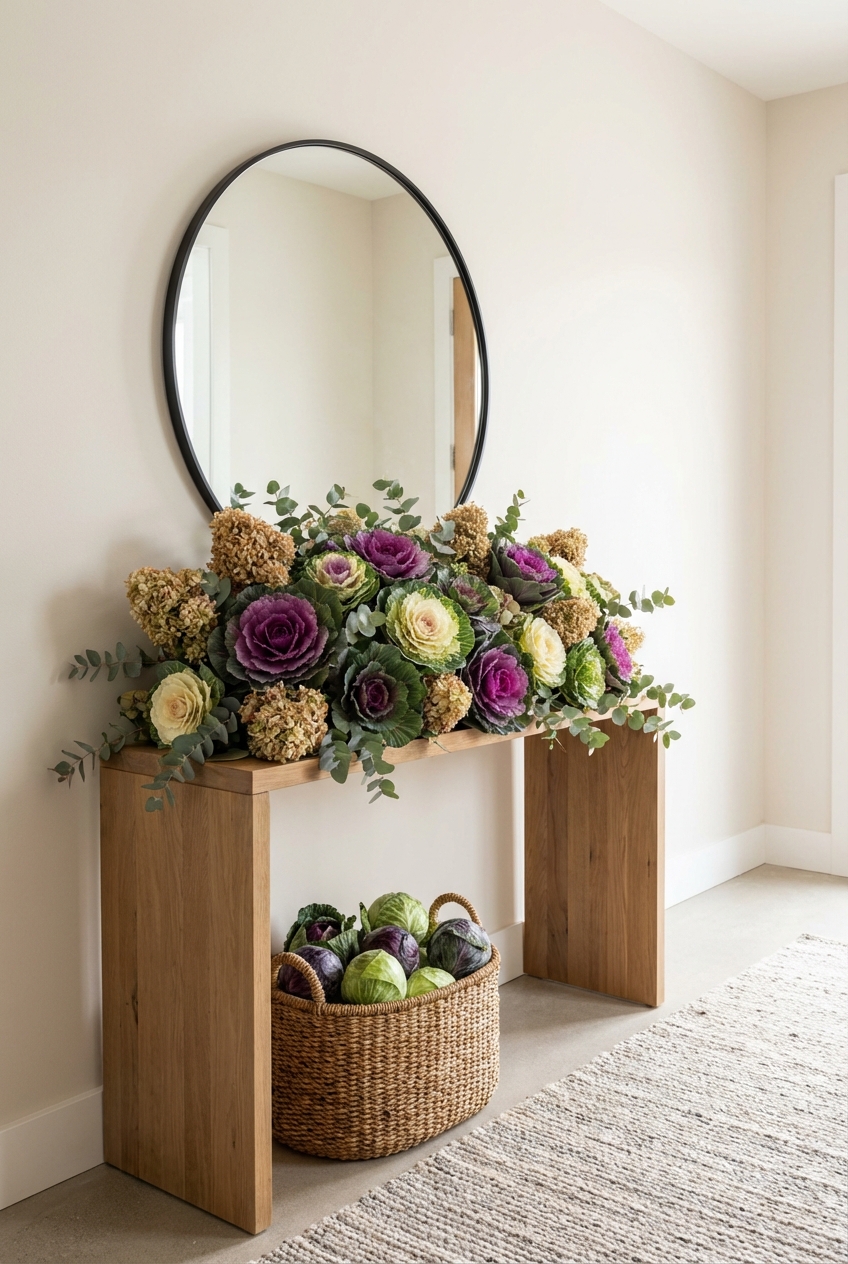
7 Easy Cabbage Crush Entryway Ideas
The “Cabbage Crush” aesthetic is having a major moment in both the fashion world and interior design. It is not just about a specific shade of green; it is about embracing the crispness of garden layers, organic textures, and that specific intersection where ruffled “grandmillennial” style meets clean, modern living. Think of a structured green trench coat paired with a flowing white linen dress—that is the vibe we are bringing to the foyer.
I recently worked on a project for a client who wanted her entryway to feel like a conservatory, even though she lived in a standard suburban colonial. We leaned heavily into this cabbage-inspired look. We used pale, almost-white greens, ruffled ceramic edges, and durable organic materials that could withstand her golden retriever. It resulted in a space that felt fresh, curated, and incredibly welcoming.
In this guide, I will walk you through how to achieve this look with practical steps, specific measurements, and a designer’s eye for detail. If you are looking for visual inspiration, I have curated a stunning Picture Gallery at the end of this blog post to spark your creativity.
1. The Foundation: Nailing the “Cabbage White” Palette
The core of this look relies on a very specific paint color. You aren’t looking for a dark forest green or a bright lime. You want a color that mimics the pale, inner leaves of a cabbage. It reads as white in bright light but reveals a soft, calming green undertone in the shadows.
In the design world, we often treat this shade as a neutral. It pairs beautifully with crisp bright whites on the trim or, for a more daring fashion-forward look, a darker “kale” green on the baseboards. This monochromatic layering creates depth without overwhelming a small space.
For renters, this is an easy sell to landlords because the color is light enough to pass as off-white. If you cannot paint, look for peel-and-stick wallpaper in a “Cabbage Rose” or subtle trellis pattern. This brings that garden texture to the walls without the commitment.
Designer’s Note:
Lighting changes everything with pale greens. A color that looks fresh in the morning can turn muddy or gray in the evening. Always test a 12×12 inch swatch on two different walls before committing to gallons of paint.
Common Mistakes + Fixes:
- Mistake: Choosing a green with yellow undertones in a room with warm lighting. This makes the walls look sickly.
- Fix: If you have 2700K (warm) bulbs, choose a green with a slight blue or gray undertone to balance it out.
2. The Console: Organic Materials and Curvature
In fashion, the “Cabbage Crush” trend often involves ruffles and volume. In furniture, we translate that into curves and woven textures. Avoid sharp, industrial metal tables for this look. Instead, opt for a console table made of light oak, whitewashed wood, or wicker.
If you have a tight hallway, look for a demi-lune (half-moon) table. The curved edges mimic the organic shapes found in a garden and improve flow. You won’t be bumping your hip against a sharp corner when you walk in with groceries.
Scale is critical here. Your console should not be deeper than the walkway allows. You need a minimum of 36 inches of clearance for a comfortable walkway. If your entry is 48 inches wide, your table should be no deeper than 12 inches.
What I’d do in a real project:
- Height: Ensure the console is 30 to 36 inches high. Anything lower feels like a coffee table and makes it hard to drop keys.
- Material: I love using a burl wood table for this style. The swirling wood grain looks like organic patterns found in nature.
3. The “Ruffle” Factor: Mirrors and Wall Decor
To truly nail the Cabbage Crush vibe, you need a nod to the ruffled texture of the vegetable itself. The easiest way to do this is through your statement mirror. Look for frames with scalloped edges, wavy ceramic borders, or pleated plaster detailing.
This adds a whimsical, high-fashion touch that prevents the space from feeling too serious. If a ruffled mirror feels too bold, try a mirror with a wicker or rattan frame. The woven texture mimics the veins of a leaf and adds warmth.
Hang your mirror so the center is approximately 60 to 62 inches from the floor. This is eye level for the average person. If the mirror is hanging above a console table, leave 4 to 8 inches of breathing room between the bottom of the mirror and the top of the table.
Pro-Level Rule of Thumb:
The mirror should be roughly two-thirds the width of the console table beneath it. If your table is 48 inches wide, a 30 to 32-inch mirror is perfect.
4. Lighting: Garden-Inspired Sconces and Pendants
Lighting is the jewelry of the room. Just as you might pair gold hoops with a green blouse, you need the right metallic finishes here. Unlacquered brass is the top choice for this aesthetic because it patinas over time, feeling lived-in and organic.
Move away from standard flush mounts. Look for lantern-style pendants or fixtures with fluted glass shades. The fluted glass looks like flower petals and diffuses light softly. If you are renting and can’t swap hardwired fixtures, use rechargeable bulbs in wall sconces.
For a true “garden” feel, consider a small table lamp on the console with a pleated fabric shade. Choose a shade in a block print floral or a solid sage green. The pleated texture is a direct callback to the cabbage theme.
Common Mistakes + Fixes:
- Mistake: Using daylight bulbs (5000K) which make green walls look like a hospital.
- Fix: Stick to 2700K or 3000K LED bulbs. This warm light makes green tones feel cozy and inviting.
5. The Runner: Durability Meets High Fashion
The floor is your opportunity to ground the space. In an entryway, durability is non-negotiable. You are tracking in mud, rain, and grit. However, for the Cabbage Crush look, we want softness.
I recommend a vintage-style washable runner or a high-quality jute rug layered with a smaller patterned rug on top. Jute brings in that natural, earthy texture that is essential for this palette. It hides dirt exceptionally well.
If you want pattern, look for block-print florals or trellis designs. Keep the colors muted—moss greens, creams, and touches of terracotta. Avoid high-pile shag rugs; they trap dirt and mat down quickly in high-traffic zones.
Rug Sizing Logic:
- Length: The runner should cover at least 75% of the hallway length.
- Width: Leave 4 to 6 inches of floor visible on both sides of the runner. If your hall is 42 inches wide, a 30-inch runner is standard and fits well.
- Door Swing: Ensure the pile height is low enough that your front door can clear it when opening.
6. Storage with Texture: Wicker and Skirted Tables
Clutter kills design. To keep your entryway functional, you need a “drop zone.” To keep it stylish, you need to hide that drop zone.
Baskets are your best friend here. Large, structured wicker baskets placed under the console table provide storage for shoes, umbrellas, and dog leashes. The woven texture fits perfectly with the organic theme.
For a very specific Cabbage Crush high-fashion look, consider a skirted entry table. A table skirt made of green ticking stripe or a leafy botanical fabric hides everything underneath. It adds softness and fabric volume, mimicking the layers of clothing seen on the runway.
Designer’s Note:
If you have cats or puppies, skip the wicker baskets on the floor—they will become scratching posts. Opt for a skirted table made of performance fabric (like a solution-dyed acrylic) that resists stains and claws.
7. The Final Layer: Living Greens and Florals
You cannot have a garden-inspired entryway without actual plants. This brings the “Crush” to life. However, entryways are often low-light zones, so plant selection matters.
If you have natural light, a potted fern or a small olive tree in a terracotta pot looks stunning. The fern fronds mimic the ruffled texture we are aiming for. Place this next to the console table to add height variation.
If your entry is dark, do not force a live plant to die a slow death. Instead, use high-quality preserved moss in a dough bowl or style a vase with fresh cut oversized hydrangeas. Hydrangeas have that same voluminous, “cabbage head” shape that ties the whole concept together.
What I’d do in a real project:
- Vessels: Use ceramic pitchers or aged stone vases. Avoid clear glass, as seeing the stems can look messy in this specific layered aesthetic.
- Scale: Use one large statement arrangement rather than five small knick-knacks. It looks more expensive and intentional.
Finish & Styling Checklist
Ready to finalize your entryway? Use this checklist to ensure you have hit all the marks of a professional design.
1. The “Walk-By” Test
Walk through your front door with a bag of groceries. Did you hit the table? If yes, the furniture is too deep. Move it or swap it.
2. The Light Layering
Do you have at least two sources of light? (e.g., overhead fixture + table lamp). Turn them on. Does the green paint look inviting?
3. The Texture Mix
Count your textures. You should aim for at least three:
- Something smooth (mirror/glass)
- Something woven (rug/basket)
- Something organic (wood/plants)
4. The Scent
Design is multisensory. For this aesthetic, a diffuser with notes of tomato vine, basil, or fresh linen creates a subconscious connection to the visual garden theme.
5. The Anchor
Is your rug taped down? Use double-sided rug tape or a high-quality rug pad. Slipping on a rug is the fastest way to ruin an entrance.
FAQs
Is this style suitable for small apartments?
Absolutely. In fact, wrapping a small entry in a monochromatic “Cabbage White” or pale sage blurs the corners and makes the space feel larger. Use a large mirror to bounce light and visually double the width of the hall.
Can I mix other colors with the green palette?
Yes. The fashion-forward approach is to add “lipstick” colors. Small pops of soft pink, lavender, or even a buttery yellow work beautifully as accents in artwork or fresh flowers. Just keep the main furniture and walls grounded in greens and neutrals.
How do I protect light green walls from scuff marks?
Use a paint finish that is durable. I always specify “Satin” or “Eggshell” for entryways. Avoid “Flat” or “Matte” paint in high-traffic areas because you cannot wipe them down without polishing the paint off. A magic eraser works wonders on satin finishes.
What if I hate brass hardware?
Polished nickel is a great alternative. It feels a bit more modern and crisp, like the buttons on a coat. Avoid matte black hardware for this specific look, as it tends to be too harsh and industrial for the soft, organic vibe we are creating.
Conclusion
Creating a Cabbage Crush entryway is about more than just following a trend; it is about setting a tone of tranquility and organic beauty the moment you walk through the door. It merges the structure of high fashion with the comfort of a cottage garden.
By focusing on the right paint undertones, layering textures like wicker and ruffle details, and ensuring your layout is functional, you can transform a pass-through space into a destination. Remember, your home should tell a story, and the entryway is the opening line. Make it fresh, crisp, and uniquely yours.
Picture Gallery


