
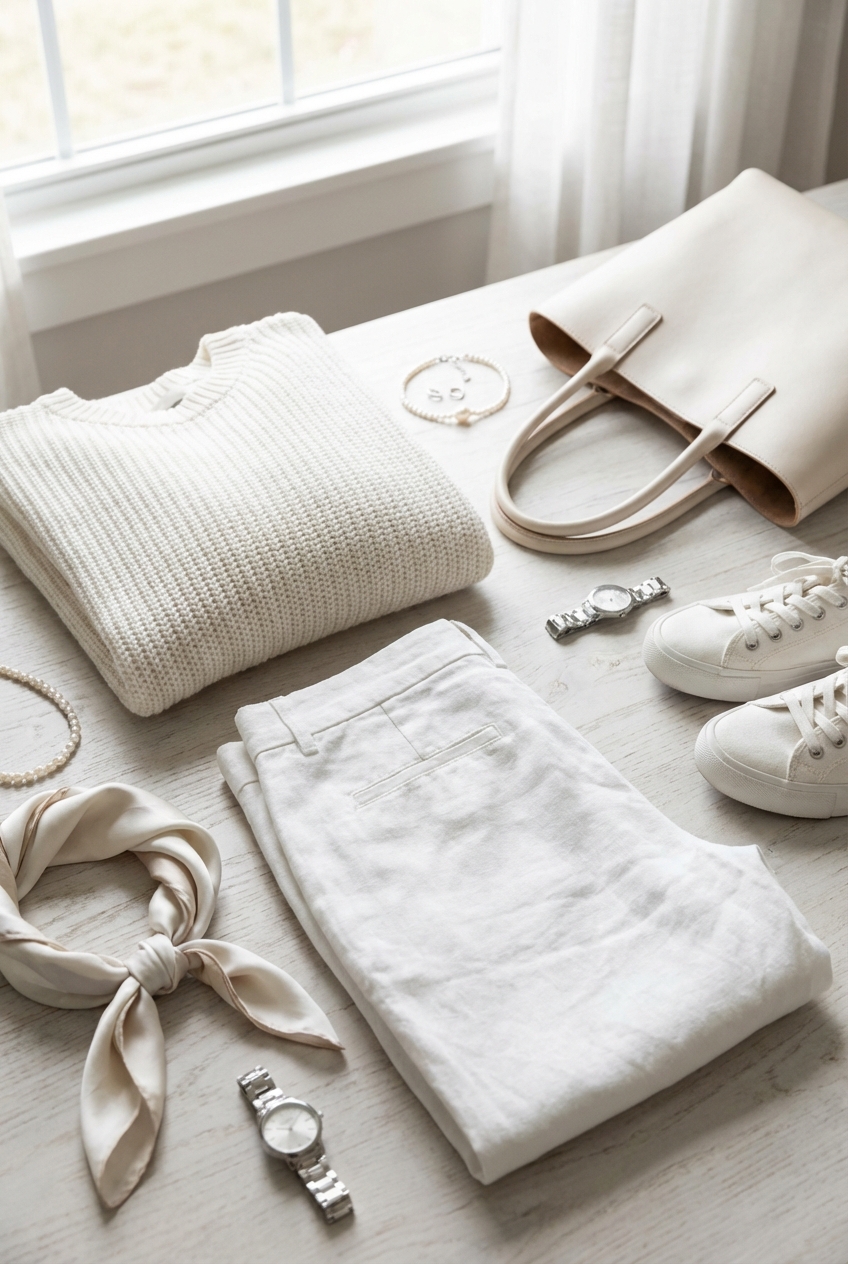
All White Outfits Achieving A Clean And Chic Look
There is nothing quite as commanding as a woman walking into a room wearing a monochromatic white look. It signals confidence, precision, and an elevated sense of style that few other palettes can replicate. While black is often the safety net for fashion, white is the high-wire act. It requires intention and a keen eye for detail to execute correctly without looking washed out or uniform.
I remember styling a high-profile client for a daytime event in the Hamptons. She was terrified of wearing all white, convinced she would look like a bride or a doctor. We focused entirely on mixing textures—pairing a chunky cashmere knit with a liquid silk skirt—and the result was effortless luxury. It shifted her entire perspective on how power dressing doesn’t always have to mean dark suits or sharp blazers.
However, achieving this look isn’t as simple as grabbing a white tee and white jeans. There are nuances in undertones, fabric weights, and tailoring that make the difference between “messy” and “masterpiece.” In this guide, I will walk you through the styling formulas I use in the studio to build flawless all-white ensembles. If you are looking for visual inspiration, check out the curated Picture Gallery at the end of this post.
Understanding The Spectrum of White
The most common misconception about dressing in all white is that every piece needs to match perfectly. In reality, trying to match whites exactly often leads to a look that feels flat or sterile. The secret to a chic outfit lies in understanding the temperature of the color.
White is not a single color; it is a spectrum. You have cool whites, which have blue or grey undertones (think stark office paper or snow), and warm whites, which have yellow or red undertones (think heavy cream, ivory, or vanilla). Mixing these indiscriminately can make the warm tones look dirty or the cool tones look blue.
When I build a look, I usually stick to one temperature family. If you have a cool skin tone (veins look blue), stark optic whites usually look crisp and striking. If you have a warm skin tone (veins look green), creamy ivories and ecru shades will make your skin glow rather than washing you out.
Designer’s Note: The Daylight Test
What usually goes wrong: You assemble an outfit in your bedroom with warm artificial lighting, looking perfect. You step outside into natural daylight, and suddenly your top looks yellow while your pants look blue-white.
How to prevent it: Always check your whites near a window before finalizing the look. Natural light is the ultimate truth-teller for undertones. If you must mix temperatures, do it intentionally with distinct textures so it looks like a stylistic choice rather than a matching error.
Texture Is Your Best Friend
When you remove color contrast from an outfit, you must replace it with textural contrast. Without texture, a head-to-toe white outfit can read as a uniform or a lab coat. The goal is to create visual interest through the surface of the fabrics.
Think about how light hits different materials. Silk reflects light, cotton absorbs it, and wool diffuses it. By placing these materials next to each other, you create depth. A successful outfit usually involves at least three different textures working in harmony.
For example, pair a distressed white denim (rough) with a bamboo cotton t-shirt (soft/matte) and a linen blazer (structured/woven). Even though they are all “white,” the eye can distinguish where one piece ends and the other begins.
Common Mistakes + Fixes
- The Mistake: Wearing a cotton jersey top with cotton jersey leggings.
- The Fix: Break up the matte fabrics. Swap the leggings for white leather trousers or a satin midi skirt. The shine of the leather or satin elevates the matte cotton instantly.
- The Mistake: Wearing all linen and looking rumpled.
- The Fix: Anchor the linen with a structured accessory or a heavier piece, like a thick leather belt or a structured handbag, to provide a polished counterpoint to the wrinkles.
The Importance of Fabric Weight and Opacity
Transparency is the enemy of elegance in an all-white outfit. Nothing cheapens a look faster than seeing the pockets of your jeans through the denim or the outline of a camisole through a blouse. In high-end styling, we pay a premium for high-grammage fabrics (fabric density).
When shopping for white bottoms, whether trousers or skirts, you must prioritize thickness. You want heavy-weight cotton drills, lined wool crepes, or denim that is at least 12 to 14 ounces. If you are buying silk or lighter fabrics, ensure they are fully lined.
A good rule of thumb is the “hand test.” Place your hand inside the garment and hold it up to the light. If you can see your skin tone or the outline of your fingers clearly, the garment is too sheer to be worn without a slip or specialized undergarments.
What I’d Do in a Real Project: The Lingerie Check
- Check 1: Discard white bras. White lingerie under white clothing acts as a highlighter. It creates a stark contrast against your skin that shines through the fabric.
- Check 2: Match your skin tone exactly. Use seamless, laser-cut undergarments that match the depth of your skin tone (from pale beige to deep cocoa). This renders the underwear invisible.
- Check 3: Sizing up. For white trousers, I often size up one size for clients. White fabric that pulls across the hips or thighs becomes more transparent. A looser fit maintains opacity and looks more expensive.
Playing with Silhouette and Volume
White is an expansive color. Visually, it reflects light and can make areas appear larger, whereas black recedes and minimizes. This doesn’t mean you should avoid white if you aren’t a size zero; it just means you need to be strategic about proportions.
The key to a flattering all-white look is balancing volume. If you are wearing a voluminous wide-leg trouser, pair it with a fitted bodysuit or a tailored vest. If you are wearing an oversized white poplin shirt, balance it with a slim cigarette pant or a fitted skirt.
Monochromatic looks also benefit greatly from architectural details. Look for pieces with interesting sleeves, asymmetrical hemlines, or pleating. Because there is no pattern to distract the eye, the cut of the garment takes center stage.
Structuring the Look
To keep the outfit from swallowing you, define your waist. This is crucial in all-white ensembles. A white leather belt or a tucking technique can re-establish your shape.
If you are petite, an all-white column look (same color top and bottom) creates a vertical line that elongates the body. Avoid breaking this line with a dark belt; stick to a belt in a matching white or nude tone to maintain that height illusion.
Accessorizing: The Finishing Touches
Accessories dictate the mood of an all-white outfit. They are the punctuation marks in your style statement. Because your canvas is blank, your choice of shoes, bag, and jewelry carries more weight.
For a “Clean Girl” aesthetic or a “Quiet Luxury” vibe, stick to neutral accessories. Tan, camel, beige, and chocolate brown leathers look incredibly rich against white. This combination feels organic and expensive. A cognac leather tote against a white linen dress is a timeless pairing.
For an evening look or something more modern, metallics are essential. Gold warms up creamy whites, making the look feel sunny and opulent. Silver pairs beautifully with stark, cool whites for a futuristic or icy aesthetic. I generally advise against mixing metals too heavily here; pick a lane and stick to it for a cohesive result.
Can You Wear Black Accessories?
Yes, but with caution. Black accessories against an all-white outfit create a very high-contrast, graphic look. It can look severe if not balanced. If you wear black shoes, try to incorporate a black bag or sunglasses to tie the look together. Avoid a heavy black shoe with a delicate white dress, as it will visually weigh you down.
Maintenance and Practicality
We cannot discuss all-white outfits without addressing the elephant in the room: keeping them clean. High-maintenance clothing requires high-maintenance habits. You have to move differently when wearing white.
I always tell clients that wearing white is a behavior modification. You don’t lean on dirty cars, you check the chair before sitting, and you place a napkin on your lap before the food arrives. However, accidents happen, and being prepared is part of the chic lifestyle.
Never bleach your whites as a first resort. Chlorine bleach can react with protein stains (like sweat) and actually turn them yellow. It can also degrade elastic fibers in stretch denim. Instead, use oxygen-based brightness boosters and bluing agents to maintain that crisp look.
Finish & Styling Checklist
Before you head out the door, run through this mental checklist. I use this exact process on set to ensure the model looks polished rather than messy.
- The Undergarment Scan: Check your rear view in a mirror with bright lighting. Can you see panty lines or color? If yes, change immediately.
- The Wrinkle Check: White shows wrinkles more than any other color. Steam your pieces. Even “casual” linen looks better when steamed to remove hard creases, even if soft wrinkles remain.
- The Lint Roll: Dark lint on white pants is distracting. Give yourself a full lint roll, especially near the hem of your pants.
- The Shoe Condition: If you are wearing white shoes, are they scuffed? Magic Erasers are great for cleaning up sneaker soles or leather heels before leaving.
- The Makeup Barrier: If pulling a white top over your head, cover your face with a silk scarf or use a makeup hood to prevent foundation transfer to the collar.
FAQs
Can I wear white after Labor Day?
Absolutely. That is an archaic rule. Winter whites are incredibly chic. The key is to shift your fabrics. Put away the linen and eyelet, and bring out white wool, cashmere, heavy denim, and corduroy. A white coat in the dead of winter is a major power move.
How do I stop makeup from getting on my collar?
Aside from using a scarf while dressing, spray your collar with a light dusting of hairspray before putting the shirt on (let it dry first). This creates a slight barrier. Also, always apply your setting spray to your neck area to lock the makeup in place.
What shoes do I wear if I don’t have white ones?
Nude or skin-tone shoes are the best alternative as they extend the leg line. Metallics (gold or silver) act as neutrals and work perfectly. Avoid a bright pop of color on the shoe unless you are intentionally color-blocking, as it draws the eye immediately to the floor.
My white jeans look greyish after washing. How do I fix it?
This usually happens from washing whites with colored clothes or using too much detergent. Strip the laundry by soaking the jeans in hot water with Borax and washing soda. Moving forward, wash whites exclusively with other whites.
Conclusion
Mastering the all-white outfit is less about the specific trend and more about mastering the fundamentals of styling: proportion, texture, and fit. It requires a level of fastidiousness that naturally commands respect. When you get the formula right—mixing your textures, ensuring opacity, and nailing the fit—the result is a look that feels fresh, expensive, and undeniably chic.
Start with the pieces you already own. Look at your white button-down, your white denim, and your white tees with fresh eyes. Layer them, add a belt, roll the sleeves, and step out with the confidence that comes from a clean, curated palette.
Picture Gallery


