Beach Color Combinations: Aqua, Coral and Sandy Neutrals
- Words by
- Julio Arco
- Published
- Reading
- 4 min
The easiest beach color combination is aqua with coral: one cool, one warm, and both read clearly against sand and water. If you want something quieter, sandy neutrals with warm white, or navy with white, are safe choices that rarely clash with the scenery.
Below are the pairings I'd reach for, with notes on how each one reads in bright light and how to wear it.
What colors look best on the beach?
Colors that sit in the same family as the setting (blues, greens, sand) blend in, while warm accents such as coral, orange or yellow stand out against all that blue. Both approaches work. Pick blending for a calm look and contrast for a playful one.
Bright sun also changes things. Strong light makes pale colors look even lighter and can wash out very pastel shades, so a mid-tone aqua or a true coral usually holds up better than a faint tint.
Aqua and coral: the bright beach color palette
Aqua is a blue-green on the cool side. Coral is a warm mix of orange and pink. Because they sit on opposite sides of the color wheel's temperature split, each makes the other look more vivid.
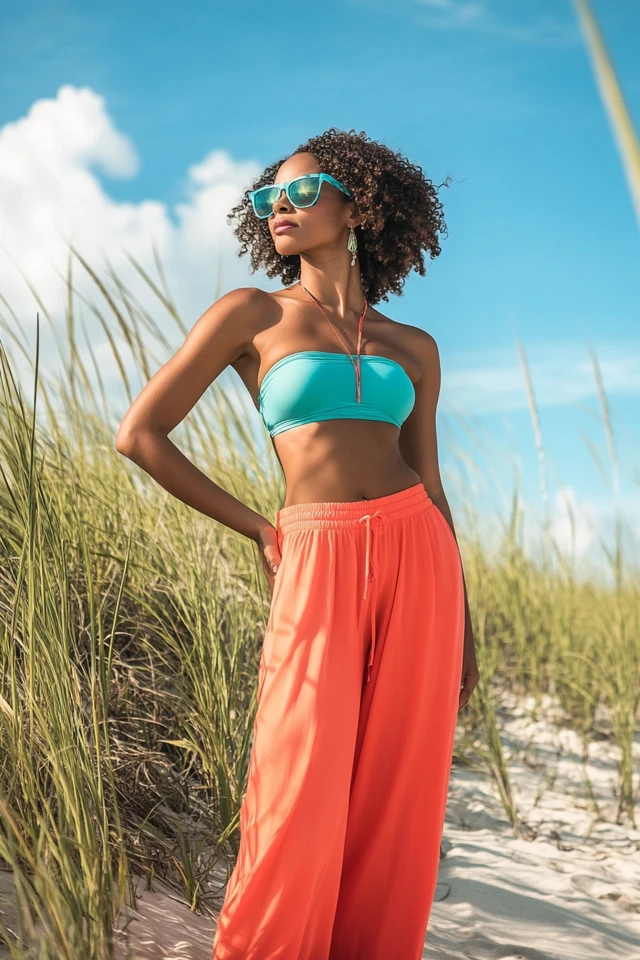
Through the lens of evidence-based design, I'd treat the two colors as a base and an accent. Let aqua cover the larger area (a kaftan, a one-piece, a maxi dress) and use coral for sandals, a hat, earrings or a bag. Reversed, it works too, but coral over a large area is louder.

Simple ways to wear the pair:
- An aqua swimsuit under a coral sarong or maxi dress.
- Aqua top and coral bottoms for a mix-and-match set.
- A tropical print that already contains both colors, with solid neutral accessories.

For more takes on this duo, see aqua and pale coral palettes for breezy tunics.
Sandy neutrals and warm whites
A neutral coastal color palette (cream, sand, oatmeal, warm white) is the calmest way to dress for the beach. These shades echo the shoreline, so the outfit looks relaxed rather than styled.
Texture matters more here than color. Linen, gauze and cotton knit each catch light differently, and a single neutral in three textures looks richer than three flat shades. Add one small accent, such as a coral scarf or aqua sunglasses, if the look feels too quiet.


Navy and white for a classic look
Navy with white is the clearest, sharpest pairing on this list. The contrast is high, so it looks put together even in a simple cotton dress or shirt-and-shorts set. Stripes are the obvious route, but a navy cover-up over a white swimsuit does the same job.
If navy feels heavy in hot weather, swap it for a mid-blue or chambray and keep the white crisp.


Soft yellows and sun-kissed accents
Butter yellow and pale gold sit well beside aqua and sand. They are warm without the intensity of coral, which suits anyone who wants color but not a loud statement. Yellow also pairs easily with white and with denim blue.
For a bolder variation, try aqua with mustard in a vacation dress.


Bright and playful pairings
If you like more energy, aqua also works with orange and with lime. Aqua and orange is a stronger version of the coral idea, covered in cool aqua and bright orange summer dresses. Lime and aqua is fresher and more tropical, as in lime green and aqua summer looks.
Keep bright pairings to two colors plus neutrals. A third bright shade is usually where an outfit starts to look busy.


How to choose a palette for your clothes
- Choose one main color for the largest piece, whether a dress, a cover-up or a swimsuit.
- Add one accent from the opposite side of the temperature range: warm accent on cool base, or the reverse.
- Fill in with a neutral (sand, white, tan) for shoes and bags.
- Check shades against your skin. Softer tints suit fair skin, mid-bright tones suit medium skin, and deeper teals and corals look striking on deep skin. These are starting points, so trust the mirror.
- Mix textures: a breezy chiffon or linen next to a smoother knit or satin gives depth without adding a color.
Fit matters as much as color. A flowy kaftan or tunic suits many shapes, and a wrap top or high-waisted bottom gives definition. Choose the cut you feel comfortable in, then let color do the rest.
Sun protection and your beach outfit
Color is the fun part, but fabric and coverage do the protecting. The Skin Cancer Foundation notes that UPF 50+ offers excellent protection, and a cover-up or shirt with that rating can be part of your palette. Dermatologist Anna L. Chien, MD, says, "A hat with a 3-inch brim protects the top of your scalp, ears and face." See her full answers on sun protection. For questions about your own skin, check with a dermatologist.

Frequently asked questions
Which color goes with beach color?
White, cream and sand go with almost any beach shade. Navy, coral, yellow and soft green also pair well with aqua and ocean blues.
What are some popular beachy colors?
Aqua, turquoise, navy, sandy beige, warm white, coral and soft yellow are the most common. They come straight from water, sand and sunset.
What shoes go with an aqua and coral outfit?
Beige, white or tan sandals keep it calm. For more color, pick coral sandals with an aqua outfit or the reverse.
Can I wear aqua and coral away from the beach?
Yes. A coral sundress with aqua earrings, or an aqua blouse with coral shorts, works well for summer outings.
Filed under Color Palettes