
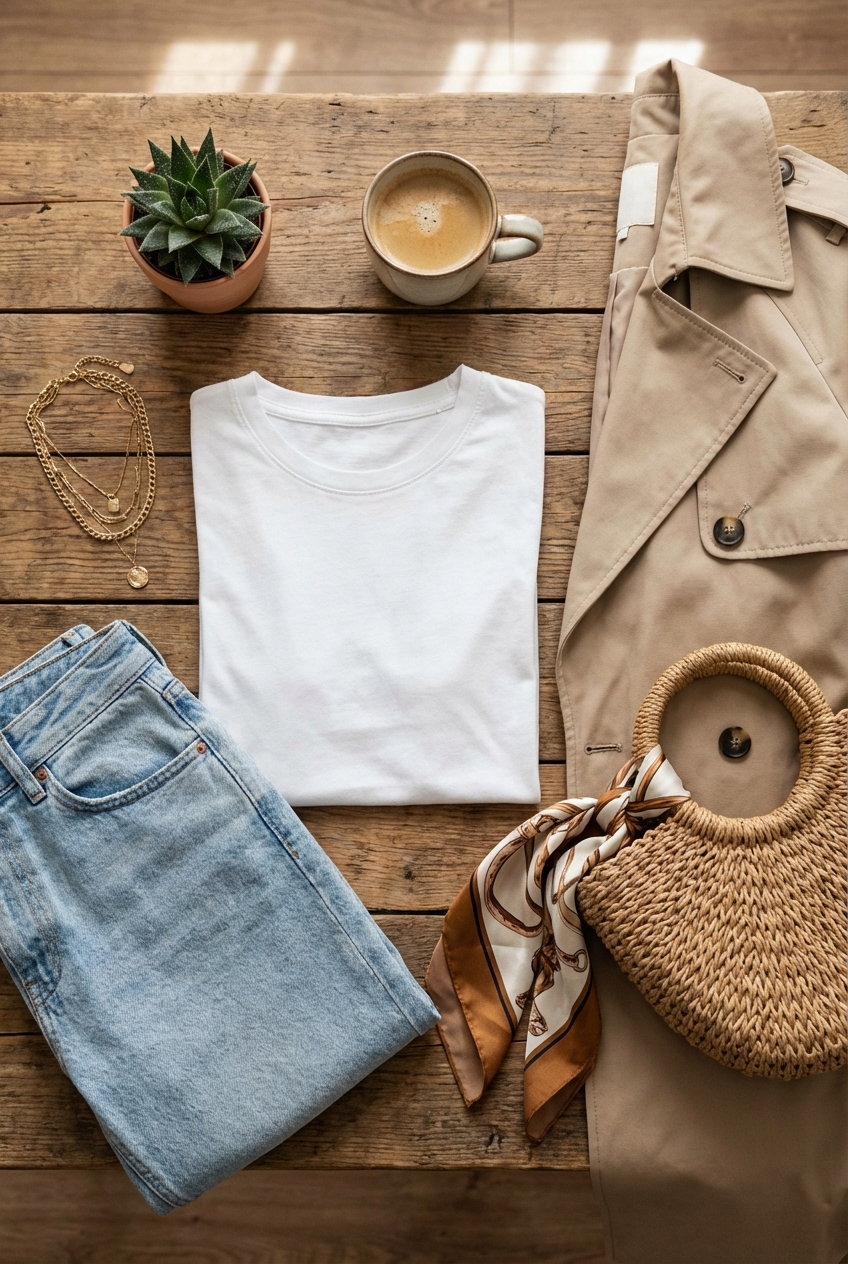
Basic White T Shirts For Endless Styling Options
There is a misconception in the fashion world that “basic” equals “boring.” In my years working with private clients and styling editorial shoots, I have found the exact opposite to be true. The humble white t-shirt is actually the ultimate litmus test for a wardrobe’s versatility and quality.
Finding the perfect white tee is surprisingly difficult, akin to finding the perfect shade of white paint for a living room. It requires an understanding of opacity, fabric weight, and architectural cut. When you find the right one, it becomes the anchor for everything from vintage denim to ballgown skirts.
In this guide, I am going to break down exactly how to select and style this essential piece with the precision of a high-end stylist. We will cover fit mechanics, fabric choices, and specific styling formulas I use on set. For a visual breakdown of these silhouettes, don’t miss the curated Picture Gallery located at the very end of this blog post.
The Anatomy of the Perfect Cut
The difference between a sloppy look and a chic “model-off-duty” vibe often comes down to millimeters. When I am fitting a client, the first thing I look at is the shoulder seam. This seam must sit exactly at the corner of your shoulder bone; if it droops, you look messy, and if it pulls up, the shirt looks cheap.
Next, consider the sleeve volume. A sleeve that “wings” out creates a wider silhouette across the upper body, which can be tricky to layer under blazers. I generally prefer a sleeve that hugs the arm slightly with a bias cut, ending right at the mid-bicep for the most flattering line.
Stylist’s Note: The Neckline Rule
A common mistake I see is ignoring how the neckline interacts with your jewelry and face shape. If you have a shorter neck or a larger bust, a deep scoop or V-neck elongates the torso. If you have a long neck or a smaller bust, a high, tight crew neck looks incredibly modern and architectural.
Understanding Fabric Weight and Opacity
In interior design, we talk about thread count; in fashion, we look at GSM (grams per square meter). You don’t need a scale, but you do need to understand the “hand” of the fabric. A heavy cotton tee provides structure and hides undergarment lines, making it ideal for professional settings.
Conversely, a slub linen or lightweight modal blend has a beautiful drape. These are your weekend warriors. They hang loosely over the waistband of jeans and offer breathability. However, they are often semi-sheer, which requires strategic undergarment choices.
The Hand Test
When shopping, place your hand inside the shirt. If you can see your skin tone clearly through the fabric, it is too sheer for the office. If you can see the outline of your fingers but not the color, it is a mid-weight safe for casual wear. If you see nothing, it is a heavyweight structure tee.
Casual Styling: The Denim Equation
Pairing a white tee with jeans seems simple, but the proportions must be balanced. If you are wearing wide-leg or baggy “dad” jeans, you need a fitted tee on top. This maintains your figure and prevents you from looking like a walking laundry bag.
If you prefer skinny jeans or straight-leg cuts, you have more freedom to play with oversized boxy tees. The contrast in volume is what makes the outfit look intentional rather than thrown together. I often size up two sizes for clients to get that perfect boxy drape.
Mastering the French Tuck
The “French Tuck” (tucking just the front middle section) is essential for defining the waist. Grab the bottom two inches of the hem at the center. Push it behind your button fly, then blouse the fabric out slightly at the sides. This elongates the leg line while hiding the bulk of the fabric.
The Professional Pivot: Suiting and Structure
A pristine white tee is the modern woman’s replacement for the stiff button-down shirt. It instantly de-ages a suit and adds an air of effortless confidence. However, the condition of the tee is non-negotiable here; it must be bright white, pressed, and free of pilling.
When styling with a blazer, I always opt for a crew neck. The high neckline mirrors the structure of the lapels. Avoid V-necks with blazers, as the competing angles can look cluttered near the collarbone.
Common Mistake + Fix
Mistake: Wearing a t-shirt that is too long under a blazer, creating a horizontal line across the hips.
Fix: Tuck the shirt fully into your trousers. If the trousers are low rise, have the t-shirt hemmed to hit exactly at the hip bone. This keeps the silhouette sharp.
Elevated Evening: The High-Low Mix
One of my favorite styling tricks for evening events is the “high-low” mix. Taking a piece as casual as a t-shirt and pairing it with something opulent creates immediate visual interest. Think of a crisp white cotton tee tucked into a floor-length silk taffeta skirt.
The key here is accessories. Because the garment is simple, your jewelry needs to be significant. I recommend a bold gold collar necklace or a stack of architectural bangles. The hardware elevates the cotton and bridges the gap between the casual top and the formal bottom.
What I’d Do in a Real Project
If I were styling a client for a gallery opening, I would pair a structured white tee (shoulder pads optional) with a leather pencil skirt and strappy heels. The leather adds edge, while the white tee keeps the look approachable and cool.
Care and Maintenance for Longevity
White t-shirts have a shelf life, but proper care can extend it significantly. The biggest enemy of white cotton is heat. High heat in the dryer breaks down the fibers and sets yellow stains that may not have been visible when wet.
I advise clients to wash their investment tees in cold water on a delicate cycle. Skip the chlorine bleach, which can actually yellow certain synthetic blends. Instead, use an oxygen-based brightener or a “bluing” agent to counteract dinginess.
Storage Logic
Never hang your t-shirts on wire hangers. The weight of the fabric will pull at the shoulders, creating “nipples” or permanent bumps in the fabric. Fold them flat or roll them like burritos to save drawer space and prevent crease lines.
Finish & Styling Checklist
Before you walk out the door, run through this quick stylist checklist to ensure your look is polished.
- Check the opacity: Can you see the texture of your bra? If so, add a camisole or switch to a heavier weight tee.
- Verify the bra color: Always wear a bra that matches your skin tone, not a white bra. White bras show through white shirts.
- Assess the neckline: Is the ribbing flat? If it is rippled or bacon-edged, the shirt is past its prime.
- Balance the volume: If your bottoms are loose, is your top fitted? If your bottoms are tight, does your top have drape?
- Inspect the hem: If you are wearing it untucked, is the hem even and free of twisting?
FAQs
How do I stop my white t-shirts from developing tiny holes near the belt line?
This is usually caused by friction between the cotton and the hardware of your jeans (the button or zipper) or leaning against granite countertops. To prevent this, ensure you are fully tucking the shirt or wearing a belt that covers the rough edges of the fly.
Can I wear a white tee to a formal office?
Yes, but the fabric quality is paramount. Look for “mercerized” cotton, which has a slight sheen and resists wrinkling. Pair it with a full suit and closed-toe pumps. Avoid slub or sheer textures in corporate environments.
What is the best way to remove yellow underarm stains?
Create a paste using baking soda, hydrogen peroxide, and water. Let it sit on the stain for 30 minutes before washing. Avoid using hot water on protein-based stains, as it cooks the stain into the fiber.
Should I buy men’s t-shirts for the oversized look?
Men’s t-shirts are a great secret weapon for the oversized aesthetic. They tend to be longer and have wider sleeves. However, be aware that the hip measurement will be narrower than a woman’s cut, so they may be tight if you have curvy hips.
Conclusion
The white t-shirt is far more than a basic staple; it is a tool for endless reinvention. Whether you are using it to dress down a sequin skirt or dress up a pair of sweatpants, the right tee works as a sophisticated neutral that ties a look together.
By paying attention to the architectural details—shoulder seams, sleeve length, and fabric weight—you elevate this garment from an afterthought to a headline piece. Invest in quality, care for the fabric, and don’t be afraid to experiment with proportions.
Picture Gallery


