
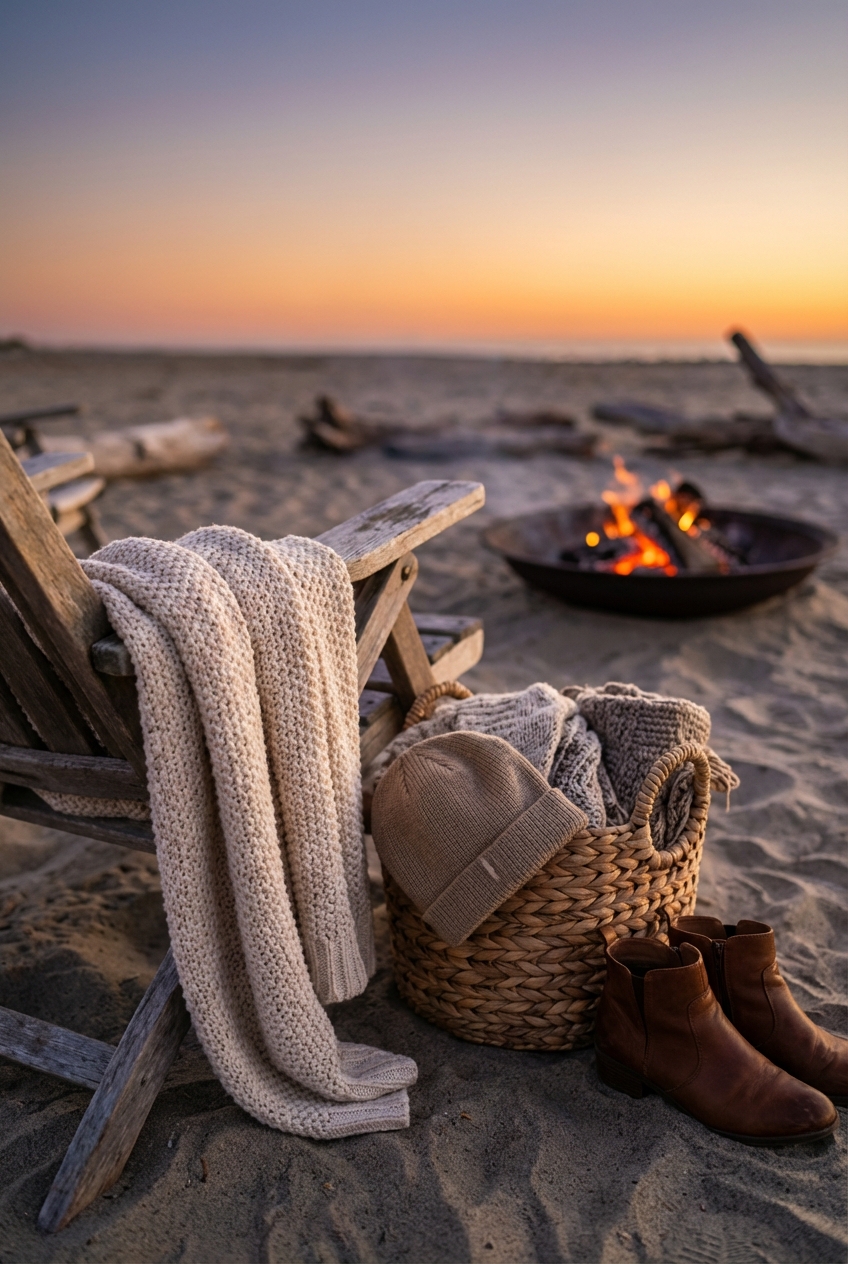
Beach Bonfire Looks With Cozy Wraps Warm Stylish And Perfect For Breezy Nights
There is a specific kind of magic that happens during the transition from a sun-soaked afternoon to a cool coastal evening. The light shifts to a deep indigo, the temperature drops rapidly, and the relaxed energy of the beach meets the crackle of a fire. As a stylist, I find this transition to be one of the most challenging yet rewarding sartorial moments. You want to maintain that effortless, windswept elegance without shivering or looking like you bundled up in a shapeless blanket.
The secret to mastering this environment lies in strategic layering and understanding fabric behavior against humidity and wind. A beach bonfire is not the place for structured blazers or stiff denim jackets that restrict movement. Instead, we turn to the world of oversized wraps, ponchos, and cashmeres that offer fluidity and warmth. It is about creating a silhouette that looks intentional, rather than just practical.
In this guide, I will break down exactly how to curate a high-end bonfire look that balances thermal comfort with visual texture. We will cover fabric choices that resist dampness, draping techniques that withstand coastal gusts, and how to accessorize without losing pieces in the sand. If you are looking for visual inspiration, please note that we have curated a comprehensive Picture Gallery at the end of the blog post.
The Foundation: Selecting the Right Base Layers
Before we even touch the wrap, your base layer dictates the success of the outfit. The temperature difference between a sunny 4 PM and a breezy 8 PM on the coast can be as much as 20 degrees. Your base needs to breathe during the setup phase but insulate once you are seated.
I always recommend natural fibers for this layer. A high-quality cotton or silk-blend tank top acts as a second skin. Avoid pure synthetics like polyester, which trap sweat during the warm hours and become clammy and cold once the sun goes down.
For a more polished look, a linen button-down is a classic choice. However, the fit is crucial. You want a “boyfriend” fit that allows air circulation. If the shirt is too fitted, it will bunch uncomfortably under a heavy wrap. Keep the collar popped to protect your neck from the initial chill before you fully bundle up.
Designer’s Note: The Volume Rule
When styling voluminous wraps, you must balance the visual weight. If your top half is going to be dominated by a large, flowing textile, keep your base silhouette streamlined. A fitted ribbed tank or a slim-cut long-sleeve tee ensures you do not get lost in the fabric.
Choosing Your Wrap: Fabric Weight and Composition
Not all wraps are created equal, especially when sand and salt air are involved. In high-end fashion, we talk about the “hand” and “drape” of the fabric. For a bonfire, you need something with significant weight. A flimsy sheer shawl will whip around in the wind and offer zero insulation.
Cashmere is the gold standard for warmth-to-weight ratio. A 2-ply or 4-ply cashmere wrap offers incredible heat retention without feeling heavy on the shoulders. However, be mindful of the weave. A loose cable knit can easily snag on driftwood or beach chairs. A tighter, flat weave is generally more durable for outdoor settings.
Alpaca is another formidable contender. It is naturally water-repellent and hypoallergenic. Alpaca fibers are hollow, which makes them exceptional insulators. If you are in a particularly damp coastal area (like the Pacific Northwest), alpaca often outperforms wool because it doesn’t absorb moisture as quickly.
Common Mistakes + Fixes
Mistake: Choosing a floor-length wrap or poncho.
Fix: While dramatic, floor-length fabrics are a disaster on the beach. They drag in wet sand and ash. Look for wraps that hit at the mid-thigh or knee. This gives you coverage when seated but keeps the hem pristine when walking.
The Art of the Drape: Securing Your Look
The biggest annoyance at a beach bonfire is constantly readjusting a sliding wrap while trying to hold a drink or roast a marshmallow. The wind is a constant variable. You need to style your wrap so it stays put.
One sophisticated method is the “belted cape” look. Drape a large rectangular wrap over your shoulders evenly. Take a slim leather belt and fasten it around your natural waist, over the front panels of the wrap, while leaving the back panel loose. This creates sleeves, cinches the waist for shape, and ensures the wrap cannot blow off.
Another option is using a high-quality brooch or pin. Do not use delicate safety pins; use a heavy architectural pin to secure one end of the wrap to the opposite shoulder. This creates an asymmetrical neckline that looks incredibly chic and stays secure against gusts.
What I’d Do in a Real Project
If I were styling a client for an evening event in Malibu, I would choose a camel-colored cashmere ruana (a wrap with a slit up the front). I would drape one side over the opposite shoulder and secure it with a matte gold pin. This keeps the hands free and maintains heat around the neck and chest.
Bottoms: Balancing Practicality and Style
The instinct might be to wear shorts, but once the sun sets, bare legs are the first place you will feel the chill. Furthermore, sand flies and mosquitoes are often active at dusk. Full coverage is usually the smarter, more stylish choice.
Relaxed-fit denim is a staple for a reason. Opt for a lighter wash to keep the vibe coastal rather than urban. A straight-leg or wide-leg silhouette works well, provided the hem does not drag. The stiffness of denim provides a nice textural contrast to the softness of a cashmere wrap.
For a softer look, consider linen trousers. However, standard linen can be too thin for a night breeze. Look for “heavyweight” or “rustic” linen blends. These have a thicker weave that blocks wind better than garment-washed summer linen.
Fabric Warning
Avoid velvet or corduroy. While warm, these fabrics act like magnets for sand. Once sand gets embedded in the pile of velvet, it is nearly impossible to get out without professional cleaning. Stick to flat weaves like denim, canvas, or heavy silk.
Footwear Strategy: Navigating the Sand
High-end fashion often ignores practicality, but for a beach bonfire, function must come first. Heels are obviously out of the question. Even wedges can be unstable in soft sand.
The most elegant solution is a pair of leather slides or mules. Look for a substantial sole—something with a bit of thickness to keep your foot elevated above the cooler sand. Leather is durable and shakes clean easily.
If you prefer a closed toe, espadrilles are the quintessential beach shoe. However, ensure they fit snugly. There is nothing worse than the back of your shoe flopping open and scooping up sand with every step. A lace-up espadrille that ties around the ankle is both secure and visually elongating.
Designer’s Rule of Thumb: Color Coordination
Match the tone of your shoes to your wrap. If you are wearing an oatmeal wrap, opt for tan or nude leather sandals. This creates a vertical line for the eye to follow, making you look taller even in flats.
Lighting and Color Palettes
When selecting the color of your wrap, consider the lighting conditions. You will be illuminated by the warm, flickering glow of the fire. Warm tones look exceptional in this light.
Rust, terracotta, camel, and warm cream are universally flattering near a fire. They reflect the light and give the skin a healthy glow. Cool tones like icy blue or stark grey can sometimes look draining as the light fades.
If you prefer a nautical palette, go for a deep navy rather than black. Navy feels softer and more appropriate for the setting. A navy wrap with white or cream denim is a timeless combination that evokes the “rich coastal” aesthetic perfectly.
Accessories and Hair
The wind is the enemy of a perfect blowout. Do not fight the elements. Instead of leaving hair down where it will whip into your lip gloss, opt for a loose, low bun or a messy braid. Secure it with a silk scrunchie or a gold cuff to elevate the look.
For jewelry, skip the long pendant necklaces that can get tangled in your wrap. Focus on earrings. A pair of chunky gold hoops or hammered metal studs catches the firelight beautifully.
Bring a bag that closes completely. An open tote is an invitation for sand intrusion. A leather crossbody or a raffia clutch with a zipper is ideal. It keeps your phone and keys sand-free and allows you to move around the fire easily.
Finish & Styling Checklist
Before you head out to the dunes, run through this quick professional check to ensure your look is road-tested:
- The Shake Test: Move your shoulders vigorously. Does the wrap stay on, or does it slip immediately? If it slips, add a belt or pin.
- The Sit Test: Sit down on a low chair or sofa. Does your waistband dig in? You will be sitting on low beach chairs or logs; comfort is key.
- Fabric Check: Are you wearing anything with a loop weave (like bouclé) that will snag on driftwood? If so, swap it for a flat weave.
- Layering Logic: Can you easily remove the wrap if you get too close to the fire? Make sure your base layer is something you are happy to be seen in.
- Hemline Audit: Are your pants or wrap dragging on the floor? If yes, cuff the pants or choose a shorter wrap.
FAQs
Q: How do I get the smell of smoke out of my cashmere wrap?
A: This is a major concern with high-end fabrics. Do not wash it immediately. Hang the wrap outside in a shaded, breezy area for 24 hours. The fresh air usually lifts the smoke scent. If it persists, a light misting of a fabric refresher designed for wool (or a steamer with a drop of lavender oil) works wonders.
Q: Can I wear a dress to a beach bonfire?
A: Yes, but choose a midi or maxi length. A short dress becomes difficult to manage when sitting on the ground or low chairs. A maxi dress in a jersey knit or heavy cotton is comfortable and stylish. Layer leggings underneath if it is particularly cold; no one will see them.
Q: What is the best material for a beach blanket to sit on?
A: While this post focuses on clothing, your seating matters. Wool blankets are traditional but itchy and trap sand. Look for “turkish towel” style blankets that are oversized and thick, or specialized outdoor blankets with a waterproof backing. This keeps moisture from seeping through to your clothes.
Q: Is white denim a bad idea?
A: Not if you are careful. White denim looks stunning at night. However, avoid sitting directly on logs or the sand. Always use a barrier blanket. If you are worried, an “ecru” or “natural” denim hides ash smudges better than optical white.
Conclusion
Dressing for a beach bonfire is an exercise in “relaxed luxury.” It requires a respect for the elements—the wind, the sand, and the dropping temperature—combined with an appreciation for silhouette and texture. By centering your look around a substantial, high-quality wrap and grounding it with practical footwear and base layers, you create an outfit that is as functional as it is beautiful.
The goal is to be present in the moment. When you are warm, your wrap is secure, and your feet are comfortable, you can focus on the sound of the waves and the warmth of the fire. That confidence is the ultimate accessory.
Picture Gallery


