
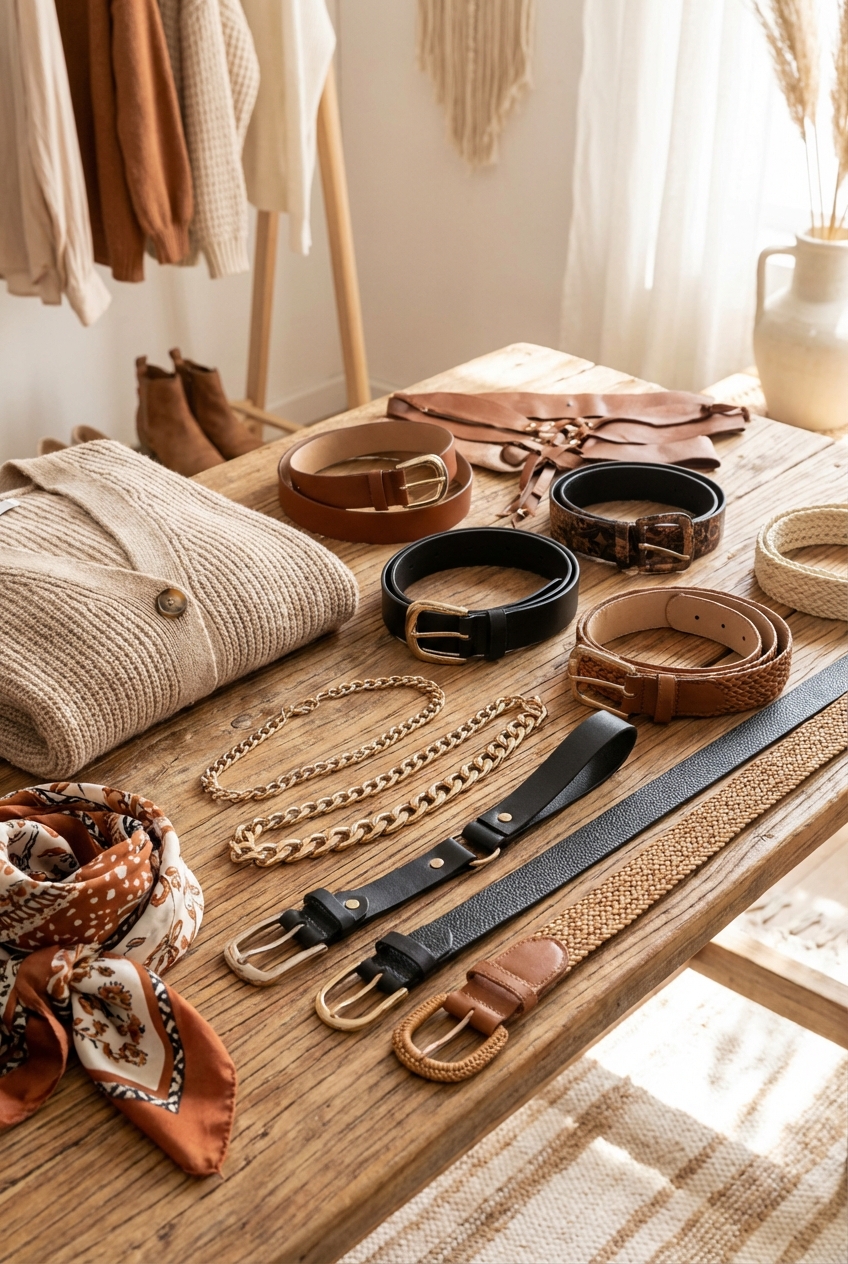
Belts And Waist Accessories Defining Your Silhouette With Style
Introduction
I remember the exact moment I realized the transformative power of a simple strip of leather. I was styling a client for a high-profile gallery opening, and she was wearing a beautiful, albeit slightly shapeless, silk caftan. It looked luxurious, but it swallowed her petite frame whole. We were minutes away from her departure, and something just felt unfinished.
I grabbed a vintage, medium-width chain belt from my kit and draped it loosely around her hips, just below the natural waistline. The metal added weight, the placement elongated her torso, and suddenly, the fabric fell in architectural folds rather than hanging limp. It wasn’t just an accessory; it was structural engineering for fashion. That single piece defined the entire mood of the outfit.
Belts and waist accessories are the unsung heroes of a wardrobe, capable of altering proportions and elevating basics instantly. Whether you are looking to define a waist in an oversized blazer or add texture to a monochromatic look, mastering this accessory is essential. You can find a curated collection of my favorite runway-inspired waist looks in the Picture Gallery at the end of this blog post.
Understanding Your Torso Proportions
Before you buy another designer belt, you must understand the canvas you are working with. The vertical real estate of your torso dictates which belt widths will look expensive and which will look accidental. In the fashion industry, we don’t just look at circle size (waist measurement); we look at the distance from the ribcage to the hip bone.
If you have a short torso, your ribcage sits very close to your hip bone. Wide belts can act like a corset that swallows your midsection, making you look boxy. For this body type, I always recommend sticking to belts that are 1 inch or narrower. These define the waist without erasing the space between your bust and hips.
Conversely, those with long torsos have significant freedom but face different challenges. A skinny belt can get lost on a long torso, failing to create the desired cinch. If you have length in your midsection, opt for belts ranging from 2 to 4 inches in width. This helps visually break up the vertical line and creates a more balanced ratio between your upper and lower body.
Designer’s Note:
A common issue I see in fittings is “belt migration.” This happens when a belt is tightened around the softest part of the waist without consideration for the ribcage. If you are cinching a dress, aim for the “floating rib”—the spot just above your natural waist. It provides a bony structure for the belt to grip, preventing it from sliding down or cutting in uncomfortably.
The Mathematics of Belt Widths
In my styling kit, I categorize belts by width because width determines formality and function. Understanding these ranges helps you build a versatile capsule collection. You generally need three categories: the Skinny, the Standard, and the Statement.
The “Skinny” belt is typically 0.5 to 1 inch wide. This is your jewelry piece. It is rarely functional in terms of holding up trousers. I use these primarily over cardigans, light floral dresses, or threaded through the loops of high-waisted cigarette trousers. It creates a focal point without adding bulk.
The “Standard” belt falls between 1.25 and 1.75 inches. This is the workhorse width. Most denim jeans have loops designed specifically for 1.75-inch belts. If you buy a luxury leather belt, this is the width to invest in. It is substantial enough to hold heavy fabrics like denim or wool but sleek enough for office wear.
The “Statement” or “Corset” belt is anything over 2.5 inches. These are high-impact items. I often use these to style coats or oversized white shirts. However, you must be careful with the material here; a stiff, wide leather belt can be incredibly uncomfortable for sitting. Look for contoured shapes that curve with the body rather than a straight, wide band.
Common Mistake + Fix:
Mistake: Wearing a narrow dress belt with heavy denim jeans. The belt creates a “gap” in the loops and allows the waistband to sag.
Fix: Match the belt width to the loop size. If the loops are 2 inches, fill them with a 1.5 to 2-inch belt to maintain structural integrity.
Material Selection and Fabric Pairing
The relationship between the belt material and the garment fabric is crucial for a polished look. You cannot simply throw a heavy, bridle-leather belt onto a delicate silk slip dress. The weight of the leather will drag the silk down, causing puckering and uneven hemlines.
For lighter fabrics like chiffon, silk, or fine knitwear, you need softer materials. Look for suede, braided leather, or chain belts. These materials have movement and drape. They work with the fabric rather than fighting against it. A chain belt is particularly effective on evening wear as it acts solely as adornment.
For heavier structures like wool coats, denim, or structured blazers, you need rigid leather. Full-grain leather is the gold standard here. It should feel stiff initially; it will soften with body heat. When I style a trench coat, I often ditch the matching fabric tie and replace it with a structured leather belt to make the coat look more tailored and expensive.
What I’d do in a real project:
If I am styling a client in a monochromatic outfit—say, all camel—I use the belt to introduce texture. I would choose a croc-embossed leather or a calf-hair belt in the exact same shade. The change in texture defines the waist without breaking the vertical color line, which keeps the silhouette long and lean.
Buckles and Hardware as Jewelry
The hardware on your waist accessories is just as important as the leather itself. In high-end fashion, we treat the buckle as a piece of jewelry. It needs to coordinate with your earrings, watch, and bag hardware. While mixing metals is acceptable in some circles, keeping them uniform creates a more cohesive, “quiet luxury” aesthetic.
Pay attention to the scale of the buckle. A massive logo buckle can easily veer into tacky territory if not styled with restraint. If you love a logo belt, wear it with minimal, classic pieces—a black turtleneck and trousers—so the buckle is the only “shout” in the outfit.
For a timeless look, opt for simple geometric shapes: squares, circles, or horseshoes in polished brass or brushed silver. These never go out of style. Avoid overly ornate buckles with rhinestones unless you are styling a specific evening look, as they can snag delicate knitwear and look dated quickly.
Designer’s Note:
Check the prong quality. Cheap buckles often have flimsy prongs that wiggle. A quality buckle should feel solid, and the prong should rest firmly in the notch. If the hardware feels light or “hollow,” it will likely tarnish or break within a season.
Styling Techniques: Knotting and Layering
How you tie or fasten the belt is often more important than the belt itself. You don’t always have to use the buckle in the traditional way. Styling tricks can make a standard belt look like a runway piece.
One of my go-to moves for thin belts over dresses or blazers is the “loop knot.” Fasten the belt normally, then take the long tail, pass it underneath the belt from the bottom up, and tuck it back down through the loop you just created. This lays flat and looks incredibly chic, preventing the tail from flapping around.
For coats, I love the “rear cinch.” Instead of buckling the belt in the front, I pull the coat open and tie the belt behind the back. This pulls the coat in at the waist, giving you shape while leaving the front open to reveal your outfit. It’s a great trick for transitional weather when you want the layer but not the warmth of a closed coat.
Common Mistake + Fix:
Mistake: The “Tail Flap.” This happens when the belt is too long, and the end hangs down awkwardly or curls outward.
Fix: Use a tiny clear elastic band (the kind used for hair) to secure the tail to the main part of the belt. It’s invisible and keeps the silhouette streamlined. Alternatively, take it to a cobbler to have it shortened professionally.
Non-Traditional Waist Accessories
Expanding your definition of “belt” opens up a world of styling possibilities. Sometimes the best waist accessory isn’t a belt at all. In editorial shoots, we often use alternatives to create softer or more edgy looks.
Silk scarves are fantastic waist cinchers for summer. Thread a long, rectangular silk scarf through the loops of white linen trousers or tie one around the waist of a shirt dress. It adds a pop of color and pattern without the heaviness of leather. It feels breezy and sophisticated.
Another option is the corset top or bustier worn over a shirt. This is a very fashion-forward look. Layering a structured corset over a crisp, oversized white button-down creates an incredible hourglass shape. It juxtaposes the masculine shirt with a hyper-feminine accessory.
What I’d do in a real project:
For a client who feels “boxy” in blazers, I use a belt bag (fanny pack) worn high at the waist. It sounds casual, but if you choose a sleek leather version, it acts as a wide belt. It defines the silhouette and adds utility. It’s perfect for travel or running errands when you want to look polished but hands-free.
Finish & Styling Checklist
Before you walk out the door, run through this mental checklist. I use this exact process during final looks on a photo set to ensure the silhouette is perfect.
Breathability Check: Can you slip two fingers comfortably between the belt and your body? If not, it is too tight and will create unflattering bulges above and below the strap.
Loop Alignment: Are the belt loops on your trousers aligned with the belt? Sometimes the back center loop pulls upward. Give the trousers a tug to ensure the belt is sitting level.
Hardware Harmony: Does the buckle metal clash with your necklace? If you are wearing a gold buckle, try to switch to gold jewelry or remove the necklace entirely.
Tail Management: Is the end of the belt secured? If it is too short to reach the first pant loop, use the loop knot or a clear elastic.
Fabric Integrity: Is the belt crushing the fabric underneath? If you are belting a puffer coat or thick cable knit, ensure you haven’t tightened it so much that the garment looks distorted.
Rise Awareness: If wearing low-rise pants, have you chosen a curved belt? Straight belts on low hips will gap at the back.
FAQs
Can I wear a brown belt with black shoes?
Absolutely. The old rule of matching leathers perfectly is dead. However, the tone matters. A rich cognac brown looks stunning with black. It adds warmth. Just try to tie the brown in somewhere else, perhaps with a bag, tortoise-shell sunglasses, or even the buttons on your coat.
How do I store my belts to keep them in shape?
Never leave them in the belt loops of your pants; this warps the leather. For leather belts, roll them loosely and place them in a drawer divider. For heavy statement belts, hang them by the buckle on a hook. This lets gravity straighten out any kinks from wear.
How do I know my belt size?
Most brands size belts by inches (e.g., 32, 34, 36). This number usually measures from the buckle end to the middle hole. Measure your waist (or hips, depending on where you wear it) over your clothes. If you measure 34 inches, buy a size 36 belt to give yourself room for the overlap and different fabric thicknesses.
Are wide belts still in style?
Yes, but the styling has changed. We aren’t doing the 2005 “boho disc belt” look. Today’s wide belts are structured, architectural, and often worn over outerwear or monochromatic suits. Think “sculptural” rather than “costume.”
Conclusion
Defining your silhouette is about more than just making your waist look smaller; it is about bringing intention to your outfit. A belt signals that you took the time to adjust the proportions of your clothes to fit your specific body. It is the difference between wearing clothes and styling them.
Start with the basics—a quality black leather belt and a classic brown one—and master the fit. Once you understand the interplay of width, material, and placement, you can experiment with scarves, chains, and corsets. Fashion is ultimately about confidence, and there is nothing more confident than a woman who knows exactly how to command her own space and shape.
Picture Gallery


