
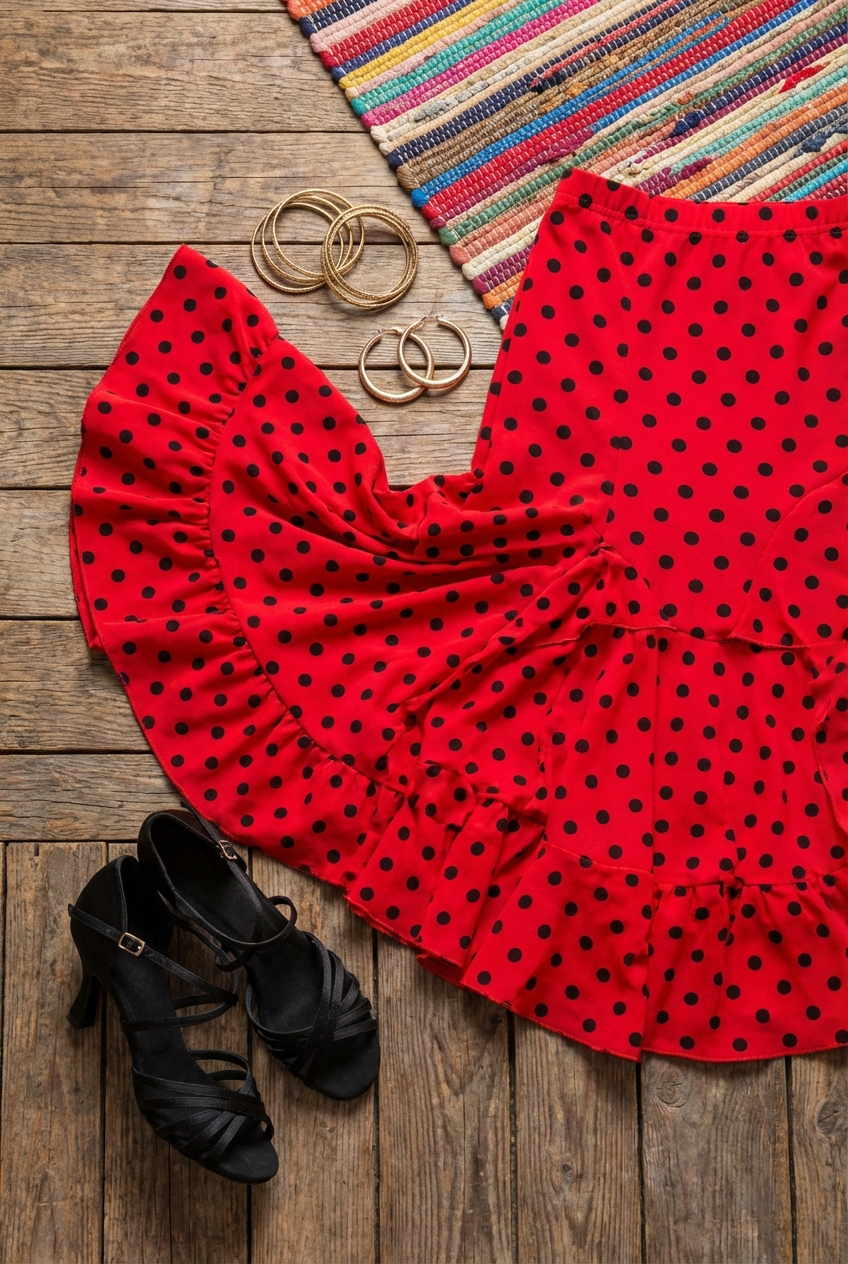
Bold Salsa Dancing Looks With Swingy Skirts Movement Meets Elegance
I still vividly remember my first night out at a high-stakes salsa club in Miami. I showed up wearing a structured, pencil-cut dress that I thought looked incredibly chic in the mirror. Within two songs, I was sweating, restricted, and unable to keep up with the complex footwork my partner was leading.
That night taught me that Latin dance fashion is a distinct intersection of physics and glamour. It is not enough to look beautiful standing still; your outfit must perform under the duress of fast spins, dips, and humidity. The “swingy skirt” is not just a stylistic choice; it is a tool that accentuates your rhythm and amplifies the visual impact of your movement.
In this guide, I will break down how to style bold salsa looks that marry high-end fashion with the practical realities of the dance floor. We will cover fabric choices, hemline mathematics, and how to construct a silhouette that moves as fast as you do. If you are in a rush and just want to see the looks, feel free to scroll down to the curated Picture Gallery at the end of the blog post.
1. The Physics of Fabric: Weight and Flow
When selecting a skirt for salsa, the fabric is your most critical variable. You need materials that possess what we call “fluidity” without being so lightweight that they fly up uncontrollably.
I always recommend synthetic blends for social dancing. A high-quality polyester-spandex blend or a nylon mesh offers the necessary four-way stretch. Natural fibers like cotton or linen absorb moisture and become heavy with sweat, which will ruin the drape of the skirt after an hour of dancing.
Look for fabrics with a bit of “loft” or weight at the hem. This weight uses centrifugal force during a spin to flare out dramatically, creating that iconic saucer shape. If the fabric is too light, it simply twists around your legs and tangles.
Designer’s Note: The Static Test
Before purchasing a dance skirt, rub the fabric against itself vigorously. If it generates immediate static, skip it. A skirt that clings to your thighs due to static electricity kills the visual line of your dance. I always advise clients to carry a small travel-size anti-static spray in their shoe bag just in case.
2. Silhouette and Scale: Balancing Volume
High-end dance fashion relies heavily on the principle of contrasting volumes. Since a swingy salsa skirt adds significant volume to your lower half, your upper half needs to be streamlined. This is the “A-line rule” of performance styling.
If you wear a voluminous skirt with a loose, blousy top, you lose your frame. In salsa, your partner needs to see your torso isolation and rib cage movement. A fitted bodysuit or a cropped top that ends exactly at the waistband is usually the best choice.
For the skirt itself, the “circle cut” is the gold standard. A full circle skirt (cut from a single round piece of fabric) offers the maximum volume. However, for a more modern, sharper look, an asymmetrical handkerchief hem creates dynamic lines that look incredible during sharp turns.
Common Mistake: The “Too Much” Trap
A frequent error I see is pairing a fringed skirt with a fringed top. While fringe is classic salsa, wearing it on both halves of the body creates visual chaos.
The Fix: Choose one focal point. If the skirt has heavy texture or fringe, keep the top sleek and minimal.
3. Hemline Mathematics: Length Matters
The length of your skirt is a safety issue as much as a style one. In salsa, you are often stepping backward quickly or being spun rapidly. If a skirt is too long, your heel—or your partner’s shoe—will catch the hem.
For social dancing, the “safe zone” is generally knee-length or a high-low midi. If you prefer a longer look, the hem must be high enough to clear your heel when you are in a deep lunge.
What I’d Do in a Real Project: Determining Length
When tailoring a skirt for a client, I ask them to wear their specific dance shoes. I measure from the floor up.
1. Put on your dance heels.
2. Measure 3 to 4 inches up from the floor.
3. This is the absolute maximum length for a maxi-style dance skirt to ensure it clears the heel during a backward step (the “back spot” turn).
4. The Role of Color Under Club Lighting
Lighting in salsa clubs or dance studios is rarely flat; it is moody, often colored, and directional. This affects how your outfit is perceived. Matte fabrics in dark colors can disappear completely, making you look like a floating head and arms.
Bright, saturated colors work best. Fire engine red, cobalt blue, and emerald green read beautifully under dim lights. If you prefer black, you must play with texture—think black sequins, black lace, or black fringe—to catch the light.
Neon has made a comeback in the “Latin street” style of salsa. A neon yellow skirt paired with a black bodysuit is a high-contrast look that demands attention. It signals confidence and energy.
Designer’s Note: The Sweat Factor
Be realistic about perspiration. Light heather greys or soft pastels in cotton blends will show sweat marks instantly. Stick to dark colors or busy patterns if you know you are going to be dancing intensely for hours. Prints are excellent for camouflaging any moisture.
5. Structural Support and Undergarments
The movement of a swingy skirt is unpredictable. When you spin, a skirt with a good flare will lift—sometimes all the way to the waist. This means your undergarments are effectively part of your outfit.
You cannot wear standard lingerie for salsa dancing. You need dance trunks, briefs, or specifically designed “shorties.” These should match the color of your skirt or be a deliberate nude tone that matches your skin.
High-waisted briefs are the most flattering and secure option. They smooth the midsection and ensure that even during a high kick or a dip, you are covered and comfortable.
Checklist for Undergarments:
- Coverage: Must fully cover the gluteal fold. No cheeky cuts.
- Material: Moisture-wicking performance fabric, not cotton.
- Waistband: Wide, flat elastic that won’t roll down during torso isolation.
6. Accessorizing for Velocity
Accessories in salsa fashion must be aerodynamic. Long necklaces are dangerous; they can whip you in the face during a turn or get caught on your partner’s buttons.
Focus your accessories on the ears and hair. Large hoop earrings or statement chandeliers are classic Latin dance staples. However, they must be lightweight. Heavy earrings will become painful after two songs of head movement.
Hair should generally be secured away from the face. A sleek ponytail or a tight bun allows for cleaner turns (spotting) and prevents your hair from whipping your partner. If you wear your hair down, be prepared for it to act as an insulator, making you much hotter.
The Shoe Connection
Your skirt choice should influence your shoe choice. If you are wearing a skirt with a lot of heavy fringe, a simple T-strap sandal is best to avoid visual clutter. If your skirt is a solid, simple color, you can get away with a more crystal-encrusted, decorative performance heel.
7. Finish & Styling Checklist
Before you head out the door, run through this final stylist check to ensure your look is road-ready.
The “Spin Test” Styling Checklist:
- The Spin Radius: Do a fast turn in front of a mirror. Does the skirt fly up higher than you are comfortable with? If so, change your briefs to fuller coverage shorts.
- The Sit Test: Sit down and stand up. Does the fabric wrinkle immediately? If yes, steam it now or change.
- The Hardware Check: Run your hand over any zippers, sequins, or clasps on your skirt and top. Is anything sharp? Sharp edges will scratch your partner or snag their clothes.
- The Reach Test: Lift your arms straight up. Does your top pull out of your skirt? If so, use fashion tape or switch to a bodysuit.
- Shoe Grip: Brush the suede soles of your shoes. A slippery shoe combined with a heavy skirt can throw off your center of gravity.
8. FAQs
Q: Can I wear a maxi skirt for salsa dancing?
A: Yes, but with caution. It must be wide enough to allow a full stride. A tight maxi skirt is a safety hazard. Look for a skirt with a high slit (up to the thigh) or a very full A-line cut. Ensure the hem is at least 2-3 inches off the ground when you are in heels.
Q: How do I wash a skirt with fringe or sequins?
A: Never put these in a washing machine, even on delicate. The fringe will tangle into a knot that is impossible to undo. Hand wash in a sink with cold water and mild detergent. Hang to dry. If it is just sweaty, you can often spray it with a vodka-water mixture to kill bacteria and let it air out.
Q: What is the best heel height for a beginner wearing a swingy skirt?
A: I recommend a 2.5-inch flared heel. The flared heel offers more stability than a stiletto. As you get more comfortable with your balance and the weight of the skirt, you can graduate to a 3-inch slim heel.
Q: My skirt keeps twisting around my waist. How do I fix this?
A: This usually happens if the waistband is too loose or the fabric is too light. You can have a tailor add a stronger elastic to the waist. Alternatively, safety pin the skirt to your dance trunks/briefs (on the inside) to anchor it in place.
Conclusion
Embracing bold salsa looks with swingy skirts is about more than just following a trend; it is about enhancing your experience of the dance. The right skirt amplifies your movement, making every hip roll and spin look more dynamic and intentional.
When you bridge the gap between high-end fashion aesthetics and the practical needs of an athlete, you gain a new level of confidence. You stop worrying about your hemline or your strap slipping, and you start fully inhabiting the music.
Remember that style on the dance floor is personal. Use these rules of proportion and fabric physics as a foundation, but do not be afraid to experiment with colors and cuts that make you feel powerful. The best outfit is one that makes you want to say “yes” to every dance.
Picture Gallery


