
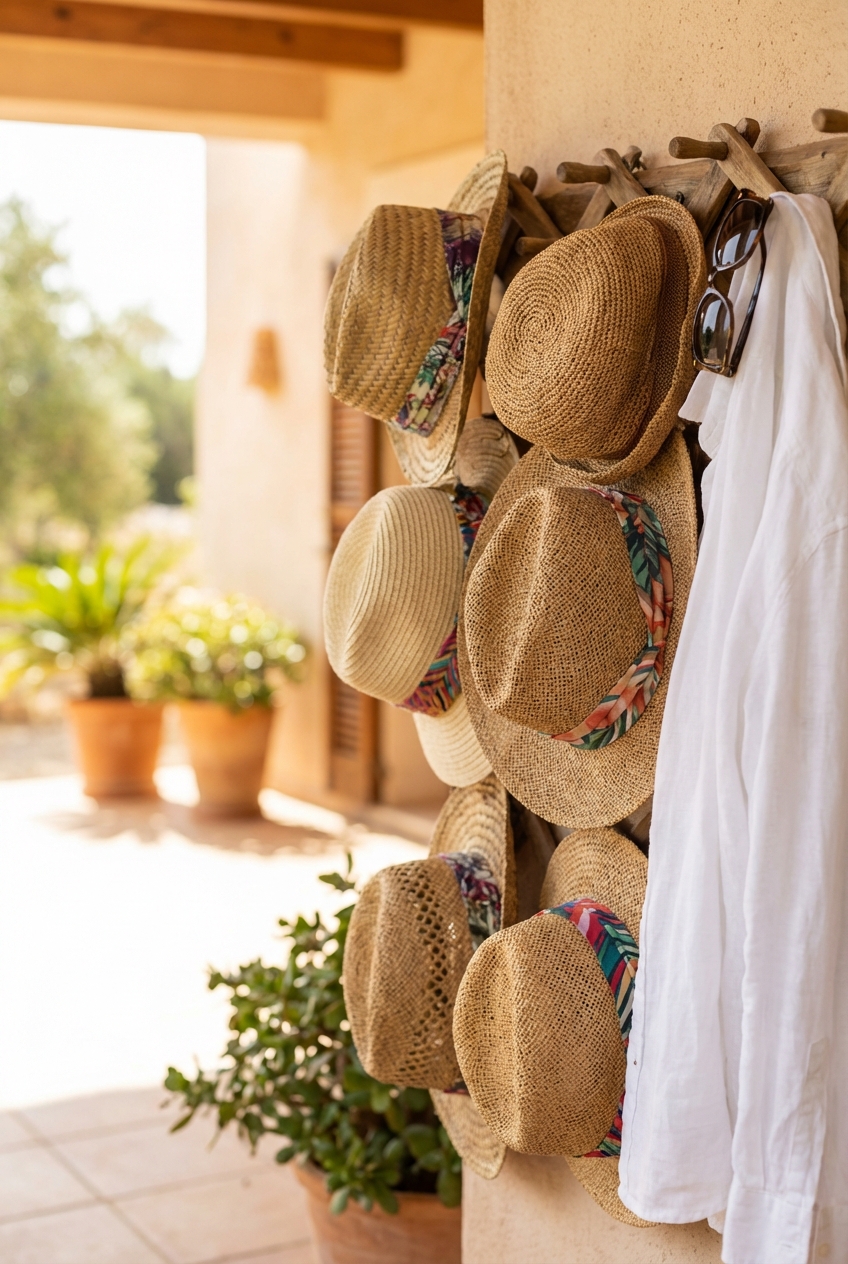
Breathable Straw Hats For Bright And Hot Days
There is a distinct difference between a summer accessory that looks good in a photo and one that actually performs in the heat. As a stylist, I have seen countless clients arrive at outdoor events looking impeccable, only to be miserable twenty minutes later because their headwear trapped heat rather than releasing it. A true summer hat must be an architectural marvel of ventilation and shade.
My own wake-up call came years ago during a mid-July editorial shoot in Provence. I had styled the model in a stiff, heavy synthetic “straw” hat that looked structured but acted like a greenhouse. Within an hour, her hair was damp, her makeup was sliding, and the hat had left a red indentation on her forehead. It was a lesson in the importance of natural fibers and weave density.
Since then, I have prioritized breathability and material integrity above mere aesthetics. Finding the right hat is about balancing the weave’s openness with the necessary sun protection factor. If you are looking for visual inspiration on how to style these pieces, I have curated a comprehensive Picture Gallery at the end of the blog post.
The Hierarchy of Straw Materials
Not all straw is created equal. In the world of high-end millinery, the provenance of the fiber dictates the breathability of the final piece. When you are shopping for a hat to withstand real heat, you must look at the label to understand the material’s origin.
Toquilla Straw (Panama)
This is the gold standard for breathable luxury. Sourced from the Toquilla palm in Ecuador, these fibers are hand-woven. The key here is the fineness of the straw.
The benefit: The natural fibers are hollow, allowing for airflow.
The texture: It feels like fabric rather than brittle grass.
The weave: Look for a “Brisa” weave, which is a simple cross pattern that allows for tiny diamond-shaped vents between the fibers.
Raffia
Raffia comes from the segments of the Raphia palm leaf. It is incredibly durable and inherently resinous, which keeps it flexible.
The benefit: You can pack it without destroying it.
The look: It has a more rustic, textured appearance compared to the smooth finish of a Panama.
Ventilation: Because the strands are often crocheted rather than tightly woven, raffia hats usually offer superior airflow.
Seagrass
This is often overlooked but is fantastic for casual wear. It is rigid and usually has a naturally loose weave.
The benefit: It is impervious to water and extremely breathable due to the larger gaps in the weave.
The color: It often retains a slight green tint that fades to tan, offering a lovely organic palette.
Designer’s Note: Material Truths
What usually goes wrong: Clients buy “paper straw” or “toyolene” thinking it is natural. While paper straw can be decent, it often contains glues that block airflow. Synthetic straws (poly-blends) are the worst offenders; they are essentially plastic helmets.
How to prevent it: Touch the hat. If it feels cool to the touch and slightly flexible, it is likely a natural fiber. If it feels stiff, plasticky, or warm, put it back.
Calculated Proportions: Brim Width and Scale
Selecting a brim width is not just about sun protection; it is a study in proportion. A brim that is too wide for your stature will overwhelm you, making you look like a walking mushroom. A brim that is too narrow will fail to protect your décolletage and may make a rounder face look wider.
The Petite Frame (Under 5’4″)
You need to create verticality. A massive sun hat pulls the eye down.
Target Brim: 3 to 4 inches (7.5–10 cm).
The Rule: The brim should not extend beyond the width of your shoulders.
Styling Tip: Look for a turned-up brim or a fedora style to lift the visual line.
The Tall Frame (Over 5’8″)
You can carry drama. A small hat can look like a toy on a tall frame.
Target Brim: 4 to 6 inches (10–15 cm) or wider.
The Rule: You can embrace the “lampshade” silhouette or the extra-wide boaters.
Styling Tip: Ensure the crown height is proportional; a low crown with a giant brim can look unbalanced.
Mid-Height Ranges
You have the most versatility, but you must consider face shape.
Target Brim: 3.5 to 5 inches (9–12.5 cm).
The Rule: Match the brim width to the widest part of your jawline for harmony.
Common Mistakes + Fixes
- Mistake: Wearing a brim that hits the back of the neck/shoulders.
- Correction: Look for a “cutaway” back or a brim that is shorter in the back than the front. This allows for full head movement without the hat popping off every time you look up.
- Mistake: A brim that casts a shadow over the eyes but leaves the nose exposed.
- Correction: Check the angle of the brim (the “dip”). It should slope slightly downward, not shoot straight out, to maximize shade coverage on the face.
Crown Shapes and Ventilation Mechanics
The crown is the engine room of the hat. This is where heat gathers. If the crown is too tight or shaped incorrectly for your head, no amount of breathable straw will save you.
The Pinch-Front Fedora
This is the most universally flattering shape. The “pinch” creates a tapered look that elongates the face.
Ventilation: Look for models with a distinct open-weave pattern around the crown sides.
Best for: Heart and oval face shapes.
The Boater
This is a flat-topped, stiff-brimmed style. It sits higher on the head.
Ventilation: Because the top is flat, it touches the top of your head. Ensure there is a sweatband spacer or that the weave is very loose.
Best for: Long or oval faces. Avoid this if you have a very square jaw, as the harsh lines will exaggerate it.
The Round Crown (Cloche or Bucket)
Soft and feminine, this follows the curve of the head.
Ventilation: These can trap heat if they fit too snugly. Size up to allow air to circulate between the hat and your scalp.
Best for: Square faces, as the curves soften angular features.
What I’d Do in a Real Project
When styling a client for a humid outdoor wedding, I always choose a hat with a ventilated crown pattern. This looks like a decorative open weave near the top of the hat. It allows hot air (which rises) to escape directly through the top rather than being trapped against the scalp. I also ensure there is at least one centimeter of space between the top of the head and the top of the hat crown.
Sizing and The Fit Factor
Buying a hat “off the rack” without checking the measurements is a gamble. A hat that is too tight restricts circulation and causes headaches (the “hat headache” is real). A hat that is too loose becomes a liability in a breeze.
How to Measure Correctly
Do not guess. Use a soft measuring tape.
1. Place the tape about 1/8 inch above your ears and across the mid-forehead.
2. Wrap it around the widest part of the back of your head.
3. Hold the tape firmly but not tightly. It should feel how you want the hat to feel.
4. Record the measurement in centimeters (it is more precise than inches).
Standard Sizing Reference
Small: 55 cm
Medium: 57 cm (The industry standard sample size)
Large: 59 cm
X-Large: 61 cm
The “One Size Fits Most” Trap
Many brands sell “One Size” (OS) hats. These usually feature an internal adjustable drawstring behind the sweatband.
The pro: You can tighten it for windy days.
The con: You cannot make it bigger. If you measure 58cm and the hat is a standard 57cm OS, it will never fit comfortably.
Designer’s Note: The Two-Finger Rule
The Rule: Once the hat is on your head, you should be able to slide two fingers flat between your forehead and the sweatband. If you can’t, it is too tight. If you can fit three or more, a gust of wind will take it.
Color Theory and Sun Reflection
We often choose hat colors based on our outfit, but for high-heat situations, we must consider physics. Dark colors absorb heat; light colors reflect it.
Natural and Bleached Straw
These are the most functional for high heat.
Function: They reflect the sun’s rays away from the head.
Aesthetics: Natural unbleached straw has a warmer, golden undertone that flatters most skin tones. Bleached white straw is sharper but can wash out paler complexions.
Black and Navy Straw
These are chic and urban, but they run hot.
Usage: Save these for late afternoon or evening events when the sun is lower.
Mitigation: If you must wear a black straw hat at noon, ensure the weave is incredibly open (like a loose crochet) to counteract the heat absorption.
Under-Brim Colors
An old field tactic used by landscape designers and golfers is relevant here.
The trick: A darker color on the underside of the brim absorbs light reflecting off the ground (or water/sand) and reduces glare in your eyes.
Implementation: Look for hats lined with dark chiffon or woven with a darker thread on the underside for maximum eye comfort.
Durability and Travel Maintenance
A breathable hat is often delicate. However, modern luxury demands functionality. You need to know how to transport your piece without crushing the crown.
Packing Strategies
The Stuff Method: For structured Panamas, flip the hat upside down. Stuff the crown tightly with socks and underwear. Place it in the center of your suitcase and pack clothes tightly around the brim to support it.
The Taco Fold: Only applicable for soft raffia or specifically designed “packable” hats. Fold the hat in half along the ridge (if pre-creased) and roll.
Reshaping Deformed Straw
If you accidentally crush your hat, do not panic.
1. Boil a kettle or use a garment steamer.
2. Hold the hat about 6 inches from the steam.
3. Use your hands to mold the straw back into shape while it is warm and damp.
4. Let it cool and dry completely in the corrected shape before wearing.
Common Mistakes + Fixes
- Mistake: Handling the hat by the “pinch” of the crown.
- Correction: This eventually cracks the straw at the pinch point. Always pick up and put on your hat by holding the brim.
- Mistake: Leaving a wet straw hat in a hot car to dry.
- Correction: Heat shrinks natural fibers. Dry it indoors, away from direct heat sources, resting on its crown (upside down) to protect the brim shape.
Finish & Styling Checklist
Before you walk out the door, run through this quick styling and functional audit to ensure your look is polished and practical.
1. Check the Tilt: Does the hat sit level? For a more mysterious/fashion-forward look, tilt it slightly to the right. For maximum sun protection, keep it level.
2. Secure the Hair: If you have long hair, tie it in a low nape bun or a loose braid. A high ponytail will push the hat forward and ruin the fit.
3. Test the anchor: Tilt your head back. If the hat slides off immediately, you need to tighten the internal band or use a hat pin.
4. Coordinate Textures: If wearing a rough raffia hat, pair it with smooth linen or silk. If wearing a smooth, fine-weave Panama, you can pull off textured cottons or knits.
5. Sunglasses Clearance: Put on your sunglasses. Ensure the hat brim doesn’t hit the frames. If it does, you need a hat with a higher crown or different sunglasses.
FAQs
Q: How do I clean sweat stains off the inner band?
A: Use a baby wipe or a soft cloth dipped in a mix of water and mild soap. Gently scrub the band only—do not get the straw wet. For oil stains on the straw itself, sprinkle cornstarch on the spot, let it sit for a few hours to absorb the oil, and brush it off.
Q: Can I wear a straw hat in the rain?
A: Generally, no. Straw absorbs water, swells, and loses its shape. If you get caught in a drizzle, dry the hat properly (see the maintenance section). If you live in a rainy tropical climate, opt for a tightly woven seagrass hat, which handles moisture better than Panama straw.
Q: How do I keep my hat on in windy conditions without a chin strap?
A: You can use “hat tape” (adhesive foam strips) inside the front of the sweatband to make the fit snugger. Alternatively, use a hat pin if your hair is up, or sew a discreet clear elastic cord into the band that sits under your hair at the back of the neck.
Q: Does the weave tightness affect UV protection?
A: Absolutely. A tighter weave blocks more UV rays. If you can see sunlight speckling through the hat onto your face, you are getting partial exposure. For maximum protection, look for UPF 50+ rated hats, which often have a thin, invisible liner in the brim.
Conclusion
Investing in the right breathable straw hat is about respecting the elements while maintaining your personal style. It requires looking past the initial silhouette and examining the weave, the fiber, and the fit mechanics.
When you find a piece that balances a light-as-air feel with structural integrity, it transforms your summer experience. You stop fighting the heat and start working with it. The right hat acts as your personal climate control system, allowing you to enjoy the garden party, the beach walk, or the city commute with cool confidence.
Picture Gallery


