
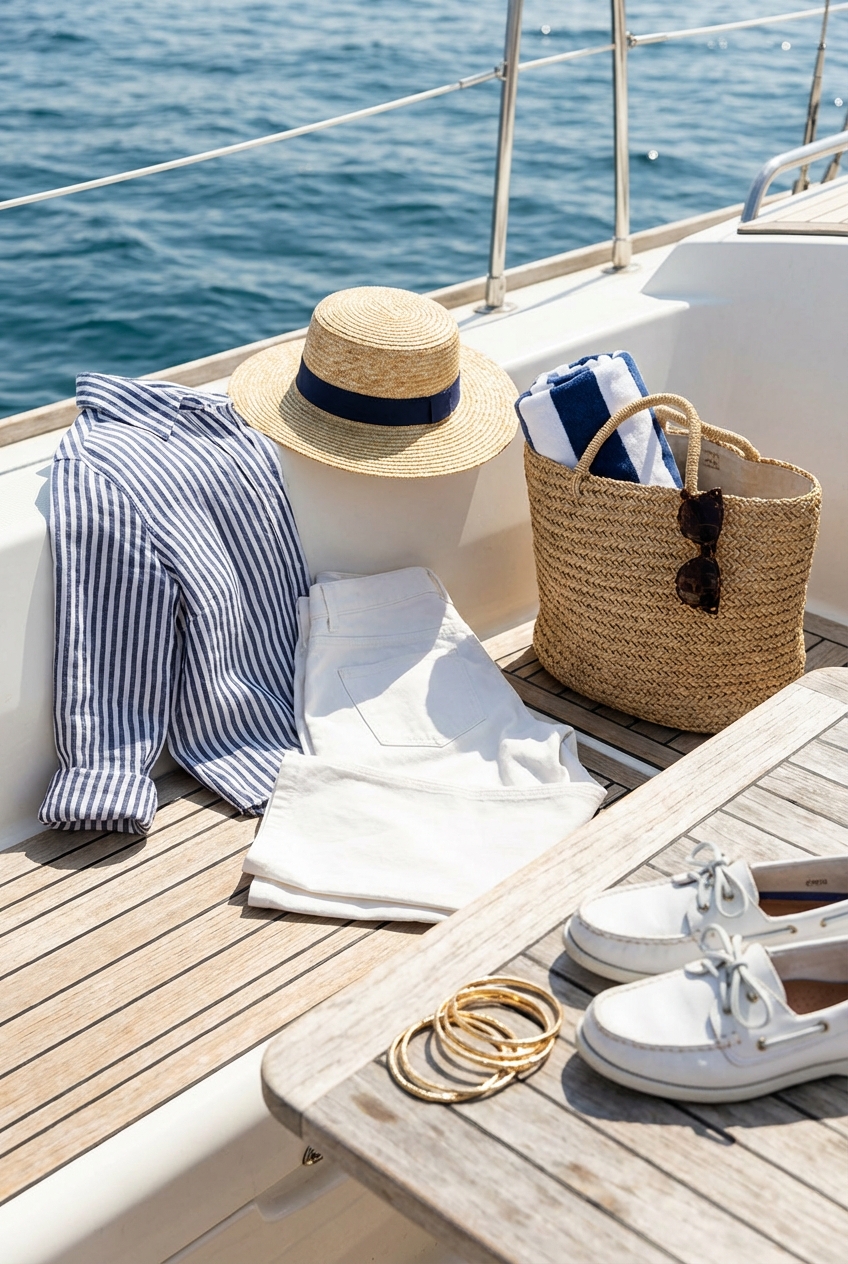
Breezy Boat Day Outfits With Nautical Stripes Effortless Style For Sunny Adventures
There is something undeniably romantic about spending a day on the water. The rhythmic sound of the hull cutting through the waves and the salty breeze creates a unique atmosphere that calls for a specific wardrobe. While trends come and go, nautical stripes remain the gold standard for maritime chic.
However, dressing for a boat is not the same as dressing for a pool party or a beach lunch. You are dealing with specific environmental elements like high winds, intense sun reflection, and moving surfaces. As a fashion stylist who has curated wardrobes for clients vacationing in the Amalfi Coast and the Hamptons, I treat boat day styling as a discipline of physics as much as aesthetics. You need outfits that move with you, stay put in a gale, and protect you from the elements while looking effortless.
The key is balancing the classic “marinière” aesthetic with modern silhouettes that don’t look like a costume. If you are looking for visual inspiration, keep reading because I have curated a stunning Picture Gallery at the end of the blog post. Let’s dive into how to master this look with practical elegance.
1. The Architecture of the Stripe: Choosing the Right Scale
Not all stripes are created equal, especially when photography is involved. When you are out on the open water, the lighting is harsh and direct. This can make high-contrast patterns vibrate visually if the scale is too small.
For a sophisticated look, opt for the classic Breton stripe spacing. This usually consists of a 2-centimeter white stripe alternating with a 1-centimeter navy stripe. This ratio is historically accurate and visually balanced. It draws the eye horizontally without widening the silhouette unflatteringly.
If you are petite, avoid wide, blocky stripes that exceed two inches in height. These can swallow your frame. Instead, look for “engineered stripes” where the pattern is placed strategically across the chest or hem, leaving negative space near the face to keep the look airy.
Designer’s Note: The “Visual Weight” Rule
I often see clients choosing stripes that are too thin (pinstripes) for casual boat wear. Pinstripes read as “business” or “suiting.” For a nautical vibe, the stripe needs to be bold enough to be seen from a distance. A good rule of thumb is that if you can’t distinguish the colors from 10 feet away, the stripe is too fine for a boat day.
2. Foundation Fabrics: Linen and Heavy Cotton
The fabric you choose is just as important as the pattern. On a boat, humidity is always high, even if it feels dry due to the wind. You need natural fibers that breathe but have enough weight to not cling to your body when damp.
Linen is the obvious choice for trousers and button-downs. However, not all linen works for boating. You want a medium-weight linen (around 150-200 gsm). Anything lighter will become sheer in the bright sunlight and blow around too much in the wind.
For your striped tops, look for a “dry hand” cotton. This feels slightly rougher to the touch than a soft supima tee, but it holds its shape much better. A structured cotton top will sit away from the body, providing airflow and preventing that sticky feeling after a few hours in the sun.
Common Mistakes + Fixes
- Mistake: Wearing synthetic blends like polyester or rayon on a hot boat.
- Fix: Check the care label. Aim for 100% cotton or linen. Synthetics trap heat and odors quickly in the sun.
- Mistake: Wearing silk.
- Fix: Leave the silk for dinner on land. Salt spray and water spots can permanently stain delicate silk fibers.
3. The Wind-Proof Silhouette: Trousers and Shorts
The number one enemy of a good outfit on a boat is the wind. A flowy skirt might look beautiful on a hanger, but on the bow of a speedboat, it becomes a liability. You spend the whole day holding your hem down rather than enjoying the champagne.
High-waisted, wide-leg trousers are the ultimate boat day staple. They offer the elegance of a maxi skirt but with the practicality of pants. Look for a “paper bag” waist or a sailor-front style with buttons. These details add interest and nod to the nautical theme without being kitschy.
If you prefer showing legs, tailored shorts are preferred over cut-offs. A mid-length short (5 to 7-inch inseam) is generally more practical for moving around a boat. You often have to climb ladders or step over lines, and a slightly longer inseam provides coverage and comfort.
What I’d Do in a Real Project
For a client chartering a sailboat, I always pack a pair of white or ecru denim shorts rather than linen shorts. Denim has the structure to withstand sitting on textured non-slip decks (which can be rough like sandpaper) without snagging or wearing thin.
4. The One-Piece Wonder: Rompers and Jumpsuits
If you struggle with tucking in shirts or coordinating separates, the jumpsuit is your best friend. A striped jumpsuit creates a long, continuous vertical line that is incredibly lengthening.
Look for a jumpsuit with a culotte-style leg. This means the leg ends mid-calf. This length is perfect because it keeps your hems dry when you are walking on a wet deck or hopping off onto a dinghy/tender.
The romper is the playful cousin of the jumpsuit and works well for younger vibes or extremely hot days. Ensure the romper has a structured bodice. Since you might be wearing a swimsuit underneath, a flimsy bodice can look lumpy. A rompers made of cotton poplin or twill will hide the lines of a bikini perfectly.
Designer’s Note: The Bathroom Logistics
Always check the entry/exit system of a jumpsuit before buying it for a boat. Bathrooms (heads) on boats are notoriously tiny. If you need a friend to unzip you from the back, it is not the right outfit for a day at sea. Look for side zippers or button fronts that you can manage solo in a confined space.
5. Layering for the Temperature Drop
It is easy to underestimate how cold it gets on the water. Even on a 90-degree day, once the boat picks up speed, the apparent temperature drops significantly. If the sun goes behind a cloud or you stay out for sunset, you will be freezing.
The classic accessory here is the cable-knit sweater or a heavy marinière long-sleeve. The strategy is the “shoulders drape.” Tie the arms loosely around your neck during the heat of the day. It acts as a scarf to protect your neck from the sun and is instantly available when the breeze kicks up.
Avoid cardigans with too many buttons. A pullover crewneck or a quarter-zip is much more practical. The wind cuts right through button plackets. You want a dense knit that acts as a windbreaker.
Material Check:
- Cotton Knits: Best for day trips. They wash easily if they get salty.
- Cashmere: Luxurious, but risky. Saltwater makes cashmere feel gritty and can damage the fibers over time. If you wear cashmere, ensure you dry clean it immediately after the trip.
- Wool Blends: Good for colder climates (like New England or the Pacific Northwest boating), but usually too itchy for tropical sun.
6. Footwear: Safety Meets Style
Footwear is the most strictly regulated part of boating fashion. Many boat owners have a strict “no shoes” or “no marking soles” policy. This means black rubber soles are generally forbidden because they leave scuff marks on the white fiberglass gel coat.
Your safest bet is a non-marking sole (usually white or light tan rubber). While the classic Sperry boat shoe is functional, it can feel a bit dated. Instead, look for modern espadrilles with a rubber bottom. Traditional rope-sole espadrilles can get slippery on wet fiberglass, so the rubber coating is essential for traction.
Leather slides are a great “dock-to-deck” option. Just remember that you might be asked to take them off immediately upon boarding. Therefore, your pedicure acts as your primary accessory.
Common Mistakes + Fixes
- Mistake: Wearing heels or wedges.
- Fix: Never wear heels on a boat. It is dangerous and damages the deck (teak is soft and dents easily). If you need height, choose a flat flatform sandal with a wide, stable base.
- Mistake: Wearing flip-flops with no grip.
- Fix: Cheap foam flip-flops are a hydroplaning hazard on wet decks. Wear sandals with a heel strap or structured slides that hold your foot securely.
7. Accessories and Sun Protection
On land, accessories are decorative. On a boat, they are functional necessities. The sun reflects off the water, effectively doubling your UV exposure.
Headwear: A wide-brimmed straw hat is classic, but it needs to stay on. I only recommend hats with an adjustable inner band or a chic ribbon chin tie. There is nothing effortless about holding your hat with one hand for six hours. A structured boater hat or a canvas bucket hat often stays put better than a floppy sun hat.
Eyewear: Sunglasses are non-negotiable. For a high-end look, oversized acetate frames (think Jackie O) are perfect. However, ensure the lenses are polarized. Polarization cuts the glare from the water surface, allowing you to see into the water (and spotting gorgeous reefs or fish) while reducing eye strain.
The Bag: Leave the leather Chanel bag at home. Water spots will ruin it. The ideal boat bag is a structured canvas tote or a raffia basket bag. It needs to be able to stand up on its own so your sunscreen and phone don’t roll out when the boat turns.
Finish & Styling Checklist
Before you head to the marina, run through this mental checklist. I use this “edit” for every client to ensure the look is cohesive and functional.
The “Sit Test”
Sit down in a low chair or on the edge of your bed. Does your waistband dig in? Do your shorts ride up too high? You will be sitting 80% of the time on a boat. If it’s uncomfortable sitting down, change it.
The Fabric Grip
Grab a handful of your fabric and squeeze it tight for 10 seconds. If it stays horribly wrinkled, rethink it. You will be damp and sitting. A little wrinkling in linen is expected (it’s called sprezzatura), but you don’t want to look like a crumpled mess.
The Opacity Check
Stand in front of a window with the light behind you. If you can see the outline of your legs through your white linen pants, everyone on the boat will see your bikini bottoms. Ensure your bottoms are lined or substantial enough.
The Layering Order
- Base: Swimsuit (comfortable, secure).
- Layer 1: Linen shirt or striped tee.
- Layer 2: Shorts or trousers.
- Layer 3: Heavy knit sweater for wind.
- Outer: Lightweight windbreaker or rain shell (stowed in bag).
FAQs
Can I wear black and white stripes, or must it be navy?
While navy and white is the traditional nautical palette, black and white is incredibly chic and often looks more modern. It pairs beautifully with tan leather accessories and gold jewelry. Red stripes are also classic but can be harder to match with other separates.
What do I do if we are going to a nice dinner straight from the boat?
This is a common scenario. Wear a crisp white linen maxi dress over your swimsuit. It looks elegant on the boat but is appropriate for a restaurant. Pack a statement belt and a pair of statement earrings in your tote. Swap your rubber-soled boat shoes for embellished sandals once you hit the dock, add the belt and jewelry, and you are dinner-ready.
How do I keep my hair looking good in the wind?
Accept that “down and perfect” won’t happen. The wind will tangle loose hair instantly. I recommend starting with a sleek low bun or a braid. Use a silk scarf to tie over your hair—it protects your strands from friction and sun damage while looking very Old Hollywood.
Are jeans okay on a boat?
Generally, no. Heavy denim absorbs water, takes hours to dry, and becomes heavy and restrictive. The only exception is white denim shorts or specifically designed lightweight chambray trousers. Stick to chinos, poplin, or linen.
Conclusion
Mastering the nautical stripe trend for a boat day is about respecting the environment you are in. It is the intersection of high style and high utility. When you choose pieces that can withstand the wind, the salt, and the movement of the sea, you look infinitely more confident.
Remember that the goal is to look like you belong on the water, not like a tourist visiting it. By sticking to high-quality natural fabrics, practical footwear, and the timeless geometry of the Breton stripe, you ensure that your style is as memorable as the adventure itself. Enjoy the breeze, the sun, and the timeless elegance of the sea.
Picture Gallery


