
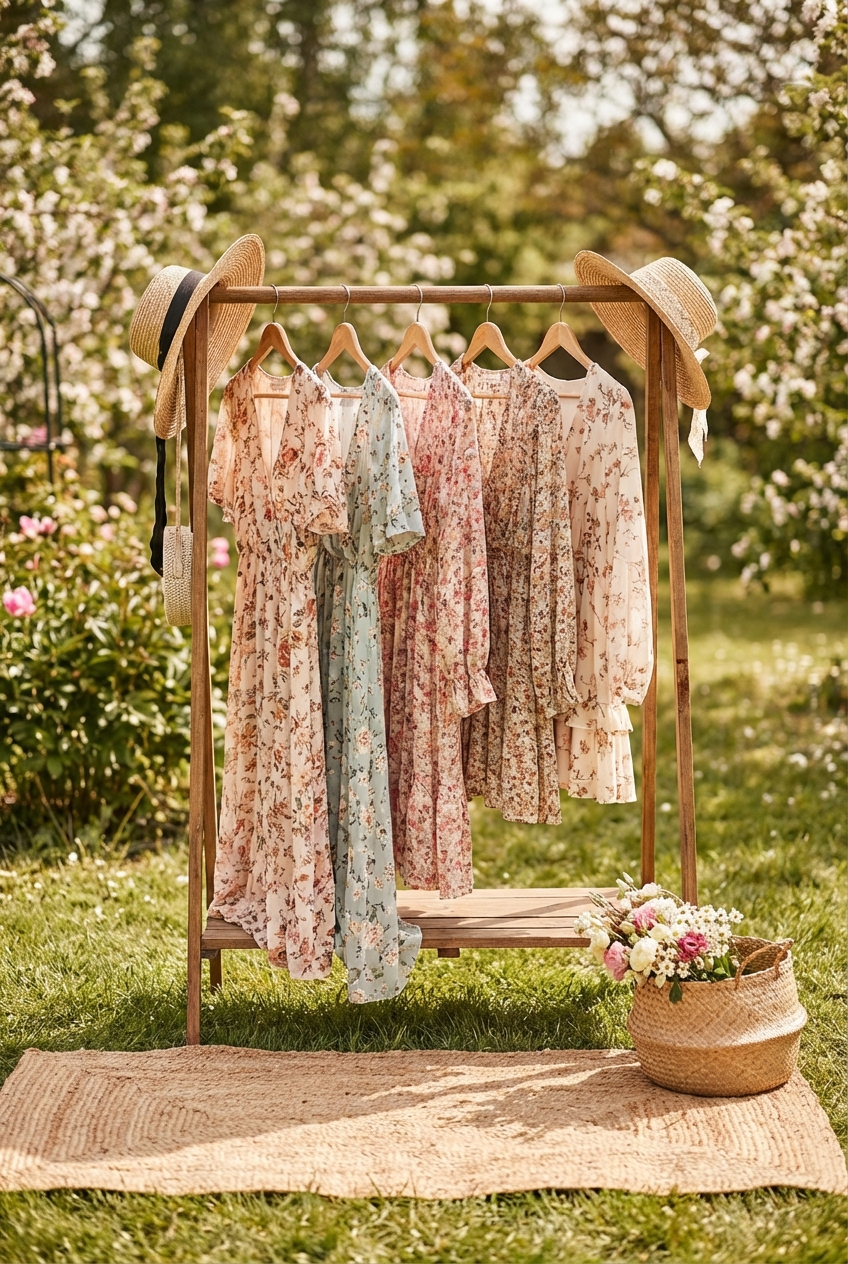
Breezy Garden Party Dresses With Floral Prints
There is distinct magic to a garden party that indoor events simply cannot replicate. The interplay of natural light, the scent of blooming jasmine or roses, and the relaxed atmosphere calls for a wardrobe that bridges the gap between sophisticated elegance and effortless comfort. When I style clients for outdoor soirées, the goal is always to look polished without appearing stiff, ensuring the dress moves beautifully with the breeze rather than fighting against it.
However, selecting the right floral dress involves more than just picking a pretty pattern off the rack. You must navigate uneven terrain, fluctuating temperatures, and the visual noise of the outdoor setting itself. A successful look requires understanding fabric weight, print scale, and the architectural silhouette of the garment.
In this guide, I will walk you through the technical and aesthetic principles of choosing the perfect breezy floral dress. For a curated visual selection of my favorite silhouettes and prints this season, be sure to view the Picture Gallery at the end of the blog post.
1. Fabric Physics: Selecting Materials that Breathe
The foundation of any “breezy” dress is the textile itself. In high-end fashion, we prioritize natural fibers not just for their luxe hand-feel, but for their thermal regulation properties. A garden party implies heat and humidity, making synthetic blends like heavy polyester or thick scuba knits a recipe for discomfort.
The Holy Trinity of Garden Fabrics
- Cotton Voile and Poplin: Cotton voile is semi-sheer and floats on the air, often requiring a lining. Poplin has a tighter weave and a crisp finish, which provides structure to puff sleeves and tiered skirts without adding weight.
- Silk Chiffon or Crepe de Chine: For a more formal elevation, silk is unbeatable. Chiffon offers that ethereal, wind-swept look, while Crepe de Chine has a matte finish and a slightly heavier drape that resists wrinkling better than standard silk.
- High-Quality Linen: While linen is prone to wrinkling, it is the ultimate breathable fabric. Look for “handkerchief linen” for dresses, which is finer and softer than the heavy weight used for trousers.
Stylist’s Note: The Lining Trap
One common issue I see is a beautiful cotton dress ruined by a cheap, polyester lining. This creates a greenhouse effect against your skin. Always check the care label. Ideally, the lining should also be cotton or a breathable rayon/viscose blend. If the dress is unlined, ensure you have a silk slip in a tone that matches your skin, not the dress, to maintain color integrity.
2. The Architecture of the Hemline
When consulting for outdoor events, the length of the dress is dictated by the ground you walk on. Garden parties usually mean grass, gravel, or decking. Your hemline choice affects your mobility and the longevity of the garment.
The Midi: The Safest Bet
A midi dress, falling mid-calf (usually 26 to 28 inches from the waist depending on your height), is the industry standard for garden parties. It keeps the hem far away from damp grass and dirt while providing enough coverage to sit comfortably on low garden furniture or picnic blankets.
The Maxi: Drama vs. Dirt
A floor-sweeping maxi is romantic, but it is high maintenance outdoors.
- The “Hover” Rule: If you choose a maxi, I recommend having it tailored to hover exactly 1.5 to 2 inches off the ground when wearing your chosen shoes. This prevents the “dip-dye” effect of grass stains at the bottom of your skirt.
- Volume Control: Avoid massive trains or excessive distinct layers that drag. A column silhouette or a gentle A-line works best.
The Mini: Managing Proportions
Mini dresses can work if the event is casual, but they require a specific balance. If the hem is short (mid-thigh), the neckline should be more conservative—think high neck, long sleeves, or a loose shift fit. This balances the skin exposure and keeps the look elegant rather than club-wear adjacent.
3. Scale and Proportion: Mastering the Floral Print
Not all florals are created equal. The scale of the print interacts with your body frame and the surrounding environment. In landscape design, we talk about “mass planting” for impact; in fashion, we talk about “print density.”
The Rule of Thumb for Print Scale
- Petite Frames (Under 5’4″): Large, dinner-plate-sized blooms can overwhelm a smaller frame, making it look like the dress is wearing you. Opt for “ditsy” florals or medium-scale prints where the pattern repeat is under 3 inches.
- Tall or Curvier Frames: Micro-florals can sometimes read as a solid color or texture from a distance. Larger, bolder botanicals or widely spaced floral motifs celebrate the scale of the garment and look proportionate.
Negative Space Matters
Pay attention to the background color—the “negative space” between the flowers. A dense, busy print camouflages wrinkles and undergarment lines, making it a practical choice for long events. A print with lots of white space is airy and fresh but requires impeccable steaming and perfect undergarments.
Common Mistakes + Fixes
Mistake: Wearing a print that clashes with the venue (e.g., a tropical hibiscus print at an English rose garden wedding).
Fix: Research the venue. If it’s a manicured botanical garden, opt for soft roses, hydrangeas, or wildflowers. If it’s a seaside garden, tropicals or bright abstracts work.
4. Silhouette Engineering: Sleeves and Structure
A garden party dress needs to offer freedom of movement. You will likely be holding a glass of champagne in one hand and an hors d’oeuvre in the other, possibly while standing for long periods.
Sleeve Options for Heat Management
- Flutter Sleeves: These are cut on the bias or circle, offering upper arm coverage without tight seams. They allow airflow to the underarm, which is crucial on 80-degree days.
- Puff Sleeves with Elastic: A trend that has become a staple. Ensure the elastic casing is not too tight. I always test this with clients by having them lift their arms above their head. If the elastic cuts off circulation, we size up or alter it.
- Spaghetti Straps: Ideal for high heat, but be mindful of sun exposure. If you burn easily, a lightweight matching shawl or a dress with sheer sleeves is a smarter long-term choice than relying solely on sunscreen.
Waist Definition
Structured corsetry can feel suffocating in the heat. I prefer dresses with smocking (shirring) at the back bodice or a drawstring waist. This accommodates distinct body fluctuations throughout the day (and after the meal) while maintaining a defined silhouette.
5. Color Theory in Natural Light
Lighting outdoors is uncontrolled. You are dealing with harsh noon sun, dappled shade, or the golden hour. The color of your dress reacts differently here than in a fitting room.
The Sunlight Test
Pastels (blush, mint, pale blue) look stunning against greenery but can wash out in bright, direct overhead sunlight. If you choose a pastel, ensure the fabric has a bit of texture or sheen to hold its own.
Jewel Tones and Saturation
Deep emeralds, magentas, and rich yellows absorb light and photograph beautifully outdoors. They also provide a sharp, sophisticated contrast against natural backgrounds. If you are unsure, a vibrant color is often more flattering in photos than a pale neutral that might blend into a beige stone patio or marquee tent.
Client Consultation: What I’d Recommend
If a client is attending a wedding in a garden, I usually steer them away from white-based florals unless the print is extremely dense. It is too easy to look bridal in a white dress with sparse pink flowers. Instead, I suggest a soft yellow or sage green base—colors that harmonize with the landscape without competing with it.
6. Practical Styling: Footwear and Accessories
The most “breezy” dress in the world cannot save you if your accessories are fighting the elements. Styling for a garden party is an exercise in practical luxury.
The Shoe Dilemma
Stilettos are the enemy of the garden. They sink into the soil, damage the turf, and ruin the suede covering of the heel.
- The Wedge: The classic garden choice. Espadrille wedges add a rustic texture that complements floral prints perfectly.
- The Block Heel: Provides the elevation of a pump but with surface area to stay above ground. Look for a heel width of at least 1.5 inches.
- The Luxe Flat: A metallic leather slide or a jeweled sandal is perfectly acceptable for all but the most formal black-tie garden weddings.
Hardware and Jewelry
In the sun, heavy metal jewelry can get hot and uncomfortable. I prefer natural materials like baroque pearls, rattan woven earrings, or lightweight resin statement pieces. They complement the organic theme of the floral print and won’t burn your skin after an hour in the sun.
Finish & Styling Checklist
Before you head out the door, run through this final checklist to ensure your look is cohesive and functional.
- Undergarments: Are you wearing nude, seamless underwear? In natural light, even thick fabrics can become slightly translucent.
- Hem Safety: Have you done the “sit test”? Ensure you can sit down without the skirt riding up uncomfortably high.
- Wind Check: If the skirt is full circle and lightweight, do you have dress weights in the hem or are you wearing biker shorts underneath? A sudden gust can be revealing.
- Sun Protection: Have you applied sunscreen to your shoulders, décolletage, and the tops of your feet (if wearing sandals)?
- The Layer: Do you have a denim jacket (casual), a cashmere pashmina (classic), or a structured blazer (modern) for when the sun sets and the temperature drops?
FAQs
Can I wear black to a garden party?
Yes, you absolutely can. While pastels are traditional, a black dress with a vibrant floral print is chic and modern. It anchors the look. To keep it “breezy,” ensure the fabric is sheer or lightweight (like chiffon) and the cut is loose. Pair it with lighter accessories, such as a straw bag or nude sandals, to lift the heaviness.
How do I stop my dress from clinging in the humidity?
Static and humidity are tricky. Avoid synthetic satins which cling relentlessly. Natural fibers are your best defense. You can also use a classic anti-static spray before leaving the house. Another stylist trick is to lightly rub a calm-balm or very small amount of lotion on your legs; dry skin generates more static electricity than moisturized skin.
Are floral prints acceptable for evening garden parties?
Certainly. For evening, look for “moody florals.” These are prints set against dark backgrounds like navy, plum, or black. They feel more formal and appropriate for nighttime. You might also look for florals that incorporate metallic thread (lurex) which catches the candlelight or string lights beautifully.
Conclusion
Choosing a breezy garden party dress is about finding the equilibrium between romance and reality. It is about selecting a floral print that complements your stature, a fabric that respects the temperature, and a cut that allows you to move with grace across the grass.
When you get these elements right, the dress becomes an extension of the event itself—effortless, beautiful, and vibrant. Whether you opt for a structured poplin midi or a flowing silk maxi, prioritizing quality materials and fit will ensure you look as fresh at the end of the party as you did at the arrival.
Picture Gallery


