
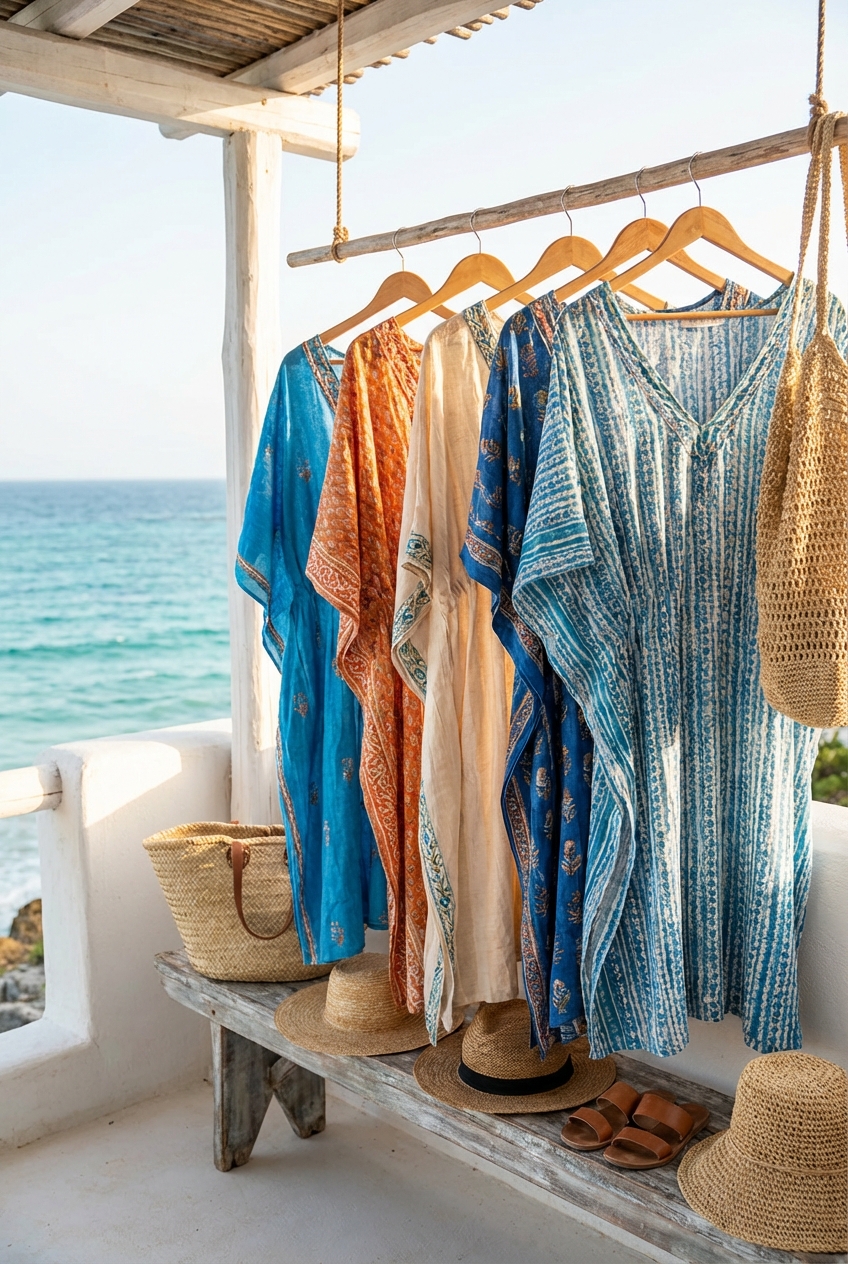
Breezy Kaftans For Summer Resort Wear Effortless Elegance In The Heat
There is a distinct challenge that arises when packing for a luxury resort or a tropical getaway. You want to look polished and sophisticated, but the humidity and heat often make structured clothing feel unbearable. I have styled countless clients for vacations in St. Tropez, Tulum, and Bali, and the dilemma is always the same: how do you maintain a high-fashion aesthetic without melting?
The answer almost always lies in the proper selection of a kaftan. This garment is not just a swimsuit cover-up; when chosen correctly, it is a piece of architectural fashion that manages airflow while offering serious elegance. It bridges the gap between comfort and occasion wear unlike any other silhouette in a summer wardrobe.
In this guide, I am going to break down exactly how to select, style, and care for high-end kaftans. You can see exactly how I style these looks for different occasions in the Picture Gallery at the end of the blog post.
The Fabric Hierarchy: Breathability vs. Structure
The primary failure point for most resort wear is fabric selection. In a high-heat environment, the material must do two things: wick moisture away from the body and allow air to circulate. If the fabric traps heat, the most beautiful silhouette in the world will look disheveled within minutes.
When I shop for clients, I categorize kaftan fabrics into three tiers. Tier one is natural fibers like lightweight linen and cotton voile. These are your workhorses for daytime. They have a “dry” hand feel and become softer with wear, though they are prone to wrinkling.
Tier two involves silk blends, specifically silk chiffon or silk crepe de chine. These offer a luxurious drape and a cooling sensation against the skin. They are perfect for evening events where you want movement and sheen without the heaviness of embroidery or beading.
Designer’s Note: Avoid 100% synthetic polyesters at all costs for day wear. While they drape beautifully on a hanger, they act like plastic wrap in the sun. If you must choose a synthetic blend for durability, ensure it is a high-quality viscose or rayon, which are semi-synthetic and offer better breathability than pure polyester.
Assessing Fabric Weight
- The Light Test: Hold the fabric up to a window. For high heat, you should see light passing through the weave easily.
- The Scrunch Test: Squeeze a handful of the fabric. If it springs back immediately, it likely has a synthetic blend. If it holds the crease, it is natural.
- The Drape Factor: Heavier linens will create a boxy, architectural shape. Light silks will cling to the body’s contours. Choose based on how much structure you want.
Silhouette Architecture: Managing Volume
A common misconception is that a kaftan is simply a “bag” or a shapeless tent. In high-end fashion, the cut of a kaftan is extremely precise. The goal is to create the illusion of ease while actually curating the body’s proportions.
When selecting a silhouette, you must consider the “volume ratio.” If a kaftan is voluminous in the body, the sleeves should be tapered or shorter to show the arm. If the sleeves are wide, kimono-style, the body should have a deeper neckline or a belt option to define the waist.
We also look at the placement of the seams. A “waterfall” cut, where the fabric cascades from the shoulders without a defined armscye, offers the most drama but the least definition. A “constructed” kaftan will have set-in sleeves and side seams that nip in slightly at the ribs.
Common Mistakes + Fixes
- Mistake: Wearing a floor-length kaftan that is voluminous everywhere.
- Fix: Choose a style with high side slits. Showing leg breaks up the block of fabric and adds movement, preventing the “wearing a bedsheet” look.
- Mistake: Losing the neck.
- Fix: Opt for deep V-necks or scoop necks. High necklines on voluminous garments can make the wearer look shorter and wider.
Mastering the Length: Hemlines and Heels
The length of your kaftan dictates its formality and its functionality. In my styling practice, we follow very specific measurement rules depending on the intended shoe. A millimeter difference can change a look from “couture” to “clumsy.”
For daytime resort wear, I recommend ankle-grazing lengths. This is typically about 1.5 to 2 inches off the ground when barefoot. This length ensures your hem stays clean when walking near pool decks or sandy paths, but still provides that elongated vertical line.
For evening wear, we aim for a “floating” hem. This should sit exactly 0.5 inches off the floor while wearing your intended heel. It creates a seamless column of color that extends the visual height of the wearer.
What I’d do in a real project: I always have my clients bring their resort wedges to the fitting. We pin the kaftan specifically for a 3-inch wedge. If they plan to switch to flats later in the night, I advise using fashion tape to temporarily hem the front by an inch to prevent tripping.
Transitioning Day to Night: The Accessory Shift
The true value of a luxury kaftan is its versatility. You should be able to wear the same high-quality silk or linen piece to breakfast and to a candlelight dinner, provided you understand the art of the accessory shift.
For the daytime, the goal is natural textures. Think raffia, straw, untreated leather, and wood. A wide-brimmed straw hat and flat leather slides ground the look and make it feel approachable.
For the evening, we swap natural textures for metallics and architectural elements. The straw hat is removed, and we slick the hair back to expose the neckline. The leather slides are replaced with metallic strappy sandals or embellished mules.
The Belt Debate
- Daytime: Wear it loose. Let the air circulate. The silhouette should be free-flowing.
- Evening: Cinch it. Use a rope belt with metal toggle ends or a wide leather sash. This creates a waist and instantly formalizes the garment.
- Placement: Place the belt slightly higher than your natural waist to elongate the legs.
Prints vs. Solids: Visual Scale Rules
Resort wear is one of the few categories where bold, large-scale prints are not only acceptable but encouraged. However, the scale of the print must coordinate with your stature and the setting.
Large-scale botanicals and geometric prints read as very confident and modern. They work exceptionally well in vast landscapes like beach resorts because they hold their own against the background.
Solid colors offer a different kind of power. A monochromatic block of color—cobalt blue, emerald green, or crisp white—reads as incredibly expensive and sophisticated. Solids allow you to play more aggressively with statement jewelry.
Designer’s Note: Be wary of horizontal stripes on full-length kaftans. They can widen the frame significantly. If you love stripes, look for vertical orientations or chevrons, which guide the eye inward and upward.
Undergarments and Foundation Layers
What you wear underneath a kaftan is just as important as the garment itself. Because these fabrics are often lightweight and move with the wind, the wrong undergarments can ruin the line of the dress or create visible distractions.
For daytime, swimwear is the standard base layer. However, ensure the swimwear hardware doesn’t snag delicate silks. I often advise clients to wear smooth, hardware-free swimsuits under chiffon kaftans.
For evening, a nude slip is non-negotiable for sheerer fabrics. It should be a bias-cut slip that hugs the body so it doesn’t add bulk. The color should match your skin tone exactly, not the dress, to remain invisible.
Structuring the Bust
- Deep V-Necks: Use a plunge bra or adhesive cups. Never let a standard bra bridge show.
- Backless Styles: Low-back bodysuits or silicone nipple covers are essential.
- Fabric Friction: If the kaftan is unlined linen, it can stick to cotton underwear. Wear smooth microfiber or silk underneath to allow the kaftan to glide.
Packing and Travel Care for Fine Fabrics
A major hesitation clients have with investing in high-end resort wear is the fear of ruining it in a suitcase. Kaftans, particularly those made of natural fibers, are prone to wrinkling.
The “rolling method” is standard, but for embellished kaftans or fine silks, I prefer the “interfold” method using tissue paper. Lay the kaftan flat, place a sheet of tissue paper on top, and fold it. The tissue reduces friction and hard creases.
Upon arrival, hang your kaftans immediately. The humidity of a tropical destination is actually your friend here; simply hanging the garment in the bathroom while you shower will release most minor wrinkles in linen and silk.
What I’d do in a real project: I always pack a handheld travel steamer for my clients. It is the single most important tool for looking expensive. A wrinkled $800 dress looks cheaper than a pressed $50 dress. Steaming takes three minutes and changes everything.
Finish & Styling Checklist
Before you head out the door, run through this mental checklist to ensure the look is polished and purposeful.
- Check the transparency: Stand in a backlit doorway to see if your silhouette is too visible. Add a slip if necessary.
- Analyze the hem: Walk a few steps. If you are stepping on the front, you need higher heels or a quick pin.
- Balance the jewelry: If the kaftan has an embellished neckline, skip the necklace and go for statement earrings.
- Grooming check: Kaftans draw attention to the feet and hands. Ensure your pedicure is fresh and heels are moisturized.
- Volume control: If you feel overwhelmed by fabric, push the sleeves up to the elbows to expose the forearms. It instantly slims the look.
FAQs
Can petite women wear floor-length kaftans?
Absolutely. The key is a vertical print or a solid column of color. Ensure the neckline is open (V-neck is best) and the hem is tailored perfectly to your highest heel. Avoid overwhelming oversized prints.
How do I wash a silk kaftan while on vacation?
If you stain it, spot treat with cool water and a tiny drop of shampoo. Do not wring it out. Roll it in a dry towel to absorb water, then hang it in the shade. Never use hot water or harsh hotel soap bars.
Is a kaftan appropriate for a formal resort dinner?
Yes, provided the fabric is luxe (silk, crepe, or high-quality rayon) and you style it correctly. Add a belt, clutch, heels, and statement jewelry. Avoid cotton or jersey fabrics for formal dining.
What shoes work best with midi-length kaftans?
Midi lengths can cut the leg line visually. To counteract this, wear nude sandals or wedges that match your skin tone. This extends the leg line. Avoid ankle straps that cut the leg horizontally.
Conclusion
Embracing the kaftan for your summer resort wear is about choosing freedom without sacrificing style. It allows you to navigate the heat with grace, offering a silhouette that is timeless, forgiving, and deeply sophisticated.
By focusing on natural fabrics like linen and silk, understanding the architecture of the cut, and mastering the day-to-night accessory swap, you can build a travel wardrobe that feels effortless. The kaftan is not just a garment; it is a mood, a lifestyle, and a testament to the fact that true elegance should never be uncomfortable.
Picture Gallery


