
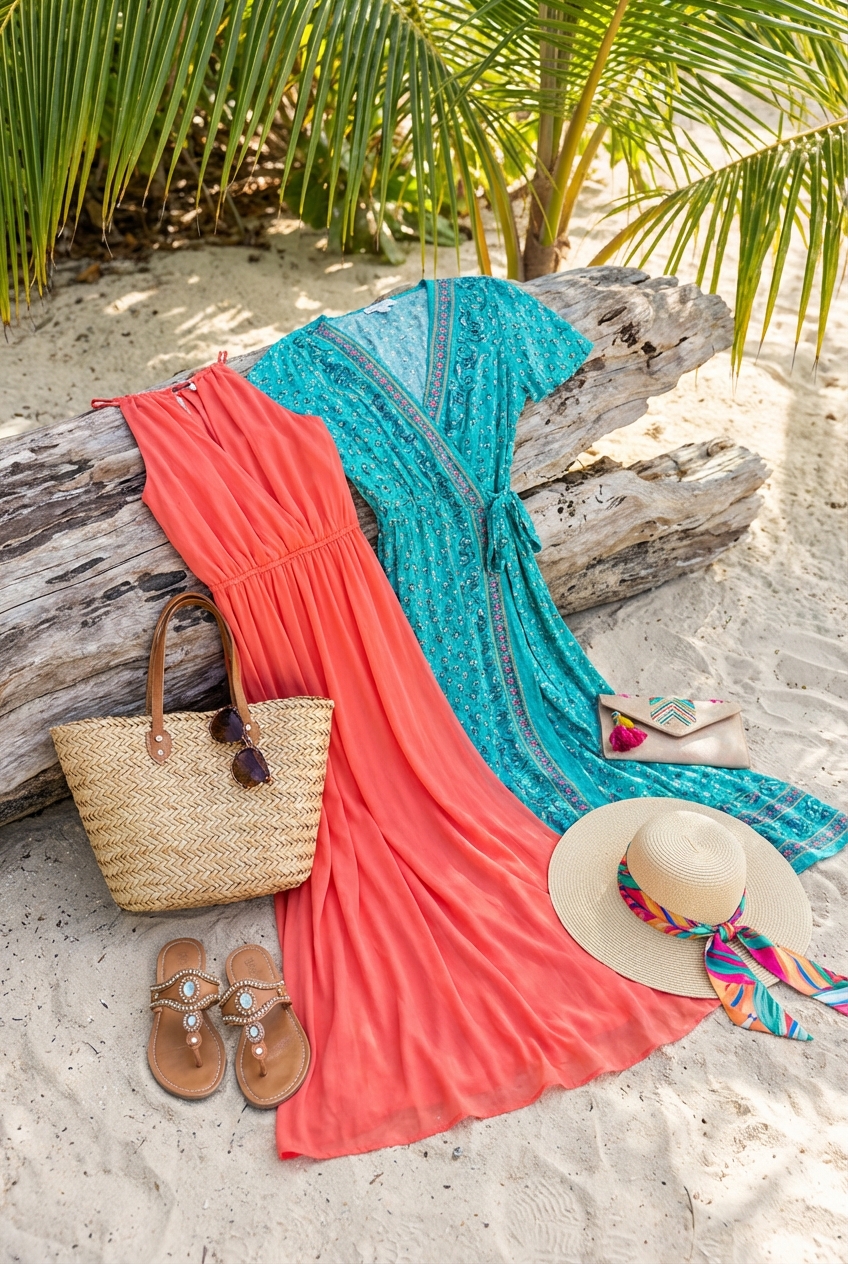
Bright Maxi Dresses For Beach Destination Weddings
Introduction
There is nothing quite as romantic as a wedding set against the backdrop of a crashing ocean and a setting sun. However, as a stylist, I know that destination weddings present a unique set of sartorial challenges. You are battling humidity, wind, sand, and often intense direct sunlight, all while trying to adhere to a formal or semi-formal dress code. I once had a client insist on a heavy, beaded silk gown for a Tulum ceremony; she looked stunning for exactly five minutes before the heat and weight made her miserable.
The bright maxi dress is the ultimate solution to this fashion equation. It offers the drama and elegance required for a wedding while providing the airflow and comfort necessary for a tropical climate. Vibrant colors play beautifully against the natural beige of the sand and the azure of the sea, ensuring you look intentional and festive rather than washed out. The length elongates the figure, while the right fabric choice can keep you cool even when the humidity hits 90 percent.
In this guide, I will walk you through exactly how to select, style, and tailor a bright maxi dress for a beach wedding. We will cover the physics of fabrics, the importance of hemline measurements on sand, and the specific undergarments you need to survive the heat. For a dose of instant visual inspiration, don’t miss our curated Picture Gallery at the end of the blog post.
Choosing the Right Fabric for Heat and Humidity
The most critical decision you will make regarding your dress is the material. In a high-end fashion context, we prioritize “hand” and “breathability” over almost everything else for tropical destinations. If the fabric does not breathe, the most beautiful dress in the world will feel like a plastic bag within twenty minutes.
Natural fibers are your best friends in this environment. Look for high-quality cotton voiles, silk chiffons, or linen blends. Pure silk is luxurious, but be wary of water spots if you sweat; a silk-cotton blend often manages moisture better. Avoid heavy synthetics like cheap polyester or thick satin, which trap heat against the body and create a greenhouse effect.
You also need to consider the weight of the fabric relative to the wind. A fabric that is too light (like a single layer of tulle) will blow around uncontrollably. A fabric that is too heavy will sink into the sand and drag. The sweet spot is a material with a fluid drape that has just enough weight to hang straight but moves beautifully when you walk.
Stylist’s Note: The Wrinkle Test
Before you buy, perform the “scrunch test.” Tightly squeeze a handful of the skirt fabric for ten seconds. If it holds deep creases immediately, imagine what it will look like after five hours in a suitcase. For destination weddings, you want fabrics that naturally release wrinkles or can be easily steamed in a hotel bathroom.
Color Theory: Why Brights Work Best on the Beach
Beach lighting is vastly different from the controlled lighting of an indoor ballroom. The sun is harsh, direct, and often directly overhead. This type of light tends to wash out pale pastels, making them look white or gray in photos. Conversely, dark colors like navy or black attract heat and can feel visually heavy against a breezy, tropical backdrop.
Bright, saturated hues are the answer. Think jewel tones like emerald green, sapphire blue, or amethyst, which look incredibly expensive and sophisticated next to the ocean. Alternatively, citrus tones like limoncelllo, tangerine, and coral reflect the joy of the setting and pop beautifully in photography.
When choosing a solid bright color, consider your skin’s undertone in natural light. If you have cool undertones, lean toward fuchsia or cobalt. If you have warm undertones, a fiery orange or a rich marigold will make your skin look radiant rather than flushed.
Common Mistakes + Fixes
- Mistake: Wearing a color that mimics the bridal party. Destination weddings often have specific palettes (usually blush, sage, or dusty blue).
- Fix: Check the invitation design. If the invite is seafoam green, avoid wearing a seafoam maxi. Bright, bold prints are often a safer bet than solids if you are worried about matching the bridesmaids.
The Logistics of Length: Tailoring Your Maxi
The term “maxi” implies floor-length, but for a beach wedding, “floor-length” is a dangerous game. If your dress touches the ground, it will collect sand, salt water, and potentially tar from the beach. By the end of the night, the bottom three inches of your expensive dress will be heavy, wet, and ruined.
I recommend a “grazing” length for beach formal wear. This is slightly shorter than a traditional ballroom break. You want the hem to hover roughly 0.5 to 1 inch above the ground while you are wearing your shoes. This creates the visual illusion of a full-length gown without the custodial hazards.
If you are buying off the rack, you will almost certainly need a tailor. Bring the exact shoes you plan to wear to the fitting. If you plan to take your shoes off for the ceremony (a common practice on sand), mention this to your tailor. They might suggest a length that works for both low wedges and bare feet, ensuring you don’t trip over the front of your dress when barefoot.
Silhouette Selection: Wind-Proofing Your Look
Coastal winds are relentless. I have seen many guests spend the entire ceremony holding their dress down because they chose a wrap style that wasn’t secured. A true wrap dress is risky unless it has internal ties or you use a safety pin to secure the flap.
What I’d do in a real project:
- Opt for a High Neck or Halter: These styles offer security against the wind and eliminate the need to constantly adjust straps.
- Choose a Slit Carefully: A side slit is sexy and allows for airflow, but ensure it isn’t so high that a gust of wind reveals your undergarments. A centered slit or an overlapping slit offers more coverage.
- Consider Cut-Outs: Tasteful cut-outs at the waist or back provide ventilation without compromising structural integrity.
Volume is another factor. A dress with too much volume (like a tiered tent dress) can balloon up in the wind, making you look larger than you are and becoming difficult to manage. A bias-cut silhouette or a column dress with a flared hem usually performs better aerodynamically.
Undergarments and Foundation for High Heat
What you wear under your bright maxi dress is just as important as the dress itself. High heat and humidity mean sweat is inevitable. Heavy shapewear is a recipe for overheating and discomfort. You want to feel breezy, not constricted.
Look for moisture-wicking fabrics in your undergarments. Many athletic brands now make seamless underwear that handles sweat better than traditional lingerie brands. If your dress is sheer or unlined (common with lightweight beach fabrics), ensure you have a slip that matches your skin tone exactly, not the dress color.
For bust support, adhesive bras are often popular for backless styles, but be warned: humidity defeats adhesive. Once you start sweating, silicone cups often slide off.
Designer’s Note: The Structural Fix
If you have a larger bust, avoid relying on sticky bras in the tropics. Instead, have a seamstress sew high-quality cups directly into the lining of your dress. This provides security without the need for a separate bra layer that traps heat.
Accessories: Elevating the Look for “Beach Formal”
The accessories you choose bridge the gap between “vacation resort wear” and “wedding guest attire.” Since the dress is bright and likely covers most of your body, your accessories serve as the punctuation marks.
Avoid cheap metal jewelry. The salt air can tarnish low-quality metals quickly, sometimes turning your skin green by the end of the night. Opt for gold vermeil, solid gold, or natural materials like baroque pearls or mother-of-pearl, which fit the aquatic theme perfectly.
Footwear is the final hurdle. Stilettos are physically impossible on sand; you will sink. Even with aisle runners, you will likely have to navigate soft sand at some point.
Approved Footwear List:
- Metallic Block Heels: Gold or silver leather reflects the sun and looks formal.
- Espadrille Wedges: Choose a refined, sleek pair rather than a chunky, casual rope style.
- Jeweled Flat Sandals: If the bride okays flats, look for sandals with rhinestones or pearls to maintain formality.
Finish & Styling Checklist
Before you zip up your suitcase, run through this final checklist to ensure your look is weather-proof and wedding-ready.
- Hem Check: Put the dress on with your shoes. Is there at least 0.5 inches of clearance from the floor?
- Transparency Test: Stand in front of a window with bright sunlight hitting your back. Can you see your silhouette through the skirt? If yes, pack a lightweight slip.
- Wind Test: Walk briskly in front of a fan. Does the skirt fly open? If so, add a small stitch or fashion tape to the slit.
- Fabric Prep: Pack a handheld steamer. Even “wrinkle-resistant” fabrics get crushed in luggage.
- Sweat Management: Dust a non-talc body powder on your inner thighs and under your bust before dressing to prevent chafing and moisture buildup.
- Emergency Kit: Throw a few safety pins and a small roll of double-sided fashion tape into your clutch.
FAQs
Can I wear black to a beach wedding?
Technically, yes, especially for evening receptions. However, black absorbs heat rapidly in direct sun. If the ceremony is at 2:00 PM on the sand, you will be much hotter than guests in lighter colors. If you love dark colors, try deep navy or eggplant instead.
What if the dress code is “Beach Formal”?
“Beach Formal” is an oxymoron that confuses everyone. It generally means: dress like you would for a nice restaurant, but wear shoes compatible with sand. A bright maxi dress in a luxe fabric (like silk or chiffon) fits this perfectly. Avoid cotton jersey (t-shirt material), which is too casual.
How do I handle sweat marks on a bright dress?
Bright solids show sweat more than prints. If you know you perspire heavily, opt for a busy print or a patterned textile. Alternatively, use underarm shields (garment guards) inside the dress to absorb moisture before it hits the outer fabric.
Is a long sleeve maxi dress too hot?
Not necessarily. A billowy, sheer chiffon sleeve can actually keep you cooler by keeping the direct sun off your skin. Just ensure the armhole is not tight, allowing air to circulate.
Conclusion
Dressing for a beach destination wedding is about balancing the fantasy of the location with the reality of the elements. A bright maxi dress is the hero piece that manages to do both. It captures the joy and vibrancy of the occasion while offering the practical coverage and comfort you need to dance comfortably under the stars.
By paying attention to the fabric composition, tailoring the hem to hover just above the sand, and choosing a silhouette that works with the wind rather than against it, you will not only look like a high-fashion insider but you will also be the most comfortable guest at the party. Embrace the bold colors, trust the flowy fabrics, and enjoy the celebration.
Picture Gallery


