
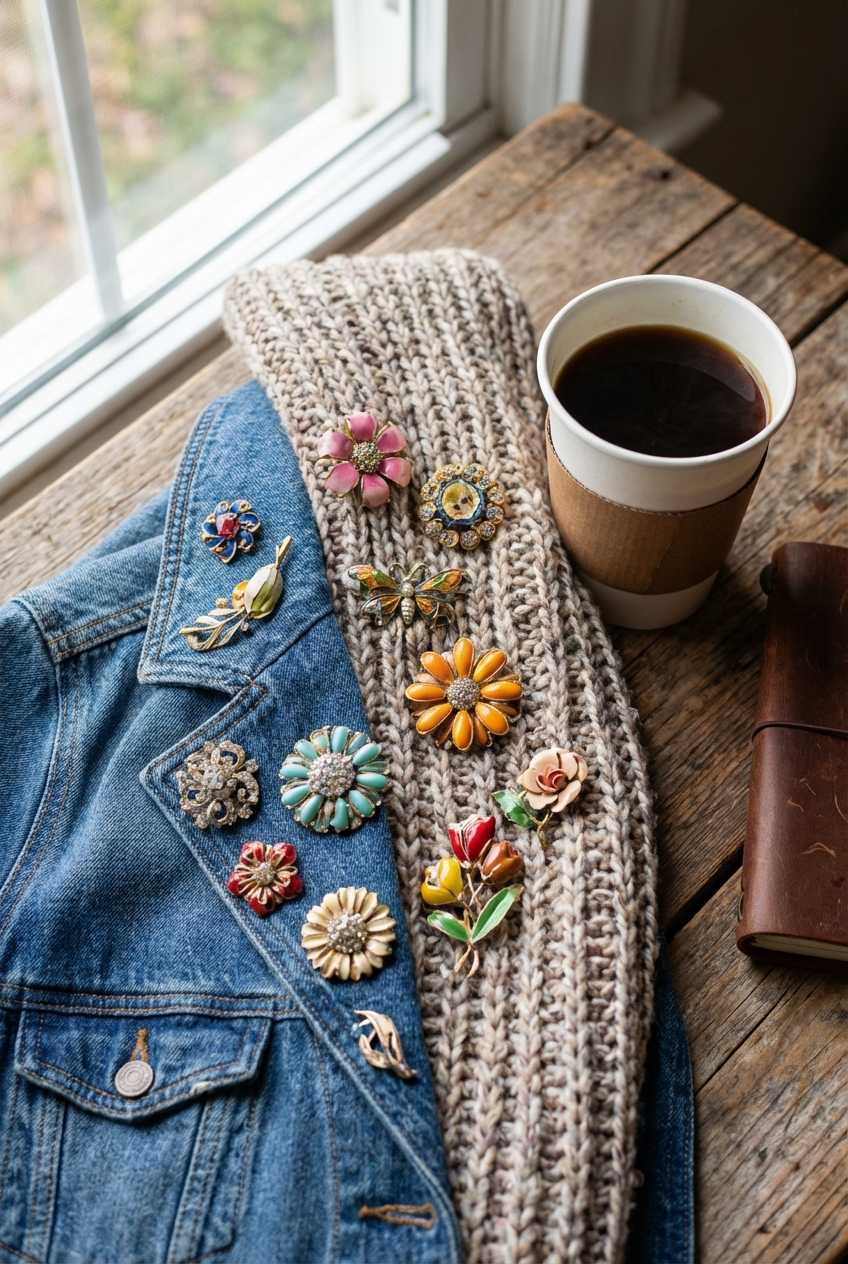
Brooches And Pins Vintage Accessories In Modern Fashion
Introduction
For years, the brooch suffered from a bit of an image problem. It was often categorized strictly as something meant for grandmothers or royalty, relegated to the very top of a jewelry box and rarely touched. But in the high-fashion world, we know that accessories are cyclical. Recently, vintage brooches have made a massive resurgence on runways and street style blogs, proving they are arguably the most versatile piece of jewelry you can own.
I vividly remember a styling session with a client who was terrified of looking “dated.” She had inherited a stunning 1950s rhinestone starburst pin but refused to wear it. I grabbed her oversized denim jacket, pinned the starburst to the collar instead of the lapel, and suddenly, the piece looked edgy and architectural rather than stuffy. It completely transformed her perception of the accessory.
Embracing vintage pins isn’t about looking like you stepped out of a period drama; it is about using history to punctuate a modern silhouette. Whether it is Bakelite from the 1930s or bold gold-tone statement pieces from the 1980s, these items add texture and personality that mass-produced jewelry simply cannot match. If you are looking for specific visual examples of these placement techniques, make sure to check out the Picture Gallery at the end of this post.
1. Identifying Quality and Era in Vintage Pieces
Before you begin styling, it is helpful to understand what you are holding. In the world of vintage costume jewelry, weight and construction are your best indicators of quality. When I am sourcing for clients, I always look at the back of the pin first.
A high-quality vintage brooch will usually have a substantial weight to it. If it feels like hollow plastic or feather-light tin, it likely won’t drape well on a jacket. Look for “signed” pieces—marks from designers like Trifari, Coro, or Haskell increase value, but anonymous pieces with heavy plating are just as stylish.
You should also examine the clasp mechanism. A “C-clasp” (a simple hook shape with no locking mechanism) often indicates a piece from the Victorian era to the early 1900s. A “safety catch” (where a rolling cylinder locks the pin) generally signals post-1920s production.
Stylist’s Note: The “Prong” Check
When buying vintage rhinestone or glass brooches, look closely at how the stones are set. High-end pieces use metal prongs to hold stones in place. Lower-end pieces use glue. Over decades, glue dries out and discolors, leading to lost stones. Always choose prong-set vintage jewelry for longevity.
2. The Geometry of Placement
The difference between a look that feels “dowdy” and one that feels “designer” is almost entirely about placement. The traditional spot—high on the left shoulder—is classic, but it is not the only option.
The Lapel Rule of Thumb
If you are placing a brooch on a blazer lapel, proper scale is vital. The brooch should sit roughly two to three inches below the collarbone. If it is too high, it disappears into your neck line. If it is too low, it drags the eye down and ruins the structure of the jacket.
The Center Line
For a modern, authoritative look, place a large, geometric brooch at the very top button of a collared shirt. This acts like a substitute for a necktie or a statement necklace. It works best with button-ups that have a crisp, stiff collar.
The Waist Cinch
One of my favorite tricks for evening wear is using a large brooch at the waistline of a wrap dress or the side of a skirt. It highlights the narrowest part of your torso and adds sparkle where people don’t expect it.
3. Mechanics: Preventing the “Droop”
Nothing ruins a look faster than a heavy brooch causing your fabric to sag forward. This is a mechanical failure, not a styling failure. The fabric must be able to support the weight of the metal.
Stabilize with Felt or Foam
If you are pinning a heavy 1980s gold-tone brooch onto a thinner blouse or a cashmere sweater, you need a stabilizer. Cut a small square of stiff felt or even a dense makeup sponge. Place this piece of material inside the garment.
Pin through the front of the garment, through the stabilizer hidden inside, and then clasp the pin. This sandwiches the fabric and distributes the weight across a larger surface area, keeping the brooch upright and flush against your body.
Designer’s Note: Common Mistakes + Fixes
- Mistake: Poking holes in silk or satin.
- Fix: Never use a traditional pin mechanism on delicate fabrics like silk, satin, or fine leather. The hole will be permanent. Instead, use a magnetic brooch converter. These are small magnets that allow you to attach the brooch without piercing the fabric.
4. Mastering the Cluster Technique
One brooch is a statement; three brooches are a collection. Styling brooches in clusters is a very high-end fashion move often seen on runway coats and heavy knits.
The Rule of Odd Numbers
Just like in interior design or landscaping, odd numbers are more visually pleasing to the human eye. Group your pins in sets of three or five.
Mixing Metals and Textures
Do not be afraid to mix eras. You can pair a cameo from the 1900s with a sharp Art Deco geometric pin and a 1960s enamel flower. The key is to keep them relatively close together—think of it as building a single, large art installation on your shoulder.
Grouping Distance
When clustering, keep the pins within a tight radius—usually no more than 4 inches across. If they are spread too far apart, they look like random spots rather than a cohesive design choice.
5. Fabric Compatibility and Weight Ratios
A fundamental rule of styling accessories is respecting the physics of your garment. You cannot force a heavy object onto a light foundation.
Heavy Brooches (Cast Metal, Large Crystal)
These belong on outerwear. Think wool coats, denim jackets, heavy tweed blazers, and thick chunky knit scarves. The fabric needs to be thick enough that the pin stem doesn’t slide around.
Light Brooches (Filigree, Small Plastics, Fine Gold)
These are safe for cardigans, cotton shirts, and lighter synthetic blends. A filigree pin is mostly air, meaning it offers a lot of visual impact without the weight penalty.
What I’d Do in a Real Project: The Sweater Test
Before I finalize a look for a client, I do the “shake test.” After pinning the brooch to a sweater, I have the client twist gently side to side. If the brooch flops over or reveals the metal pin bar underneath, the fabric is too light for that specific accessory. We either switch to a heavier garment or move the brooch to a structural area, like a waistband or collar seam.
6. Styling for Different Occasions
Brooches are surprisingly adaptable to the dress code. The goal is to match the vibe of the event without overpowering your outfit.
The Office
For professional settings, discretion is key. A single, architectural silver or gold pin on a blazer lapel commands respect without being distracting. Avoid high-sparkle rhinestones before 6:00 PM. Stick to metals, matte enamels, or semi-precious stones like jade or turquoise.
Weekend Casual
This is the place to have fun with kitschy vintage pieces. Bakelite cherries, celluloid animals, or 1960s pop-art pins look incredible pinned to a denim jacket or a canvas tote bag.
Evening Gala
This is where you bring out the “parure” (matching sets) or large crystal pieces. Don’t limit yourself to the dress. Pin a large sparkly brooch to a satin clutch bag to give an old accessory new life. You can also pin a brooch into an updo hairstyle—just secure it to a hair comb first or use bobby pins over the pin stem.
7. Caring for Vintage Materials
Vintage jewelry requires different care than modern gold or diamonds. These pieces have survived decades, but they are fragile.
Avoid Water
Never submerge vintage costume jewelry in water or ultrasonic cleaners. Many vintage stones are “foil-backed,” meaning the sparkle comes from a thin sheet of foil behind the glass. Water will seep behind the stone, ruin the foil, and turn the stone black or “dead.”
Verdigris Watch
Watch out for green gunk on gold-tone metal. This is verdigris, a form of corrosion that eats away at the metal and can spread to other jewelry. If you see it, isolate the piece immediately. It can sometimes be removed with a toothpick and vinegar, but proceed with caution.
Storage Rules
Store your brooches individually. If you toss them all in a bag, the harder stones (like glass) will scratch the softer materials (like faux pearls or enamel). Soft pouches or lined drawers are essential.
Finish & Styling Checklist
Before you head out the door, run through this quick mental checklist to ensure your accessory game is on point.
- Stability Check: Is the brooch drooping forward? If so, add a felt backing inside the garment.
- Placement Height: Is the brooch too high (touching the shoulder seam) or too low (dragging the lapel)? Aim for 2-3 inches below the collarbone.
- Fabric Safety: Are you pinning through silk or leather? Stop! Use a magnet converter instead.
- Proportion: Does the size of the brooch make sense with the width of the lapel? Large lapels need large pins; thin lapels need dainty pins.
- Security: Is the clasp fully locked? If the safety catch is loose, add a tiny rubber earring back stopper to the pin stem before clasping it for extra security.
FAQs
Can men wear vintage brooches?
Absolutely. In menswear, they are often referred to as lapel pins, but the boundary is blurring. A large floral or geometric brooch looks fantastic on a men’s tuxedo lapel or even on a heavy wool overcoat.
How do I fix a bent pin stem?
Vintage pin stems are often made of softer base metals. If it bends, use flat-nose pliers to very gently guide it back to straight. Do not wiggle it back and forth rapidly, as this will fatigue the metal and cause it to snap.
What is the difference between a brooch and a pin?
In modern fashion terms, the words are used interchangeably. Historically, a “pin” was a general term for fastened jewelry, while a “brooch” specifically referred to a larger, decorative piece with a rotating clasp mechanism.
Are unsigned vintage brooches worth buying?
Yes. While signed pieces (Dior, Chanel, Trifari) hold monetary value, many high-quality “unsigned beauties” were made by the same manufacturers using the same materials. Buy what you love and what feels heavy and well-made.
Conclusion
Vintage brooches and pins are the ultimate tools for personal expression. They allow you to take a mass-produced blazer, coat, or dress and customize it into something that feels uniquely yours. By understanding the mechanics of placement, respecting your fabrics, and mixing eras with confidence, you can elevate your style significantly.
Don’t let these treasures sit in the dark. Bring them out, mix them up, and wear them with the confidence of a modern fashion expert. The next time you see a tray of “old pins” at a flea market, take a second look. You might just find the hero piece of your wardrobe.
Picture Gallery


