
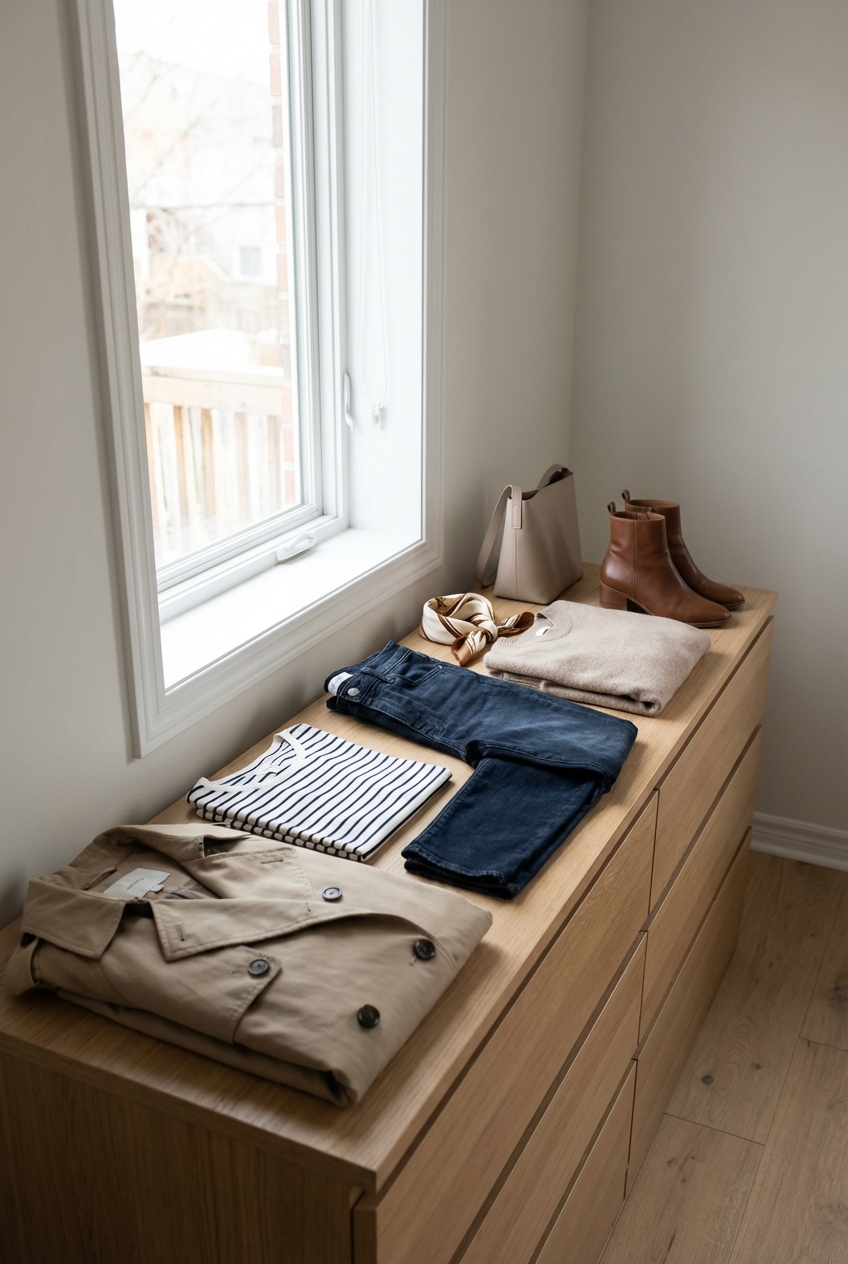
Building A Capsule Wardrobe With Only 10 Pieces
I have spent years standing in massive walk-in closets that are bursting at the seams, only to hear my client say the exact same phrase: “I have absolutely nothing to wear.” This paralysis isn’t caused by a lack of options. It is caused by a lack of cohesion. When you own 300 items but none of them speak the same language, getting dressed becomes a chore rather than a joy.
The solution is not more clothes. It is better architecture. Creating a 10-piece capsule wardrobe is the ultimate exercise in editorial editing. It forces you to focus on silhouette, fabric quality, and color theory. When I build these capsules for high-end clients, we focus on high-rotation staples that can mix to create over 20 unique looks. It is about maximizing your “cost per wear” and minimizing decision fatigue.
In this guide, I will walk you through exactly how to select these ten items to ensure they work for your lifestyle, body type, and aesthetic. We will cover the specific fabrics to look for, the tailoring rules you cannot break, and how to maintain a small rotation. If you are looking for visual inspiration on how these pieces come together, make sure to look at the Picture Gallery at the end of the blog post.
The Strategy: The 4-3-2-1 Formula
You cannot simply grab ten random items and hope for the best. A capsule wardrobe requires a mathematical approach to balance. If you have too many bottoms and not enough tops, you run out of outfits quickly. If you lack layers, the wardrobe lacks depth and texture.
I use a specific ratio when building these micro-wardrobes for travel or minimalist living:
- 4 Tops (Varied necklines and weights)
- 3 Bottoms (Varied silhouettes)
- 2 Layers (Structure and warmth)
- 1 Dress or Jumpsuit (The “one-and-done” piece)
Note: Shoes and accessories are usually counted separately in a true capsule, but if we are being strict with a “10-item pack,” you would swap the dress and one top for two pairs of shoes. For this guide, we will focus on the 10 clothing articles that act as the foundation.
Category 1: The Tops
The tops are the workhorses of your closet. They are nearest to your face, meaning they dictate how your complexion looks and how polished you appear. In a restricted wardrobe, you cannot afford a top that requires a specific bra or constant adjusting.
1. The Architectural White Button-Down
This is non-negotiable. However, do not buy a stiff, cheap cotton shirt. Look for “poplin” with a bit of stretch or a high-quality silk crepe de chine.
- Fit Check: The shoulder seam must hit exactly at the corner of your shoulder bone. If it droops, you look sloppy. If it pulls, you look restricted.
- Versatility: It can be worn fully buttoned for work, unbuttoned over a tank, or tied at the waist with a skirt.
2. The Cashmere or Merino Wool Crewneck
Texture is vital when you have fewer items. A fine-gauge knit adds softness. Neutral tones like camel, charcoal, or navy work best here because they hide minor wear better than black or white.
3. The Silk or Satin Camisole
This is your transition piece. Under a blazer, it is office-appropriate. Alone, it is ready for dinner. Look for a bias cut, which means the fabric is cut at a 45-degree angle. This allows the fabric to drape over curves rather than clinging to them.
4. The Striped Breton or High-Quality Tee
A pattern breaks up the monotony of solids. A classic Breton stripe (navy and white) is visually interesting but acts like a neutral. If you prefer solids, opt for a high-gsm (grams per square meter) cotton tee. It should be opaque, not sheer.
Category 2: The Bottoms
Fit is everything with bottoms. In interior design, we talk about “scale” regarding furniture in a room. In fashion, we talk about “proportion.” If your top is loose, your bottom should be tailored, and vice versa.
5. The Tailored Trouser
Move away from stiff work slacks. Look for a high-waisted, wide-leg trouser in a lightweight wool or heavy crepe.
- Hemming Rule: If you wear heels, the hem should sit 1/4 to 1/2 inch off the floor. If you wear flats, the hem should graze the top of your foot. Do not try to split the difference; commit to a shoe height.
6. The Dark Wash Denim
Straight-leg denim is currently the most timeless silhouette. It balances the hips and elongates the leg. Avoid distressing, whiskers, or holes. A clean, dark indigo wash looks like a trouser at night but feels casual during the day.
7. The Midi Skirt
A slip skirt or a pleated midi skirt offers movement. In a 10-piece wardrobe, pants can feel repetitive. A skirt changes the air flow and silhouette completely. A bias-cut slip skirt in champagne, black, or navy pairs with the knit sweater and the button-down equally well.
Category 3: The Layers
Layers are the “finish materials” of your outfit. They provide the structure. A simple t-shirt and jeans is boring; add a great blazer, and it is a “look.”
8. The Structured Blazer
This is your armor. For a capsule, I prefer a slightly oversized “boyfriend” cut rather than a cropped, tight fit. It allows you to layer the sweater underneath without bunching in the arms.
- Fabric Choice: Go for a wool blend. Synthetic linings (polyester) can make you sweat, so look for viscose or cupro linings which breathe better.
9. The Trench or Long Cardigan
If you live in a rainy climate, get a classic trench. If you are in a dry/cool climate, a long “coatigan” (coat-cardigan hybrid) adds vertical lines to your body, making you appear taller and leaner.
Category 4: The One-and-Done
10. The Black Dress (LBD) or Jumpsuit
This piece needs to be a chameleon. A wrap dress or a sheath dress in a matte jersey fabric travels well and doesn’t wrinkle. It should look appropriate with sneakers and a denim jacket, or with heels and statement earrings.
Designer’s Note: The “Color Story” Rule
What usually goes wrong:
People buy 10 items they love individually, but they don’t coordinate. You end up with a red skirt, a green top, and a purple blazer. You have 10 items, but only 3 outfits.
How to prevent it:
You must pick a color story. For a capsule, I recommend the 70/30 rule.
- 70% Neutrals: Black, White, Navy, Camel, Gray, Denim.
- 30% Accent: Choose ONE color family (e.g., Olive Green/Sage or Burgundy/Blush).
Every single top must match every single bottom. If the red blouse clashes with the green pants, one of them has to go. Lay them all out on a bed. If your eyes can move calmly across the collection without jarring interruptions, you have succeeded.
Common Mistakes + Fixes
Mistake: Ignoring Texture
If all your 10 pieces are flat cotton, your wardrobe will look cheap and one-dimensional.
Fix: Mix your finishes. Pair the matte wool trousers with the shiny silk camisole. Pair the rough denim with the soft cashmere. This contrast creates visual interest without needing bright colors.
Mistake: Buying for Your Fantasy Life
You buy three cocktail dresses and high heels for a 10-piece wardrobe, but you work from home and chase a toddler.
Fix: Be brutally honest about your week. If you spend 80% of your time in casual settings, 80% of your capsule should be elevated casual (quality denim, soft knits), not formal wear.
Mistake: Incorrect Tailoring
You buy off the rack and wear it immediately. Sleeves that are too long or waists that gap ruin the “expensive” look we are going for.
Fix: Budget an extra $100 for a tailor. Shortening sleeves to hit the wrist bone and taking in the waist of a blazer makes a $50 item look like a $500 item.
What I’d Do in a Real Project: A Mini Checklist
If I were hired to purge your closet and build this for you today, this is the exact workflow I would use. You can do this at home:
- Step 1: The Purge. Remove everything from the closet. Only put back items that fit you today. No “goal weight” clothes.
- Step 2: The Anchor Selection. Pick your favorite pair of pants and your favorite jacket. These define the vibe.
- Step 3: The Bridge Pieces. Select tops that connect the pants and jacket.
- Step 4: The Gap Analysis. What is missing? usually, it is a layering piece or a clean white top. Only shop for these specific missing links.
- Step 5: The Hanger Swap. Put all 10 items on matching velvet hangers. Visual clutter causes mental clutter. Uniform hangers elevate the experience of getting dressed.
Finish & Styling Checklist
Once you have your 10 pieces, the “styling” comes from how you manipulate them and the accessories you add (which don’t count toward the 10).
- The Tuck: Learn the “French Tuck” (front only) for bulky sweaters to define your waist.
- The Roll: Roll up the sleeves of your blazer and button-down to expose your wrists. It is a slimming trick that adds a relaxed vibe.
- The Belt: A cognac or black leather belt is essential for polishing a look.
- Jewelry: Stick to one metal tone (all gold or all silver) to keep things cohesive.
- Shoe Care: Keep white sneakers spotless. Use a Magic Eraser. Scuffed shoes ruin a minimalist look.
- Steaming: Own a handheld steamer. Wrinkled silk looks messy; pressed silk looks luxurious.
FAQs
How often do I need to do laundry with only 10 pieces?
You will do laundry more often, likely once or twice a week. However, loads will be tiny. To extend wear, hang wool items to air out between wears (they are naturally odor-resistant) and wear an undershirt beneath expensive knits.
Can I do this if I love bright colors and prints?
Yes, but the math changes. Make your bottoms neutral and solid. Make your tops the prints. It is much harder to mix a floral pant with a striped top than it is to mix a floral blouse with jeans.
What about seasonal changes?
This 10-piece wardrobe is a seasonal capsule. You should have a box for “Spring/Summer” and a box for “Fall/Winter.” The jeans and white shirt likely stay out all year, but the wool coat swaps for a trench, and the cashmere sweater swaps for a linen tank.
Won’t people notice I’m wearing the same things?
Honestly? No. People notice how you look, not the specific tag on your shirt. If you look put-together and fit, they will just think you have great style. Plus, by changing shoes, lipstick, and jewelry, the same black dress looks completely different on Tuesday than it did on Friday.
Conclusion
Building a capsule wardrobe with only 10 pieces is an act of curation. It requires you to stop impulse buying and start thinking like a designer. By focusing on the architecture of the clothes—the fit, the fabric, and the silhouette—you can create a closet that feels abundant despite being small.
When you strip away the excess, you are left with a collection that serves you. Getting dressed becomes a five-minute ritual rather than a thirty-minute struggle. You will find that you are better dressed with 10 right things than you ever were with 100 wrong things.
Picture Gallery


