
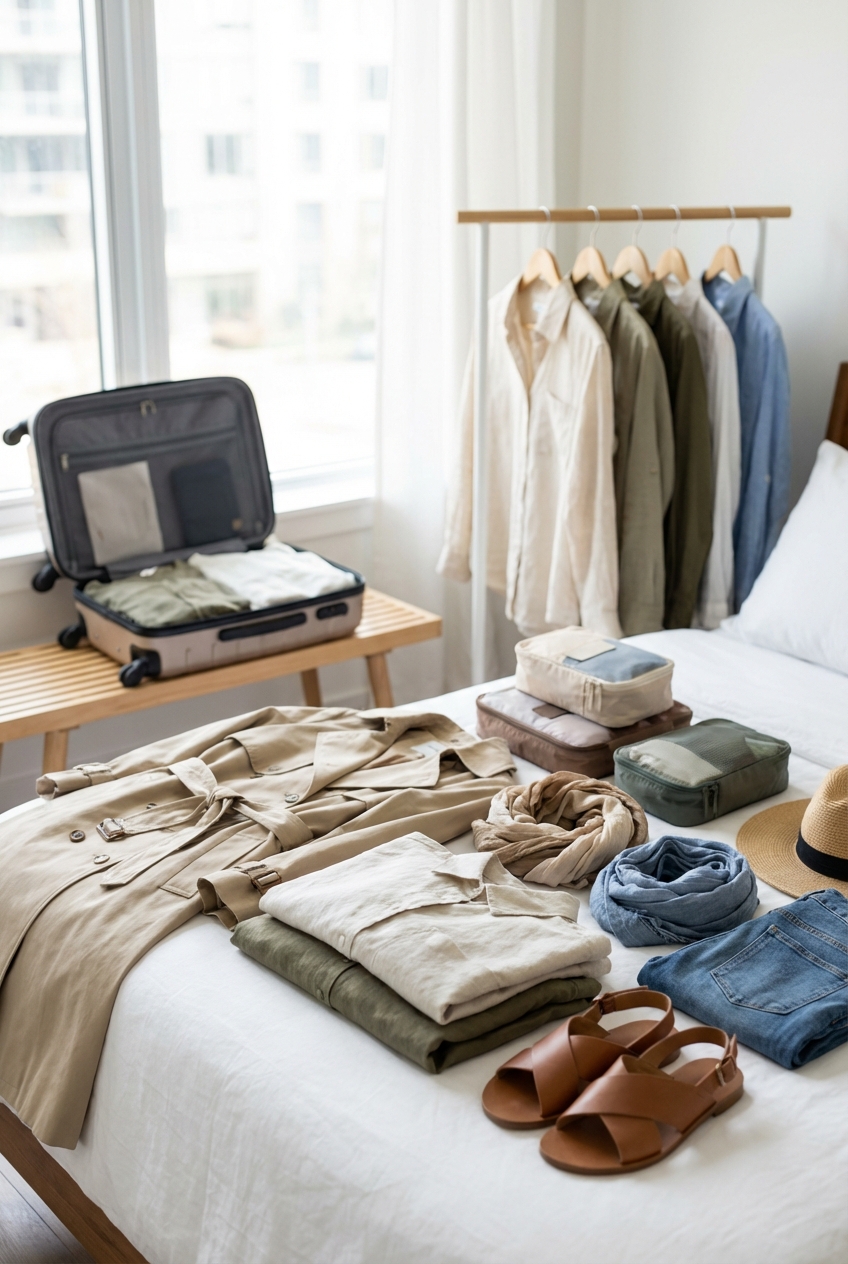
Building A Travel Capsule Wardrobe That Fits In A Carry On
There is a distinct, sinking feeling that comes with watching the baggage carousel spin empty while you stand in a foreign airport. My conversion to carry-on-only travel wasn’t born out of minimalism, but out of a desire for total control and efficiency. As a fashion stylist, I used to believe that having options meant bringing three large suitcases, but I eventually learned that true style relies on curation, not volume.
Traveling with a carry-on requires a shift in mindset from “what if” to “what works.” It forces you to define your aesthetic for the trip before you even leave your bedroom. When you limit your physical space, you actually expand your creativity, forcing you to rely on silhouettes, textures, and accessories to change the narrative of an outfit.
This guide isn’t just about rolling your clothes tightly; it is about building a cohesive, high-functioning wardrobe that looks editorial but fits in an overhead bin. If you are looking for visual inspiration on how to style these pieces, you can find our curated Picture Gallery at the end of this blog post.
The Mathematics of the Capsule: The 5-4-3-2-1 Method
Styling is often more about math than people realize. When space is finite, every square inch of your suitcase must earn its rent. The most effective way to start is by applying a structural framework to your packing list.
I recommend a modified version of the classic 5-4-3-2-1 rule. This provides enough variety for a two-week trip without requiring a checked bag. The specific numbers can shift slightly based on weather, but the ratios should remain consistent.
- 5 Tops: A mix of base layers, blouses, and tees.
- 4 Bottoms: Trousers, denim, skirts, or shorts.
- 3 Accessories: Sunglasses, hats, or belts.
- 2 Shoes: One for walking, one for evening (plus the pair you wear on the plane).
- 1 Swimsuit or Outer layer: Dependent on destination.
Stylist’s Note: The “Maybe” Pile
In my years of styling clients for press tours and vacations, the biggest mistake is the “maybe” pile. If you find yourself saying, “I might wear this if we go to a fancy dinner,” leave it at home. Only pack items you are excited to wear and that fit 100% correctly right now. If a garment requires special undergarments or constant adjusting, it will stay in the suitcase.
Defining Your Color Story and Fabrics
A travel capsule fails when the pieces don’t speak to each other. To maximize the 5-4-3-2-1 rule, every top must work with every bottom. This requires a strict adherence to a color palette.
Start with a neutral base. Navy, black, camel, or ivory should make up 70% of your suitcase. These colors hide stains better and look more expensive in photographs.
Once your base is set, choose two accent colors. For a summer trip to Italy, this might be sage green and terracotta. For a winter trip to New York, perhaps burgundy and charcoal. If a piece doesn’t fit within this tri-color scheme, it disrupts the versatility of the capsule.
Fabric Selection Criteria
Materiality is just as important as color. You need fabrics that resist wrinkling and can be worn multiple times without laundering.
- Merino Wool: The gold standard for travel. It regulates temperature, is naturally antimicrobial (meaning no odors), and releases wrinkles easily.
- Tencel and Modal: These drape beautifully like silk but are much more durable and resistant to creasing.
- Synthetics Blends: While I usually prefer natural fibers, high-quality polyester blends are excellent for travel trousers as they retain their shape after hours on a plane.
- Cashmere: Lightweight warmth that elevates any outfit immediately.
Common Mistakes + Fixes
Mistake: Packing 100% linen or heavy cotton poplin.
Fix: While linen is chic, it looks messy after five minutes of sitting. If you must bring linen, choose a linen-rayon blend, which maintains the texture but reduces the severity of the wrinkles.
The Anchor Pieces: Bottoms and Outerwear
Your bottoms are the foundation of the wardrobe. Because they get dirty less quickly than tops, you can get away with fewer pairs, but the fit must be impeccable.
The Hard Pant: You need one pair of rigid or semi-rigid trousers. usually, this is a great pair of straight-leg denim or a heavy cotton utility pant. Wear these on the plane to save weight in your bag.
The Soft Pant: This is a tailored trouser, preferably in a wool blend or heavy crepe. It should be comfortable enough for a museum day but sharp enough for a Michelin-star dinner. A wide-leg silhouette often looks more elevated and offers better airflow.
The Skirt or Short: For warm climates, a midi slip skirt is indispensable. It takes up the space of a handkerchief and can be dressed down with a t-shirt or up with a cashmere sweater.
Outerwear Logic
Coats are the enemy of the carry-on traveler due to their bulk. You should generally limit yourself to one major coat and one layering jacket.
The Trench Coat is the ultimate travel companion. It is wind-resistant, water-repellent, and looks classic over sweatpants or a cocktail dress. Always wear your heaviest coat onto the plane.
Layering Logic: Tops and Dresses
Tops are where you inject personality and manage temperature changes. The goal is to layer without adding bulk.
The Base Layer: Pack two high-quality T-shirts (one white, one black or gray). These protect your knits from sweat and serve as standalone pieces on warmer days. Look for mercerized cotton for a polished sheen.
The Button-Down: An oversized button-down shirt is the Swiss Army knife of a wardrobe. It works as a beach cover-up, a light jacket over a dress, or tucked into trousers for a city look.
The “Going Out” Top: Choose a silk camisole or a fine-gauge halter top. These take up almost zero space in a suitcase but instantly signal “evening” when you change for dinner.
The One-and-Done Dress: Pack one dress that hits mid-calf (midi length). This length is respectful for visiting churches or temples but chic enough for evening drinks. A bias-cut slip dress or a wrap dress are universally flattering options.
What I’d Do in a Real Project
If I were packing for a client going to Paris in the fall, here is the specific top check-list I would use:
- 1 Black cashmere turtleneck (thin gauge).
- 1 White crisp button-down (worn open or closed).
- 1 Striped boatneck tee (classic Breton).
- 1 Black silk camisole.
- 1 Charcoal merino wool crewneck.
Shoe Strategy: The High-Maintenance Variable
Shoes are the heaviest and most awkward items to pack. They are also the most critical for comfort. As a rule of thumb, you should never bring more than three pairs of shoes, including the ones on your feet.
The Walking Shoe: This is non-negotiable. A sleek white leather sneaker is currently the most versatile option. It pairs just as well with a floral dress as it does with jeans. Avoid athletic running shoes unless you plan on actually working out.
The Boot or Loafer: For cooler climates, a black Chelsea boot is perfect. For moderate climates, a chunky loafer adds a modern edge. These should be water-resistant.
The Evening/Summer Shoe: If it’s hot, a flat leather slide sandal is refined and easy to pack. If you need a heel, skip the stilettos. A block heel mule is easier to walk in on cobblestones and packs flatter.
Designer’s Note: The 3-Wear Rule
Before a pair of shoes goes into the bag, I visualize them with my three main outfits. If a pair of heels only works with one specific dress, they do not make the cut. Every shoe must work with at least two bottoms and three tops.
Packing Mechanics and Accessories
How you pack is just as important as what you pack. To fit a high-end wardrobe into a carry-on, you must utilize compression and organization.
Packing Cubes: These are essential. I separate items by category: tops in one cube, bottoms in another, undergarments in a small one. This creates “drawers” in your suitcase so you don’t have to explode your bag to find socks.
The Rolling Method: Rolling clothes tightly prevents hard creases and saves space. For structured items like blazers, fold them inside out to protect the outer fabric, then lay them flat on top of the packed cubes.
Toiletries: Decant everything. You do not need the full bottle of shampoo for a 10-day trip. Use high-quality silicone travel bottles. Place a square of plastic wrap under the cap before screwing it on to prevent leaks due to cabin pressure changes.
Accessories as Multipliers
Accessories are the secret weapon of the carry-on traveler. They take up minimal space but change the entire vibe of a look.
- Silk Scarf: Tie it around your neck, on your bag handle, or use it as a headband.
- Statement Earrings: Gold hoops or architectural metal earrings can make a T-shirt look like evening wear.
- Belts: A leather belt with interesting hardware helps define the waist on oversized dresses and adds texture to simple denim.
Finish & Styling Checklist
Before you zip that suitcase, run through this final styling checklist to ensure your capsule is functional and cohesive.
- The Hanger Test: lay out all items on your bed. Is there one color palette? If a bright red shirt stands out and matches nothing else, remove it.
- The Texture Mix: Do you have a mix of textures? You want leather, denim, cotton, and silk. An outfit made entirely of cotton looks flat; mixing textures looks styled.
- The Jewelry Edit: Stick to one metal tone (all gold or all silver) to streamline your jewelry packing.
- The Steaming Hack: Since you can’t pack a steamer, plan to hang your silk and wool items in the bathroom while you shower upon arrival. The steam will release travel creases.
- The Tote Bag: Bring a structured leather tote as your “personal item” on the plane. Inside, stash a small clutch or crossbody bag for evenings so you don’t have to lug the big tote to dinner.
FAQs
How do I handle laundry on a two-week trip?
For a two-week trip with a carry-on, expect to do laundry once. I recommend booking an Airbnb with a washer halfway through the trip, or using a hotel laundry service for heavy items like jeans. For intimates and tees, bring a small packet of travel detergent and wash them in the sink; they will dry overnight.
What if the weather changes unexpectedly?
This is why layering is vital. A Uniqlo Heattech top takes up less space than a pair of socks but provides immense warmth. I always throw one in the bottom of my bag just in case. Similarly, a lightweight specialized rain shell can be rolled to the size of a soda can.
Can I fit a hairdryer in a carry-on?
Technically yes, but I advise against it. It takes up the space of two pairs of shoes. Most accommodations provide them. If you have specific hair needs, focus on travel-size styling tools (like a mini flat iron) rather than the dryer itself.
What if I need to attend a formal wedding?
Wear the formal outfit on the plane? No, that’s uncomfortable. For a wedding, choose a fabric like silk or chiffon that packs down to nothing. Men should wear their suit jacket on the plane and fold the trousers carefully at the top of the suitcase.
Conclusion
Building a travel capsule wardrobe is an exercise in editing. It challenges you to look at your closet with a critical eye and select only the pieces that serve you best. The result is a travel experience where you feel lighter, more mobile, and surprisingly, more stylish.
When you remove the clutter of “options,” you are left with a collection of your absolute favorite pieces. You spend less time getting dressed in the morning and more time exploring the city you came to see. Travel is about the experience, not the luggage. Pack light, dress well, and enjoy the freedom of the carry-on life.
Picture Gallery


