
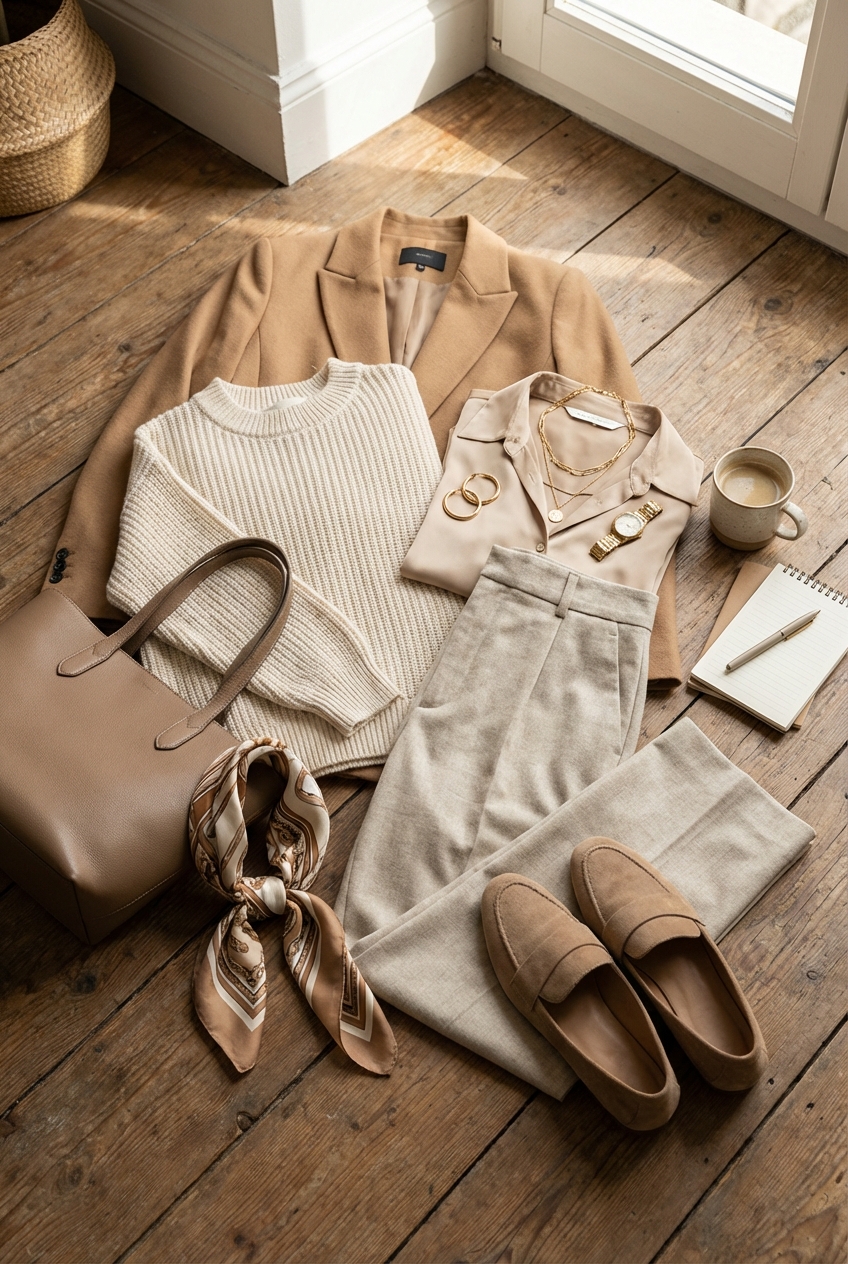
Capsule Wardrobe For Creating Chic Monochromatic Looks
1. Introduction
There is a misconception that dressing in a single color is the safe choice for those who fear fashion. In reality, committing to a monochromatic look is one of the boldest, most sophisticated style maneuvers you can make. It communicates intention, confidence, and a deep understanding of silhouette.
When I style high-net-worth clients, the first thing we often do is strip away the noise of busy prints and clashing colors. We focus on the power of a “column of color.” This technique not only elongates the frame but also allows the quality of your garments to take center stage.
Building a capsule wardrobe around this concept simplifies your morning routine without sacrificing elegance. It turns getting dressed into a seamless experience where every piece speaks the same language. For a visual feast of inspiration, make sure to check out the Picture Gallery at the end of the blog post.
2. The Foundation: Selecting Your Power Color
The first step in building a monochromatic capsule is choosing a color that serves your lifestyle and complexion. This isn’t about picking a trendy shade; it is about finding a hue that makes you look vibrant even when you aren’t wearing makeup.
While all-black is the classic “fashion editor” uniform, it is not your only option. A capsule built around camel, navy, winter white, or even a deep burgundy can look incredibly expensive. The goal is versatility.
If you have cool undertones, lean toward slate blues, charcoal greys, or stark whites. If you have warm undertones, olive greens, rich creams, and chocolates will illuminate your skin. Once you pick your base, you must commit to it for the majority of the capsule items.
Designer’s Note: The Lighting Test
In my years of styling, the biggest disaster I see is a client buying pieces that match under fluorescent store lights but clash in daylight.
The Lesson: Never buy a monochromatic addition without seeing it in natural light. A “black” sweater might actually be dark navy, and it will look messy against true black trousers. Always swatch your fabrics together near a window before removing the tags.
3. The Rule of Texture: The Secret to Depth
If you wear a flat cotton shirt with flat cotton pants in the exact same shade, you risk looking like you are wearing a uniform or scrubs. This is the death knell of chic style.
The secret to a successful monochromatic look is texture. You must create visual interest through the surface of the fabrics rather than color contrast. When the eye travels down your outfit, it needs to catch on different weights and weaves.
Think in terms of opposites. Pair a chunky cable-knit sweater (matte and heavy) with a silk slip skirt (shiny and fluid). Pair stiff leather trousers with a soft cashmere tee. This interplay makes the outfit look dynamic and intentional.
Common Mistakes + Fixes
Mistake: Wearing the same fabric weight from head to toe (e.g., a wool suit with a wool top).
Fix: Break up the density. If you are wearing a heavy suit, wear a sheer chiffon blouse or a shiny silk camisole underneath. The difference in light reflection is what creates the “luxury” feel.
4. The Essential Capsule Pieces
To create a functional capsule, you need specific items that layer well. A capsule usually consists of 10 to 15 items that can create over 20 unique looks.
Here is the hierarchy of pieces I recommend for a high-functioning monochromatic wardrobe:
- The Anchor Bottoms (2 pairs): One tailored trouser (wool or crepe) and one relaxed option (denim or leather).
- The Fluid Skirt (1 item): A satin or silk midi skirt is non-negotiable for texture variance.
- The Structural Layer (1 item): A blazer or structured cardigan that defines the shoulders.
- The Soft Tops (3 items): A cashmere sweater, a silk button-down, and a high-quality cotton tee.
- The Statement Coat (1 item): A longline wool coat in your chosen color connects the entire look.
What I’d Do in a Real Project
If I were building a capsule for a client with a $2,000 budget, I would spend 50% of that budget on the coat and the trousers.
The Logic: You can get away with a cheaper t-shirt or knit if the outer layers are impeccably tailored. A high-end coat hides a multitude of sins underneath and instantly elevates the outfit.
5. Tonal Dressing vs. Color Matching
One of the most liberating realizations in monochromatic dressing is that your colors do not need to match perfectly. In fact, they shouldn’t.
Attempting to match distinct dyes across different brands is nearly impossible and often looks “off.” Instead, embrace tonal dressing. This means wearing different shades within the same color family.
Imagine a “grey” outfit. You might wear charcoal trousers, a dove grey sweater, and a silver necklace. This gradient effect adds dimension and makes you look taller. It creates a vertical line that draws the eye up and down without interruption.
Rules of Thumb for Gradients
- Keep the darkest shade on the bottom: This generally grounds the look and is more flattering for the silhouette.
- Keep the lightest shade near the face: This acts as a reflector, brightening your complexion.
- Spacing: If you have two items that are almost the same color but slightly different, put a contrasting texture or a belt between them to break the visual proximity.
6. Tailoring and Proportion Control
When you remove color contrast, silhouette becomes the primary focus. Without color blocking to break up the body, your clothes’ fit determines your shape.
Oversized on oversized rarely works in monochrome unless you are extremely tall. It tends to look like you are drowning in a bolt of fabric. You need to balance the volume.
If you are wearing wide-leg trousers, ensure your top is fitted or tucked in to define the waist. If you are wearing an oversized knit, pair it with slim trousers or a bias-cut skirt that hugs the hips.
Specific Measurements to Watch
- Trouser Hem: For wide-leg monochromatic pants, the hem should sit 1/4 inch off the floor while wearing your intended shoes. Any shorter cuts the line; any longer creates sloppy pooling.
- Sleeve Length: Your jacket sleeve should end at the wrist bone, allowing 1/2 inch of your blouse or knit to peek through. This subtle layering adds another textural element.
- Coat Length: For the ultimate “rich girl” aesthetic, your coat should ideally be longer than your skirt or dress. If the skirt peeks out, it should be by at least 3 inches to look intentional, not accidental.
7. Accessorizing Without Breaking the Line
Accessories can make or break a monochromatic look. The wrong shoe color can chop off your legs, making you look shorter.
For the most cohesive look, match your shoes to your trousers. Black pants with black boots create an infinite leg line. Beige trousers with nude pumps have the same effect.
However, you can also use accessories to introduce a metallic neutral. Gold or silver shoes can act as a neutral in a white or cream capsule. Animal print, used sparingly (like on a belt or bag), can also serve as a neutral in a camel or black capsule.
Designer’s Note: The Metal Rule
Stick to one metal finish.
When dressing casually, mixing metals is fine. In a chic monochromatic look, uniformity is key. If your bag has gold hardware, wear gold jewelry and ensure your belt buckle is gold. This continuity signals that you thought about every detail.
8. Finish & Styling Checklist
Before you walk out the door, run through this quick professional checklist to ensure your look is polished.
- Texture Check: Do I have at least two different fabric textures visible? (e.g., Wool + Silk).
- Lint Check: Monochrome (especially black or navy) highlights dust and hair. A lint roll is mandatory.
- The Tuck: Is my top tucked or half-tucked to define my waist, or is the volume overwhelming me?
- Hardware Match: Do the metals on my bag, shoes, and jewelry coordinate?
- Shoe Transition: Is there an awkward gap of skin between my pants and boots? (Wear matching socks to maintain the column of color).
9. FAQs
Q: Can I do a monochromatic look with bright colors like red or pink?
A: Absolutely. These are called “dopamine dressing” capsules. However, they are less versatile for daily wear than neutrals. If you choose a bright color, ensure the tailoring is sharp, as bright colors highlight cheap construction more than neutrals do.
Q: How do I handle shoes in a summer white capsule?
A: Avoid black shoes with an all-white outfit; they are too heavy visually. Opt for nude, tan, metallic, or white footwear to keep the look airy and elevated.
Q: What if I’m on a tight budget?
A: Start with black. It is the easiest color to match across different price points. Cheap black cotton looks very similar to expensive black cotton. Cheap camel or navy fabrics often have undertones that reveal their price point.
Q: Does denim count in a blue monochrome capsule?
A: Yes! Denim is a neutral. A chambray shirt tucked into dark wash jeans is a classic, durable monochromatic look. Just ensure the washes are distinct enough to look styled.
10. Conclusion
Creating a chic monochromatic capsule wardrobe is not about restricting yourself; it is about refining your eye. It allows you to buy less but better quality, knowing that every new piece will seamlessly integrate with what you already own.
By focusing on texture, silhouette, and the subtle art of tonal layering, you elevate your daily style from functional to exceptional. You stop worrying about what matches and start focusing on how you feel—which should be powerful, put-together, and effortlessly chic.
11. Picture Gallery


