
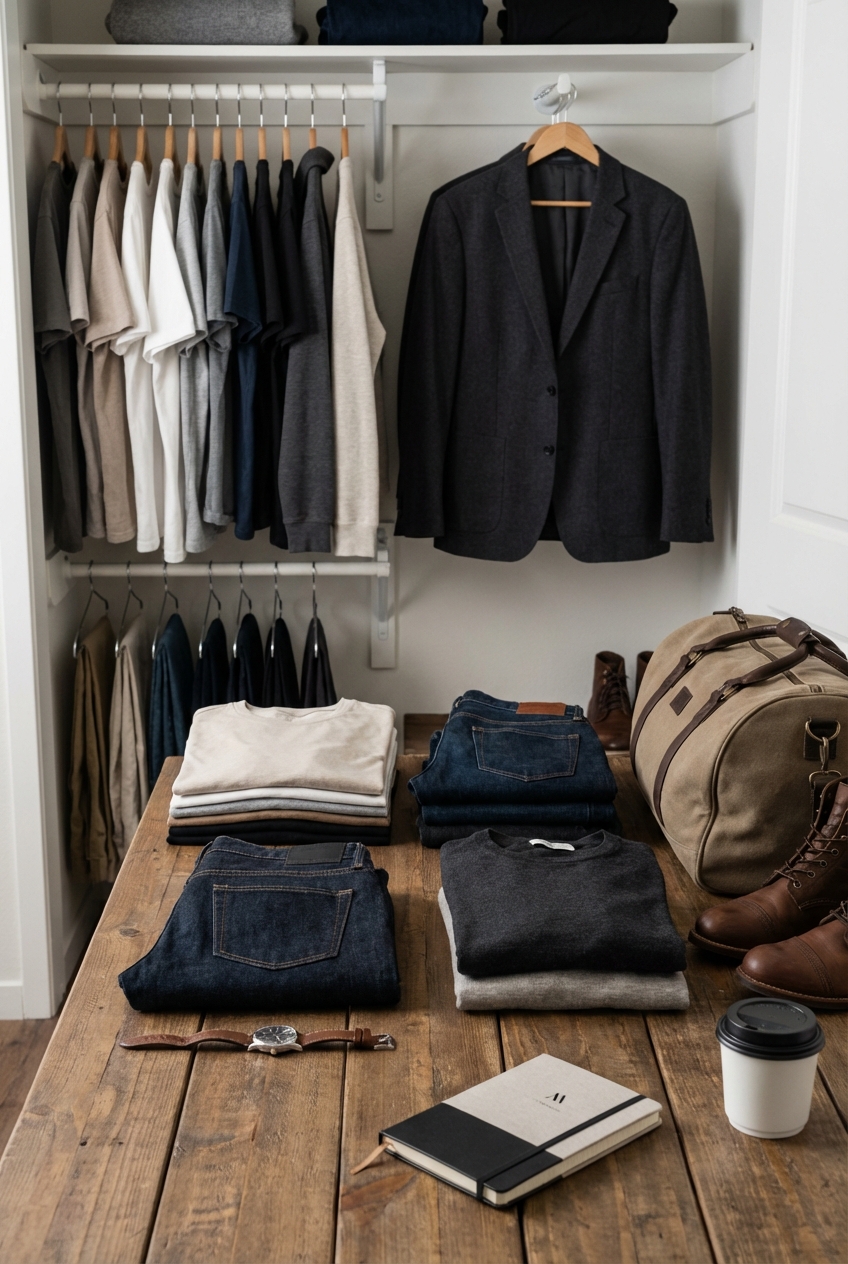
Capsule Wardrobe For Men Simple Yet Stylish Essentials
Creating a refined wardrobe is not about owning more clothes; it is about owning the right clothes. In my years as a fashion stylist, I have seen countless men’s closets filled to the brim with ill-fitting trends, graphic tees from college, and suits that haven’t seen a tailor since the mid-2000s. The result is always the same: a closet full of fabric but nothing to wear.
A capsule wardrobe solves this paralysis. It relies on a curated selection of interchangeable items that maximize versatility while minimizing decision fatigue. When every shirt pairs with every trouser and every jacket complements the shoes, getting dressed becomes an effortless ritual rather than a morning chore. We focus on high-quality fabrics, precise tailoring, and a neutral color palette that exudes confidence.
Whether you are revamping your own style or curating a look for the man in your life, the goal is timeless sophistication. I have compiled a comprehensive visual guide to these looks, so make sure you scroll to the Picture Gallery at the end of the blog post.
The Philosophy of Fit and Fabric
Before buying a single garment, you must understand the two pillars of high-end style: fit and fabric. No brand name can save an outfit if the shoulders are too wide or the material looks cheap. In luxury styling, we look at the composition label before the price tag.
Fabric Standards
- Cotton: Look for Supima or Egyptian cotton for t-shirts and shirts. The long-staple fibers resist pilling and maintain a subtle sheen after washing.
- Wool: For suits and trousers, aim for “Super 100s” to “Super 120s” wool. This indicates the fineness of the fiber. Anything higher is too delicate for daily wear; anything lower can feel scratchy.
- Synthetics: Avoid garments with more than 5-10% synthetic blends (polyester or nylon), unless it is technical outerwear. Synthetics trap heat and retain odors.
The “Golden” Fit Rules
- The Shoulder Seam: The seam of a jacket or shirt must sit exactly where the arm meets the shoulder bone. If it droops, the item is too big; if it pulls, it is too small.
- The Sleeve Length: Shirt sleeves should end at the wrist bone. Jacket sleeves should end about half an inch above that, allowing a sliver of the shirt cuff to show.
- The Torso: You should be able to pinch 1-2 inches of fabric on either side of the waist. More than that creates a billowing “muffin top” effect when tucked in.
Stylist’s Note: The most common mistake I see is men buying clothes that are one size too large because they equate “loose” with “comfortable.” In reality, excess fabric adds visual weight and makes the wearer look sloppy. A tailored fit is actually more comfortable because it moves with the body.
The Core Bottoms: Trousers and Denim
A capsule wardrobe requires only 3 to 5 pairs of pants to cover every social scenario from casual Fridays to weekend brunches. The key is strict adherence to classic washes and cuts.
Dark Wash Denim
You need one pair of high-quality, dark indigo jeans. There should be no distressing, no holes, and no artificial fading (whiskering) on the thighs. Dark denim reads as neutral and dressy, allowing it to be paired with a blazer for dinner.
The Fit: Slim-straight is universally flattering. Skinny jeans are dated, and bootcut jeans can look clumsy. The hem should have a “slight break,” meaning the fabric rests lightly on the top of the shoe without bunching.
The Performance Chino
Chinos bridge the gap between denim and dress pants. I recommend colors like khaki, olive green, or slate grey. Navy is also classic, but dark denim already fills that color slot.
Common Mistakes + Fixes:
- Mistake: Pleated fronts on casual chinos. This adds unnecessary volume to the hips.
- Fix: Always choose “flat front” chinos. They create a clean, vertical line that lengthens the leg.
Wool Dress Trousers
For formal events or important meetings, a pair of charcoal or mid-grey wool trousers is non-negotiable. Wool drapes better than cotton, resisting wrinkles and holding a sharp crease.
The Essential Tops: Layers and Knits
The upper half of the capsule is where we introduce texture. Since the pants are neutral, the tops can vary slightly in weave, though we stick to a cohesive color story—whites, blues, greys, and blacks.
The Perfect White Tee
This is not an undershirt. A capsule t-shirt must be substantial enough to be worn alone. Look for a “heavyweight” cotton (180-200 GSM). The neckline should be a tight crew neck; v-necks can be difficult to style elegantly without looking dated.
The Oxford Cloth Button Down (OCBD)
The OCBD is the workhorse of American menswear. The fabric is slightly thicker and more textured than a smooth dress shirt, making it versatile. A light blue and a white OCBD are mandatory. They look just as good pressed under a suit as they do rumpled with sleeves rolled up at a bar.
Merino Wool Sweaters
Thick, chunky knits have their place, but for a capsule, you want lightweight Merino wool crewnecks. They are thin enough to layer under a jacket without restricting movement but warm enough for transition seasons. Navy, charcoal, and burgundy are excellent choices here.
What I’d Do in a Real Project: When styling a client, I always ensure the sweater length hits mid-zipper. If it covers the entire butt, it ruins the proportions of the leg line. If it rides up when lifting arms, it is too short.
The “Third Piece”: Jackets and Outerwear
In fashion theory, the “third piece” is the item that completes an outfit—usually a jacket or coat. This is what separates a “guy wearing clothes” from a “man with style.”
The Navy Blazer
This is the most versatile item in a man’s arsenal. Opt for an unstructured blazer (little to no shoulder padding) in a textured wool or hopsack fabric. Unstructured blazers feel like cardigans but look like suits. It pairs perfectly with the grey wool trousers, chinos, and even the dark denim.
The Harrington or Bomber Jacket
For casual days, a structured casual jacket is essential. Avoid hoodies for the capsule; they are for the gym. A Harrington jacket in beige or navy offers a sharp silhouette with a zipper front. It frames the torso nicely and keeps the look adult.
The Classic Overcoat
If you live in a climate that drops below 50 degrees, you need a camel or charcoal wool overcoat. It should be single-breasted and hit roughly 2-3 inches above the knee. This length is modern and functional, covering a suit jacket underneath without dragging near the ground.
Footwear: Anchoring the Look
Shoes are the first thing people notice, and cheap footwear is obvious immediately. In a capsule wardrobe, we focus on three specific pairs that cover every base.
The White Leather Sneaker
We are not talking about running shoes. This is a minimalist, low-top sneaker made of smooth white leather. No heavy branding, no neon colors. Brands like Common Projects popularized this look, but you can find accessible versions everywhere. They pair with the chinos and denim effortlessly.
The Brown Leather Boot
A Chelsea boot or a Chukka boot in dark brown leather or suede adds rugged sophistication. Brown is generally more versatile for day-to-day wear than black. Ensure the toe box is rounded or slightly almond-shaped; avoid square toes at all costs.
The Black Derby or Oxford
You need one formal shoe for weddings, funerals, and boardrooms. A black leather Derby is slightly less formal than an Oxford due to the open lacing system, making it more comfortable for wider feet while still looking polished.
Care Tip: Invest in cedar shoe trees. They absorb moisture and maintain the leather’s shape when you aren’t wearing them. This doubles the lifespan of the shoe.
Accessories: The Devil in the Details
Accessories should be minimal and functional. In a capsule wardrobe, we do not use accessories to be “loud”; we use them to signal intentionality.
Leather Goods
The rule of thumb is to match your leathers. If you are wearing brown boots, wear a brown belt. The belt should be about 1.25 to 1.5 inches wide. Anything wider looks like workwear; anything narrower looks like a dress belt from the 90s.
Watches
Smartwatches are functional, but a traditional analog watch elevates an outfit. A stainless steel dive watch or a simple dress watch with a leather strap is timeless. The face size should be proportional to the wrist—usually between 38mm and 42mm for most men.
Socks
Throw away the white gym socks for daily wear. Stock up on over-the-calf socks in navy and charcoal. They should match your pants, not your shoes. This creates an unbroken visual line from waist to toe, making you appear taller.
Finish & Styling Checklist
Use this checklist to audit your current wardrobe or guide your next shopping trip. If an item doesn’t fit these criteria, it doesn’t belong in the capsule.
- Color Cohesion: Does every shirt match every pair of pants? (Stick to Navy, Grey, White, Olive, Black).
- The Pinch Test: Can you pinch more than 2 inches of fabric at the waist of your shirts? If yes, tailor it.
- Fabric Quality: Is the content label mostly natural fibers (Cotton, Wool, Linen)?
- Shoe Condition: Are the heels worn down? Are the white sneakers actually white? Scuffs ruin the aesthetic.
- Hem Length: Do your trousers break properly on the shoe, or are they pooling at the ankles?
- Hardware: Are zippers smooth and buttons secure? Loose buttons make a garment look old fast.
FAQs
How many items total should be in a men’s capsule wardrobe?
Aim for roughly 15 to 20 core items (excluding underwear and gym gear). This usually breaks down to: 3 jackets, 5 trousers, 7 tops, and 3 pairs of shoes. This combination creates over 300 unique outfit variations.
Can I include patterns?
Yes, but keep them subtle. A micro-check or a thin stripe on a shirt is fine. Avoid large logos, loud plaids, or novelty prints, as they are memorable and harder to repeat frequently without people noticing.
What if I live in a very hot climate?
Swap the wool trousers for linen or tropical-weight wool. Swap the heavy denim for lighter-weight chambray or travel chinos. The silhouette remains the same, but the GSM (weight) of the fabric changes.
How much should I budget for a high-quality capsule?
It is better to buy slowly than to buy cheaply. A budget of $1,500–$2,000 can build a very high-end foundation if you shop smart. However, because these are “forever” items, cost-per-wear drops significantly over time.
Conclusion
Building a capsule wardrobe is an exercise in discipline and self-respect. It signifies that you value quality over quantity and that you understand the power of presentation. By restricting your choices to compatible, high-quality essentials, you actually liberate yourself from the stress of dressing.
Remember that style is personal. Once you have mastered these basics, you can begin to introduce small flourishes that reflect your personality—a colorful pocket square, a unique watch strap, or a vintage leather bag. But the foundation must come first. Start with the fit, invest in the fabric, and the style will follow naturally.
Picture Gallery


