
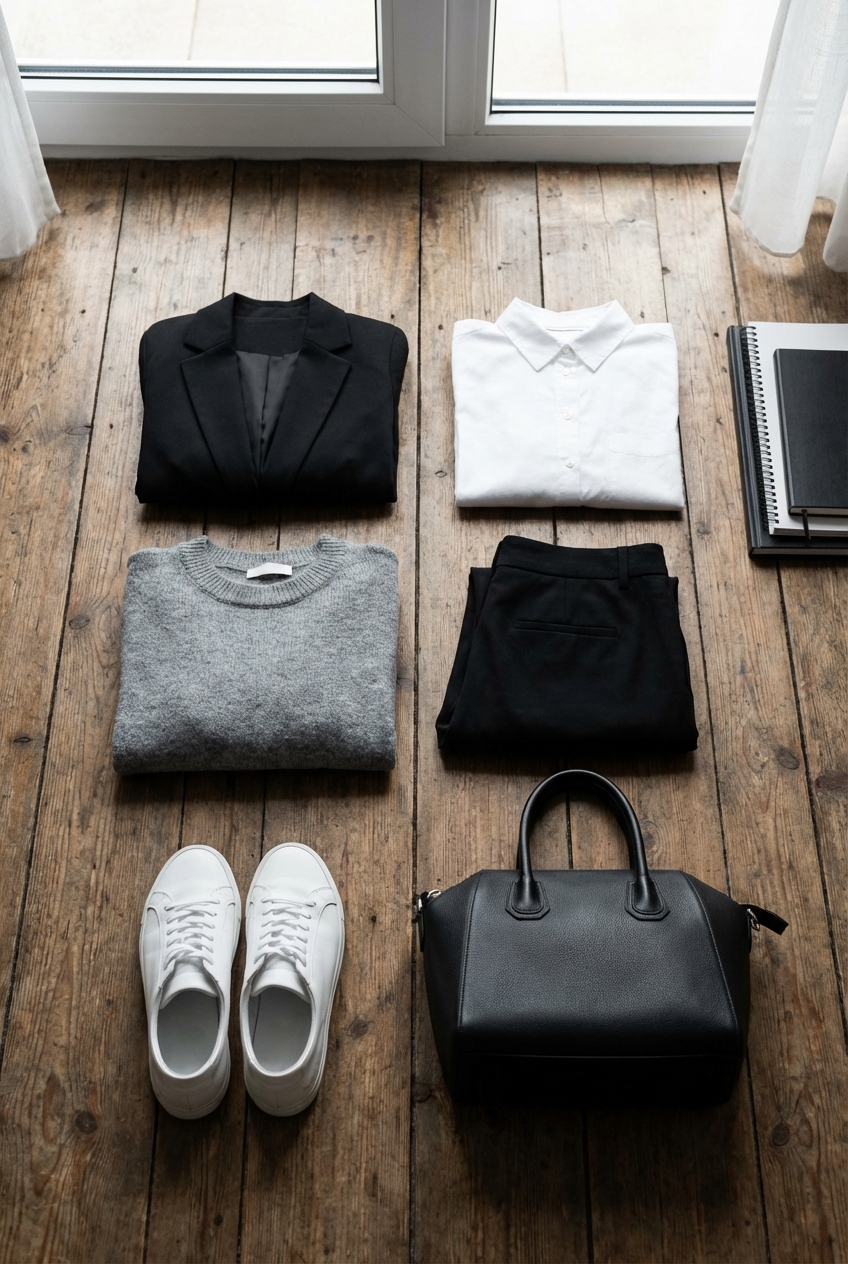
Capsule Wardrobe For Monochrome Outfit Ideas Timeless Elegance And Endless Simplicity
Introduction
I clearly remember the moment I decided to stop chasing trends and start building a wardrobe that actually worked for me. I was standing in front of a bursting closet, running late for a client meeting, and feeling completely overwhelmed despite owning hundreds of items. The colors clashed, the patterns felt dated, and nothing seemed to communicate the level of polish I wanted to project.
That was the day I pivoted toward a monochrome capsule wardrobe. It wasn’t about limiting myself; it was about refining my choices to create a sense of calm and luxury. Tonal dressing—wearing different shades of the same color family—is the secret weapon of high-end stylists. It instantly elongates the silhouette and looks expensive, regardless of the budget.
In this guide, I will walk you through how to build a functional, elegant monochrome capsule. We will cover texture, proportions, and the specific pieces you need to make this aesthetic work for real life. For a dose of serious inspiration, check out the picture gallery at the end of this blog post to see these combinations come to life.
Understanding Tonal Depth and Color Families
Many people mistakenly believe that “monochrome” means wearing solid black from head to toe. While an all-black outfit is chic, true monochrome styling embraces the entire spectrum of a single hue.
The key to high-end styling is “tonal dressing.” This means mixing varying saturations of one color. For example, if you choose beige as your base, your outfit should include oatmeal, cream, camel, and tan. This creates visual interest without the chaos of contrasting colors.
Identifying Your Base Neutral
To start a capsule, you must pick your primary lane. This ensures maximum mix-and-match potential.
- The Warm Neutrals: Creams, tans, browns, and terracottas. This palette feels organic and rich.
- The Cool Neutrals: Stark white, slate grey, charcoal, and silver. This palette feels modern and architectural.
- The Dark Anchors: Navy, midnight blue, and indigo. A softer alternative to black that looks incredible on almost every skin tone.
Designer’s Note: The Lighting Trap
One lesson I learned early in my career involves lighting. Black fabrics are not all created equal. Under bright sunlight or photography flash, a cheap cotton black tee will often look reddish or faded compared to a high-quality wool black trouser.
The Fix: When buying black or navy pieces to wear together, always check them in natural daylight. If the undertones don’t match (one is green-based black, one is red-based black), the outfit will look accidental rather than curated.
The Architecture of the Capsule: Core Pieces
A capsule wardrobe relies on quality over quantity. Because you aren’t distracted by loud prints, the cut and fabric of your clothes take center stage. You need fewer items, but they must be better items.
1. The Tailored Third Piece
Every look needs a “completer piece.” In a monochrome wardrobe, this is usually a blazer or a structured coat. This item dictates the silhouette of your entire outfit.
Look for a wool-blend blazer in your chosen color palette. It should have enough room in the arms to layer over a sweater but be tailored enough to wear over a silk camisole.
2. The Texture-Rich Knit
Flat fabrics make monochrome looks feel boring. You need dimension. A chunky cable-knit sweater or a ribbed cashmere turtleneck provides necessary depth.
If you are doing an all-white look, a heavy cream wool sweater contrasts beautifully against smooth white denim. The color is the same, but the light hits the surfaces differently.
3. The Fluid Bottom
To balance structure, you need movement. A silk midi skirt or wide-leg trousers in a high-drape fabric (like crepe or wool gabardine) adds elegance.
Avoid stiff fabrics for this category. You want the fabric to sway as you walk, adding a dynamic element to your single-color ensemble.
4. The Structure Bottom
This is usually your denim or a stiff cotton trouser. If you are building a grey capsule, this would be a pair of washed black or charcoal straight-leg jeans.
Real Project: The “What I’d Do” Checklist
If I were styling a client starting from scratch today, here is exactly what I would buy first to ensure 20+ outfits from just 5 items:
- Item 1: High-waisted trousers in a mid-weight wool (Example: Charcoal).
- Item 2: Silk or satin button-down shirt (Example: Silver-grey).
- Item 3: Cashmere crewneck sweater (Example: Dove grey).
- Item 4: Tailored wool coat (Example: Slate grey).
- Item 5: Leather pointed-toe boots (Example: Black or dark grey).
Mastering Texture and Fabric Mixes
The biggest mistake I see with monochrome outfits is “flatness.” If you wear a navy cotton tee with navy cotton chinos, you look like you are wearing a uniform or a jumpsuit. To look high-fashion, you must mix opposing textures.
The Rules of Contrast
You want to create friction between your garments. This tactile variety tricks the eye and makes the outfit look thoughtfully composed.
- Matte vs. Shine: Pair a matte wool sweater with a satin slip skirt. The reflection of the silk against the light-absorbing wool is visually stunning.
- Rough vs. Smooth: Pair a chunky, rough linen blazer with a smooth, mercerized cotton tank top.
- Hard vs. Soft: Pair rigid denim or leather trousers with a fuzzy mohair cardigan.
Seasonal Considerations
In the summer, mixing textures is harder because we wear fewer layers. Focus on the weave of the fabric. Linen, crochet, and raw silk offer texture without heat.
In the winter, this is effortless. Leather, suede, faux fur, and heavy wools are naturally distinct from one another.
Silhouette and Proportion Logic
When you remove color contrast, your silhouette becomes the primary focus. If the fit is sloppy, there is no bold print to hide it.
The Rule of Thirds
In fashion, as in interior design, the rule of thirds applies. You never want to cut your body exactly in half (50/50). It looks static and unflattering.
Aim for a 1/3 to 2/3 ratio.
- Option A: High-waisted trousers (2/3) paired with a tucked-in top (1/3). This elongates the legs.
- Option B: A long tunic sweater or coat (2/3) over slim trousers or leggings (1/3). This creates a relaxed, tunic-style elegance.
Volume Balancing
If you are wearing a monochrome outfit, volume speaks loudly. Do not wear oversized pieces on both top and bottom, or you will look like you are drowning in fabric.
If you wear wide-leg palazzo pants, keep the top fitted or belted. If you wear an oversized blazer, keep the bottom silhouette slim (like a pencil skirt or straight-leg jeans).
Accessories as Anchors
Accessories in a monochrome capsule serve one of two purposes: they either blend in to continue the vertical line, or they stand out to act as jewelry.
The “Blending” Technique
To make your legs look miles long, match your shoe color to your trousers. If you are wearing camel pants, wear beige or camel boots. This unbroken line is a classic celebrity stylist trick for petite clients.
The “Pop” Technique
Sometimes a monochrome look needs an anchor to keep it from floating away (especially with all-white or all-cream looks).
A cognac leather belt and matching bag can ground an all-cream outfit. The accessories act as the frame for the picture.
Metals and Jewelry
Metallic hardware (zippers on jackets, buckles on bags, jewelry) becomes very visible on a monochrome backdrop.
- Gold: Warms up cool tones (grey/white) and complements warm tones (camel/brown).
- Silver: Looks incredibly chic and futuristic with all-black or navy ensembles.
Common Mistakes + Fixes
Even with the best intentions, monochrome styling can go wrong. Here are the issues I correct most often during wardrobe edits.
Mistake 1: The “Almost” Match
Trying to match two different fabrics to the exact same pantone shade usually fails.
The Fix: Lean into the difference. If you can’t match the color exactly, go at least two shades lighter or darker. Intentional contrast is better than a failed match.
Mistake 2: Ignoring Fabric Weight
Wearing a heavy winter wool skirt with a flimsy summer tank top looks unbalanced.
The Fix: Match the visual weight of the fabrics. If you wear heavy wool, pair it with substantial cotton or silk ply, not sheer polyester.
Mistake 3: Over-Accessorizing
Adding a colorful scarf or bright bag because you feel “too plain.”
The Fix: Trust the simplicity. If you feel plain, add texture (like a croc-embossed bag in the same color) rather than a contrasting color.
Styling For Specific Environments
A monochrome capsule is versatile enough for the boardroom and the playground, but the specific pieces will shift.
The Corporate Office
Stick to the “Power Neutrals”: Navy, Charcoal, or Camel.
- Outfit Formula: Navy wide-leg trousers + navy silk blouse + navy wool trench coat.
- Why it works: It commands authority without being distracting. It implies you are too busy to worry about matching colors, yet you look impeccable.
Weekend Casual
Lean into the “Soft Neutrals”: Grey, Oatmeal, or Denim Blue.
- Outfit Formula: Grey joggers + grey cashmere hoodie + heather grey wool coat + white sneakers.
- Why it works: It elevates loungewear. Matching your sweatsuit to your coat makes the outfit look like “model-off-duty” wear rather than “gym” wear.
Date Night / Events
Embrace the “Dramatic Neutrals”: Black, White, or Red.
- Outfit Formula: Black slip dress + black oversized blazer + black sheer tights + black heels.
- Why it works: It is sexy and mysterious. The play on transparency (sheer tights vs. opaque blazer) adds intrigue.
Fabric Care and Maintenance
A monochrome wardrobe reveals stains and wear more than patterned clothing. To keep your capsule looking high-end, maintenance is non-negotiable.
Protecting Whites and Creams
If you choose a light palette, you must be vigilant.
- Always carry a bleach pen.
- Store wool items in breathable bags to prevent yellowing.
- Separate laundry religiously. One red sock will ruin a white capsule wardrobe.
Keeping Darks Rich
Faded black looks messy.
- Wash darks inside out in cold water.
- Use a detergent formulated for dark colors.
- Air dry whenever possible; heat breaks down fibers and causes fading.
- Use a fabric shaver (de-piller) on your knits. Nothing ruins a sleek monochrome look like pilling under the arms.
Finish & Styling Checklist
Before you walk out the door, run through this quick mental checklist to ensure your monochrome look is polished.
- Check the Undertones: Do all pieces belong to the same temperature family (all warm or all cool)?
- Check the Texture: Do I have at least two different textures present (e.g., denim and wool)?
- Check the Proportions: Am I following the rule of thirds? Is my waist defined or intentionally obscured?
- Check the Condition: Are there any visible lint specs (on black) or small stains (on white)?
- Check the Anchor: Do my shoes and bag support the color story or distract from it?
FAQs
1. Isn’t a monochrome wardrobe expensive to build?
Not necessarily. Because you are buying fewer items, your budget goes further. Also, matching colors makes inexpensive clothes look more premium. A budget-friendly beige sweater looks much more expensive when paired with matching beige trousers than it does with mismatched jeans.
2. Can I do monochrome with bright colors?
Absolutely. “Dopamine Dressing” in monochrome is very trendy. A head-to-toe emerald green or cobalt blue look is powerful. However, it is less timeless than neutrals. If you want longevity, stick to neutrals for your investment pieces and use brights for lower-cost items.
3. What if I get bored wearing the same color?
The beauty of a capsule is that the pieces can still be mixed with other things. Your camel sweater can be worn with jeans. Your black trousers can be worn with a white shirt. You aren’t locked in; you just have the option of the monochrome look when you want to feel put-together.
4. I’m petite. Will monochrome overwhelm me?
Actually, monochrome is the best styling trick for petite frames. Creating a continuous vertical line of color prevents the body from being visually “chopped up,” making you appear taller and leaner.
Conclusion
Building a capsule wardrobe focused on monochrome outfit ideas is more than just a fashion choice; it is a lifestyle shift toward simplicity and elegance. It reduces the mental load of getting dressed in the morning while increasing your sartorial impact.
By focusing on texture, proportion, and fit, you transform simple basics into head-turning ensembles. Start with what you own, identify your favorite neutral, and slowly build out the textures to create a wardrobe that feels timeless.
Picture Gallery


