
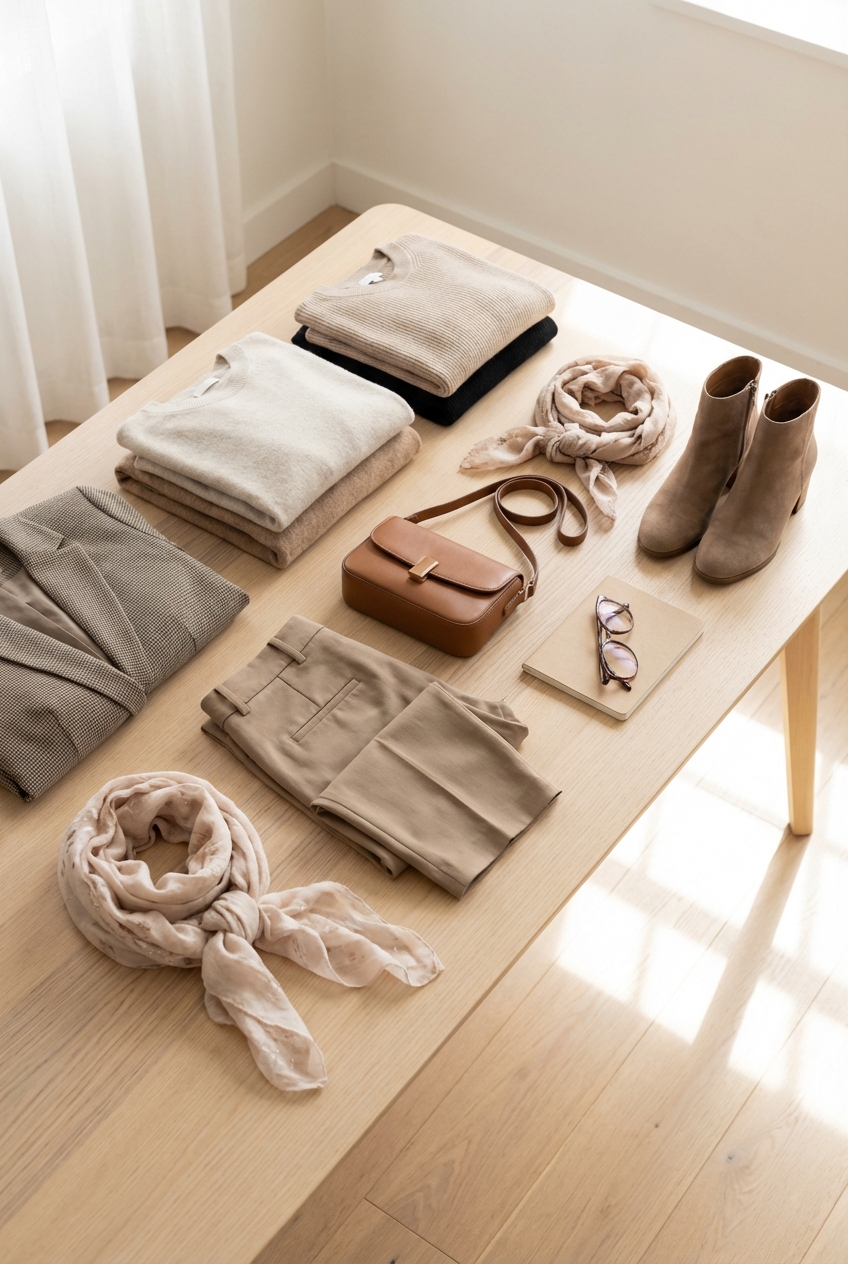
Capsule Wardrobe For Petite Women Pro Tips For Proportions
One of the most common frustrations I hear from clients under 5’4″ is the feeling that clothes are wearing them, rather than the other way around. There is a misconception that “petite” simply means small all over, but in the high-end fashion world, we know it is strictly a vertical measurement. You can be petite and curvy, petite and athletic, or petite and slender. The challenge remains the same: creating a silhouette that elongates the frame without sacrificing personal style.
Building a capsule wardrobe for a petite frame is less about limiting your choices and more about refining your filter. When I curate a closet for a petite client, we focus entirely on the “golden mean” of proportions. It is not about hiding your height; it is about manipulating visual lines to create a seamless, confident look. We want to avoid visual interruptions that cut the body in half or weigh it down with unnecessary bulk.
In this guide, I am going to walk you through the exact formulas I use to style editorial shoots and private client wardrobes. We will cover the mathematics of tailoring, the fabrics that drape best on smaller frames, and the specific pieces that belong in your rotation. If you are looking for visual inspiration, don’t miss the curated Picture Gallery at the end of this blog post.
The Rule of Thirds vs. Halves
The most critical error in petite dressing is cutting the body into equal halves. When your top and bottom are roughly the same length, it boxes in the figure and highlights a lack of height. In design, we use the “Rule of Thirds” to trick the eye. The goal is to create a 1/3 to 2/3 ratio.
For a petite woman, this usually means the top covers one-third of the body, and the bottoms cover two-thirds. This is why high-waisted trousers are non-negotiable in a petite capsule. By visually starting the waistline higher than your natural waist, you immediately add inches to the look of your legs.
The inverse also works, though it is trickier to pull off. A longer tunic-style top that covers two-thirds of the body, paired with slim leggings or tights (the remaining one-third), can elongate the frame. However, for a timeless capsule wardrobe, sticking to the “short top, long bottom” ratio is the safest and most chic bet.
Designer’s Note: The Drop-Waist Trap
I often see petite clients tempted by drop-waist dresses because they look relaxed and bohemian. In a real-world styling scenario, I almost always veto these. A drop waist lowers your visual center of gravity, making your legs look significantly shorter. If you love a relaxed look, opt for a shift dress that has no defined waist, rather than one that cuts you off at the hips.
Fabric Weight and Volume Management
When you have less vertical space to work with, every inch of fabric volume counts double. A chunky cable knit sweater that looks cozy on a tall model can look suffocating on a petite frame. This doesn’t mean you can’t wear knitwear, but the gauge of the knit matters immensely.
For your capsule, prioritize fabrics with “fluidity” over stiffness. Cashmere, merino wool, silk blends, and rayon have a drape that falls against the body rather than standing away from it. Stiff fabrics like heavy canvas or thick tweed add width. If you add width without having the height to balance it, the result is a boxy silhouette.
I always advise clients to look for “flat” textures. Instead of a thick bouclé jacket, choose a smooth wool gabardine. The warmth is comparable, but the visual bulk is reduced by half. This allows you to layer pieces—a key component of a functional capsule—without looking like a snowman by piece number three.
Common Mistakes + Fixes
Mistake: Buying “oversized” trends off the rack in standard sizing.
Fix: If you want the oversized look, you must buy it in petite sizing or size down significantly in standard cuts. True oversized fashion is cut with intentional shoulders. Standard oversized items on a petite frame usually result in shoulder seams sliding down the arm, which looks accidental, not stylistic.
The Architecture of the Perfect Petite Blazer
A blazer is the anchor of any luxury capsule wardrobe, but for petite women, fit is a game of millimeters. The shoulder seam is your north star. It must sit exactly at the edge of your shoulder bone. If it extends even half an inch past, you look like a child playing dress-up.
When selecting a blazer, pay close attention to the button placement (the “stance”). On standard jackets, the waist button often hits a petite woman at the hip, which ruins the Rule of Thirds. You need a jacket where the nip of the waist hits exactly at your natural waist or slightly higher.
Length is equally important. A traditional boyfriend blazer can overwhelm a small frame. Look for cropped styles or jackets that end at the high hip. If you prefer a longer line, ensure the jacket is tailored sharply close to the body to maintain that vertical column.
What I’d Do in a Real Project
If I were building your blazer collection tomorrow, I would source:
- One cropped black blazer (hem hitting the waistband of your trousers).
- One cream or camel tailored jacket (hip length, strictly fitted).
- One textured jacket (like a tweed) with bracelet-length sleeves to show off wrists and break up the fabric mass.
The Mathematics of Hemlines and Tailoring
In my line of work, we call tailoring the “petite tax.” It is an unavoidable part of looking polished. Off-the-rack clothing is generally designed for a woman standing 5’6″. If you wear those garments without adjustment, the proportions will always be slightly off.
For trousers, the “break” (where the pants hit the shoe) dictates the leg line. For wide-leg trousers, which are fantastic for petites when fitted correctly, the hem should float exactly 1/4 inch off the floor while you are wearing your intended heel height. This creates a floor-to-waist infinite line.
For cropped pants, the hem should hit just above the ankle bone. Anything lower cuts off the foot and shortens the leg. If you are wearing a skirt, the most flattering lengths are usually mini (mid-thigh) or maxi (ankle). The “tea length” or mid-calf cut is notoriously difficult because it cuts the leg at its widest point, often making the wearer look shorter.
Tailoring Checklist for Petites
When you visit your tailor, bring the shoes you plan to wear most often. Ask for:
- Sleeve Pitch: Sleeves should end at the wrist bone, exposing a bit of skin or your watch. This reduces visual heaviness.
- Shoulder Narrowing: If a top fits everywhere but the shoulders droop, ask if they can lift the shoulders. Note: This is expensive, so it’s better to buy fit-in-the-shoulders first.
- Armhole Raising: Often, armholes are too low on petites, revealing bras. A tailor can lift the side seams for a cleaner fit.
Color Blocking vs. Monochromatic Columns
One of the oldest tricks in the book remains the most effective: monochromatic dressing. Wearing one color from head to toe creates a single, uninterrupted vertical line. This is the secret weapon for a petite capsule wardrobe.
This does not mean you must wear all black. A column of navy, camel, cream, or even burgundy works just as well. The key is to match the tone closely. When the eye can travel from the shoulder to the hem without stopping to register a color change, the brain perceives the object (you) as taller.
If you do want to mix colors, keep the contrast low. Pairing a light gray top with white pants is less jarring than pairing a black top with white pants. High-contrast color blocking cuts the body horizontally. If you must color block, try to keep the darker color on the bottom to anchor the frame.
Real World Application
For a client’s travel capsule, I packed:
- Three pairs of high-waisted trousers in cream, navy, and black.
- Three cashmere sweaters matching those exact shades.
- A trench coat in a neutral beige that worked over all three columns.
This allowed her to mix and match for contrast or stick to solids for height, giving her maximum versatility with minimal items.
Scaling Your Accessories
Accessories are the final polish, but scale is often overlooked. A giant tote bag can make a petite woman look even smaller by comparison. It is all about relative size.
For handbags, structured medium-sized bags or clutches are preferable to slouchy, oversized hobo bags. The straps on crossbody bags are a major pain point; they are almost always too long, causing the bag to hit at the thigh rather than the hip. This drags the eye downward. Look for adjustable straps or have a cobbler shorten leather straps to hit at your high hip.
Jewelry should also be considered. While I love a statement piece, a massive bib necklace can shorten the neck. Longer, pendant-style necklaces create a V-shape that elongates the neck and torso.
Shoe Strategy
The “nude” shoe is a petite essential. A pump or flat that matches your skin tone extends the leg line all the way to the toe. Conversely, a black ankle strap on a bare leg acts like a tourniquet, visually cutting off the foot. If you wear ankle boots, match them to your pants (black boots with black pants) to keep that leg line continuous.
Finish & Styling Checklist
Before you head out or finalize a purchase for your capsule, run through this mental checklist. These are the criteria I use to ensure a garment earns its place in a high-value wardrobe.
1. The Shoulder Check
Does the seam sit effectively on the bone? If it droops, put it back (unless you plan to tailor it immediately).
2. The Volume Ratio
If the top is loose, are the bottoms fitted? If the bottoms are wide, is the top fitted? Never do loose-on-loose.
3. The Vertical Eye Test
Does the outfit invite the eye to move up and down, or does it force the eye side-to-side? We want vertical movement.
4. The Fabric Hand
Is the fabric weighing you down? Scrunch the fabric in your hand; if it is stiff and bulky, it will likely add unwanted width.
5. The Third Piece
Does the jacket or cardigan end at a flattering point (waist or high hip), or does it cut across the widest part of your hips?
FAQs
Can petite women wear maxi dresses?
Absolutely. In fact, a floor-length dress can be incredibly elongating because it creates a solid column of color. The key is the fit: ensure the waist is high (empire or natural waist) and the hem grazes the floor. Avoid large, overwhelming prints; opt for smaller scale patterns or solids.
Are cropped pants okay, or do they make legs look shorter?
Cropped pants are great if the length is intentional. They should hit the narrowest part of the leg (the ankle). Avoid capris that stop at the mid-calf muscle. Pair cropped pants with a nude shoe or a low-vamp shoe to regain some visual leg length.
How do I handle oversized trends?
Focus on “controlled volume.” If you want to wear an oversized sweater, ensure it has a V-neck to open up the chest, and French tuck the front into high-waisted jeans. This shows where your waist is and proves you are in the sweater, not lost in it.
Do I really need to buy “Petite” specific brands?
Not always, but it helps with proportions like shoulder width and armhole depth, which are hard to tailor. However, many high-end “regular” brands work if you know your measurements. Cropped pants from a standard brand often become full-length pants for a petite woman—just check the rise to ensure the crotch doesn’t hang too low.
Conclusion
Building a capsule wardrobe for a petite frame is an exercise in geometry and self-awareness. It requires ignoring generic fashion advice and tuning in to the specific measurements of your body. When you master the rule of thirds, invest in the right fabrics, and befriend a talented tailor, you stop worrying about your height and start enjoying the clothes.
Remember, the goal of this capsule is not just to look taller—it is to look balanced. A balanced outfit exudes confidence and intentionality. By curating a closet full of pieces that respect your proportions, you make getting dressed an effortless experience every morning.
Picture Gallery


