
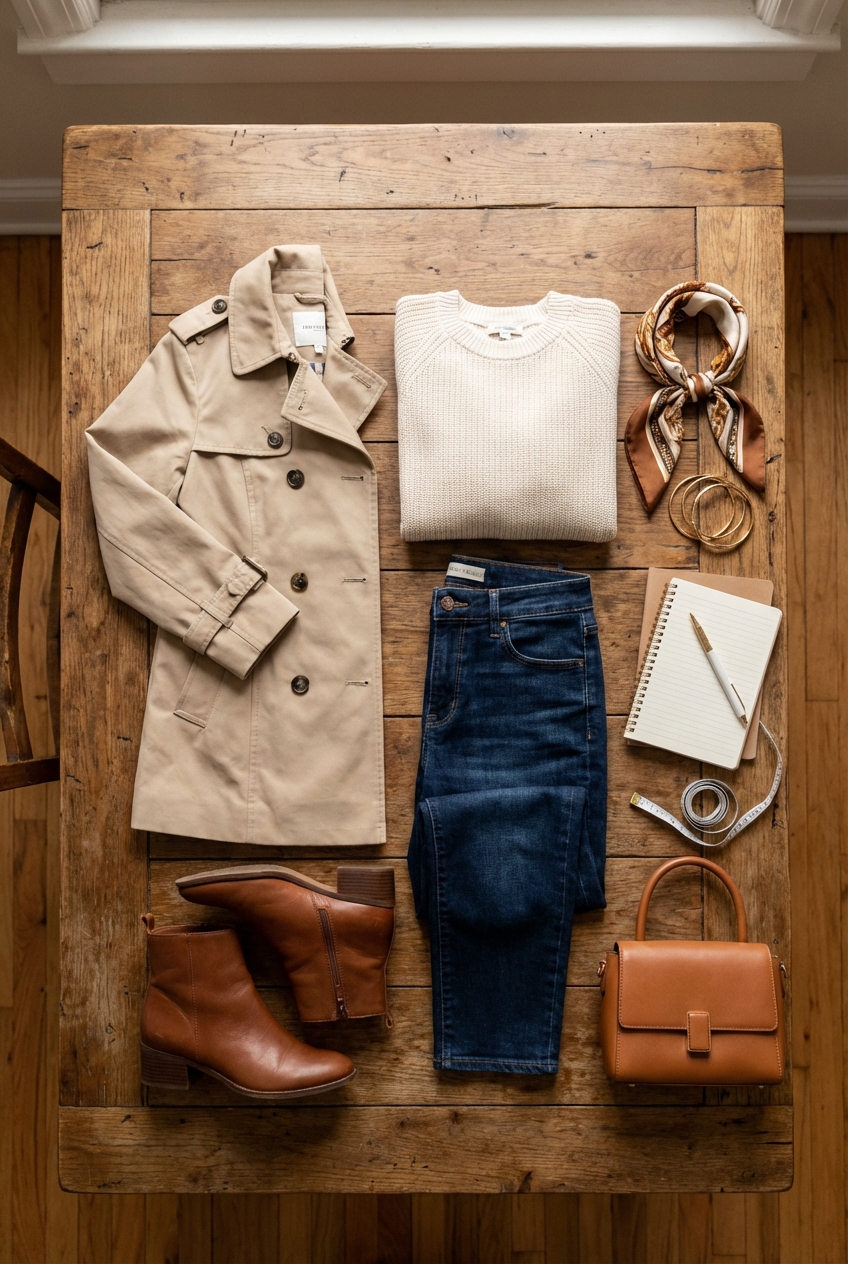
Capsule Wardrobe For Petite Women The Dos And Donts
Being petite is not just about height; it is about proportion. In my years working as a high-end stylist, I have seen countless women under 5’4″ struggle with clothing that overwhelms their frame. The sleeves are always two inches too long, the “cropped” pants drag on the floor, and oversized trends threaten to swallow them whole.
Creating a capsule wardrobe for a petite frame is the ultimate exercise in intentionality. You cannot rely on generic sizing charts or trends that cater to the average 5’6″ fit model. You need a curated collection of pieces that respect your vertical line. A capsule wardrobe simplifies your morning routine, but for petites, it also eliminates the daily frustration of poor fit.
This guide delves deep into the architecture of a petite wardrobe. We will look at specific measurements, fabric weights, and visual tricks that elongate the silhouette. For visual examples of these principles in action, check out the Picture Gallery is at the end of the blog post.
The Golden Rule of Thirds
Before buying a single garment, you must understand the Rule of Thirds. In design, the human eye finds odd numbers more visually appealing than even numbers. For a petite woman, dividing your body into a 1:1 ratio (a 50/50 split) is a mistake.
If you wear a shirt that ends at your hips and pants that start at your hips, you cut your body in half visually. This highlights your shorter stature. Instead, we aim for a 1/3 to 2/3 ratio. This means your torso should visually appear as one-third of your body, while your legs appear as two-thirds.
How to achieve the 2/3 ratio:
- High-waisted bottoms: This artificially lifts your waistline, extending the visual length of your legs.
- Tucked-in tops: A French tuck or a full tuck defines the waist and reduces the torso’s visual length.
- Cropped jackets: Jackets that hit at the true waist (rather than the hip) reinforce this proportion.
Designer’s Note: The Rise Measurement
A common misconception is that “high rise” is the same for everyone. It is not. For a petite client, a 12-inch rise might sit dangerously close to the bust line, creating a “short torso” effect that backfires.
The Fix: Measure your front rise (from the crotch seam to your natural waist). For most petite women, the “sweet spot” for a high-waisted look is actually a 10-inch to 11-inch rise. Anything over 11 inches often requires a taller torso.
The “Dos” of Petite Fabrication and Fit
When building a high-end capsule, fabric choice is just as critical as the cut. Heavy, stiff fabrics add bulk. On a smaller frame, bulk equals width, and width counteracts height.
Do: Prioritize Fluid Fabrics
Opt for fabrics with “drape” rather than stiffness. Silk, rayon, fine merino wool, and modal blends hang close to the body. They move with you rather than standing away from you. This creates a vertical column effect.
Do: Embrace Monochromatic Columns
Wearing one color from head to toe is the oldest trick in the book because it works. It creates an unbroken vertical line.
- The Strategy: You do not have to wear all black. An all-cream, all-navy, or all-camel outfit works just as well.
- Texture Variance: To avoid looking flat, vary the textures. Pair a silk camisole with wool trousers in the exact same shade. The light hits the fabrics differently, adding depth without breaking the vertical line.
Common Mistakes + Fixes
Mistake: Buying “Petite” labeled clothing without trying it on.
Fix: Many mass-market brands simply chop two inches off the hem and call it petite. A true petite garment should have higher armholes, narrower shoulders, and a shorter inseam. If the shoulders droop, put it back. You can hem pants, but tailoring shoulders is costly and often ruins the garment’s structure.
The “Don’ts” – Silhouettes to Avoid
In the world of high fashion, volume is often celebrated. However, for the petite capsule, unbridled volume is the enemy. It hides your shape and makes you look like you are playing dress-up in someone else’s closet.
Don’t: Drop Waists and Tunic Lengths
A drop waist creates a long torso and short legs—the exact opposite of our 2/3 goal. Similarly, tunic tops that hit mid-thigh erase your legs entirely.
Don’t: Massive Prints
Scale matters. A large, dinner-plate-sized floral print effectively camouflages a petite body. The pattern wears you.
The Alternative: Choose micro-prints, subtle pinstripes, or small geometric patterns. These provide visual interest without overwhelming the surface area of your body.
Don’t: Wide Cuffs and Horizontal Breaks
Thick cuffs on jeans or wide ankle straps on shoes create horizontal lines. These lines act as visual “stops” for the eye, halting the vertical flow.
- Avoid pants with permanent thick cuffs.
- Avoid boots that cut horizontally across the widest part of your calf.
- Avoid color-blocking that splits the body horizontally.
Building the Core: Tops and Layers
Your capsule tops should be versatile enough to layer but structured enough to stand alone. The focus here is on necklines and sleeve lengths that open up the frame.
The Neckline Strategy
Show some skin. A V-neck or a deep scoop neck elongates the neck and draws the eye vertically. High crew necks and turtlenecks can sometimes make a petite person look “stumpy” if not styled carefully.
Sleeve Length Matters
One of the fastest ways to look shorter is wearing sleeves that cover your hands. It signals to the brain that the garment is too big.
- The 3/4 Sleeve: This is universally flattering for petites. It exposes the wrist bone, which is a delicate part of the body, adding a sense of lightness to the look.
- The Push-Up: If you are wearing a blazer or a long-sleeve button-down, push or roll the sleeves up to the elbow. It instantly adds structure.
What I’d Do in a Real Project: The Blazer Edit
If I were styling a petite client’s capsule, the blazer is usually the first item we correct.
The Check: The hem of the blazer should never go below the thumb knuckle when arms are at the sides. Ideally, it hits right at the hip bone.
The Shoulder: The seam must sit exactly on the edge of the shoulder. If it overhangs by even half an inch, the client looks like a child wearing a parent’s coat.
Bottoms and One-Piece Wonders
This category is where measurements are non-negotiable. Ill-fitting trousers are the most obvious sign of a wardrobe that hasn’t been tailored.
Inseam Intelligence
You need to know your inseam numbers by heart. While every body is different, here are the general ranges I use for clients around 5’2″ to 5’3″:
- Ankle Crop: 25 to 26 inches. This should hit just above the ankle bone.
- Full Length (Flats): 27 to 28 inches. This should graze the top of the shoe.
- Full Length (Heels): 29 to 30 inches. This should fall 1/4 inch off the floor while wearing the intended heel.
The Jumpsuit Advantage
A monochromatic jumpsuit is a secret weapon for petites. It creates a seamless column of color from shoulder to toe. Look for styles with a defined, high waist.
Skirts and Dresses
Mini skirts (hitting mid-thigh) are excellent for extending leg length. Conversely, maxi dresses can actually work beautifully if they are floor-length and fitted at the waist. The danger zone is the “tea length” or mid-calf cut, which often hits the widest part of the calf and shortens the leg.
Shoes and Accessories: The Finishing Touches
Accessories in a capsule wardrobe are not afterthoughts; they are tools for proportion control.
The Power of the Pointed Toe
A round-toe shoe stops the eye. A pointed-toe shoe extends the line of the leg by an extra inch or two. This is physics.
- Nude Pumps: A pointed pump that matches your skin tone is the single most effective way to make your legs look longer.
- Low Vamp: Choose shoes with a “low vamp” (the part of the shoe that covers the toes). Showing more of the top of your foot extends the leg line.
Bag Scaling
Oversized totes are practical, but visually, they can crush a petite frame. For your daily capsule, opt for medium-sized structured bags. If the bag is wider than your torso, it is too big.
Belts
Use skinny belts. A wide, chunky belt consumes too much vertical space on a short torso. A narrow belt (1 inch or less) defines the waist without shortening the upper body.
Finish & Styling Checklist
Before you walk out the door, run through this mental checklist to ensure your proportions are optimized.
- The Waist Check: Is my waist defined? If wearing a loose dress, have I belted it? If wearing a shirt, is it tucked?
- The Cuff Check: Are my wrists and ankles visible? If not, can I roll the sleeves or cuff the jeans slightly?
- The Shoulder Check: Do the shoulder seams sit perfectly on my bone structure?
- The Shoe Check: Does the shoe elongate or cut off my leg line? (e.g., swapping ankle boots for low-vamp loafers).
- The Volume Check: If I am wearing wide-leg pants, is my top fitted? (Balance volume; never wear loose on loose).
FAQs
Can petite women wear wide-leg trousers?
Absolutely. The key is the waist and the hem. They must be high-waisted and fitted through the hip. The hem should nearly touch the floor (wear them with heels). This hides the shoe and makes your legs look miles long. Avoid culottes that cut off at the shin.
Do I need to wear heels every day?
No. You can look tall in flats if you follow the pointed-toe rule and the monochromatic rule. A pointed-toe flat in a nude shade is just as effective as a round-toe heel.
Can I wear oversized blazers?
Proceed with caution. The “boyfriend” look is trendy, but for petites, it often looks unintentional. If you want an oversized look, buy it in a petite size so the shoulders fit, but the body is cut looser. Never just buy a size up in regular sizing.
What is the best coat length for petites?
You generally have two best options: a cropped jacket that hits at the hip, or a long coat that hits just below the knee. Coats that end at mid-thigh often cut the body in an unflattering way.
Conclusion
Building a capsule wardrobe for a petite frame requires a shift in perspective. It is about respecting the geometry of your body. When you stop fighting your height and start dressing for your proportions, you will find that you need fewer clothes to look stylish.
Focus on the fit of the shoulders, the rise of the pants, and the position of the waistline. Invest in tailoring—it is the tax we pay for looking impeccable, and it is worth every penny. By adhering to the Rule of Thirds and maintaining a disciplined color palette, you can create a wardrobe that feels expansive, luxurious, and perfectly suited to you.
Picture Gallery


