
Capsule Wardrobe For Plus Sizes Proportions And Pairings
Building a functional, high-end wardrobe when you are plus-size is rarely about finding clothes that fit. The real challenge—and the true art—lies in finding clothes that honor your proportions. For years, the fashion industry told women above a size 12 to cover up, drape loosely, and default to black. As a fashion expert who has styled countless women of varying architectures, I can tell you that hiding your shape is the fastest way to look unpolished.
A successful capsule wardrobe is an engineering project. It requires understanding the ratio of your torso to your legs, the slope of your shoulders, and exactly where your natural waist sits. When we strip away the excess and focus on twenty to thirty high-quality pieces that interact seamlessly, getting dressed becomes a joy rather than a source of anxiety. We focus on structure, fabric weight, and the golden rules of visual balance.
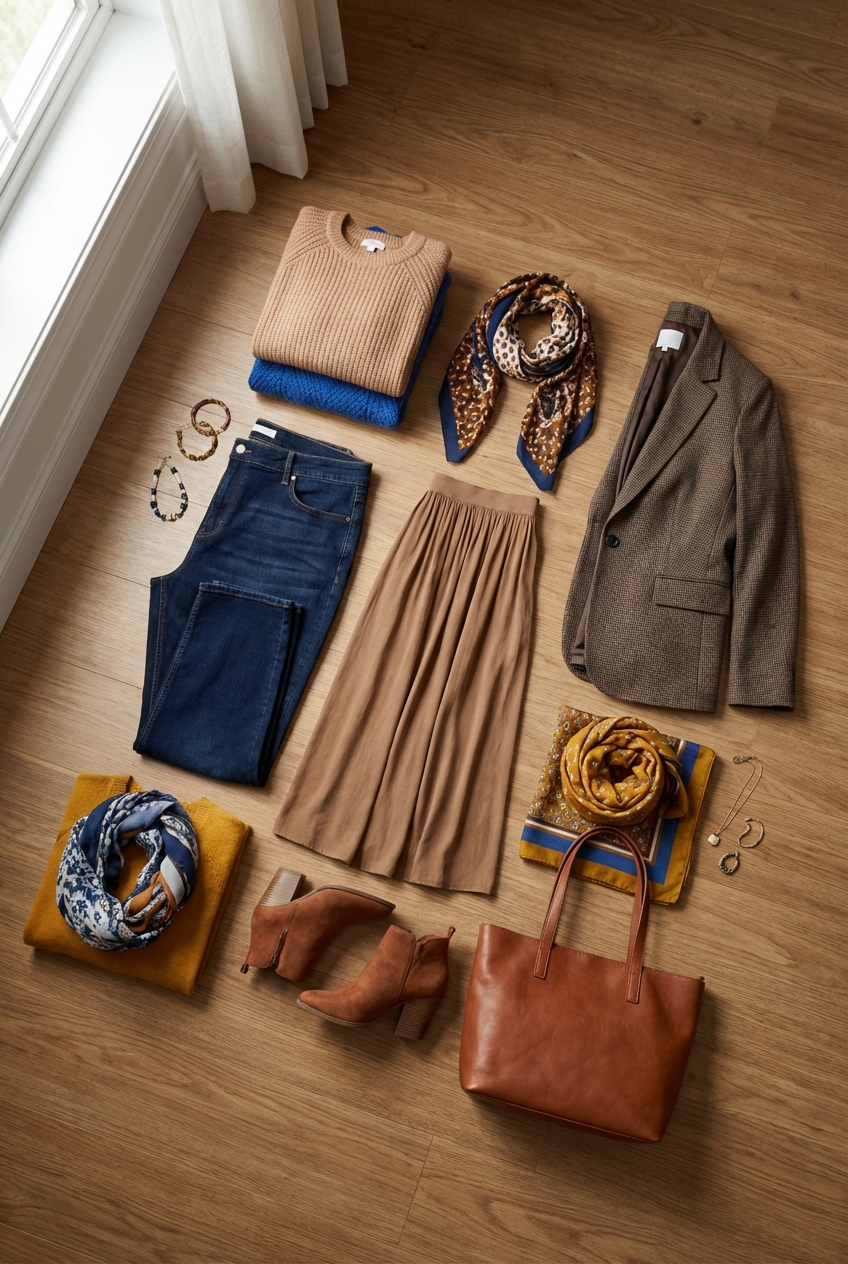
In this guide, we are going to dismantle the old rules of plus-size dressing. We will replace them with architectural principles that create a cohesive, luxurious closet. If you are looking for visual inspiration on how these items come together, check out the Picture Gallery at the end of this blog post.
Understanding Your Architecture: Body Mapping
Before buying a single garment, you must understand your personal topography. “Plus size” is a blanket term that tells us nothing about your shape. A size 18 with a defined waist and wide hips requires a completely different strategy than a size 18 who carries weight in the midsection and has slender legs.
In high-end styling, we look at the vertical line first. We need to determine if you are short-waisted or long-waisted. This measurement dictates the rise of your trousers and the length of your tops. If you are short-waisted, a high-rise pant might sit too close to the bust, creating a “shelf” effect. If you are long-waisted, mid-rise pants can cut your torso in an unflattering spot, making your legs look shorter.
Designer’s Note: The Volume Myth
One of the hardest lessons for my clients to learn is that volume does not hide volume. Adding a tent-like tunic over wide hips actually makes you look larger. The goal is to define the silhouette, not erase it. We want to skim the body, highlighting the narrowest points—usually the wrists, ankles, under the bust, or the natural waist—to create visual breaks.
The Foundation: Structure and Tailoring
The backbone of a luxury capsule wardrobe is the “third piece.” This is usually a jacket, blazer, or structured cardigan that pulls a look together. For plus-size proportions, the shoulder line of a jacket is non-negotiable. It must sit precisely at the edge of your shoulder bone. If it droops, you look slouchy; if it pulls, you look constricted.
Invest in a single-breasted blazer with a deep V-neckline. This elongates the neck and torso. Avoid double-breasted styles if you have a large bust, as the extra fabric and buttons add bulk exactly where you don’t want it. Look for fabrics like tropical wool or heavy crepe that hold their shape but breathe.
Common Mistakes + Fixes
Mistake: Buying blazers that cannot close comfortably.
The Fix: Always buy to fit your widest measurement (bust or hips) and have the rest tailored down. It is much easier for a tailor to take in the waist of a jacket than to try and let out the seams.
Mistake: Sleeves that are too long.
The Fix: Sleeves should hit right at the wrist bone. Showing that sliver of skin at the wrist and hand breaks up the fabric block and makes the whole outfit look lighter and more intentional.
Bottoms: Rise, Break, and Fabric
Trousers and skirts are the workhorses of your capsule. For a versatile wardrobe, you generally need three key styles: a wide-leg trouser, a straight-leg dark denim, and a midi skirt. The key here is the “break”—where the pant leg hits your shoe.
For plus-size pairings, a wide-leg trouser is incredibly chic, but it must be fitted through the hip and thigh before flaring out. This balances the proportions. These trousers should almost skim the floor, covering most of your shoe to create a long, unbroken vertical line.
What I’d Do in a Real Project
When building a capsule for a client, my checklist for bottoms is strict:
- The Fabric Test: I scrunch the fabric in my hand. If it wrinkles immediately, it goes back. We want weighty fabrics that drape, like ponté knit, gabardine, or heavy silk.
- The Rise Check: I measure the client’s rise (crotch seam to belly button) to ensure the waistband sits flat without rolling.
- Pocket Placement: I check the rear pockets on denim. They should be centered on the glutes. If they are too small or spaced too far apart, they make the rear look wider.
The Rule of Thirds
The “Rule of Thirds” is the golden ratio of fashion. Visually, the human eye finds a 1/3 to 2/3 ratio most pleasing. In fashion terms, this means your outfit should not split your body in half (1:1 ratio). Splitting the body in half often happens when you wear a shirt untucked that ends at the hips, paired with pants. This makes the legs look short and the torso boxy.
Instead, aim for a 1/3 top and 2/3 bottom ratio. You achieve this by tucking in your shirt or wearing a cropped jacket (the top 1/3) with high-waisted trousers (the bottom 2/3). Alternatively, you can wear a long tunic or dress (2/3) over slim leggings or trousers (1/3).
Implementation Strategy
If you are uncomfortable tucking in fully due to midsection concerns, master the “French Tuck.” Tuck just the front center of your blouse into your waistband and let the back and sides hang loose. This defines the waistline visually while providing coverage at the hips. It creates that crucial vertical leg line without exposing the entire stomach area.
Color Theory and Column Dressing
One of the most effective tools for plus-size proportions is “column dressing.” This involves wearing a single color or very similar tones from neck to toe. This creates one seamless vertical line that the eye travels up and down without interruption.
This doesn’t mean you must wear all black. A column of navy, charcoal, olive, or even cream is incredibly sophisticated. Once you have your base column (top and bottom), you can layer a contrasting jacket or coat over it.
Designer’s Note: Print Scale
If you incorporate prints into your capsule, scale is everything. Tiny, ditsy florals often get lost on a larger frame and can look busy or juvenile. Conversely, massive, spaced-out prints can widen the body. Look for medium-scale, dense prints where the background color doesn’t dominate. A classic leopard print, a Breton stripe, or a geometric pattern usually works beautifully.
Fabric Weights and Texture Interplay
The texture of your clothing affects your silhouette just as much as the cut. Shiny fabrics like satin or thin silk reflect light, which emphasizes every curve and bump. Matte fabrics absorb light and recede visually, creating a smoother line.
However, a wardrobe of entirely matte, flat cotton can look dull. The secret to a high-end look is mixing textures within the same color family. Pair a chunky knit sweater (texture) with a smooth leather skirt (sheen/structure). Or wear a silk camisole under a matte wool blazer.
Avoid “clinging” knits that have too much spandex. You want fabrics that skim. A high-quality merino wool or cashmere sweater will float over the body, whereas a cheap synthetic blend will hug tightly. When shopping for t-shirts or jersey tops, look for “slub” textures or cottons with a heavier gram weight. They hold their structure and don’t become transparent when stretched.
Finish & Styling Checklist
Once the clothes are on, the styling is what elevates the look from “dressed” to “styled.” Here is the final checklist I use before a client walks out the door.
- Shoe Vamp: If wearing a skirt or cropped pants, choose a shoe with a low vamp (the part covering the toes). A low vamp exposes more of the foot, extending the line of the leg. Ankle straps often cut the leg line short.
- Pointed Toes: A pointed toe or an almond toe elongates the leg much better than a square or round toe.
- Statement Jewelry: Scale your jewelry to your frame. A tiny, delicate chain can disappear. Opt for a chunky link necklace or a substantial cuff bracelet to create a focal point.
- Belt Width: If you use a belt, ensure it is substantial enough (1.5 to 2 inches wide). Skinny belts can look strained against a larger torso.
- Undergarments: The wrong bra ruins the best blouse. ensure your bust is lifted to allow for maximum torso length. Seamless, high-waisted shaping briefs eliminate lines under trousers.
FAQs
Q: Can I wear oversized trends as a plus-size woman?
A: Yes, but with balance. If you wear an oversized blazer or sweater, keep the bottom half slim (like straight-leg jeans or a pencil skirt). If you wear wide-leg trousers, keep the top fitted. Two oversized pieces together will overwhelm your frame.
Q: How many pieces should be in this capsule?
A: Aim for roughly 24 to 30 items for a single season, including shoes and outerwear. This creates enough variety without clutter. Focus on quality over quantity.
Q: What if I have a fluctuating size?
A: Focus on wrap dresses, adjustable waists, and knits with recovery. A wrap dress is the most forgiving garment for size fluctuations as it can be tightened or loosened while maintaining the exact same silhouette.
Q: Is white denim okay for plus sizes?
A: Absolutely. The rule that white makes you look bigger is outdated. The key is the fabric thickness. Look for denim with at least 98% cotton and 2% elastane, and ensure the pocket bags are beige, not white (so they don’t show through). Pair with a neutral top for a fresh, luxurious look.
Conclusion
Creating a capsule wardrobe for plus-size proportions is about respecting the geometry of your body. It is about rejecting the notion that you need to hide and embracing the power of tailoring, fabric, and line. When you stop focusing on the size on the tag and start focusing on the fit on your shoulders and the break on your trousers, your style transforms.
Remember that true style is not about being smaller; it is about being balanced. By applying the Rule of Thirds, utilizing column dressing, and insisting on proper tailoring, you create a wardrobe that serves you. Fashion is a tool for communication. Use these pairings to tell a story of confidence, elegance, and intention.
Picture Gallery


