
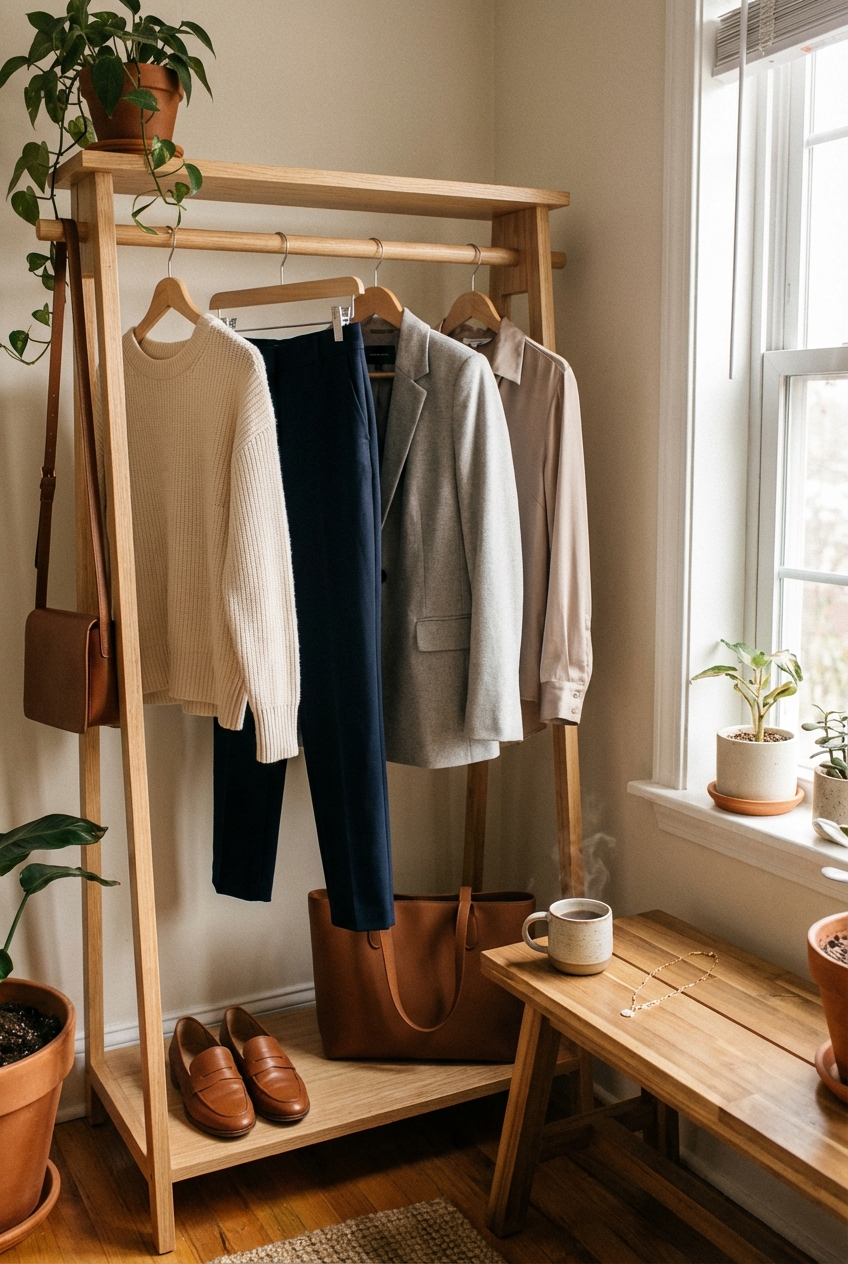
Capsule Wardrobe For Stay At Home Professionals
The transition to working from home often starts with a sense of liberation regarding our closets. We trade tailored suits for sweatpants and heels for slippers, relishing the comfort. However, after styling hundreds of clients who made this shift, I have noticed a consistent pattern: when the wardrobe slides too far into “lounge,” productivity and confidence often slide with it.
There is a distinct psychological shift that happens when you dress with intention, even if your commute is just down the hallway. The goal of a work-from-home capsule is not to replicate the stiffness of corporate wear, but to find the sweet spot between elevated polish and absolute comfort. We call this “Zoom-ready lounge,” and it requires a very specific approach to fabric selection and silhouette.
In this guide, I will walk you through building a high-end, functional capsule wardrobe designed specifically for the seated professional. We will cover fabric durability, the “waist-up” rule for video conferencing, and how to maintain style without sacrificing comfort. For visual inspiration on how these pieces come together, be sure to check out the curated Picture Gallery at the end of the blog post.
The Foundation: Understanding Fabric Composition for All-Day Wear
The most critical element of a stay-at-home wardrobe is the hand-feel of the fabric. In a corporate office, structure often trumps softness. At home, if a garment itches, pulls, or restricts movement, you will inevitably change back into pajamas by 10:00 AM.
You need to prioritize natural fibers mixed with high-quality stretch filaments. Look for “long-staple” cottons, merino wool, and modal blends. These fabrics regulate body temperature much better than cheap synthetics, which is vital when you are sitting in a climate-controlled home environment all day.
Avoid 100% linen for your bottom layers if you sit for long periods. While linen is breathable, it wrinkles aggressively in the lap and behind the knees. Instead, opt for a linen-rayon blend, which maintains the breezy look but possesses a heavier drape and resists deep creasing.
Designer’s Note: The Pilling Test
One lesson I teach all my clients is how to predict durability. High-friction areas—specifically under the arms and the seat of the pants—are prone to pilling when you work from home. Before you buy a knit pant or sweater, rub the fabric against itself vigorously for ten seconds. If it starts to fuzz immediately, put it back. It won’t survive a month in your office chair.
The “Waist-Up” Strategy for Video Conferencing
When working remotely, your professional image is framed entirely by what is visible on a webcam. This creates a unique styling constraint I call “Tabletop Dressing.” Your pants can be incredibly casual, but your top half must do the heavy lifting.
Necklines are the most important variable here. A classic crew neck can sometimes look like a t-shirt on camera, reading as too casual. A V-neck or a boat neck elongates the neck and provides a cleaner, more deliberate frame for your face.
Collars are also powerful visual cues. A soft, knit blazer or a “coatigan” (a coat-cardigan hybrid) with a lapel instantly signals authority without the restriction of a structured woven blazer. You get the visual credit for wearing a suit jacket, but the physical sensation of wearing a robe.
Common Mistakes + Fixes
Mistake: Wearing busy, small-scale prints on video calls.
Fix: Cameras struggle with small patterns (like houndstooth or tight stripes), creating a vibrating “moiré” effect that distracts viewers. Stick to solids or large-scale, abstract prints to keep the focus on your face.
Bottoms: The Rise of “Hard Pants” Alternatives
The term “hard pants” refers to denim or trousers with non-stretch waistbands, zippers, and buttons. For a seated professional, these are often uncomfortable. Digging waistbands disrupt focus. However, wearing gym leggings can make you feel unpolished.
The solution lies in the “Ponte” fabric family. Ponte di Roma is a double-knit fabric that is thick, stable, and holds its shape, yet stretches like yoga pants. A high-quality Ponte trouser often features a sewn-in crease down the front, mimicking a dress pant.
Look for pants with a flat-front waistband that is elasticized only in the back. This “hybrid” waistband looks tailored if you stand up during a meeting but expands comfortably when you sit.
What I’d Do in a Real Project:
For a client building this capsule, I strictly avoid drawstrings that tie on the outside. Exposed drawstrings immediately read “gym wear.” I source trousers where the drawstring is hidden inside the waistband, or I choose a wide, flat elastic band that sits flush against the skin.
The Third Piece Rule: Adding Structure to Softness
In fashion styling, the “Third Piece Rule” suggests that an outfit needs three elements to feel complete: a top, a bottom, and a third layering piece. At home, this third piece is your secret weapon for feeling dressed.
This layer serves a functional purpose for temperature regulation, but it also adds visual weight. A simple white tee and black joggers is an outfit for cleaning the house. Add a camel-colored long-line cardigan or an unstructured knit blazer, and it becomes a work outfit.
Focus on length. For stay-at-home professionals, I recommend longer lengths that cover the hip. This creates a long, lean vertical line that looks elegant when you get up to grab a coffee or answer the door.
Pro-Level Sizing Rule:
When choosing a “house blazer” or cardigan, check the shoulder seam. It should sit exactly at the edge of your shoulder bone. If it droops down the arm, the item looks sloppy. If it pulls up toward the neck, it looks shrunken. Fit is the difference between “relaxed” and “messy.”
Footwear: The Forgotten Element of WFH Style
Many people default to being barefoot or wearing socks at home. As a fashion expert, I advise against this for two reasons. First, putting on shoes sends a signal to your brain that it is time to work. Second, walking barefoot on hardwood or tile all day offers zero arch support, leading to fatigue.
You do not need to wear heels. The capsule should include “indoor shoes” that never touch the street. A high-end leather slide, a shearling-lined mule, or a pristine white leather sneaker are excellent choices.
If you prefer a slipper, choose a structured smoking slipper style rather than a fluffy scuff. A velvet or leather loafer-style slipper looks chic and intentional, whereas a fuzzy slip-on looks like you just woke up.
Maintenance Tip:
Keep a dedicated pack of leather wipes in your desk drawer. Because you are wearing these shoes in a clean environment, they should remain spotless. A quick wipe keeps your white sneakers or leather slides looking brand new, maintaining that high-end aesthetic.
Color Palette: Creating a Cohesive Mix-and-Match System
A capsule wardrobe relies on mathematical probability: every top should work with every bottom. To achieve this, you must limit your color palette. For a professional capsule, I recommend a base of three neutrals and two accent colors.
Excellent neutrals for video calls include navy, charcoal, camel, and cream. Black is classic, but it can sometimes look harsh or create a “floating head” effect on low-quality webcams if the lighting is poor. Navy is universally flattering and softer on the lens.
Your accent colors should be personal to your skin tone but kept consistent. If you choose sage green and dusty rose, ensure all your accessories and layers coordinate with these hues. This allows you to get dressed in the dark and still look put-together.
Designer’s Note: The “Monochrome” Hack
When in doubt, dress in one color from head to toe. A column of grey (grey knit pants + grey cashmere sweater) looks incredibly expensive and intentional. It is the easiest way to look high-fashion with zero effort. Vary the textures (e.g., wool mixed with silk) to keep it from looking like a uniform.
Finish & Styling Checklist
To execute this capsule effectively, you need a balance of core items. Below is a curated checklist based on a standard work week with laundry done once a week.
The Core Wardrobe (12-15 Items Total):
3 “Zoom” Tops: Silk or high-quality rayon blouses with interesting necklines.
3 Elevated Tees: Pima cotton or modal blends in solid neutrals (White, Navy, Black).
2 Knit Blazers/Cardigans: One structured knit blazer (Navy or Black) and one long-line cardigan (Camel or Grey).
3 Bottoms: One pair of wide-leg Ponte trousers, one pair of high-end joggers (no logos), and one pair of stretch-crepe pants.
1 “One-and-Done” Piece: A midi-length t-shirt dress or a soft jumpsuit for days you lack styling energy.
2 Indoor Footwear Options: One leather slide/mule and one clean sneaker or structured slipper.
The Accessory Edit:
Statement Earrings: Gold or resin hoops that show up on camera.
Blue-Light Glasses: A stylish frame can hide tired eyes and act as an accessory.
* A Quality Watch: Even if you check the time on your computer, a watch signals professionalism.
FAQs
How do I handle “Dry Clean Only” items in a home capsule?
Honestly, I recommend avoiding them for your daily rotation. Working from home involves coffee spills, pet hair, and lunch at your desk. Look for “hand wash cold” labels or high-quality wools that can be spot-cleaned. If you love silk, ensure it is washable silk. Practicality must reign supreme for daily wear.
Can I wear jeans in my WFH capsule?
Yes, but be selective. Rigid, 100% cotton vintage-style denim is miserable for sitting 8 hours a day. Look for denim with at least 2% elastane or polyurethane. “Ab-solution” technology or hidden elastic waistbands in denim have come a long way and are perfect for this application.
What if I need to run out to a client meeting suddenly?
This is why the “Third Piece” and footwear are crucial. If you are wearing Ponte pants and a nice tee, simply swapping your indoor slides for a loafer and throwing on your knit blazer makes you street-ready. You should not have to change your entire outfit to leave the house.
How often should I rotate this capsule?
I suggest a seasonal refresh. The fabrics that keep you warm in winter (merino wool) will be stifling in July. Swap your heavy cardigans for linen-blend blazers and your wool joggers for cropped cotton trousers as the seasons change.
Conclusion
Building a capsule wardrobe for working from home is an investment in your professional identity. It draws a clear boundary between “rest time” and “work time,” helping you switch modes mentally without sacrificing physical comfort.
By focusing on high-quality fabrics, camera-friendly necklines, and comfortable yet tailored bottoms, you create a system that serves you. You stop wasting energy deciding what to wear and start your day feeling pulled together and capable.
Remember, the goal is not to impress others in the office breakroom, but to respect your own role as a professional. When you dress the part, you perform the part. Take the time to audit your current loungewear, remove the items that make you feel sluggish, and slowly build a rotation that elevates your work-from-home experience.
Picture Gallery


