
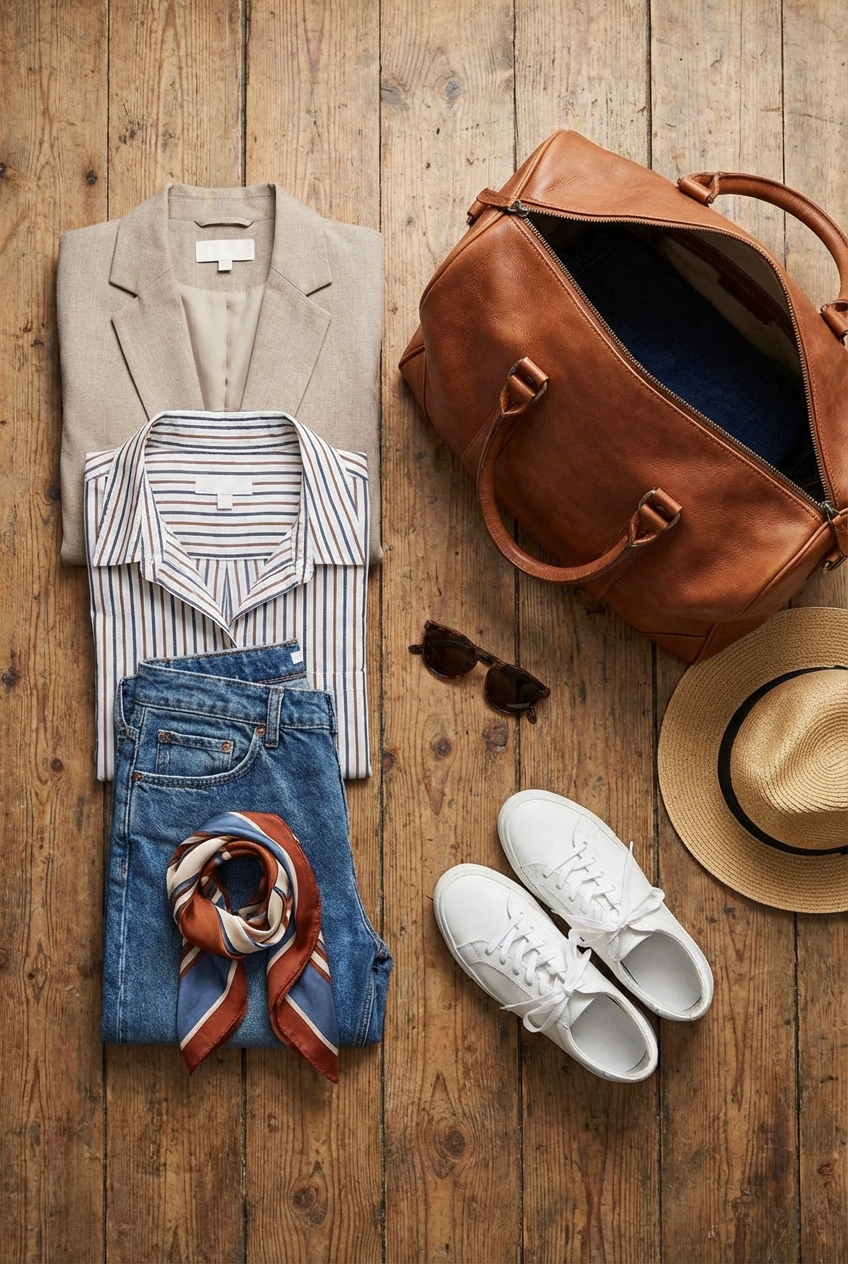
Capsule Wardrobe For Weekend Getaways Packing Like A Pro
There is a specific kind of anxiety that comes with an open suitcase. You stare at your closet, convinced you need options for every possible scenario, weather event, and mood shift. Before you know it, you have packed six pairs of shoes for a forty-eight-hour trip, and you still feel like you have nothing to wear.
As someone who has spent years in the fashion industry, traversing between editorial shoots and client consultations, I have learned that packing is not about volume; it is about curation. A weekend getaway requires a strategic approach, very similar to how I design a room or style a collection. It requires a defined color palette, an understanding of silhouette, and a ruthless editing process.
Mastering the capsule wardrobe allows you to travel lighter, dress better, and eliminate decision fatigue once you arrive at your destination. If you are looking for visual inspiration, don’t miss the Picture Gallery at the end of this blog post.
Establishing Your Color Palette
The single most effective way to ensure a cohesive travel wardrobe is to strictly limit your color palette. When every piece coordinates with every other piece, the number of potential outfit combinations multiplies exponentially, even if the item count remains low.
Start with two neutrals. These are the workhorses of your suitcase. For a chic, city-break vibe, black and camel is a timeless combination that looks expensive and hides travel stains well. If you are heading to a coastal destination, navigate toward navy and crisp white or oatmeal. These neutrals will make up approximately 70% of what you pack, including your shoes and outerwear.
Once your neutrals are set, choose one accent color. This adds personality and prevents the capsule from feeling like a uniform. Since this is a short trip, you do not need a rainbow. If your neutrals are navy and white, a punch of cherry red or a soft sage green works beautifully. This accent color should appear in a scarf, a knit top, or perhaps a statement bag.
Designer’s Note: The 3-Color Rule
I learned this the hard way during a trip to Milan. I packed individual “outfits” rather than a mix-and-match system. When the weather turned unexpectedly cold, my layers didn’t match my base layers. Always ensure your layers—cardigans, blazers, or trenches—work over every single top in your bag. If a jacket only works with one specific dress, it stays at home.
The Rule of Three: Tops, Bottoms, and Layers
For a standard three-day weekend (Friday through Sunday), you need to balance utility with style. The biggest mistake people make is packing too many bottoms. Pants and skirts take up the most volume in a suitcase and are the items least likely to need washing after one wear.
I recommend a specific ratio for a weekend trip: three tops, two bottoms, and one dress (or jumpsuit). This structure forces you to be selective. Your two bottoms should cover different use cases. For example, pack one pair of high-quality denim for travel and day walking, and one pair of tailored trousers or a silk midi skirt for evenings.
Your tops must vary in weight. Pack one basic T-shirt or tank for layering, one elevated blouse (silk or crisp cotton poplin), and one knit. The knit is crucial because hotel air conditioning and airplane cabins are unpredictable. A lightweight cashmere crewneck is worth its weight in gold here; it is warm, breathable, and elevates a pair of jeans instantly.
Common Mistakes + Fixes
- The Mistake: Packing heavy, chunky knits that consume half the suitcase.
- The Fix: Switch to Merino wool or Cashmere. A fine-gauge cashmere sweater provides four times the warmth of a chunky cotton cable knit but rolls up to the size of a water bottle.
- The Mistake: Bringing bottoms that require a specific heel height.
- The Fix: Hem your travel trousers to work with flats or a low block heel. If pants drag on the floor without sky-high stilettos, they are not versatile enough for a weekend trip.
Footwear Strategy: The Anchor of the Capsule
Shoes are the heaviest and most awkward items to pack. In a professional travel capsule, there is a strict limit: three pairs maximum, including the ones on your feet. For a weekend, you can often get away with two.
The first pair is your “Travel/Walk” shoe. This must be a closed-toe shoe. A sleek white leather sneaker or a comfortable loafer is ideal. Avoid athletic running shoes unless you actually plan to work out; they ruin the aesthetic of a polished outfit. Wear your heaviest shoes on the plane to save weight in your luggage.
The second pair is your “Elevated” shoe. This does not necessarily mean a stiletto. A block-heel ankle boot, a metallic ballet flat, or a strappy sandal (weather permitting) works well. The goal is a shoe that can transition from a museum tour to a nice dinner. Comfort is non-negotiable; nothing ruins a getaway faster than blistered feet.
What I’d Do in a Real Project
If I am styling a client for a getaway, I insist they break in their shoes two weeks prior. Here is my checklist for shoe selection:
- Versatility: Does the shoe match both the denim and the dress?
- Condition: Are the heels scuffed? Polish them before packing. Scruffy shoes downgrade the whole look.
- Hardware: Match the hardware on your shoes (gold or silver buckles) to your handbag and jewelry for a seamless look.
Fabric Science: Weight and Wrinkle Resistance
As a fashion expert, I look at the composition label before I look at the price tag. When building a travel capsule, fiber content dictates performance. You want fabrics that are resilient, breathable, and recover well from compression.
Avoid 100% linen for travel unless you embrace the “lived-in” look or have access to a steamer. Linen creases the moment you look at it. Instead, look for Tencel or Lyocell blends. These semi-synthetic fibers drape beautifully like silk but resist wrinkling and are much easier to care for.
Synthetic blends have a place in travel. A polyester-blend crepe dress will emerge from a packing cube looking exactly the same as when it went in. However, keep synthetics for outer layers or loose garments. For anything touching your skin directly, natural fibers like cotton or wool are superior for temperature regulation.
Wool jersey is an unsung hero of travel. Unlike cotton, which absorbs moisture and holds odors, wool is antimicrobial and wicks moisture away. You can wear a merino wool tee twice without washing it, which is a massive advantage for keeping your luggage light.
Accessories: High Impact, Low Volume
This is where you transform the look. You might be wearing the same black trousers and white tee that you wore on the flight, but with the right accessories, you are ready for a Michelin-star dinner. Accessories take up virtually no space, so this is where you can break the “minimalist” rules slightly.
Pack one statement necklace or a pair of architectural earrings. Gold hoops are a classic choice that works with everything. A silk scarf is perhaps the most versatile item you can own. Tie it around your neck for warmth, loop it onto your handbag for a pop of color, or use it as a headband if you are having a bad hair day.
Regarding handbags, use the “nesting” method. Carry a structured tote bag for your travel transit—this holds your laptop, water bottle, and essentials. Inside your suitcase (or nested inside the tote), pack a flat clutch or a small crossbody bag for evenings. Never travel with just a tiny bag; you will inevitably end up carrying a plastic shopping bag of overflow items, which ruins the look.
The Mechanics of Packing: Fold vs. Roll
The debate between folding and rolling is settled by the type of garment. Structure should be folded; softness should be rolled. Tailored items like blazers and stiff trousers should be folded carefully to preserve the shoulder pads and pleats.
Soft items like knits, T-shirts, jeans, and swimwear should be rolled. Rolling compresses the air out of the fabric and allows you to fit these items into the gaps around your shoes. It also prevents hard crease lines from forming in the middle of your shirts.
I strictly use packing cubes, but not just for organization. Compression cubes actually reduce the volume of your clothing by about 30%. I dedicate one cube to “tops and bottoms” and a smaller, slender cube for “undergarments and swimwear.” This creates a drawer-like system within your luggage. When you arrive at the hotel, you simply lift the cubes out and place them in the drawers. You are unpacked in thirty seconds.
Designer’s Note: The Toiletry Edit
Do not pack full-sized bottles. It disrupts the weight distribution of your luggage. I keep a pre-packed toiletry bag ready at all times. I use refillable silicone tubes for my specific shampoo and skincare. High-end hotels provide decent toiletries, so unless you have reactive skin, rely on the hotel for body wash and body lotion. Save your space for the serums and face creams that you cannot live without.
Sample Weekend Itinerary Wardrobe
To visualize how this works, here is a breakdown of a hypothetical weekend capsule using the principles above. This assumes a climate of mild spring/autumn weather (50-70°F).
- Travel Day (Friday): Straight-leg denim + Merino wool tee + Trench coat + Loafers. (Comfortable, chic, polished).
- Friday Dinner: Change into the Black Slip Dress + Blazer (draped over shoulders) + Heeled Boots + Statement Earrings.
- Saturday Day (Exploring): Denim (from Friday) + Crisp White Button-down + Trench Coat + Loafers + Silk Scarf.
- Saturday Night: Tailored Black Trousers + The Silk Camisole (layered under the button-down or blazer) + Heeled Boots.
- Sunday Brunch/Travel Home: Tailored Black Trousers + Merino Wool Tee + Trench Coat + Loafers.
Notice how few items are actually required? By mixing the textures (denim vs. silk vs. wool), the outfits feel distinct even though the components are recycled.
Finish & Styling Checklist
Before you zip that suitcase, run through this final styling checklist. This mimics the final walkthrough I do before a photoshoot.
The “What If” Check
- Weather shift: Do I have one layer that is warmer than I think I need? (e.g., a scarf or thermal tank).
- Rain plan: Is my outerwear water-resistant, or do I have a compact umbrella?
- Stain plan: Did I pack a tide pen or individually wrapped stain remover wipes?
The Fit Check
- Undergarments: Do I have the right bra for the racerback tank? Do I have seamless underwear for the silk dress? (Visible panty lines will ruin a high-end look instantly).
- Hardware sync: Does the belt buckle match the bag hardware?
- Opacity: If I am bringing white linen pants, did I check them in bright light to ensure they aren’t see-through?
FAQs
How do I handle gym clothes in a capsule wardrobe?
Be realistic. If you truly workout on vacation, pack one monochromatic set (black leggings and black top). This can double as loungewear or a travel outfit in a pinch. If you are “hoping” to workout but usually don’t, leave it at home.
What is the best luggage size for a weekend?
A standard international carry-on (21-22 inches) is sufficient. Avoid the “weekender” duffel bags unless you are driving. Carrying a heavy duffel on one shoulder through an airport throws off your posture and wrinkles your clothes. A 4-wheel hard-shell spinner is the most professional choice.
How do I keep my clothes smelling fresh if I re-wear them?
Pack a small sachet of lavender or a dryer sheet in your suitcase. Hang your clothes up immediately upon arrival. For wool items, hanging them in the bathroom while you shower (but not directly in the water) allows the steam to release wrinkles and refresh the fibers.
Should I pack an iron?
Never. Hotels have irons, but they are often low quality and can spit rusty water on your silk. I recommend a tiny travel steamer if you wear a lot of natural fibers. Alternatively, use “wrinkle release” spray, which works surprisingly well on cottons and blends.
Conclusion
Packing a capsule wardrobe is an exercise in editing. It is about understanding that you are enough, and you do not need an infinite amount of clothing to be stylish or prepared. By focusing on a tight color palette, high-quality fabrics, and versatile silhouettes, you free yourself from the burden of heavy luggage.
When you travel with less, you have more mental space to enjoy the architecture, the food, and the experience of your getaway. You move through the airport with ease, you dress with confidence, and you return home without a pile of unworn, wrinkled clothes to wash. That is the true luxury of travel.
Picture Gallery


