
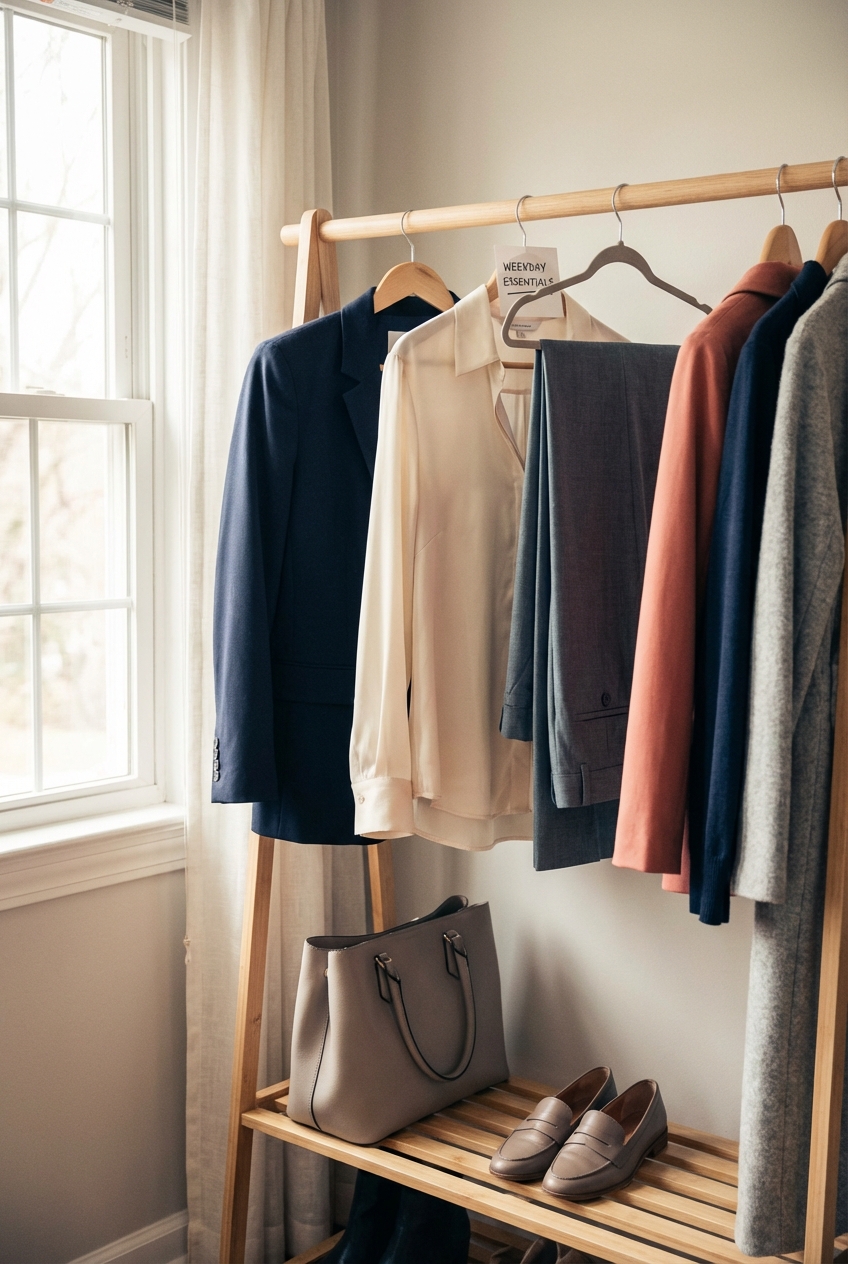
Capsule Wardrobe For Work Simplifying Your Professional Attire
There is a specific kind of morning panic that almost every professional woman knows intimately. You are standing in front of a closet that is bursting at the seams, yet you feel completely convinced that you have absolutely nothing to wear. This paradox usually stems from decision fatigue and a lack of cohesion in our purchasing habits.
When I work with high-end clients to rehabilitate their style, we almost always start by subtracting before we add. We strip away the “sale rack regrets” and the ill-fitting impulse buys to reveal the core of what actually works. A work capsule wardrobe isn’t about restriction; it is about liberating yourself from the stress of getting dressed so you can focus your energy on your career.
By curating a collection of high-quality, interchangeable pieces, you ensure that you look polished every single day with zero effort. To see exactly how these combinations come together in real life, be sure to visit our curated Picture Gallery at the end of the blog post.
The Philosophy of Fabric and Fit
Before buying a single item, you must understand the architecture of your clothing. In the luxury fashion world, we prioritize the “hand” of the fabric and the precision of the cut above trends. If a garment does not feel good against your skin, you will subconsciously avoid wearing it, no matter how beautiful it looks on the hanger.
For a work capsule, natural fibers and high-grade blends are your best friends. You want breathable materials that can withstand an eight to ten-hour day without losing their shape. Look for “tropical weight” wools, which work year-round, and cotton poplins with a high thread count.
Stylist’s Note: The 2% Rule
When buying trousers or structured blazers, check the care label. You ideally want 98% natural fiber (wool or cotton) and 2% elastane or spandex. This tiny percentage of stretch prevents the knees of your trousers from bagging out by 2:00 PM and allows you to reach across your desk comfortably. Avoid 100% synthetic polyester linings if you run warm; they trap heat and can cause discomfort during high-stress meetings.
Fit is the second non-negotiable pillar. Off-the-rack clothing rarely fits anyone perfectly because it is cut for a symmetrical mannequin, not a real human body. Budgeting for a tailor is just as important as budgeting for the clothes themselves.
Common Mistakes + Fixes
- The Mistake: Wearing sleeves that are too long, which makes even an expensive blazer look like a hand-me-down.
- The Fix: Have your jacket sleeves hemmed to hit right at the wrist bone. This allows a quarter-inch of your blouse or watch to peek through, which is a hallmark of high-end styling.
- The Mistake: Trousers that drag on the floor or bunch up at the shoe.
- The Fix: Bring the shoes you intend to wear most often to your tailoring appointment. For a straight-leg pant, ask for a “slight break” where the fabric gently touches the top of the shoe.
Defining Your Core Color Palette
A capsule wardrobe fails when the colors fight each other. To maximize versatility, we need a mathematical approach to color. I generally advise clients to stick to the “3 + 2” rule. Select three neutrals that will form the backbone of your wardrobe and two accent colors to inject personality.
The Base Neutrals
These are the colors for your investment pieces like suits, coats, and leather goods. They should be colors you never tire of.
- Black (Classic, authoritative)
- Navy (Softer than black, highly professional)
- Camel or Charcoal (Excellent for layering)
The Accents
These are utilized in blouses, silk scarves, or knitwear. They prevent the capsule from feeling like a uniform.
- Jewel tones (Emerald, Burgundy, Deep Plum)
- Soft pastels (Ice Blue, Blush, Cream)
What I’d Do in a Client Project
If I were building a wardrobe for a creative director, I might choose Black, Charcoal, and Ivory as the base, with Chartreuse and Cobalt Blue as accents. For a lawyer or corporate executive, I would lean toward Navy, Cream, and Grey, with accents of Soft Pink and Slate Blue. The goal is that you should be able to pull any top and any bottom from this rack and have them match instantly.
The Five Key Anchors of the Work Capsule
While the total number of items in a capsule can vary (usually between 12 and 24 pieces), there are five anchors that every professional woman needs. These are the workhorses of your closet.
1. The Structured Blazer
This is your armor. A well-cut blazer instantly elevates a t-shirt and jeans to business casual, or completes a suit for the boardroom. Look for a single-breasted cut with a notch lapel for maximum timelessness.
Pay attention to the shoulders. The seam should sit exactly where your shoulder ends. If it droops, the jacket is too big; if it pulls, it is too small. Shoulder width is one of the hardest things to alter, so get this right off the rack.
2. The Perfect Trouser
Current trends fluctuate between wide-leg and skinny, but for a capsule, a cigarette pant or a straight-leg cut is the most enduring silhouette. High-waisted options are generally more flattering and practical for tucking in blouses.
Material check: Wool gabardine is the gold standard for work trousers. It drapes beautifully, resists wrinkles, and holds a crease.
3. The Silk or High-Quality Synthetic Blouse
You need a top that offers softness to contrast the structure of the suit. A button-down silk shirt in cream or ivory is non-negotiable. It reflects light onto the face, making you look awake and vibrant.
If you are concerned about dry cleaning costs or stains, look for high-quality technical fabrics or viscose blends that mimic the drape of silk but are machine washable.
4. The Shift or Sheath Dress
A dress is the ultimate “one-and-done” outfit. A sheath dress that skims the body without clinging is appropriate for almost any office environment. Sleeveless versions are great for layering under blazers, while sleeved versions stand alone better in air-conditioned offices.
5. The Fine-Gauge Knit
Bulky sweaters have no place in a streamlined work capsule. You need a fine-gauge merino wool or cashmere sweater. These can be worn alone or layered under a jacket without adding bulk to your arms. A crew neck or boat neck is universally flattering.
The Shoe Edit: Comfort Meets Authority
Nothing ruins a professional image faster than the inability to walk comfortably. As a stylist, I see women hobbling in heels that are too high or too cheap. Your footwear needs to support you, literally and figuratively.
The Commuter Reality
If you commute via public transit or walk significant distances, do not try to brave it in stilettos. Wear a chic leather loafer or a pointed-toe flat for the transit, and keep your heels under your desk.
The Three Essential Shoes
- The Power Pump: A pointed toe lengthens the leg. Stick to a heel height of 2.5 to 3.5 inches. Anything higher borders on evening wear; anything lower can feel matronly depending on the cut. Nude (closest to your skin tone) or black are the essentials.
- The Structured Flat: Loafers are having a massive resurgence, and they look incredible with ankle-length trousers. Look for hardware details like a horsebit or a sleek buckle to add polish.
- The Ankle Boot: For cooler months, a sleek leather bootie with a block heel is vital. It pairs perfectly with tights and skirts or trousers.
Accessories: The Third Piece Rule
In fashion styling, we often talk about the “Third Piece Rule.” Your pants are piece one, your top is piece two. The third piece is what finishes the look. Often this is a jacket, but in warmer months or casual offices, your accessories become that third piece.
Jewelry Strategy
Keep it simple but significant. A capsule wardrobe calls for a capsule jewelry box.
- Everyday: Small hoops or pearl studs, a simple pendant necklace, and a quality watch.
- Statement: One bold gold link necklace or a structured cuff bracelet for days when your outfit is very simple (like a black turtleneck and grey trousers).
The Work Bag
This is a tool, not just an accessory. It needs to be large enough to hold a laptop and documents without bulging. Structured leather totes are best. Avoid bags with heavy branding or logos; “quiet luxury” exudes more confidence in a professional setting. Ensure the straps are long enough to go over the shoulder of your winter coat.
Maintenance and Longevity
A capsule wardrobe is an investment strategy. To lower your “cost per wear” (the price of the item divided by how many times you wear it), you must keep these pieces in pristine condition.
The Steam vs. Iron Debate
Throw out your iron unless you are pressing crisp cotton shirts. For wool, silk, and cashmere, an iron crushes the fibers and can leave a shine. A handheld steamer is faster, gentler, and kills bacteria.
Washing Habits
You do not need to dry clean your blazers after every wear. In fact, doing so will degrade the fabric. Hang them in an airy space overnight to let them breathe. Spot clean stains immediately. Dry clean your suits once a season, or only when visibly soiled.
Storage Solutions
Never hang knits; they will stretch out at the shoulders. Fold them. For your blazers and coats, invest in proper wooden hangers with flared shoulders. Wire hangers from the dry cleaner will ruin the structure of a jacket shoulder permanently.
Stylist’s Finish & Styling Checklist
Before you walk out the door, run through this quick mental checklist to ensure the look is cohesive.
- The Proportion Check: If you are wearing wide-leg trousers, is your top fitted or tucked in? If you are wearing an oversized knit, is your bottom half streamlined? Balance is key.
- The Ankle Gap: If wearing boots with cropped pants, ensure the boot shaft goes under the pant leg, or there is a deliberate show of skin. Avoid the awkward 1-inch gap where a sock might show.
- The Lint Roll: Dark trousers and blazers are magnets for dust and hair. A quick roll is the difference between messy and meticulous.
- The Third Piece: Did you add a belt, a watch, or a scarf?
- Shoe Condition: Are your heels scuffed? A quick wipe or a touch of polish takes ten seconds.
FAQs
How do I stop myself from getting bored with a capsule wardrobe?
Boredom usually comes from a lack of texture, not a lack of clothes. Mixing textures—like wearing a chunky cable knit with smooth wool trousers and a silk scarf—keeps things visually interesting even if the colors remain neutral. You can also swap out your “accent” items seasonally.
Can I do this on a budget?
Absolutely. You do not need to buy everything at once. Start with the blazer and the trousers. Spend the most money on these two items. You can save money on layering tees and shell tops. It is better to have one amazing suit than five cheap ones.
What happens if my weight fluctuates?
This is where fabrics like ponte knit or wool with higher elastane content are lifesavers. Wrap dresses are also incredibly forgiving and adjustable. If you are between sizes, invest in accessories and shoes first, as these always fit.
Does a capsule wardrobe work for creative fields?
Yes, but the “anchors” change. Instead of a structured blazer, your third piece might be a leather moto jacket or an oversized kimono. Instead of wool trousers, you might opt for raw denim or culottes. The principle of interchangeability remains the same.
Conclusion
Building a capsule wardrobe for work is not about limiting your creativity; it is about respecting your time. When you eliminate the noise from your closet, you start your day with a “win.” You walk out the door feeling pulled together, comfortable, and prepared for whatever the business world throws at you.
By focusing on fit, fabric quality, and a cohesive color story, you move away from the cycle of fast fashion and into a sustainable, stylish way of dressing. It turns your wardrobe from a source of stress into a powerful tool for your career advancement.
Picture Gallery


