
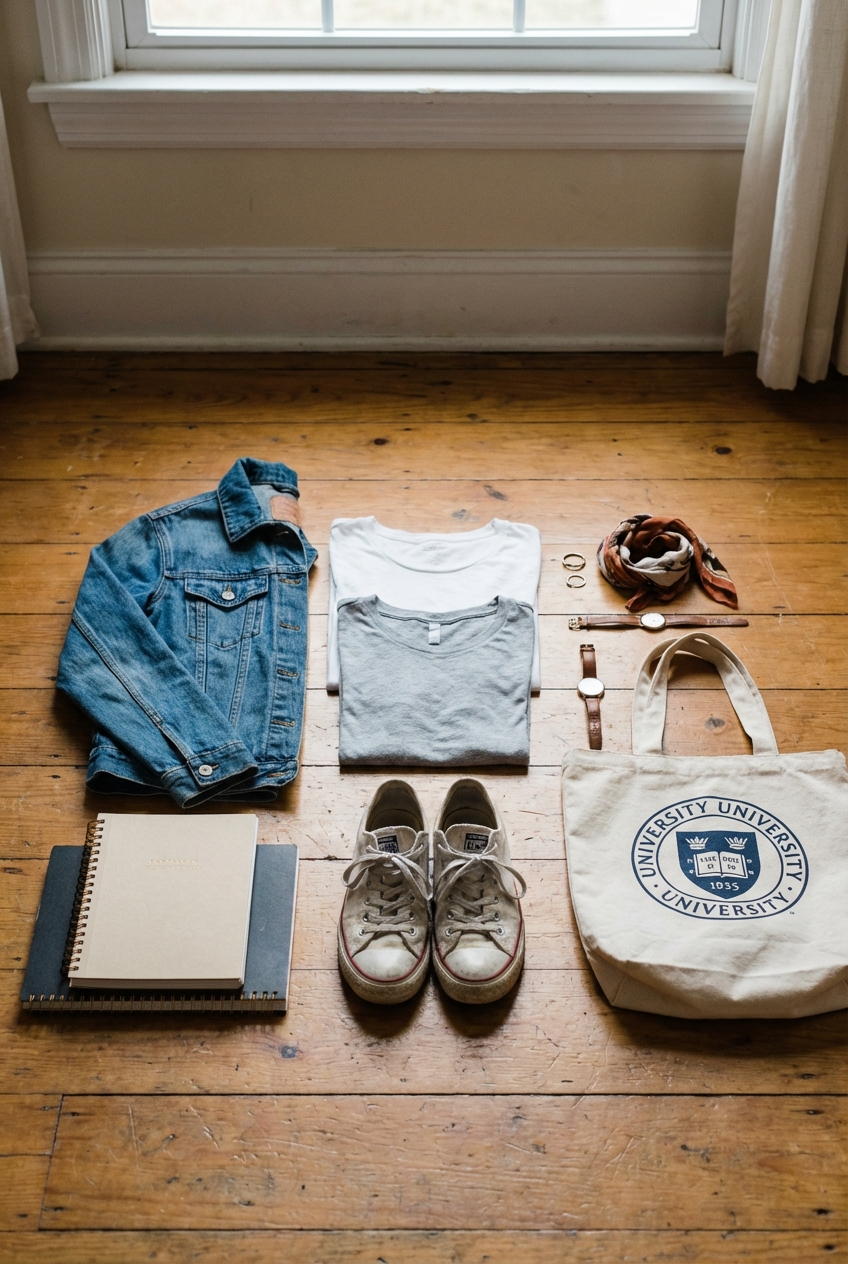
Capsule Wardrobe Ideas For College Students On A Budget
Introduction
I vividly remember staring into my college closet five minutes before an 8 AM lecture, overwhelmed by options but feeling like I had absolutely nothing to wear. The racks were stuffed with trendy tops from fast-fashion sales and impulse buys that didn’t match anything else. It wasn’t until I started working in high-end fashion styling that I realized the solution wasn’t buying more clothes, but buying the right clothes.
A capsule wardrobe isn’t about limiting your creativity; it is about curating a collection of interchangeable pieces that maximize your outfit potential while minimizing stress. For a college student, this approach saves money, saves precious dorm room space, and ensures you look pulled together for everything from morning classes to internship interviews. The goal is to build a high-quality visual identity without a high-end price tag.
In this guide, I will break down exactly how to construct a functional, stylish wardrobe using the principles I apply when styling editorial shoots, but adapted for a student budget. We will cover fabric choices, essential silhouettes, and the specific items that offer the best return on investment. For visual inspiration on how these pieces come together, be sure to check out the Picture Gallery at the end of the blog post.
The Core Foundation: T-Shirts, Tanks, and Denim
Every great wardrobe is built on basics, but “basic” does not mean boring. In the fashion world, we refer to these as your “anchors.” These are the pieces you will wear 80% of the time, so they need to be durable and comfortable.
For college students, I recommend the “Rule of Three” for tops: one pure white tee, one black or navy tee, and one neutral tank or bodysuit. When shopping for these on a budget, look for 100% cotton or a cotton-modal blend. Avoid 100% polyester t-shirts, as they trap odors and tend to pill after a few washes.
When it comes to denim, fit is far more important than the brand name on the label. A straight-leg jean in a medium vintage wash is currently the most versatile silhouette. It works with sneakers for class and heels for a night out.
Designer’s Note: The “Opaque Test”
A common issue with budget-friendly white tees is transparency. When shopping, place your hand inside the shirt. If you can clearly see your skin tone or a tattoo through the fabric, put it back. You want a mid-weight cotton (around 160-180 GSM if shopping online) that provides full coverage. This instantly makes the garment look more expensive.
The “Third Piece” Theory: Layering for Campus Life
The difference between “wearing clothes” and “styling an outfit” usually comes down to the third piece. In a college setting, this is also a practical necessity because lecture halls are freezing and walking across campus requires layers.
Your first investment should be an oversized blazer or a structured shacket (shirt-jacket). This piece creates a sharp silhouette over a simple hoodie or t-shirt. Stick to menswear-inspired fabrics like houndstooth, plaid, or solid charcoal gray. These textures hide stains better than solid black and add visual depth to your look.
Cardigans are making a massive resurgence, but the cut matters. Look for a slightly cropped, boxy fit with buttons. This creates a better proportion with high-waisted jeans than a long, flimsy cardigan, which can distort your body shape.
Common Mistakes + Fixes
Mistake: Buying blazers that are too tight in the shoulders.
The Fix: You should be able to hug yourself comfortably without the fabric pulling across the back. If you plan to layer a hoodie underneath, size up. A slightly oversized fit looks intentional and high-fashion; a tight fit looks ill-fitting.
Bottoms Beyond Jeans: Trousers and Skirts
While jeans are a staple, you need alternatives for presentations, internships, or just days when you want to feel softer. A pair of wide-leg trousers is essential. Look for a poly-viscose blend, which offers the drape of wool without the dry-cleaning bill or the itchiness.
For skirts, a satin or silk-style midi skirt is a workhorse. It can be dressed down with a graphic tee and sneakers or dressed up with a bodysuit and boots. The midi length (hitting mid-calf) is universally flattering and practical for sitting on campus lawns or maneuvering through crowded dining halls.
When selecting trousers, pay close attention to the hem. The pant leg should break slightly at the top of your shoe. If it drags on the ground, the hem will get destroyed immediately by campus concrete.
What I’d Do in a Real Project:
- I would hunt for men’s trousers at thrift stores. They often have better fabric quality and deeper pockets.
- I would take them to a dry cleaner or tailor to have the waist taken in. This usually costs $15–$20 but results in a custom-fit designer look for under $40 total.
- I would ensure the rise (crotch to waistband) is at least 10 inches for a true high-waisted fit, which elongates the legs.
Footwear Strategy: Walkability Meets Style
College life involves a deceptive amount of walking. As a stylist, I never recommend sacrificing foot health for a look, because if you are limping, the outfit fails. You need three specific pairs of shoes to complete a capsule.
First, a clean white leather (or faux leather) sneaker. Avoid canvas if possible, as it gets dirty quickly and is hard to clean. Leather wipes down easily and looks sharper.
Second, a black leather Chelsea boot or a chunky loafer. These are your “academic” shoes. They are water-resistant, durable, and add a heavy visual weight that anchors your fall and winter outfits.
Designer’s Note: The “Finger Rule”
When buying loafers or boots, you should be able to fit one finger behind your heel comfortably. Feet swell during the day, especially with all the walking you will do. Buying shoes too tight is the number one reason students end up abandoning their stylish footwear for flip-flops.
Color Palette Cohesion
The secret to a capsule wardrobe that actually works is a cohesive color palette. If every top matches every bottom, you essentially double your wardrobe without spending a dime.
Start with two main neutrals: Black and White, or Navy and Cream. Then, choose one or two accent colors that bring you joy or flatter your skin tone, such as sage green, burgundy, or slate blue.
Stick to these colors strictly. When you are on a budget, you cannot afford to buy a bright orange sweater that only matches one specific pair of pants. Every new purchase must coordinate with at least three items you already own.
Common Mistakes + Fixes
Mistake: Buying prints that are too memorable.
The Fix: A bright floral dress can only be worn once every few weeks before it feels repetitive. A solid slip dress can be styled five different ways in the same week (under a sweater, over a tee, with a blazer, etc.) and no one will notice.
Smart Shopping & Fabric Science
To achieve a luxury look on a budget, you must become a fabric snob. Always read the internal care label before buying.
Avoid “acrylic” whenever possible in knitwear. Acrylic looks fluffy in the store but will pill and lose its shape within three wears. It also doesn’t breathe, making you sweat. Look for cotton, wool, or nylon blends. Even a 5% wool content adds significant warmth and durability.
For blouses and dresses, “viscose” or “rayon” is superior to polyester. These are semi-synthetic fibers made from wood pulp, meaning they drape beautifully like silk and breathe like cotton. Polyester sits stiffly on the body and often has a cheap sheen.
Checklist: The “Cost Per Wear” Formula
Before purchasing, do the math.
- Example A: A trendy $30 top you wear 3 times = $10 per wear.
- Example B: A high-quality $100 jacket you wear 3 times a week for two semesters (approx 100 times) = $1 per wear.
Spend your budget on the items you wear daily (coats, shoes, denim) and save on the items you wear occasionally (party tops, accessories).
Finish & Styling Checklist
Once you have your items, the styling is what elevates the look. Here is a checklist I use on set to give outfits that final polish:
- The French Tuck: Tuck just the front center of your sweater or tee into your waistband. This defines your waist while maintaining a relaxed vibe.
- Roll the Sleeves: If you are wearing a blazer or button-down, roll the sleeves to show your wrists. It breaks up the fabric and makes the fit look tailored.
- Match Leathers: Try to keep your belt and shoes in the same color family (black with black, brown with brown). It creates visual order.
- Accessorize: A simple pair of gold hoop earrings and a structured tote bag can make a sweatshirt and leggings look intentional.
- Check the Shoulders: Ensure your shoulder seams hit right at your shoulder bone. Dropped shoulders are fine if intentional, but unintended drooping looks sloppy.
FAQs
How do I maintain my clothes without a washer/dryer in my dorm?
Invest in a small handheld steamer. It is faster than ironing, kills bacteria, and refreshes clothes between washes so you don’t have to do laundry as often. For washing, wash everything on “Cold” to prevent shrinking and fading.
What if I have a formal event or sorority recruitment?
Include one “Little Black Dress” in your capsule. Choose a simple silhouette with a modest neckline. You can dress it down with sneakers and a denim jacket for class, or dress it up with heels for formal events.
How do I stop my dark jeans from fading?
Wash them inside out and only when absolutely necessary. Denim is designed to be worn many times between washes. If they smell, hang them up to air out or put them in the freezer overnight to kill bacteria.
Can I still follow trends with a capsule wardrobe?
Yes, but use accessories for trends. If neon green is trending, buy neon green socks, a hair clip, or a phone case. Keep your expensive clothing items neutral so they last beyond the trend cycle.
Conclusion
Building a capsule wardrobe for college is about shifting your mindset from quantity to quality. It is about understanding that true style comes from the fit of your clothes and the confidence with which you wear them, not the price tag. By focusing on natural fabrics, versatile layers, and a cohesive color palette, you can create a closet that serves you throughout your entire academic career.
Remember, the goal is to wake up for that 8 AM class, grab the first top and bottom you see, and know that they will look fantastic together. That is the power of a well-curated wardrobe.
Picture Gallery


