
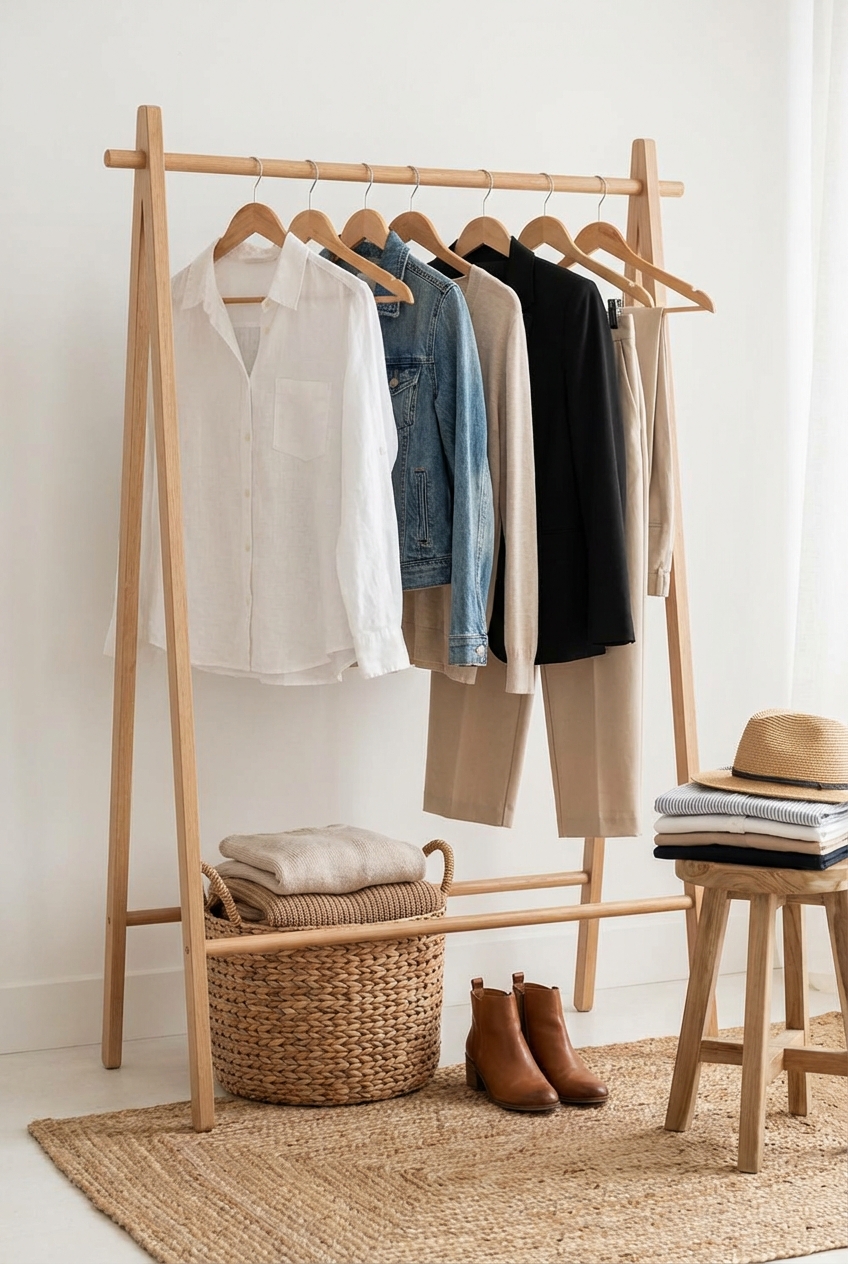
Capsule Wardrobe Tips For Simplifying Your Closet
Introduction
We have all stood in front of a bursting closet, staring at hundreds of hangers, and muttered the infamous phrase: “I have absolutely nothing to wear.” This phenomenon is usually caused by decision fatigue and a lack of cohesion rather than a lack of clothing. When you curate a capsule wardrobe, you are not just removing clutter; you are designing a system that works for your specific lifestyle and body type.
As a fashion stylist, I often see clients holding onto items that fit a past version of themselves or a fantasy lifestyle they do not actually live. The goal of a capsule wardrobe is to strip away the noise so you can focus on quality, fit, and personal style. It is about waking up and getting dressed in under five minutes while looking infinitely more polished than before.
In this guide, I will walk you through the exact framework I use to build functional, high-end wardrobes for my private clients, focusing on fabrication, tailoring, and color theory. For visual inspiration on how these pieces come together, be sure to check out the Picture Gallery at the end of the blog post.
The Philosophy of Subtraction and Assessment
The first step in any closet overhaul is not shopping; it is an aggressive, honest audit of what you currently own. You cannot build a structure on a shaky foundation, and you cannot build a style on ill-fitting garments.
Start by removing every single item from your closet and laying it out on your bed. You need to see the volume of what you own to understand your purchasing habits.
Create three distinct piles: “Love and Wear,” “Maybe,” and “Donate/Sell.” Be ruthless with the “Maybe” pile. If you have not reached for it in the last twelve months, it is taking up valuable real estate in your home and your mind.
Designer’s Note: The “Fantasy Self” Trap
The most common issue I see is clients keeping clothes for their “fantasy self.” This is the woman who goes to galas every weekend or vacations in St. Tropez four times a year, even though the real client works from home and has two toddlers.
The Fix:Allocate 80% of your wardrobe to your real, daily life (work, school drop-offs, errands) and only 20% to occasion wear. If an item does not serve your current reality, it does not belong in your capsule.
Defining Your Core Color Palette
A cohesive color palette is the secret weapon of a functional capsule wardrobe. When everything matches, the number of outfit combinations grows exponentially.
I recommend anchoring your wardrobe with two to three neutral colors. Good examples are black, navy, camel, charcoal, or ivory. These will form the basis of your investment pieces, such as coats, trousers, and blazers.
Once your neutrals are set, choose two to three accent colors that flatter your skin tone. These will appear in your blouses, scarves, and perhaps a statement dress.
Common Mistakes + Fixes
Mistake: Buying a standalone piece in a loud print that matches nothing else in the closet.
Fix: Use the “Rule of Three.” Before buying any new item, ensure it can be worn with at least three other items you already own. If it only matches one pair of pants, it is not a capsule contender.
The Numbers: Quantity and Categories
There is no hard and fast rule that says a capsule must be exactly 33 items, but aiming for a range of 30 to 40 pieces per season is a healthy target. This count includes tops, bottoms, outerwear, and shoes, but usually excludes workout gear, pajamas, and underwear.
Here is a balanced breakdown for a typical professional woman’s fall/winter capsule:
- 9 Tops: A mix of T-shirts, silk blouses, and button-downs.
- 5 Sweaters: Varying weights, from fine-gauge cashmere to chunky knits.
- 5 Bottoms: Two pairs of denim (one light, one dark), two tailored trousers, and one skirt.
- 3 Dresses: One day dress, one sweater dress, and one versatile cocktail dress.
- 3 Jackets/Coats: One trench, one blazer, and one heavy wool coat.
- 5 Pairs of Shoes: Sneakers, ankle boots, loafers, tall boots, and heels.
This structure ensures you are covered for casual weekends, important board meetings, and dinner dates without needing an overflowing closet.
Fabrication: Why Material Matters
In a small wardrobe, the quality of every single item becomes glaringly obvious. When you wear the same sweater once a week, it needs to hold its shape and resist pilling.
Avoid cheap synthetics like acrylic and low-grade polyester. These fabrics trap heat, retain odors, and pill after two washes. They ultimately cost you more because you have to replace them frequently.
Focus your budget on natural fibers. Look for Merino wool, cashmere, cotton, linen, and silk. These fabrics breathe better, drape more beautifully on the body, and last for years with proper care.
Material Rules of Thumb
- Denim: Look for jeans with 98% cotton and 2% elastane. This provides structure without bagging out at the knees by noon.
- Knits: Check the label for 100% wool or cashmere. If you are sensitive to wool, look for high-quality cotton blends, but avoid blends where acrylic is the primary fiber.
- T-Shirts: Pima or Supima cotton has a longer fiber length, making it softer and more resistant to pilling than standard cotton.
The Importance of Tailoring and Fit
The difference between looking “fine” and looking “expensive” is almost always tailoring. Off-the-rack clothing is made for a generic mannequin, not your specific body measurements.
In a capsule wardrobe, you wear your pieces frequently. If the pants drag on the floor or the blazer sleeves swallow your hands, you will look unpolished every single time you wear them.
Set aside a portion of your budget specifically for alterations. It is better to buy a $100 pair of pants and spend $30 tailoring them than to buy a $200 pair that fits poorly.
Specific Measurements to Watch
- Pant Hems: For trousers worn with heels, the hem should fall 1/4 to 1/2 inch from the floor. For flats or ankle boots, the hem should hit just at the ankle bone or slightly below, ensuring no bunching.
- Sleeve Length: Jacket and blazer sleeves should end right at the wrist bone. If you wear a shirt underneath, about 1/4 to 1/2 inch of the shirt cuff should be visible.
- Shoulder Seams: The seam of a coat or blazer should sit exactly at the edge of your shoulder. If it droops down your arm, the item is too big; if it pulls up, it is too small. This is the hardest area to tailor, so get this right when buying.
Investment Pieces vs. Fillers
You do not need to spend a fortune on every single item. The key is knowing where to invest and where to save.
Spend money on “high-mileage” items. These are the pieces you wear three to four times a week. Your winter coat, your primary leather handbag, your everyday boots, and your blazer should be the highest quality you can afford.
Save money on items that require frequent washing or are prone to staining. White T-shirts, tank tops, and trendy accessories can be purchased at lower price points because they naturally have a shorter lifespan.
Designer’s Note: Cost Per Wear (CPW)
When suffering from sticker shock, calculate the Cost Per Wear. A $400 trench coat worn 100 times over two years costs $2 per wear. A $50 trendy top worn twice costs $25 per wear. The “expensive” coat is actually the cheaper option in the long run.
Styling Your Capsule for Versatility
The fear of a capsule wardrobe is boredom. People worry they will look the same every day. The solution lies in layering and accessories.
Change the vibe of an outfit by swapping shoes and jewelry. A silk camisole and jeans paired with sneakers and a tote bag is a perfect weekend look. Take that same camisole and jeans, add a blazer, swap the sneakers for heels, and add a structured bag, and you are ready for dinner.
Utilize the “sandwich method” for balancing colors. If you are wearing black shoes, try to incorporate black into your top half (a black belt, a black top, or a black headband) to create balance. If you wear chunky boots, balance the visual weight with a structured jacket or a chunky scarf up top.
Finish & Styling Checklist
Before you consider your capsule wardrobe complete, run through this “Real Project” checklist I use with my clients. This ensures your closet is functional, not just pretty.
What I’d Do in a Real Project:
- The Sit Test: Sit down in your jeans and trousers. Do they dig into your stomach? If they are uncomfortable, you won’t wear them. Replace them.
- The Undergarment Check: Do you have the right nude bra for white tops? Seamless underwear for silk skirts? A capsule fails without the right foundation.
- Hardware Harmony: Check that the hardware on your bags generally coordinates with your jewelry. While mixing metals is trendy, sticking to all gold or all silver creates a cleaner, more luxurious look.
- The Maintenance Plan: Ensure you own a steamer. It is faster than ironing and essential for keeping your limited rotation looking fresh.
- Weather Reality: Do you have waterproof shoes? A hood? Don’t let practical weather needs ruin your style. incorporate them into the design.
FAQs
Q: Won’t people notice I am wearing the same clothes all the time?
A: Honestly, no. Most people are too focused on themselves to track your wardrobe rotation. Furthermore, wearing high-quality, well-fitting clothes on repeat signals confidence and signature style, not a lack of options. Think of it as a personal uniform.
Q: How do I handle laundry with fewer clothes?
A: You may need to do laundry slightly more often, but the loads will be smaller. However, many items like jeans, sweaters, and wool trousers do not need to be washed after every wear. Airing them out or steaming them is often sufficient to refresh the fabric between wears.
Q: Can I still follow trends with a capsule wardrobe?
A: Absolutely. Use accessories or one or two seasonal “wildcard” items to nod to current trends. If leopard print is huge this season, buy a leopard scarf or a pair of flats rather than a leopard print coat you will hate next year.
Q: What if my weight fluctuates?
A: This is a common reality. Include items with forgiving silhouettes, such as wrap dresses, elastic-waist trousers that still look tailored, and oversized knits. Avoid garments that are extremely rigid or difficult to alter.
Conclusion
Building a capsule wardrobe is a journey of refinement. It requires you to be honest about who you are and what you actually need. By focusing on high-quality fabrics, precise tailoring, and a harmonious color palette, you reduce the stress of dressing and increase your confidence.
Remember, a simplified closet is not about restriction; it is about liberation. It gives you back your time, your money, and your mental energy. Start with the purge, invest in your basics, and enjoy the ease of always having something wonderful to wear.
Picture Gallery


