
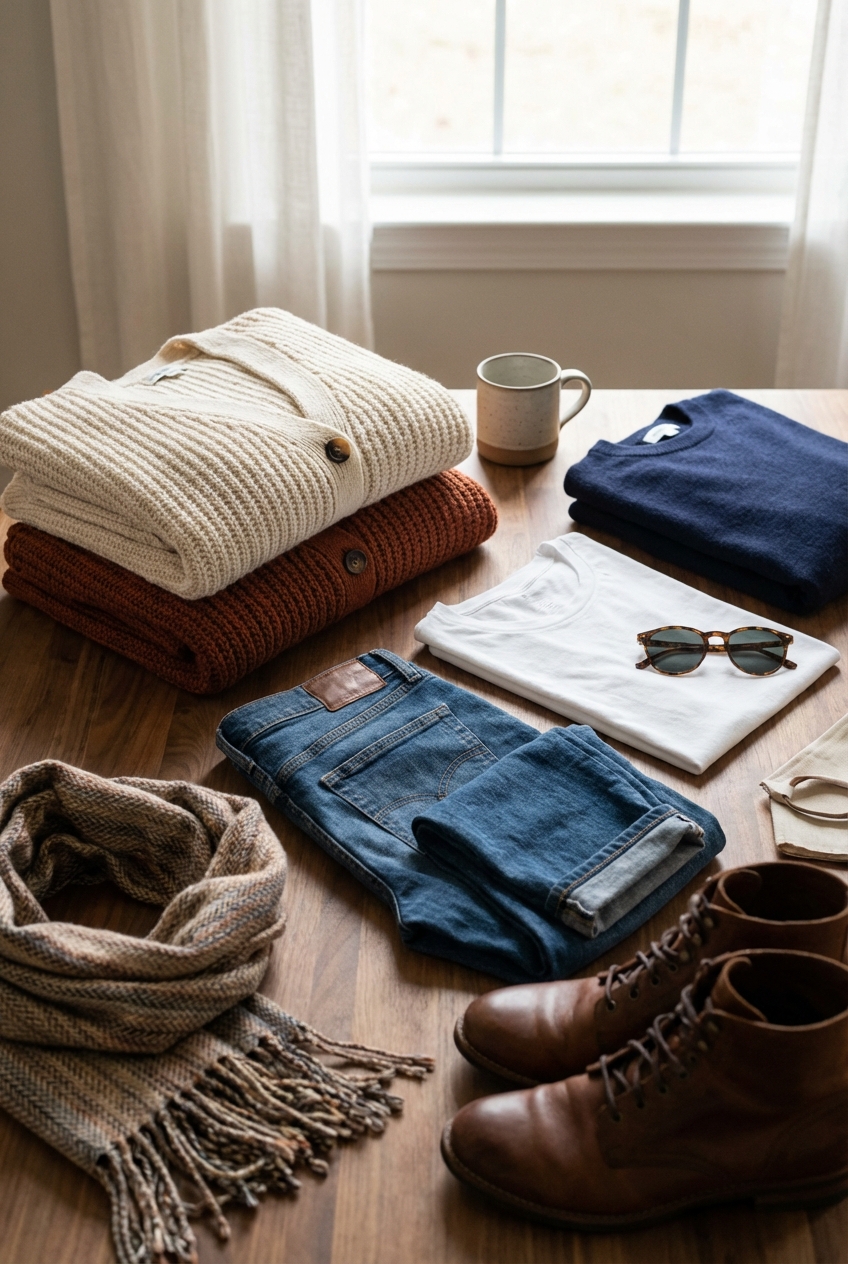
Cardigans And Crewnecks Knitwear Essentials For Layering
There is a precise moment in early autumn when the air shifts, and styling becomes less about survival and more about strategy. I remember standing outside a show during Paris Fashion Week, shivering in a silk blouse because I had underestimated the wind chill. That moment redefined my approach to building a wardrobe; I realized that knitwear is not just an accessory, but the architectural foundation of a functional outfit.
Layering is often misunderstood as simply piling on clothes to stay warm, but true high-end styling requires a nuanced understanding of volume, texture, and gauge. A well-curated collection of crewnecks and cardigans serves as the toolkit for navigating transitional weather with elegance. It allows you to move from a crisp, air-conditioned office to a brisk evening dinner without compromising your silhouette.
In this guide, I will break down exactly how to select, style, and care for these essential pieces. We will look at the specific weights that work for layering, the fabrics that offer longevity, and the fit rules I use when styling editorial shoots. For visual inspiration on how to execute these looks, be sure to check out the Picture Gallery at the end of the blog post.
The Crewneck Foundation: Selecting the Right Gauge
The crewneck sweater is the workhorse of the knitwear category. However, not all crewnecks are created equal when it comes to layering. The most critical factor to consider is the “gauge,” or the number of stitches per inch.
For a base layer that sits comfortably under a blazer or a trench coat, you need a fine-gauge knit. This is typically a 12-gauge or higher, meaning the fabric is thin, smooth, and drapes close to the body. This prevents the dreaded “stuffed sausage” look that happens when a sweater is too bulky for the jacket over it.
Conversely, a chunky 5-gauge or 7-gauge crewneck serves as a standalone piece or an outer layer. When styling these heavier weights, I always advise clients to ensure the neckline is slightly relaxed. A thick, tight collar can visually shorten the neck, whereas a slightly open crewneck allows a collared shirt to peek through beautifully.
Designer’s Note: The Neckline Gap
One specific detail I always check is the tension of the ribbed collar. In cheaper knitwear, the neck ribbing often ripples or sags after a few wears. Look for “fully fashioned” marks at the shoulder seam, which indicate the piece was shaped on the machine rather than cut and sewn. This construction ensures the neck stays flat against your collarbone, providing a polished frame for necklaces or scarves.
The Cardigan Renaissance: From Frumpy to Chic
For years, cardigans suffered from a reputation of being dowdy or strictly utilitarian. That narrative has completely shifted with the return of structure and intentional design. The modern cardigan is either a cropped “lady jacket” meant to be buttoned all the way up, or an elongated “grandpa” style meant to be worn open.
When selecting a cropped cardigan, treat it like a blouse. It should hit exactly at the waistband of your high-waisted trousers or skirts. This creates a 1/3 to 2/3 ratio on your body, lengthening your legs. If the cardigan hits the widest part of your hip, it creates a boxy, unflattering line.
For longer, oversized cardigans, the key is balancing the volume underneath. I strictly pair these with slim-fitting base layers, such as a turtleneck bodysuit or cigarette pants. The contrast between the billowing knit and the fitted under-layer highlights your frame rather than drowning it.
Common Mistakes + Fixes
Mistake: Buttoning a cardigan over a shirt that is too bulky or stiff.
Fix: Only wear fine silk or jersey tops under fitted cardigans. If you must wear a crisp button-down, drape the cardigan over your shoulders instead of putting your arms through the sleeves.
Fabric Intelligence: Cashmere, Merino, and Blends
Understanding fiber content is the single most important skill in building a luxury wardrobe on any budget. As an expert, I look at the label before I even look at the price tag. The fiber dictates how the piece layers, how it breathes, and how long it lasts.
Merino wool is my top recommendation for daily layering. It has active fibers that react to your body temperature, keeping you warm without overheating indoors. It is also naturally elastic, meaning it snaps back into shape after a long day of wear, unlike cotton which tends to bag out at the elbows.
Cashmere is the ultimate luxury, but you must be wary of the ply. Two-ply cashmere is the minimum standard for durability. If the cashmere feels incredibly soft and fluffy in the store, it might be over-washed during manufacturing, which leads to immediate pilling. A high-quality cashmere should feel slightly firm initially and soften with wear.
Fabric Hierarchy for Layering:
- Tier 1 (Best for warmth/thinness ratio): 100% Merino Wool or 2-ply Cashmere.
- Tier 2 (Best for texture): Alpaca or Mohair blends (great for outer layers, bad for base layers as they shed).
- Tier 3 (Avoid for layering): 100% Acrylic. It does not breathe and will cause you to sweat, making layering uncomfortable.
Mastering Proportions and Silhouettes
Styling is ultimately a game of geometry. When layering knitwear, you are adding bulk to your frame, so you must use styling tricks to define your shape. The most effective tool is the “French Tuck” or the half-tuck.
Taking the front hem of a medium-weight crewneck and tucking just an inch into your belt buckle accomplishes two things. First, it defines the waistline. Second, it creates a diagonal line at the hip, which is visually slimming. This works exceptionally well with denim or satin midi skirts.
For cardigans, consider the “third piece” rule. Your top and bottom are the first two pieces. The cardigan is the third. To make this look intentional, the cardigan must relate to the outfit. If you are wearing a monochromatic black outfit, a camel cardigan adds dimension. If your outfit has a pattern, the cardigan should pick up the darkest color in that print.
What I’d Do in a Real Project
When I am styling a client for a capsule wardrobe, I use the “Sandwich Rule.”
1. Top Layer: Chunky Knit Cardigan (Texture A).
2. Middle Layer: Silk Camisole (Texture B – Smooth).
3. Bottom Layer: Wool Trousers (Texture A – Matte).
By sandwiching the smooth silk between the matte wools, the outfit feels balanced and cohesive.
Color Theory in Layering
Color coordination is where amateurs and experts diverge. The safest route is tonal layering, which involves wearing different shades of the same color family. For example, an oatmeal crewneck under a camel cardigan with dark brown trousers. This creates a rich, expensive aesthetic.
However, contrasting layers can create a dynamic focal point. A bright poppy red crewneck poking out from under a navy blazer is a classic, nautical-inspired combination. When layering a button-down shirt under a crewneck, the collar and cuffs act as accents.
A white crisp shirt is the universal brightener. Even a small sliver of a white collar peeking out of a charcoal sweater illuminates the face. It reflects light upward, acting almost like a cosmetic highlighter. Ensure the shirt cuffs extend about half an inch beyond the sweater cuffs to tie the look together.
Lighting and Color Perception
Keep in mind that knits absorb light, while silks and cottons reflect it. A black velvet skirt reflects light differently than a black wool sweater. Even if they are the exact same color code, they will look different. Embrace this textual contrast rather than trying to match blacks perfectly, which is nearly impossible.
Care and Maintenance: Protecting Your Investment
You cannot have a conversation about knitwear without discussing maintenance. The longevity of your layers depends entirely on how you wash and store them. The number one rule is gravity is the enemy. Never hang a sweater on a hanger; the weight of the garment will stretch the shoulders and lengthen the body irreversibly.
Always fold your knits. For heavy cardigans, I recommend a shelf fold where the arms are crossed over the body to minimize creases. For lighter merino crewnecks, you can roll them to save drawer space, similar to the method used for packing suitcases.
Pilling is natural, even for high-end knitwear. It occurs in areas of friction, like under the arms or where a seatbelt crosses your chest. Do not pull pills off by hand, as this pulls the fiber out further. Use a battery-operated fabric shaver or a cashmere comb.
My Washing Protocol:
- Use a no-rinse wool detergent (like Eucalan).
- Submerge the knit in lukewarm water for 15 minutes. Do not agitate.
- Squeeze the water out gently—never wring or twist.
- Lay flat on a clean white towel and roll it up like a sleeping bag to press out excess moisture.
- Unroll and reshape on a drying rack away from direct sunlight or heat sources.
Finish & Styling Checklist
Before you head out the door, run through this quick mental checklist to ensure your layered look is polished and purposeful.
- Check the Collar: Is your base layer collar lying flat? If wearing a button-down under a crewneck, ensure the points of the collar are tucked inside unless you are going for a specific preppy look.
- Sleeve Length: Do your sleeves hit at the wrist bone? If they are too long, cuff them once. Long, slouchy sleeves can look messy rather than cozy.
- Hemline Check: Does the hem of your knit interact well with your waistband? Ensure no skin is showing when you raise your arms, unless it is a deliberate crop top look.
- Friction Test: Rub the sleeve against the body of the sweater. If it generates static immediately, you may need an anti-static spray or to rethink the fabric combination.
- Lint Check: Dark knits are magnets for dust and hair. A quick pass with a lint roller is non-negotiable before leaving the house.
FAQs
Can I layer a crewneck over a dress?
Absolutely. This is a great way to transition a summer slip dress into fall. To avoid losing your waist, belt the dress first, then tuck the hem of the sweater up into the belt to create a cropped effect.
How do I stop my wool sweater from itching?
If you are sensitive to wool, layering is your best friend. Wear a long-sleeved modal or silk tee underneath. Alternatively, soak the sweater in water mixed with a clear hair conditioner for 10 minutes to soften the fibers, then rinse thoroughly.
Is it okay to wear a cardigan buttoned up as a shirt?
Yes, this is currently a very fashionable way to wear cardigans. Look for styles with higher necklines or wear a lace bralette underneath for coverage. Ensure the buttons do not gape across the bust; if they do, size up.
What is the best way to store seasonal knits?
Clean them first. Moths are attracted to body oils and food residue, not just the wool itself. Store them in breathable cotton canvas bags with cedar blocks or lavender sachets. Avoid plastic bins, which can trap moisture and yellow the fabric.
Can I mix gold and silver buttons?
If your cardigan has gold buttons, try to keep your jewelry in the same metal family for a cohesive look. However, mixed metals are acceptable if done intentionally. For example, a silver belt buckle can work if you have a silver watch, even with gold cardigan buttons.
Conclusion
Mastering the art of cardigans and crewnecks is about respecting the balance between function and form. These pieces are the quiet heroes of a sophisticated wardrobe, providing the comfort we crave with the polish we require. By paying attention to gauge, fiber quality, and proportion, you can elevate a simple layered outfit into a statement of personal style.
Remember that the most stylish women are not the ones with the most clothes, but the ones who understand how their clothes work together. Invest in quality natural fibers, care for them diligently, and don’t be afraid to experiment with textures and lengths. Your knitwear should serve you, keeping you warm without weighing you down.
Picture Gallery


