
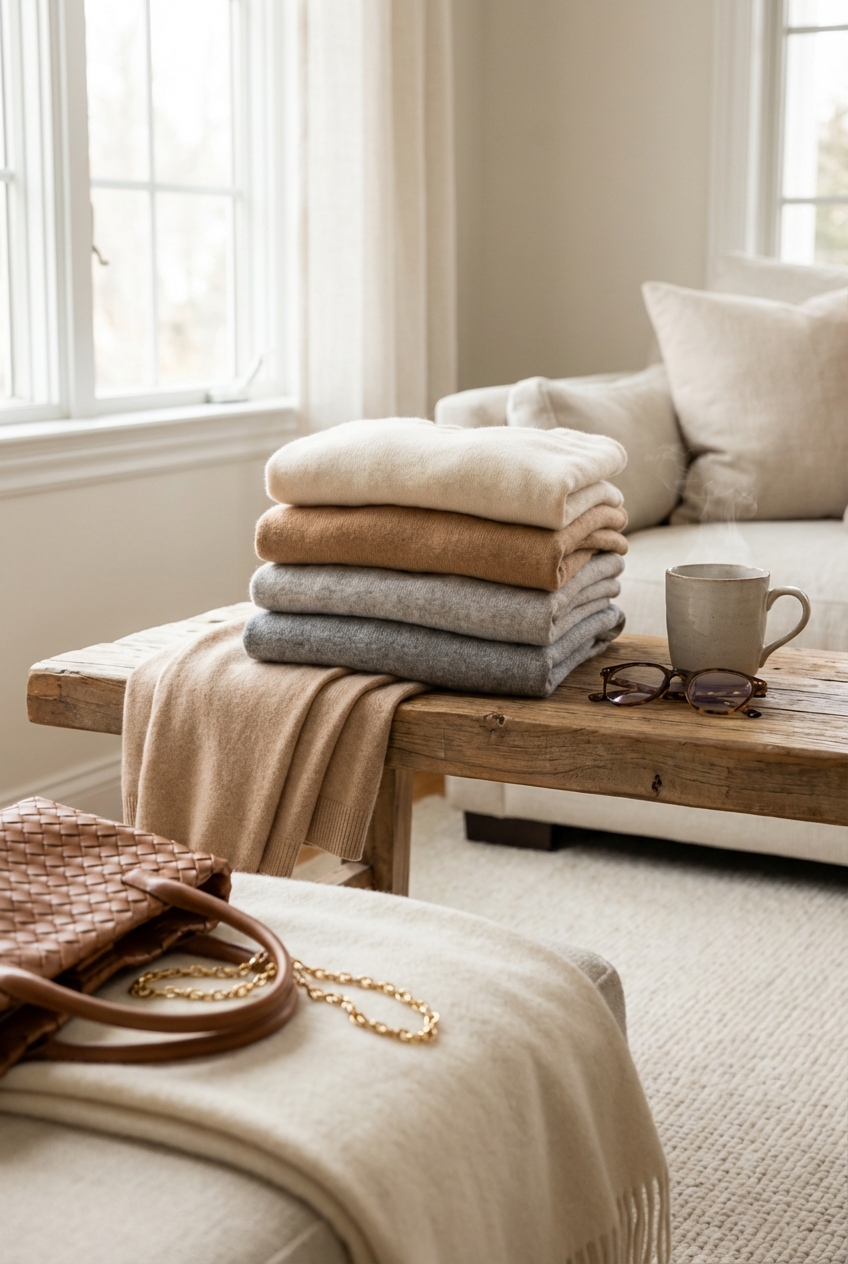
Cashmere Sweaters For Luxurious Layers
There is a distinct moment in every woman’s style evolution when she touches a piece of knitwear and realizes that not all wool is created equal. I remember my first significant investment piece—a charcoal 2-ply cashmere crewneck I bought in Milan over a decade ago. It wasn’t just about warmth; it was about the way the fabric draped against the skin without clinging, offering a softness that felt more like a hug than a garment.
Cashmere is the gold standard of layering because it offers the highest warmth-to-weight ratio of practically any natural fiber. However, navigating the market can be tricky, as mass production has flooded stores with lower-quality blends that pill after two wears. True luxury lies in understanding the fiber, the construction, and exactly how to style it for longevity.
In this guide, I will walk you through everything you need to know to curate a collection that lasts a lifetime, from micron counts to washing techniques. For those looking for visual inspiration on how to style these pieces, be sure to scroll to the Picture Gallery at the end of the blog post.
Decoding Cashmere Quality: The Technical Details
Before you swipe your card, you need to understand what you are actually paying for. The price gap between a $50 sweater and a $500 sweater usually comes down to the quality of the goat hair and the manufacturing process.
High-end cashmere comes from the undercoat of Capra Hircus goats, usually found in the freezing climates of Mongolia and Inner Mongolia. The extreme cold forces the goats to grow ultra-fine fibers to trap heat.
Here are the technical specs you should look for to ensure you are buying “investment grade” rather than fast fashion:
- Micron Count: This measures the diameter of the fiber. The lower the number, the softer the knit. Top-tier cashmere is usually between 14 and 15.5 microns. Anything over 19 microns will feel scratchy and is often blended with regular wool.
- Fiber Length: Longer fibers (around 34mm or more) are stronger and pill less because there are fewer loose ends sticking out of the yarn twist. Short fibers pop out easily, causing that fuzzy, messy look after a week.
- Ply Count: This refers to how many threads are twisted together to make the yarn. Look for 2-ply as a minimum. 1-ply is prone to developing holes, while 4-ply offers a chunkier, more durable feel suitable for deep winter.
Designer’s Note: The Touch Test
Be wary of sweaters that feel too soft right on the rack. Some manufacturers over-wash or treat the fibers with silicon softeners to mimic high quality. This reduces the lifespan of the garment. A great cashmere sweater should feel slightly firm initially; it will soften naturally with wear and proper washing.
Mastering the Art of the Layer
Layering cashmere is not just about piling on clothes; it is about managing volume and texture. If you get the proportions wrong, you risk looking bulky rather than chic. The goal is to maintain a streamlined silhouette while trapping heat.
The foundational rule of layering is to graduate your weights. You must start with the finest gauge against your skin and move toward heavier textures as you work outward.
My formula for the perfect layered look:
- Base Layer: A silk camisole or a superfine merino bodysuit. This protects the cashmere from oils and deodorants, extending time between washes.
- Mid Layer (The Cashmere): A fitted, fine-gauge crew or turtleneck. This should skim the body but not pull tight across the bust.
- Outer Layer: A structured blazer or a heavy wool coat. The structure of the coat contrasts beautifully with the softness of the sweater.
When layering a button-down shirt underneath a cashmere sweater, pay attention to the cuff and collar. The shirt cuff should extend exactly 1/2 inch to 1 inch beyond the sweater sleeve. This creates a deliberate, polished frame for your hands.
Selecting the Right Silhouette for Your Frame
Not every cut works for every body type or every occasion. Buying the wrong shape is the most common reason a beautiful sweater ends up sitting unworn in a drawer.
The Oversized V-Neck
This is the most versatile piece for a relaxed, “borrowed from the boys” aesthetic. It creates a vertical line that elongates the neck.
Best for: Pairing with slim-leg trousers or leather leggings to balance the volume.
Fit Check: The shoulder seam should drop off your natural shoulder by about 2 inches for that intentional slouch.
The Fitted Crewneck
This is your workhorse. It fits neatly under suit jackets and tucks easily into high-waisted skirts.
Best for: Office settings and formal layering.
Fit Check: The shoulder seam should sit squarely on your shoulder bone. The hem should hit right at the hip bone—any longer and it will bunch up when you sit.
The Boxy Cropped Cardigan
A modern favorite, this silhouette works exceptionally well with high-waisted denim or trousers.
Best for: creating a waistline. It draws the eye up and lengthens the legs.
Fit Check: The hem should just graze the waistband of your pants. You want zero skin showing when you raise your arms slightly.
Texture and Color Theory
Cashmere absorbs dye differently than cotton or synthetics, resulting in rich, deep hues. However, to build a truly luxurious wardrobe, I always recommend starting with the “Old Money” palette.
These colors never date and they make the fabric look more expensive than it is:
- Oatmeal and Camel: These undyed or lightly dyed shades show off the natural quality of the wool. They pair beautifully with white denim in winter.
- Charcoal and Slate: More forgiving than black (which can sometimes hide the beautiful texture of the knit), charcoal offers depth and softness.
- Navy: The ultimate professional neutral. It commands respect but feels less harsh than black near the face.
Mixing Textures
Luxury is tactile. A flat-knit cashmere sweater looks incredible when paired with opposing textures.
Cashmere + Silk: The matte finish of the wool against the sheen of a silk skirt is perfect for evening wear.
Cashmere + Leather: A chunky knit softens the edge of leather trousers, creating a balanced, high-low look.
Cashmere + Denim: Rigid, vintage-wash denim provides the structure needed to support a slouchy sweater.
Common Mistakes + Fixes
Even seasoned fashion lovers make errors when handling these delicate garments. Here are the most frequent issues I see in closets and how to correct them immediately.
Mistake 1: Hanging your sweaters.
Gravity is the enemy of knitwear. Hanging a cashmere sweater will stretch out the shoulders (creating “hanger bumps”) and drag the hemline down, ruining the shape permanently.
The Fix: Always fold your knits. If you are tight on shelf space, roll them like towels to prevent fold lines.
Mistake 2: Over-washing.
You do not need to wash cashmere after every wear. In fact, washing it too often strips the natural oils that keep the fibers supple.
The Fix: Air out your sweater for 24 hours after wearing it. Spot clean small stains. Aim to wash the garment only 2 or 3 times per season unless there is a major spill.
Mistake 3: Panicking over pilling.
Many people assume pilling means the sweater is cheap. This is false. All cashmere pills due to friction, especially under the arms or where a purse strap rubs.
The Fix: Purchase a cashmere comb or a depilling stone. Lay the sweater flat and gently comb in one direction. Never use scissors or a razor, as you risk cutting the yarn.
Care and Maintenance: The Ritual
If you treat cashmere well, it can last for twenty years. If you throw it in the dryer, it will last twenty minutes. The care process should be viewed as a ritual, not a chore.
The Washing Process
Ignore the “Dry Clean Only” tag. Dry cleaning chemicals are harsh and can make the fibers brittle over time. Hand washing is actually better for the longevity of the garment.
- Fill: Fill a clean basin with lukewarm water (never hot). Add a capful of specific wool and cashmere shampoo. Baby shampoo is a decent emergency alternative, but dedicated wool wash is best.
- Soak: Turn the sweater inside out and submerge it. Gently squeeze the suds through the fibers. Do not rub, twist, or agitate, as this causes felting (shrinking). Let it soak for 30 minutes.
- Rinse: Drain the basin and refill with cool water to rinse until soap is gone.
- The Towel Roll: Do not wring out the water. Lay the wet sweater flat on a clean white towel. Roll the towel up like a yoga mat with the sweater inside and press down to absorb excess moisture.
- Dry: Unroll and reshape the sweater on a drying rack away from direct sunlight and heat sources. Reshaping while wet is crucial to getting the fit back to normal.
Storage Strategy
Moths are the arch-nemesis of cashmere. They are attracted to body oils and microscopic food particles.
Always wash sweaters before storing them for the summer.
Store in breathable cotton canvas bags, not plastic. Plastic traps moisture and can yellow the fabric.
* Use cedar blocks or lavender sachets. Replace them every season as the scent (which repels pests) fades.
Real-World Styling: What I Do For Clients
When I am styling a client for a fall/winter capsule wardrobe, I focus on versatility. I don’t want them to have 20 sweaters they rarely wear; I want them to have 3 that they wear everywhere.
Here is the checklist I use during a fitting:
- The Neckline Check: Does the neck itch? If so, we pass. No amount of styling will make an itchy sweater wearable.
- The Transparency Test: I hold the sweater up to the window light. If I can see clearly through the weave, the knit is too loose and will lose its shape quickly.
- The Rise Test: I ask the client to lift their arms. If the sweater exposes the stomach, it requires a high-waisted bottom or a bodysuit underneath.
- The Tuck Strategy: For thicker ply cashmere, I teach the “French Tuck.” Tuck just the front center of the hem into the waistband and let the sides and back hang loose. This defines the waist without creating bulk around the hips.
Finish & Styling Checklist
Before you head out or finalize your outfit, run through this quick mental checklist to ensure your look is polished and practical.
- Lint Check: Cashmere loves to pick up hair and lint. Give it a quick pass with a roller.
- Jewelry Watch: Be careful with pronged rings or bracelets. They are the number one cause of snags. Put jewelry on after the sweater.
- Undergarments: Ensure you are wearing a nude or color-matched bra if the knit is light-colored. White bras often show through cream sweaters.
- Layering: If wearing a jacket over top, ensure the jacket lining is smooth (like silk or rayon) to prevent friction pilling on the sweater.
FAQs
Why is my cashmere itchy?
True high-quality cashmere should not be itchy. If it is, it likely has a high micron count (coarser hairs) or is a blend containing regular sheep’s wool. Always check the label for “100% Cashmere.”
Can I un-shrink a sweater?
Sometimes. If you accidentally shrunk a sweater, soak it in a basin of lukewarm water with a generous amount of hair conditioner. This relaxes the fibers. Gently stretch it back to its original shape while wet and pin it in place on a towel to dry. It’s not guaranteed, but it often works for minor shrinkage.
Is 100% cashmere always better than a blend?
Generally, yes, for warmth and softness. However, a blend with 10-20% silk adds sheen and drape, which can be lovely for evening wear. Avoid blends with high percentages of nylon or acrylic, as these reduce breathability.
How often should I depill my sweater?
Only do this when necessary. Excessive depilling thins the fabric over time. A good rule of thumb is to do a “maintenance check” once a month during the heavy wearing season.
Conclusion
Building a collection of cashmere is an investment in your daily comfort and confidence. There is a quiet power in wearing a garment that feels as good as it looks. It signals that you value quality over quantity and that you understand the nuances of fine materials.
By focusing on fiber quality, mastering the wash routine, and styling with proportion in mind, your cashmere layers will serve you beautifully for years to come. It elevates a simple pair of jeans into a “look” and makes winter transitions seamless. Treat these pieces with respect, and they will return the favor every time you slip them on.
Picture Gallery


