
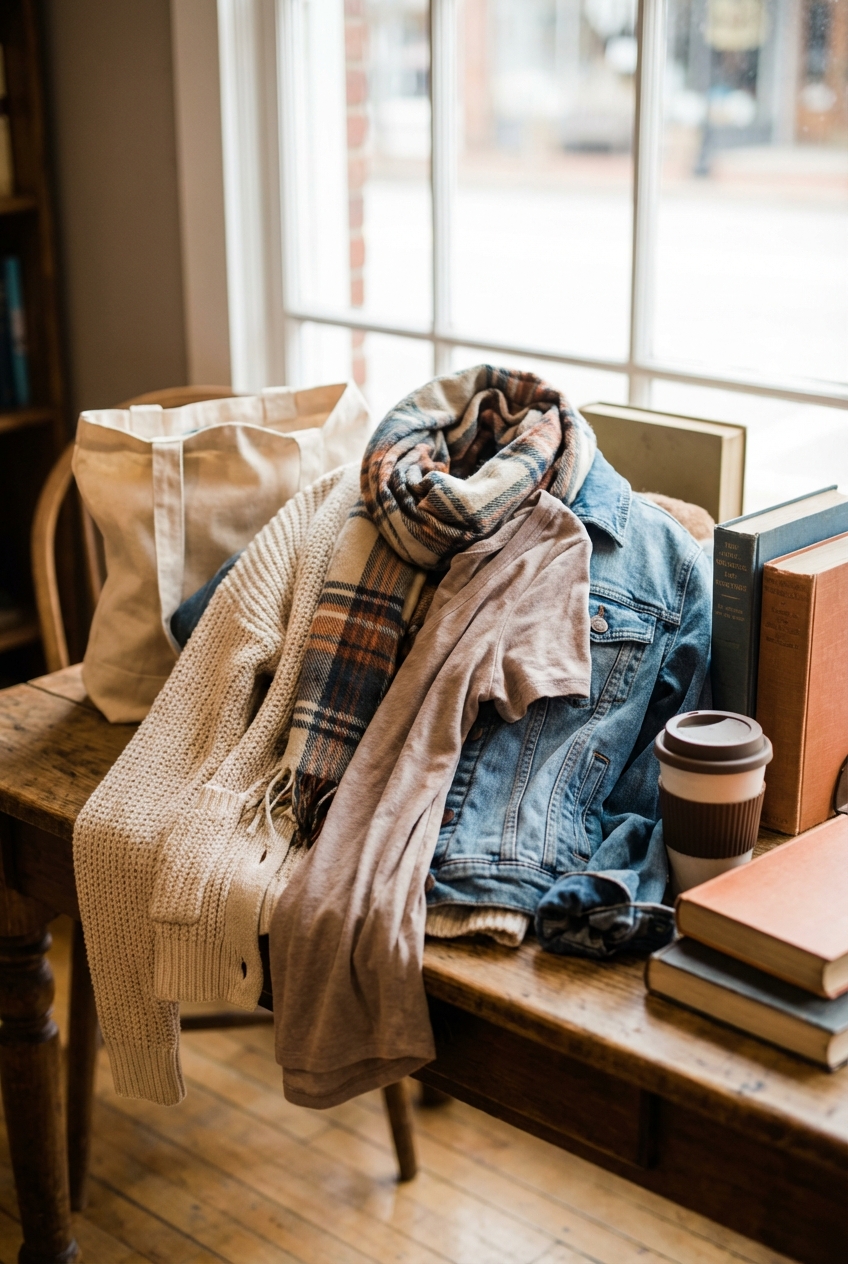
Casual Bookstore Hangout Outfits With Easy Layers
There is something undeniably romantic about spending a Saturday afternoon lost in the stacks of a local bookstore. The smell of old paper, the hushed atmosphere, and the potential of finding a new favorite story create a specific mood that demands the right wardrobe. You want to look effortless and intellectual, yet you need to be comfortable enough to sit in a worn-out leather armchair for an hour.
The secret to mastering this aesthetic lies entirely in strategic layering. Temperatures in bookstores can fluctuate wildly, from drafty entrances to overheated corners near the café. If you wear a single heavy sweater, you will likely overheat, but a simple t-shirt might leave you shivering in the fiction aisle.
My goal as a stylist is to help you build an outfit that functions as well as it photographs. We are aiming for a look that feels curated but not constricting, allowing you to reach for high shelves and curl up with a hardback without adjusting your waistband. If you are looking for specific visual inspiration, skip to the Picture Gallery at the end of the blog post.
The Foundation: Selecting the Right Base Layer
The base layer is the most critical component of a layered outfit because it sits directly against your skin. In a bookstore setting, comfort is paramount. You should avoid synthetic fabrics that trap heat and moisture, as you might be moving around quite a bit.
Start with high-quality natural fibers like Pima cotton, modal, or lightweight merino wool. A fitted turtleneck is a classic “dark academia” choice that instantly elevates the look. It provides a sleek silhouette that makes layering bulky items on top much easier without creating unwanted bunching.
If turtlenecks feel too restrictive, opt for a high-quality white crewneck t-shirt or a ribbed tank top. The key here is fit; the item should skim your body rather than squeeze it. You want a smooth foundation that allows your second and third layers to drape correctly.
Designer’s Note: The “Sit Test”
I always tell my clients to perform the “sit test” before leaving the house. Bookstore hangouts invariably involve sitting, squatting to look at bottom shelves, or leaning against counters.
If your base layer rides up or your waistband digs into your stomach when you sit down, change it immediately. There is nothing worse than trying to focus on a book blurb while physically uncomfortable. I prefer high-waisted trousers with a bit of stretch or a bodysuit that stays tucked in no matter how you move.
The Art of the Mid-Layer
The mid-layer is where you introduce texture and personality to the outfit. This piece acts as your primary insulator but needs to look excellent on its own if you decide to remove your coat. This is the bridge between your basics and your outerwear.
An oversized button-down shirt is one of the most versatile tools in a stylist’s kit. Wear it open over your tank top or turtleneck. Look for fabrics like flannel for warmth or crisp poplin for a more polished, preppy vibe. If you choose a button-down, ensure the cuffs peek out from under your top layer for a deliberate, styled finish.
Chunky knit cardigans are another bookstore staple. However, you must pay attention to the gauge of the knit. If you plan to wear a jacket over this, avoid massive cable knits in the sleeves, as they will make your arms feel sausage-like and immobile.
Pro-Tip: Vest Layering
Sweater vests have made a massive comeback and are perfect for this scenario. They keep your core warm while leaving your arms free and unencumbered. Layer an argyle or solid cashmere vest over a white button-down for a look that is equal parts vintage scholar and modern fashionista.
Outerwear That Doesn’t Overwhelm
Your outer layer serves two purposes: protection from the elements outside and framing the outfit inside. Since you are indoors, you generally want outerwear that can be worn open without slipping off your shoulders. This frame creates vertical lines that elongate your body.
A classic trench coat is a phenomenal option for transition seasons. It adds an air of mystery and sophistication that fits the literary vibe perfectly. Look for a trench in a neutral camel, stone, or olive green. Ensure the length hits at least below the knee to maintain proper proportions with your trousers or skirt.
For a more casual approach, consider a “shacket” (shirt-jacket) in a wool blend. These offer the structure of a jacket with the softness of a shirt. They are easy to drape over the back of a chair if you settle in to read, and they rarely wrinkle.
Common Mistakes + Fixes
Mistake: Wearing a stiff, structured blazer that restricts arm movement.
Fix: Opt for an “oversized” boyfriend blazer with a drop shoulder. This allows you to reach for books on high shelves without the fabric pulling tight across your back.
Mistake: Wearing a coat that is too long for your frame, making you look like you are playing dress-up.
Fix: If you are petite (under 5’4″), ensure your coat hem ends above the ankle or at mid-calf. Avoid floor-sweeping lengths unless you are wearing heels, which I generally advise against for this activity.
Bottoms: Balancing Comfort and Style
The bottom half of your outfit dictates the overall vibe—casual, dressy, or edgy. For a bookstore, I lean heavily toward tailored trousers or relaxed denim. We want to avoid anything too athletic, like gym leggings, as it breaks the polished aesthetic we are building.
Wide-leg trousers are incredibly popular right now and work beautifully here. They offer the comfort of pajamas but look sophisticated. Look for fabrics like corduroy or heavy wool blends. Corduroy, in particular, adds a wonderful tactile element that feels very autumnal and appropriate for a library setting.
If you prefer denim, stick to straight-leg or relaxed cuts in a medium to dark wash. Distressed denim with holes can look a bit too messy for this specific aesthetic. A clean, dark wash pairs beautifully with loafers and knits.
Skirt Options
If you prefer skirts, a midi-length pleated skirt is a fantastic option. It allows for ease of movement and looks great with knee-high boots. Just be mindful of length; you don’t want a skirt that drags on the dusty floor of a used bookstore.
Footwear for Browsing and Standing
Footwear is arguably the most important functional choice you will make. You will be standing on hard floors, likely concrete or wood, for extended periods. You need support, but you also need style.
Loafers are the quintessential academic shoe. A chunky penny loafer adds a bit of height and edge while remaining flat and walkable. Pair them with visible ankle socks—perhaps in a contrasting color or a sheer texture—to bridge the gap between your pants and shoes.
Ankle boots are another safe bet. A Chelsea boot with a low block heel gives you stability and protection. If it is raining, waterproof leather or treated suede is essential. Avoid stilettos or strappy sandals; they look out of place in this environment and are impractical for climbing library ladders or navigating narrow aisles.
What I’d Style in a Real Project
If I were styling a client for a day in the city that included a bookstore stop, I would choose:
- Base: A charcoal grey merino wool turtleneck (thin gauge).
- Bottoms: High-waisted, wide-leg camel trousers with a pleat front.
- Mid-Layer: A denim button-down shirt worn open over the turtleneck.
- Outer: A relaxed, oversized wool blazer in a plaid pattern.
- Shoes: Black leather chunky loafers with white cotton socks.
Accessorizing Without Clutter
Accessories should be practical. You are there to handle books, so you don’t want a dozen bangles clinking against the shelves or rings that snag on pages. Keep hand jewelry minimal.
The most critical accessory is your bag. A tiny clutch is useless here. You need a sturdy tote bag or a structured satchel that can hold your purchases. Canvas totes with literary prints are a meta choice, but a high-quality leather tote elevates the outfit significantly.
Scarves are excellent for adding a pop of color near your face. A large blanket scarf can also double as a literal blanket if you find a cozy nook to read in. Choose one in a soft material like cashmere or a brushed synthetic to avoid itchiness.
Eyewear is also a major styling element. If you wear reading glasses, bring them. Even if you don’t need prescription lenses, a pair of blue-light blocking glasses with acetate frames can serve as a chic accessory that ties the whole “studious” look together.
Fabric Science & Color Palettes
To truly nail the high-end look, you must pay attention to color theory and fabric weight. The bookstore aesthetic heavily favors “earth tones” and “neutrals.” This is not usually the place for neon pinks or electric blues, as they can feel jarring against the backdrop of muted book spines.
Stick to a palette of camel, cream, espresso brown, navy, forest green, and burgundy. These colors mix and match effortlessly, allowing you to maximize your wardrobe. Monochromatic looks (wearing all one color in different shades) are particularly effective at making you look taller and more expensive.
Regarding fabric weight, always mix textures. If your pants are smooth wool, wear a chunky knit sweater. If your top is smooth cotton, try corduroy pants. Visual interest comes from the contrast of materials.
Designer’s Rule of Thumb: The 70/30 Texture Split
Aim for 70% matte fabrics (wool, cotton, denim) and 30% sheen or texture (leather, silk, chunkier knits). This ratio keeps the outfit grounded but interesting. Too much shine looks like evening wear; too much matte looks flat.
Finish & Styling Checklist
Before you head out, run through this quick mental checklist to ensure your outfit is practical and stylish.
What I’d Do: The Final 5-Step Check
- Reach Test: Can I raise my arms above my head without my top coming untucked or my coat restricting me?
- Sit Test: Can I sit cross-legged or in a deep chair without my waistband cutting off my circulation?
- Temperature Check: Do I have at least one layer I can easily remove if the heating is on full blast?
- Bag Capacity: Will my bag fit at least two hardback books?
- Shoe Comfort: Can I stand in these shoes for two hours without pain?
Common Styling Mistakes
- Over-accessorizing: Wearing too many long necklaces that swing and hit shelves as you lean forward. Keep jewelry close to the body.
- Ignoring Socks: Wearing loafers with no socks in colder months. A visible sock is a deliberate style choice that adds warmth and visual interest.
- Bulky Sleeves under Fitted Coats: Trying to jam a balloon-sleeve sweater into a fitted trench coat. This restricts blood flow and ruins the silhouette.
FAQs
What if it is raining or snowing?
Swap the loafers for waterproof Chelsea boots or knee-high leather boots. Replace the wool coat with a trench that has water-resistant properties. Ensure your tote bag has a zipper closure to protect your books from the elements.
Can I wear sweatpants to a bookstore?
While you can, I advise against it if you want to maintain a “styled” appearance. If you must prioritize comfort, opt for a matching knit set (loungewear) in a neutral color rather than grey gym sweats. Throw a structured trench coat over it to hide the casual nature of the set.
How do I transition this look for a dinner date afterward?
This is the beauty of layering. If you are wearing a turtleneck and a blazer, simply swap your tote bag for a small clutch (keep the clutch inside the tote), apply a bolder lipstick, and perhaps switch from flat loafers to a heeled bootie if you brought them along or kept them in the car.
Is it okay to wear a hat?
Absolutely. A beanie adds a cozy, casual vibe, while a beret leans into the Parisian literary aesthetic. Just be aware that if the store is warm, you might want to take it off, so make sure your hair is presentable underneath.
Conclusion
Dressing for a bookstore hangout is about finding the sweet spot between academic romance and genuine utility. It is an opportunity to embrace tactile fabrics, rich colors, and thoughtful layering. By prioritizing natural fibers, managing your proportions, and ensuring your footwear can handle a few hours of browsing, you create an outfit that allows you to focus on what really matters: finding your next great read.
Remember that confidence is your best accessory. When you feel comfortable in your clothes—physically and aesthetically—you carry yourself differently. Enjoy your browsing.
Picture Gallery


