
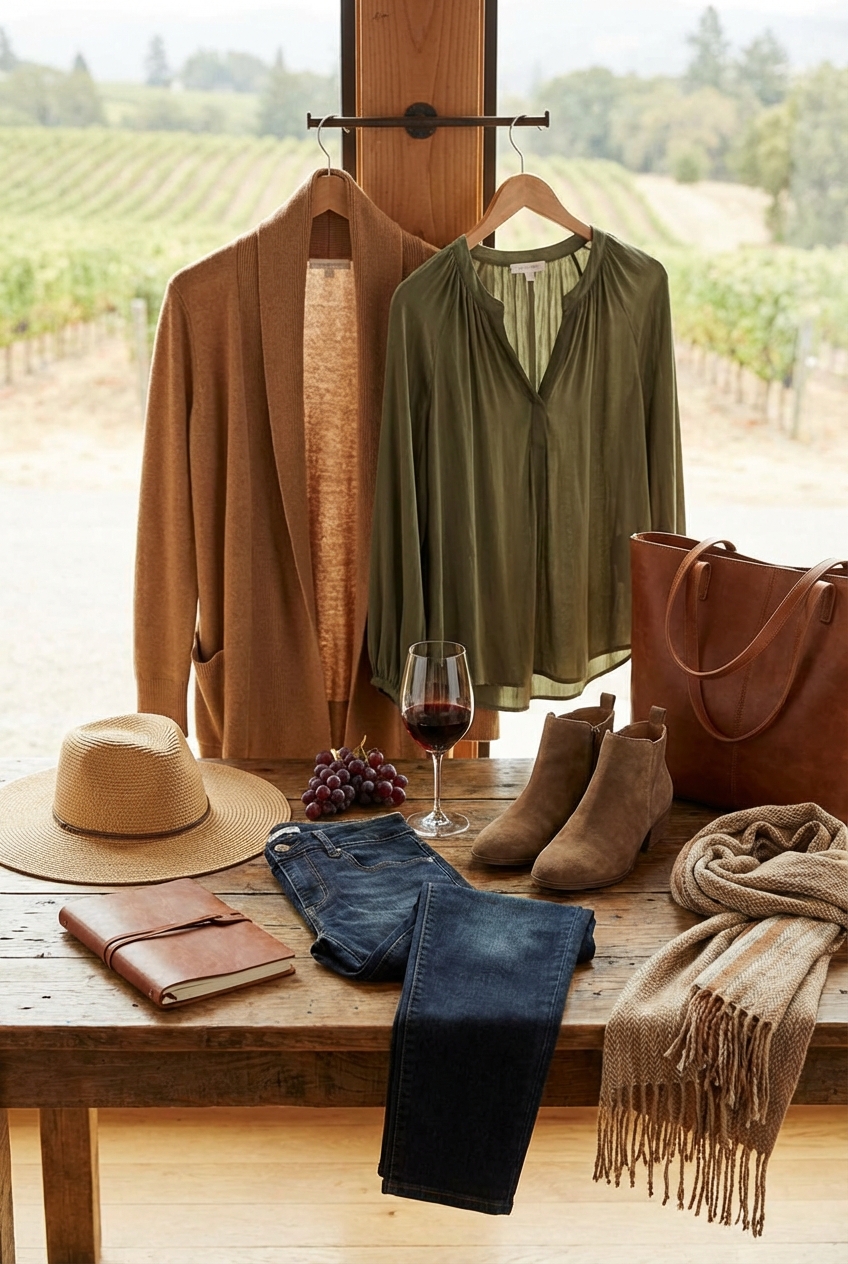
Casual Wine Tasting Looks With Earthy Tones Relaxed Refined And Perfectly Vineyard Ready
Introduction
There is a specific art to dressing for a day at the vineyards. Unlike a cocktail party or a city brunch, wine tasting requires a blend of agricultural practicality and high-end aesthetic. You are essentially visiting a working farm, yet the expectation is one of effortless luxury. The goal is to look harmonious with the surroundings, which is why earthy tones—terracottas, olives, deep ochres, and warm sands—are the gold standard for this environment.
I remember my first time styling a client for a weekend in Napa Valley. She packed structured city suits and stilettos, thinking “luxury” meant “boardroom sharp.” We had to completely pivot her wardrobe to accommodate gravel paths, fluctuating temperatures, and the relaxed pacing of wine country. The secret lies in the tension between “relaxed” and “refined.” It is about choosing fabrics that drape rather than constrict, and colors that complement the vines rather than compete with them.
In this guide, I will break down exactly how to build these looks using high-quality textures and a nature-inspired palette. We will cover footwear that survives the terrain, layering strategies for the cellar chill, and the specific silhouettes that photograph beautifully among the grapes. If you are looking for visual inspiration, be sure to check out our curated Picture Gallery at the end of the blog post.
Mastering the Earthy Color Palette
When we talk about earthy tones in high fashion, we aren’t just talking about generic brown. We are looking for colors that have depth and complexity. These shades resonate with the landscape, creating a visual continuity that looks incredibly chic in photos.
The Core Palette:
- Terracotta and Rust: These warm, reddish-browns bring a flush of color to the face without being as aggressive as a primary red. They pair beautifully with gold jewelry.
- Sage and Olive Green: These act as neutrals in a vineyard setting. They anchor an outfit and allow you to play with brighter accessories if needed.
- Oatmeal and Sand: These are your highlighters. A monochromatic look in these shades screams “quiet luxury,” though it requires careful maintenance.
- Slate and Charcoal: Softer than black, these colors provide the necessary contrast to lighter earth tones without feeling too harsh for a daytime activity.
Fashion Expert’s Note:
One thing that often goes wrong when styling earth tones is a lack of contrast. If you wear the same shade of beige from head to toe without varying the texture, the look falls flat. To prevent this, mix your materials. Pair a silk rust-colored skirt with a chunky oatmeal knit sweater. The difference in light reflection between the silk and the wool creates the necessary depth.
The “Relaxed Refined” Silhouette
The “relaxed refined” aesthetic is built on the concept of volume control. You never want to be tight all over, nor do you want to be drowning in fabric. The terrain of a vineyard is open and breezy; you want clothes that move with the wind but maintain a structured shape.
My Go-To Formulas:
1. The Midi Dress + Structured Jacket: A bias-cut midi dress offers movement. When you throw a structured blazer or a cropped denim jacket over it, you ground the look.
2. Wide-Leg Trousers + Fitted Tank: High-waisted, wide-leg linen or wool trousers elongate the legs. Pair them with a fitted bodysuit or tank to define the waist.
3. The Oversized Button-Down: A high-quality cotton or linen shirt, tucked loosely into straight-leg denim, is timeless. Roll the sleeves to show off a watch or bracelet stack.
Common Mistakes + Fixes:
Mistake: Wearing a maxi dress that drags on the floor.
Fix: In a vineyard, the ground is dusty, muddy, or grassy. Ensure your hemline hits at the ankle bone. This “floating” hemline keeps your garment clean and draws attention to your boots or shoes.
Fabric Selection: Texture is Everything
For a casual wine tasting, the fabric you choose dictates your comfort level. Synthetic fabrics often trap heat and don’t breathe well, which can be disastrous during a warm afternoon of drinking wine (which naturally raises body temperature). Natural fibers are non-negotiable here.
Linen Blends:
Pure linen is beautiful but wrinkles the second you sit in the car. I always recommend a linen-viscose or linen-cotton blend. You get the dry, textured look of linen with a bit more drape and wrinkle resistance.
Cashmere and Merino Wool:
Even in summer, wine caves and tasting rooms are kept at roughly 55 to 60 degrees Fahrenheit. A lightweight cashmere sweater draped over your shoulders is not just a styling trick; it is a functional necessity.
Denim Weights:
Leave the stiff, raw denim at home. You will be sitting on low tasting couches or standing for long periods. Opt for denim with 1% to 2% elastane for comfort, or choose a lighter-weight chambray that feels soft against the skin.
Footwear: The Practicality of Gravel
This is where I see the most fashion disasters. Vineyards are agricultural sites. There is gravel, loose dirt, grass, and uneven paving. Stilettos are physically dangerous and visually out of place. However, you don’t need to resort to hiking boots.
The Block Heel:
If you must add height, a leather block heel is your best friend. Look for a heel with a wide base, roughly 2 to 3 inches high. This distributes your weight and prevents the heel from sinking into the turf.
The Elevated Flat:
A pointed-toe mule or a high-end leather slide works perfectly for warmer days. They are easy to slip off if you end up picnicking on a blanket.
The Western Boot:
This is a classic vineyard pairing. A suede ankle boot or a knee-high western boot pairs exceptionally well with midi dresses. The rugged leather contrasts perfectly with softer fabrics like silk or chiffon.
What I’d Do in a Real Project:
If I were styling a client for a Sonoma trip in October, I would choose a chocolate brown suede knee-high boot with a 2-inch block heel. I would ensure the shaft of the boot is wide enough to tuck in straight-leg jeans but slim enough to sit under a skirt. Suede reads more “daytime luxury” than polished leather, fitting the earthy theme perfectly.
Layering for Microclimates
Wine country is famous for its microclimates. It might be 80 degrees in the sun at 2:00 PM and drop to 55 degrees by 5:00 PM as the fog rolls in. Your outfit must be modular.
The Base Layer:
Start with a camisole, tank, or light tee. This is your “high heat” layer. Stick to breathable cotton or silk.
The Mid Layer:
This is your fashion statement piece—a chunky cardigan, a denim jacket, or an oversized blazer. In earthy tones, a camel blazer is a powerhouse piece.
The Outer Layer:
For spring or autumn tastings, a trench coat or a wool wrap coat is essential. When choosing a coat, ensure the length complements your bottom layer. A coat that ends exactly where your dress ends creates a very clean, deliberate line.
Designer’s Tip on Proportions:
If you are wearing voluminous layers (like a trench over a chunky knit), keep the bottom half slim. Skinny jeans or tailored trousers balance the bulk on top. Conversely, if you have a wide-leg pant, keep the jacket cropped or belted to define the waist.
Accessories: Finishing the Look
Accessories transform a simple outfit into a “look.” In a wine tasting setting, they also serve functional purposes.
The Hat Debate:
Wide-brimmed felt hats or straw fedoras are vineyard staples for a reason—sun protection. However, scale is critical. If you are petite, a massive brim will swallow you. The hat brim should not extend past the width of your shoulders. Stick to wool felt in cooler months and high-quality straw in summer.
Bag Selection:
You need your hands free for the wine glass and appetizers. A crossbody bag is the most practical choice. Look for saddlebag shapes in cognac or espresso leather. Avoid clutches; they are annoying to manage when you are trying to swirl and sip.
Jewelry:
Earthy tones look best with gold hardware. Layered gold necklaces or chunky gold hoops add a metallic warmth that reflects the sunlight. Avoid heavy statement necklaces that might clink against the glass or get in the way.
Finish & Styling Checklist
Before you head out the door, run through this quick fashion expert checklist to ensure your look is polished and practical.
The Fit Check:
- Can you sit comfortably? (Test this! Tasting chairs are often low and plush).
- Is your hemline safe from the ground? (Aim for ankle height or higher).
- Does your jacket fit over your sweater without bunching at the armpits?
The Color Check:
- Do you have at least one point of contrast? (Texture or tone).
- Are your earthy tones warm or cool? (Try to keep them in the same family—e.g., warm rust with warm cream).
The Practicality Check:
- Are your shoes gravel-proof? (No thin heels).
- Do you have a layer for the wine cave?
- Are you wearing a lipstick that can survive a few sips? (Stains are better than gloss here).
FAQs
Can I wear white to a wine tasting?
Yes, but proceed with caution. White looks stunning against the green vines, but red wine stains are a real risk. If you choose white, opt for it on your top half and wear darker bottoms, or choose a patterned fabric where a small drip might be disguised.
Are jeans acceptable at high-end vineyards?
Absolutely. The key is the wash and the cut. Avoid distressed, ripped, or acid-washed denim. Dark wash, black, or crisp white denim in a straight or wide-leg cut looks very elegant. Pair it with a silk blouse and a blazer to elevate the denim.
What should I do if it rains?
Leave the trench coat; bring a waxed canvas jacket or a high-end raincoat. Swap suede boots for leather ones that can handle moisture. A Hunter boot can look chic if styled with tight trousers and a thick sock, embracing the “English countryside” aesthetic.
Is it okay to wear a short skirt or shorts?
Generally, I advise against short shorts. It feels a bit too casual for the elevated atmosphere of a tasting room. If you want to show leg, a tailored romper or a skirt that hits mid-thigh is acceptable, provided the footwear is flat or low-heeled to keep the look grounded and not too “night out.”
Conclusion
Dressing for a casual wine tasting is about respecting the setting while showcasing your personal style. It is the perfect opportunity to embrace earthy tones that reflect the natural beauty of the vineyard. By focusing on natural fibers, practical footwear, and smart layering, you ensure that you are comfortable enough to enjoy the experience and stylish enough to feel confident in every photo.
Remember that the best outfit is one that allows you to be present. You shouldn’t be tugging at a hemline, shivering in a cave, or stumbling on gravel. When you nail that balance of relaxed and refined, you embody the true spirit of wine country luxury.
Picture Gallery


