
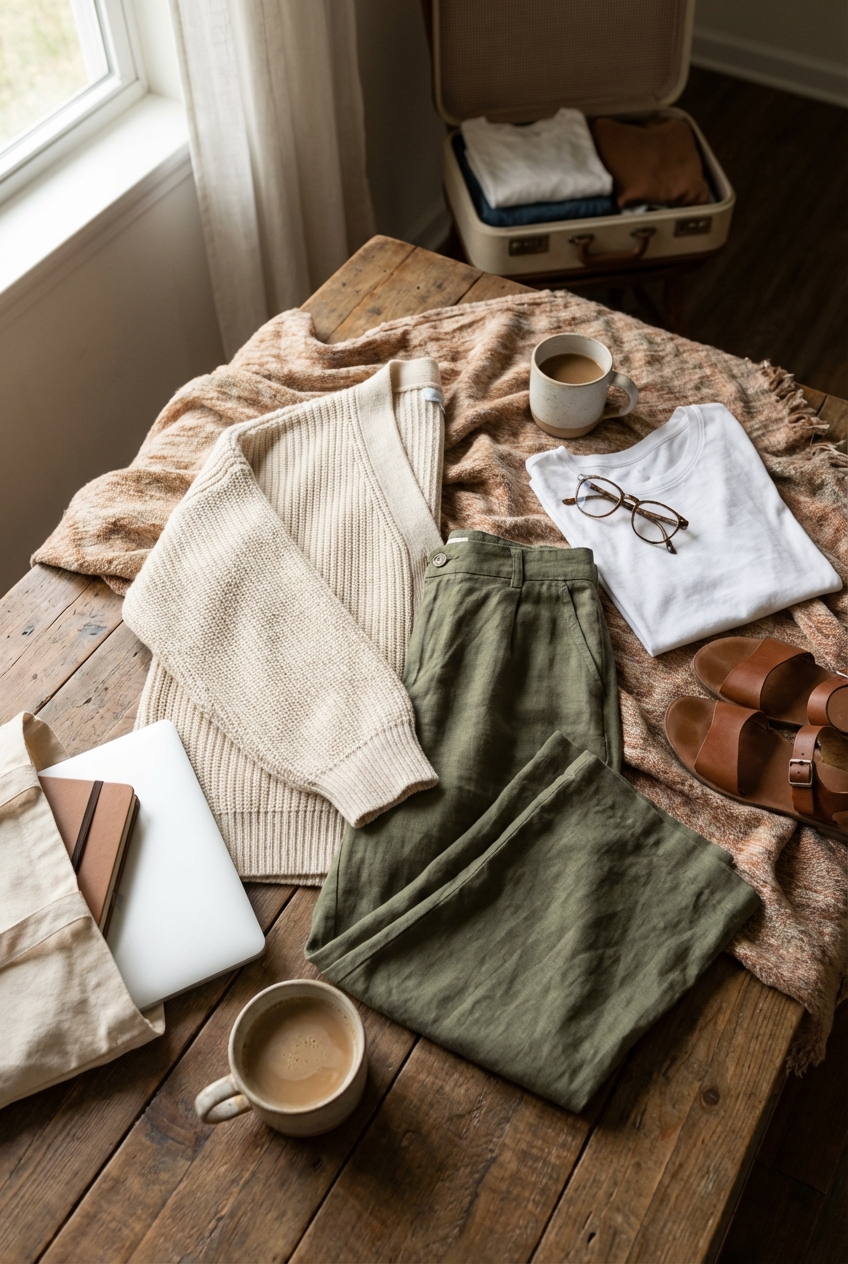
Casual Work Retreat Styles With Relaxed Fits Effortless Comfort For A Productive Getaway
Introduction
There is a distinct shift in mindset when you swap a structured blazer for an oversized cashmere knit. The same physiological release happens when you step into a room designed for a “work retreat” rather than a sterile office. As we blend our professional lives with restorative getaways, the spaces we inhabit need to mirror that desire for “relaxed fits.”
I have spent years styling high-end interiors that function as creative sanctuaries, and the secret lies in mimicking the ease of your favorite wardrobe staples. A productive getaway demands an environment that feels unforced, tactile, and perfectly tailored to your needs without feeling rigid. It is about creating a space that holds you comfortably while you work, rather than forcing you to sit up straight.
In this guide, I will walk you through designing a work retreat space that balances productivity with profound relaxation. We will cover everything from the ergonomics of lounge seating to the color temperatures that keep you focused without fatigue. For a huge dose of inspiration, be sure to scroll all the way down to the curated Picture Gallery at the end of the blog post.
Defining the “Relaxed Fit” Aesthetic in Interiors
When we talk about “relaxed fits” in fashion, we refer to drape, movement, and softness. In interior design, we translate this through textile selection and furniture silhouettes. The goal is to eliminate sharp edges and cold surfaces that subconsciously signal “high alert.”
Start by auditing the fabrics in your designated workspace. You want materials that invite touch. I always steer clients toward heavy-weight linens, bouclé, and velvet for upholstery. These textures absorb sound, creating a hushed acoustic environment that is essential for deep focus.
Avoid high-gloss finishes on large surfaces like desks or tabletops. Glare is a major source of eye strain. Instead, opt for matte woods, honed stones, or leather-topped surfaces. These materials develop a patina over time, much like a well-loved leather bag, adding character and warmth to the room.
Designer’s Note: The “Touch Test”
I have a rule in my studio: if it doesn’t feel good against the back of your hand, it doesn’t go in a retreat space. I once specified a gorgeous, sculptural wool chair for a client’s reading nook. It looked stunning, but the wool was too scratchy for lounging in shorts or a robe. We had to reupholster it immediately. Always swatch fabrics and rub them against sensitive skin (like your inner wrist) before committing.
Layout Logic: Flow and Function
A “relaxed” room does not mean a messy one. In fact, effortless comfort requires precise mathematical planning to ensure good flow. If you are tripping over an ottoman or squeezing past a desk, the relaxation is broken.
First, establish your traffic patterns. You need a minimum of 30 to 36 inches of clearance for any major walkway. In a retreat setting, I prefer to push this to 42 inches if space allows. This extra width creates a sense of luxury and breathability, similar to the drape of an oversized coat.
Consider the “floating” layout. Pushing all furniture against the walls is a common mistake that creates a dead zone in the center of the room. Instead, pull your seating arrangement into the middle of the space to create intimacy. Anchor this arrangement with a rug, ensuring the front legs of all seating furniture sit on the textile.
Common Mistakes + Fixes
Mistake: Placing the desk facing a blank wall.
Fix: Turn the desk perpendicular to the wall or face it toward the room (command position). This reduces the feeling of being “in time out” and allows you to enjoy the full scope of the design you have created.
Lighting the Retreat: The Layering Rule
Lighting is the jewelry of the room; it sets the mood and defines the utility. For a work retreat, you cannot rely on a single overhead fixture. That is the equivalent of wearing a hospital gown—functional, but unflattering and harsh.
You need three distinct layers: ambient, task, and accent. Ambient lighting is your base, usually from recessed cans or a central pendant. For a relaxed vibe, install dimmers on every single switch. This is non-negotiable.
Task lighting is where the productivity happens. A desk lamp should cast light downwards without shining into your eyes. The bottom of the shade should be roughly at eye level when you are seated. Accent lighting, like a picture light over art or a small table lamp on a shelf, provides the “glow” that makes a space feel cozy in the evenings.
Pro-Tip: Color Temperature Matters
Pay attention to Kelvin (K) ratings on your bulbs.
- 2700K: Warm, yellow light. Best for the evening lounge areas.
- 3000K: Soft white. Ideally, use this for the whole room to keep it neutral.
- 4000K+: Cool, blue light. Avoid this in a retreat. It mimics commercial office lighting and disrupts your circadian rhythm.
The Ergonomics of “Casual” Work
We often romanticize working from a sofa, but true comfort requires support. The “casual” aspect should come from the aesthetic, not a lack of spinal alignment. You need a dedicated workspace that supports your body for 3-4 hours at a time.
If you refuse to use a standard office chair (which ruins the vibe of a retreat), look for a “dining armchair” or a “library chair” on casters. These pieces often feature fully upholstered bodies and high-end fabrics but include the necessary swivel and height adjustments hidden beneath the seat.
Your desk height is critical. The standard is 29 to 30 inches high. If you are using a vintage dining table as a desk, measure it. Many vintage tables are 28 inches or lower, which will force you to hunch. If the table is too low, you can add discreet risers or casters to lift it.
What I’d Do in a Real Project:
For a recent “cloffice” (closet-office) retreat, we used a Parsons-style table in a matte burl wood. We paired it with a mid-century modern executive chair reupholstered in a cognac mohair. It looked like a lounge, but it functioned like a CEO’s office.
The Lounge Zone: Soft Seating and Rugs
Every work retreat needs a “break room,” which in this context means a luxurious lounge corner. This is where you take calls, read briefs, or decompress. The key here is scale.
A common failure in DIY design is the “postage stamp rug.” A rug that is too small makes the room feel disjointed and cheap. The rug should be large enough that at least the front two legs of your sofa and accent chairs rest on it. Ideally, leave about 12 to 18 inches of bare floor visible around the perimeter of the room to frame the space.
For the coffee table, spacing is paramount for comfort. You want the table to be 14 to 18 inches away from the edge of the sofa. This is close enough to put your feet up or set down a drink, but far enough to walk through without banging your shins.
Durability for Peace of Mind
If you have pets or are renting this space out, use performance fabrics. Brands like Crypton or Sunbrella make fabrics that feel like soft linen or chenille but are virtually stain-proof. “Relaxed” means not panicking when you spill your espresso.
Bringing the Outdoors In
A true retreat blurs the line between inside and outside. This connection to nature restores mental energy. If you have a view, frame it. Do not block natural light with heavy, opaque drapes.
Use linen sheers or woven wood shades to filter light without eliminating it. If your view is lackluster (like a brick wall or a neighbor’s fence), create your own internal landscape. Large-scale indoor trees, like a Ficus Audrey or a Black Olive tree, add verticality and life.
Place greenery near the corners of the room to soften the boxy architecture. A large plant effectively hides cords and dead space while improving air quality. Ensure your planters are scaled correctly; a tiny pot on the floor looks cluttered. The planter should be substantial, roughly 1/3 the height of the plant itself.
Finish & Styling Checklist
Before you consider the room complete, run through this styling checklist to ensure the “relaxed fit” vibe is cohesive.
- The Sit Test: Sit in every chair. Is there a place to set a drink within arm’s reach? If not, add a drink table.
- Cord Control: Nothing kills a vibe like a tangle of black wires. Use cord covers painted to match the wall color or route them under the rug.
- Scent Scaping: Style is multisensory. Add a diffuser or candle with notes of sandalwood, bergamot, or cedar.
- Layered Textiles: Does the sofa have a throw blanket? A casual drape of alpaca wool adds instant visual softness.
- Vertical Balance: Do you have something tall (a lamp, a plant, a bookshelf) to balance the low horizontal lines of the furniture?
FAQs
Can I create a work retreat in a small bedroom?
Absolutely. In small spaces, scale is everything. Choose furniture with exposed legs rather than skirted bottoms; seeing the floor underneath makes the room feel larger. Use a wall-mounted desk or a secretary desk that can fold up to hide clutter when you are done.
How do I mix wood tones without it looking messy?
The rule of thumb is to identify the undertone. Mix warm woods (walnut, cherry, oak) with other warm woods. You can mix light and dark shades as long as the undertone matches. Avoid mixing a very red mahogany with a very gray driftwood, as they will clash visually.
What is the best paint finish for a relaxing room?
I almost exclusively use “Eggshell” or “Matte” for walls in retreat spaces. Matte finishes absorb light rather than reflecting it, creating a velvety, soft appearance that hides wall imperfections. Save the “Semigloss” for trim and baseboards only.
Is it okay to put a desk in front of a window?
Yes, but watch out for contrast glare. If the window is bright and your screen is dark, your eyes will fatigue quickly. If you face a window, ensure you have sheer curtains to diffuse direct sunlight during peak hours.
Conclusion
Designing a casual work retreat is an exercise in empathy for your future self. It is about anticipating your needs—a soft place to land, a clear surface to think, and lighting that soothes rather than strains. By applying these interior design principles, you move beyond simple decoration and into the realm of functional wellness.
Just as you curate a wardrobe of relaxed fits to feel confident and comfortable, your environment deserves the same level of intention. When the flow is right, the lighting is layered, and the textures are inviting, productivity ceases to be a chore and becomes a natural byproduct of your surroundings.
Picture Gallery


