
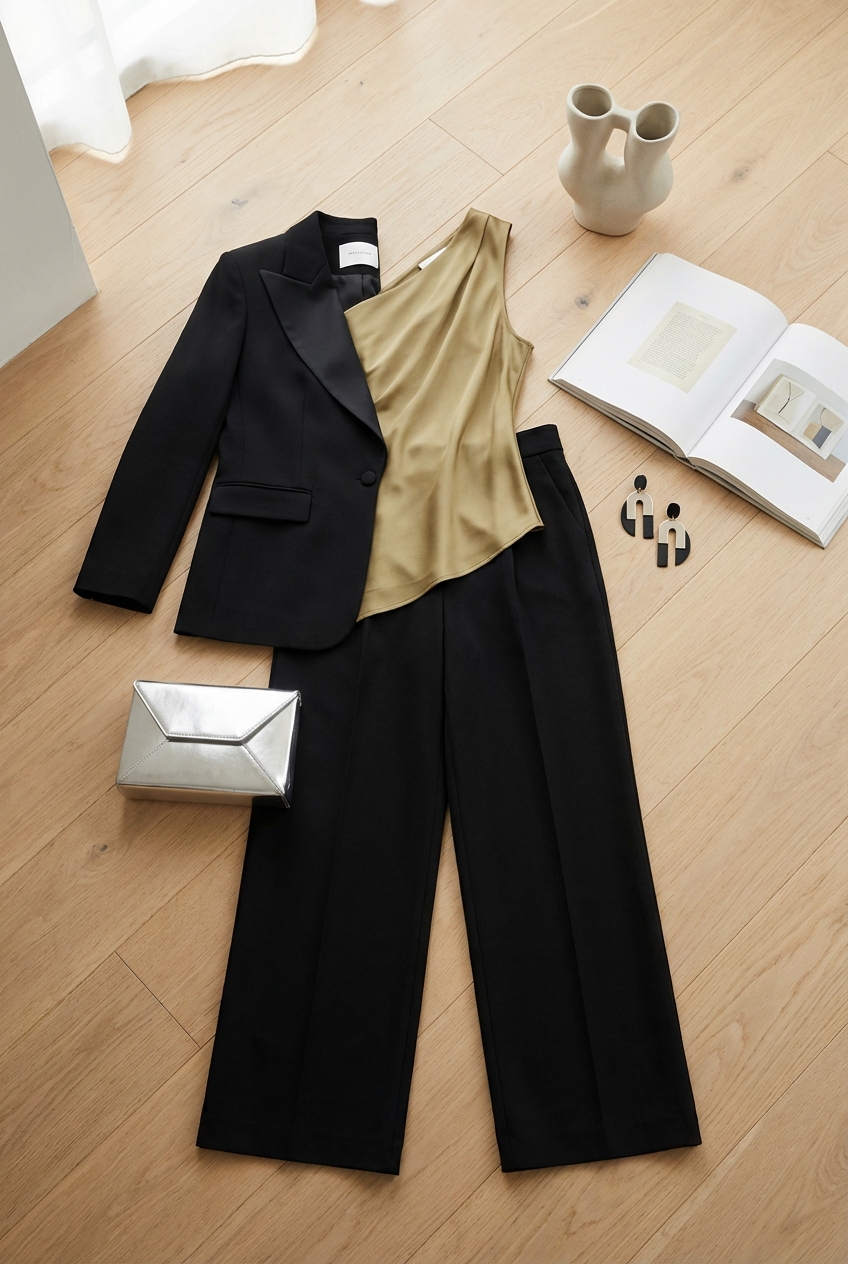
Chic Art Gallery Opening Looks With Sculpted Lines Sophisticated Artistic And Statement Making
There is a distinct electricity in the air at an art gallery opening. The lighting is deliberate, the crowd is cultured, and the atmosphere sits somewhere between a quiet museum visit and a high-energy cocktail party. For a stylist, this is one of the most exciting environments to dress a client for because the dress code is refreshingly open-ended yet demanding. You are there to appreciate art, but in many ways, you are expected to embody it as well.
I remember the first time I attended a major opening in Chelsea. I made the rookie mistake of wearing a busy print that competed with the abstract expressionism on the walls. I felt like visual clutter. The women who truly commanded the room weren’t wearing the loudest colors; they were wearing architectural shapes. They understood that in a room full of visual information, the silhouette is king.
That night changed how I approach gallery style forever. It is not about fading into the white walls, nor is it about screaming for attention. It is about curated structure. If you are looking for visual inspiration on how to execute this aesthetic, make sure you look at our dedicated Picture Gallery at the end of the blog post.
The Philosophy of Wearable Sculpture
When we talk about “sculpted lines” in fashion, we are referring to garments that hold their own shape regardless of the body underneath. This is different from body-con or draping. This is about rigidity, angles, and volume. Think of a blazer with a shoulder so sharp it could cut glass, or a skirt with a hem that stands away from the leg.
To master this look, you have to stop thinking about clothes as fabric and start thinking of them as construction materials. We are looking for structure. The goal is to create a silhouette that looks interesting in profile, from the back, and from the front.
In high-end fashion styling, we often use the “Rule of Thirds.” If you are wearing a voluminous, sculpted top, the bottom two-thirds of your body should remain streamlined. Conversely, if you are wearing wide-leg, structural trousers, keep the bodice fitted. This prevents you from looking like a walking fabric swatch.
Designer’s Note: The Volume Trap
One frequent issue I see is clients wearing volume on volume. A boxy neoprene top paired with a stiff A-line skirt will swallow you whole, regardless of your size.
The Fix: Always reveal one structural point of the body. If the shoulders are covered and boxy, show the wrists or cinch the waist. If the legs are hidden by wide trousers, ensure the neckline is open or the waist is defined.
Fabric Selection: The Engineering of the Look
You cannot achieve a sculpted look with flimsy jersey or thin silk. Those fabrics are fluid; they succumb to gravity. To get that “artistic statement” vibe, you need fabrics with memory and weight. This is where the technical side of fashion becomes crucial.
I always steer clients toward bonded fabrics, scuba (neoprene), wool gazar, or heavy jacquard. These materials have high “gsm” (grams per square meter) and inherent stiffness. When you put them on, they don’t just hang; they stand.
For a gallery setting, matte finishes generally photograph better and look more expensive under track lighting than high-shine satins. A matte crepe with a heavy drape absorbs light beautifully, making the color appear richer and the lines of the garment sharper.
Common Mistakes + Fixes
Mistake: Choosing a structured dress in a cheap polyester blend.
Fix: Structure requires quality lining. Check the inside of the garment. A well-constructed piece should have a lining that supports the outer shell, often fused with interfacing. If you pinch the fabric and it feels thin or papery, put it back.
Mistake: ignoring the “sit test.”
Fix: Structured fabrics can be unforgiving when you sit down. Before buying, sit in a chair. Does the neckline choke you? Does the skirt rise dangerously high? Gallery dinners often follow the standing reception, so mobility is key.
The Monochromatic Power Move
Galleries can be visually chaotic environments. There is art on the walls, people moving around, and often eclectic furniture. To cut through that noise with sophistication, I almost always recommend a monochromatic palette.
Dressing head-to-toe in a single hue creates a long, uninterrupted vertical line. This allows the shape of your clothes to take center stage. If you are wearing a complex, asymmetric cut, doing it in black, ivory, or electric blue allows the eye to appreciate the architecture of the garment without being distracted by a pattern.
However, monochrome does not mean boring. The secret to making it work is texture variance. If you are wearing all black, mix a wool structural coat with a leather clutch and patent leather shoes. The difference in how light hits these surfaces creates depth.
What I’d Style for a Client
1. Base: A sleeveless, funnel-neck midi dress in bonded crepe (black or charcoal).
2. Layer: A cropped, boxy jacket that hits exactly at the waistline.
3. Texture: A smooth leather belt to define the waist if the dress is loose.
4. Shoe: A sculptural wedge heel—something that looks like art itself.
Architectural Footwear and Grounding the Look
Shoes are the pedestal upon which your sculpted look stands. A gallery opening is one of the few occasions where I encourage clients to prioritize “interesting” over “classic.” This is not the time for a basic beige pump.
Look for heels with geometric shapes. Chrome spheres, triangular wedges, or lucite blocks are excellent choices. The shoe should feel intentional, like the final brushstroke on a painting. Square toes are currently very relevant and add a nice sharp edge to the bottom of an outfit.
Practicality is still a factor. You will be standing for at least two hours on concrete or hardwood floors. I recommend a heel height between 2.5 and 3.5 inches. Anything higher than 4 inches will have you shifting your weight uncomfortably after forty-five minutes, which ruins your posture and, consequently, the line of your outfit.
Pro-Tip on Hemlines and Heels
If you are wearing wide-leg, structural trousers, the hem should hover exactly 0.25 to 0.5 inches off the ground when you have your shoes on. You want the “floating” effect. If the pants pool at the bottom, you lose the clean line. If they are too short, the proportions feel off. Take your exact shoes to the tailor.
Jewelry as Wearable Art
When the clothes are sculptural, the jewelry must be curated carefully. You are aiming for “gallery curator chic,” not “costume party.” The rule here is scale and negative space.
If your neckline is high and structural (like a mock neck or funnel), skip the necklace entirely. It interrupts the line. Instead, focus on the ears or hands. Large, hammered metal earrings or an architectural cuff bracelet work best.
I prefer metals with a brushed or matte finish for these events. High-shine gold can sometimes look too “commercial.” Brushed brass, oxidized silver, or resin pieces feel more artisanal and aligned with the art world aesthetic.
Jewelry Rules of Thumb
One Statement Piece: If the earrings touch your shoulders, the wrists and neck should be bare.
Brooches: A gallery opening is the perfect place to revive the brooch. Place a large, abstract brooch on the lapel of a structured blazer or even at the waist of a dress. It acts as a focal point.
Ring Stacking: Avoid thin, delicate stacking rings. Opt for one or two large, cocktail-style rings that have weight and presence.
Grooming: The Sleek Complement
Your hair and makeup are the final accessories. With sculpted, sophisticated clothing, you generally want grooming that is equally clean and deliberate. A messy boho beach wave often clashes with sharp tailoring.
I usually advise a sleek, pulled-back hairstyle. A low bun, a sharp bob, or a high, tight ponytail elongates the neck and allows the collar and shoulders of your garment to shine. If you have textured hair, focusing on shape and volume control is key to matching the structural vibe of the outfit.
For makeup, think “fresh modern.” Heavy contouring can look dated in gallery lighting. Instead, focus on luminous skin and perhaps one graphic element, like a sharp winged liner or a bold, matte red lip. Do not do both. Keep the palette neutral and sophisticated.
The “Gallery Lighting” Reality Check
Gallery track lighting is overhead and harsh. It creates shadows.
Avoid: Heavy under-eye concealer (it can crease and look cakey) and excessive glitter (it reflects oddly).
Do: Use a light-reflecting primer and a setting spray to keep your makeup fresh while you sip warm white wine in a crowded room.
The Practicalities of the Evening
We must address the logistics of a gallery opening. These events are social minefields involving small glasses of wine, crowded spaces, and no seating.
First, consider your bag. You need a clutch or a small shoulder bag. A large tote implies you just came from work; a clutch implies you are there for the evening. However, you need one hand for a drink and one for shaking hands. I highly recommend a sleek bag with a delicate chain strap or a wristlet loop. Tucking a clutch under your arm all night leads to “clutch fatigue” and ruins the silhouette of your jacket.
Second, consider temperature control. Galleries are often freezing (to protect the art) or boiling (due to body heat). A structural blazer worn over the shoulders (the “editor cape” style) is a great solution. It keeps you warm but is easy to slip off if the crowd gets dense.
Finish & Styling Checklist
Before you head out the door, run through this final check to ensure your look is polished and gallery-ready.
Silhouette Check: Stand in front of a mirror and squint. Do you see a clear, defined shape? If it looks like a blob, add a belt or change a layer.
Lint Roller: Structured fabrics, especially in black, are magnets for lint. Give yourself a thorough roll before leaving the house and keep a mini roller in your bag.
Undergarments: Ensure no lines are visible. Structured clothes often require seamless, laser-cut undergarments.
The “Clink” Test: Walk across a hard floor. If your shoes are deafeningly loud, it might be distracting in a quiet gallery space.
Hemline Audit: Check your hem from the back. Often, skirts can hike up on the backside if the fit isn’t perfect.
Fragrance: Apply sparingly. In tight crowds, overpowering perfume is a faux pas.
Teeth Check: If you are wearing bold lipstick, double-check your teeth. You will be talking close-up with people.
FAQs
Q: Can I wear jeans to a gallery opening?
A: It depends on the gallery. For a high-end opening in a major city, I would avoid standard blue denim. However, a pair of black, coated denim jeans or extremely wide-leg, dark-wash trousers with a structural blazer can work. The denim must look intentional and pristine, not distressed.
Q: What if I am on a tight budget?
A: Structure looks expensive, even if it isn’t. Look for “scuba” or “neoprene” fabrics at fast-fashion retailers. These materials hold their shape well. Stick to black, as it hides cheap fabric quality better than light colors. Swap out the plastic buttons on a cheap blazer for nicer metal ones to instantly elevate the piece.
Q: I’m petite. Will sculpted clothes overwhelm me?
A: They can if you aren’t careful. If you are petite, focus on “micro-structure.” Instead of giant oversized shoulders, look for a fitted dress with a peplum or a small architectural ruffle. Keep hemlines above the knee or go full maxi; avoid the mid-calf length, which can cut your leg line.
Q: How do I handle coat check?
A: Most galleries have a coat check, but lines are long. Ideally, your outfit is the coat—a heavy, structural blazer dress or a cape. If you must wear a heavy winter coat, wear something sleek underneath so you aren’t fumbling with layers when you arrive.
Conclusion
Dressing for a gallery opening is an exercise in balance. You are curating your own image to align with a night dedicated to aesthetics. By focusing on sculpted lines, sophisticated fabrics, and architectural details, you create a look that is powerful and respectful of the environment.
Remember that the most important element of any statement look is confidence. Structural clothing requires you to stand tall. Shoulders back, chin up. When you wear something that takes up space visually, you have to inhabit that space mentally.
Fashion, at this level, is a form of non-verbal communication. It tells the room that you understand proportion, you appreciate detail, and you belong in the world of art. Enjoy the exhibition, but don’t be surprised if people spend just as much time looking at your outfit as they do the paintings.
Picture Gallery


