
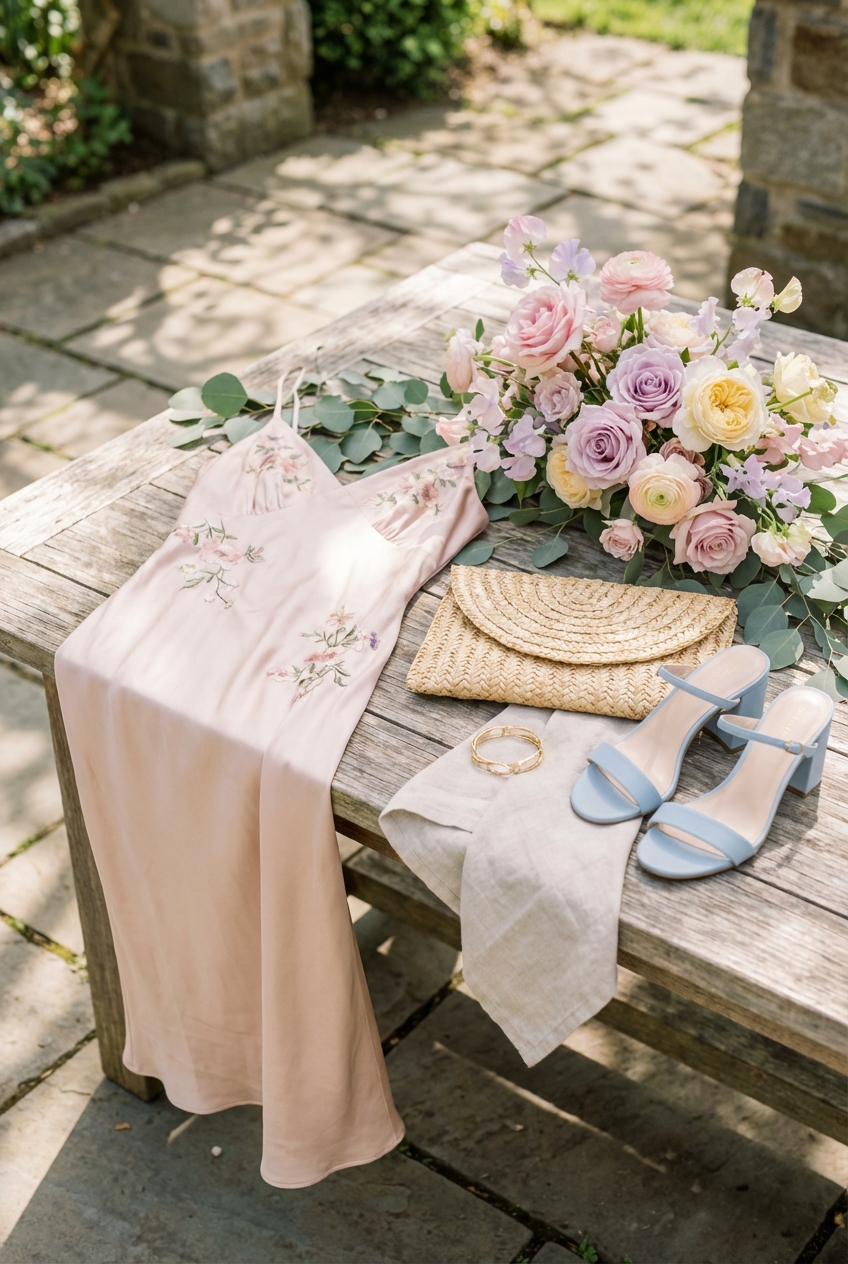
Chic Garden Wedding Looks With Pastel Florals
Introduction
There is nothing quite as romantic as a garden wedding. The combination of natural light, blooming backdrops, and the celebratory atmosphere allows for some of the most stunning fashion moments of the year. However, dressing for an outdoor venue presents a unique set of challenges that requires a balance between high-end aesthetics and environmental practicality.
As a fashion stylist, I treat a garden wedding guest look exactly like an interior design project. You have to consider the environment, the lighting conditions, and the “architecture” of your garment. You want to complement the landscape, not compete with it, all while navigating uneven terrain like grass, gravel, and decking.
In this guide, we are going to break down how to execute the pastel floral trend with sophistication. We will look at fabric weights, hemline mathematics, and the color theory required to look expensive and polished. For visual inspiration on these specific color palettes and silhouettes, make sure you scroll to the curated Picture Gallery at the end of the blog post.
Understanding the Landscape: The Color Palette
When we talk about “pastel florals” for a high-end look, we aren’t talking about the Easter aisle at a grocery store. We are talking about nuanced, dusty, and organic hues that mimic the surrounding flora. The goal is to harmonize with the garden setting.
If the wedding is in an English rose garden, dusty pinks, sages, and creams are effortless. If the venue is a Mediterranean terrace, you might lean toward pale lemons, sky blues, and soft terracotta pastels. The key is undertone matching.
Designer’s Note: The “Bridesmaid” Trap
In my years of styling clients for weddings, the most common fear is accidentally matching the bridal party. Before you invest in a gown, check the wedding invitation design. If the invite is sage green and blush, do not wear a solid sage green or blush dress.
Instead, opt for a pattern that incorporates those colors as minor accents, or choose a complementary pastel on the opposite side of the color wheel. If the bridesmaids are in blush pink, a soft periwinkle blue or mint floral will make you look distinct and intentional.
Fabric Physics: Materials That Breathe and Move
In an outdoor setting, natural light is unforgiving. Cheap synthetics like low-grade polyester will shine unnaturally in the sun and trap heat, leaving you uncomfortable within an hour. For a chic garden look, materiality is the most important foundation.
You need fabrics that offer “breathability” and “drape.” I always recommend silk chiffon, organza, or a high-quality viscose-linen blend. These fabrics catch the breeze, creating dynamic movement as you walk through the venue.
Common Mistakes + Fixes: The Linen Wrinkle
Mistake: Wearing pure linen to a formal garden wedding. While linen is breathable, it wrinkles the moment you sit down in the car. By the ceremony, you look disheveled.
The Fix: Look for “linen blends.” A linen-silk or linen-rayon blend retains the texture of linen but includes fibers that resist hard creasing. Alternatively, choose a chaotic floral print on a natural fabric; the pattern will visually mask any inevitable creases better than a solid color.
Hemlines and Dimensions: The Architecture of the Dress
When dealing with a garden floor plan—which usually implies grass or soil—your hemline is a technical measurement that matters. A floor-sweeping gown is a risk. It will collect twigs, dust, and moisture from the grass, creating a dirty ombré effect at the bottom of your dress by cocktail hour.
For a garden setting, I prefer the “Tea Length” or a “Midi” cut. This usually hits about mid-calf, roughly 28 to 32 inches from the waist depending on your height. This proportion feels vintage, romantic, and distinctly “garden party” appropriate.
What I’d Do in a Real Project
If a client insists on a maxi dress for a garden wedding, here is the rule I enforce:
- The Hem Calculation: I instruct the tailor to hem the dress so it hovers exactly 1.5 inches off the ground when the client is wearing her chosen shoes.
- The Reason: This clearance prevents the fabric from dragging on damp grass while still giving the illusion of a floor-length gown.
- The Silhouette: I avoid mermaid cuts for gardens. They restrict movement too much on uneven ground. An A-line or bias cut offers necessary fluidity.
Footwear Engineering: Stabilizing Your Foundation
As a stylist, I see footwear as a structural necessity, not just an accessory. The “landscape” of a garden wedding is hostile to stilettos. There is nothing less chic than a woman sinking into the turf, damaging her heels, and walking with a wobble.
You must increase the surface area of your heel to distribute your weight. This doesn’t mean you have to wear clunky shoes. Refined wedges, sculptural block heels, or trendy flatforms are essential.
The “Grass Rule” for Heel Width
When shopping, inspect the base of the heel. For a lawn setting, the heel base should be a minimum of 2cm x 2cm.
- Espadrilles: Perfect for semi-formal or “rustic chic” codes.
- Lucite Block Heels: Great for a modern, Cinderella vibe that doesn’t distract from the dress.
- Leather Block Sandals: The gold standard for comfort and stability.
Scale and Pattern: Mastering the Floral Print
Not all floral prints are created equal. The scale of the print changes how the body is perceived. Large, oversized blooms (macro-florals) tend to be more modern and bold, while tiny, repeated buds (micro-florals) read more traditional and cottage-core.
For a sophisticated look, look for “painterly” florals. These are prints that look like watercolor paintings or hand-sketched botanicals rather than digital clip art. The lines should be soft and blended, not sharp and geometric.
Matching Print to Body Scale
- Petite Frames: Avoid massive dinner-plate-sized flowers. They will overwhelm your frame. Stick to delicate vines or medium-scale posies.
- Taller/Curvier Frames: You can handle bold, large-scale botanicals. In fact, a larger print can be incredibly flattering as it creates a cohesive wash of color rather than a busy, vibrating pattern.
The “Third Piece”: Outerwear and Layering
Garden weddings often transition from a warm, sunny afternoon to a brisk evening. The lighting drops, and so does the temperature. The most common fashion oversight is planning the dress but forgetting the top layer.
Stealing your partner’s oversized suit jacket is a vibe for the after-party, but for the reception photos, you want something intentional. A structure-less pashmina often looks dated or messy.
Instead, consider a structured blazer draped over the shoulders (the “editor’s cape” look). For pastel florals, a white, cream, or soft tan blazer looks incredibly sharp. Alternatively, a cropped bolero or a high-quality trench coat worn open can maintain the high-fashion silhouette without hiding the dress entirely.
Finish & Styling Checklist
Before you head out the door, run through this quick professional checklist to ensure the look is cohesive and functional for an outdoor environment.
The “Sit Test”
Sit down in a chair for 5 minutes while wearing the dress. Stand up and check for deep creases across the lap. If they don’t fall out in 30 seconds, you need a steamer or a different fabric.
The Lighting Check
Take a photo of yourself in direct sunlight (outdoors), not just in your hallway mirror. Pastels can sometimes look white in bright sun. Ensure there is enough saturation in the color so you don’t look like the bride.
The Transparency Test
Backlighting is common in garden weddings. Stand with a light source behind you and check if the skirt becomes see-through. If so, you need a slip.
The Utility Check
Does your clutch fit your phone, lipstick, mints, and sunglasses? Garden weddings often mean wearing sunglasses for the ceremony. Make sure you have a place to put them when the sun goes down.
FAQs
Can I wear a white dress with a floral print to a wedding?
This is controversial, but the safest expert answer is no. Even if it has flowers, a white base reads as “white” in photos. If the background of the print is cream, ivory, or white, skip it. Opt for a blush, silver, or pale blue base instead.
Are hats appropriate for a garden wedding?
Absolutely, but check the time of day. Morning or afternoon ceremonies are perfect for millinery. A wide-brimmed straw hat with a ribbon tie is very chic. However, avoid “fascinators” unless it is a British or highly formal wedding, as they can look costume-like in more relaxed American settings.
What jewelry pairs best with pastel florals?
Keep it organic. Baroque pearls are my top choice for garden weddings because their irregular shape mimics nature. Gold tends to warm up pastels (peaches, pinks), while silver cools them down (blues, mints, lilacs). Avoid heavy, industrial chunky chains; keep the hardware light and delicate.
Conclusion
Dressing for a garden wedding is about merging the romance of the setting with the reality of the elements. It is the perfect opportunity to embrace soft pastels and feminine florals, but doing so requires a strategic eye for fabric, footwear, and fit.
By choosing breathable materials, respecting the terrain with your shoe choice, and selecting a print that feels like art rather than upholstery, you will achieve a look that is both timeless and effortlessly high-end. Enjoy the champagne, trust your heel stability, and let the venue be your ultimate accessory.
Picture Gallery


