
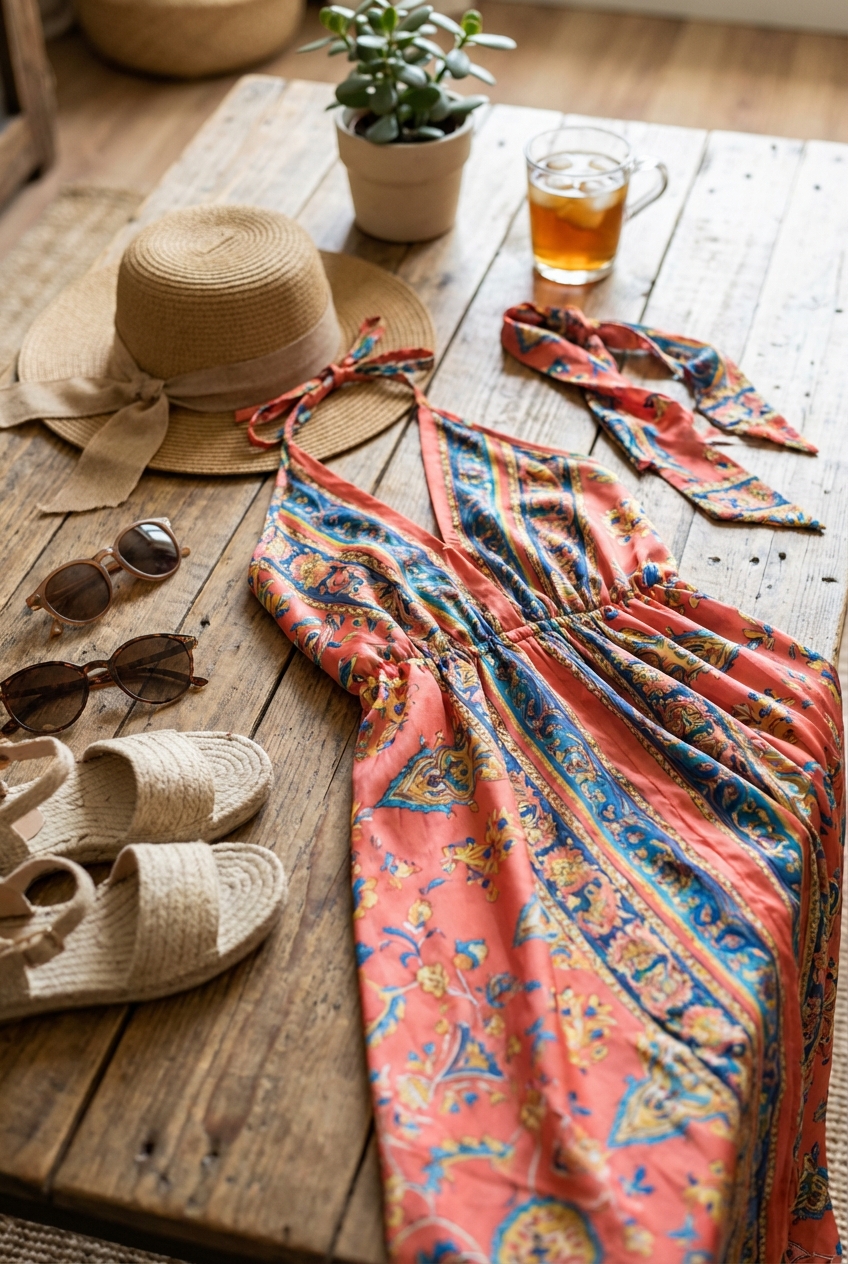
Chic Halter Neck Dresses For Summer Elegance
There is a specific architectural beauty to the halter neckline that few other silhouettes can rival. It draws the eye upward, emphasizes the shoulders, and creates a long, lean line that feels inherently sophisticated. In my years of styling clients for high-end summer events—from Hamptons garden parties to destination weddings in Como—I have found that the halter is the ultimate equalizer. It works on petite frames by elongating the torso, and it complements athletic builds by highlighting sculpted deltoids.
I recall a specific fitting with a client who was terrified of strapless dresses because she felt constantly in danger of a wardrobe malfunction. We switched her into a high-neck silk halter. Immediately, her posture changed. She stood taller, she felt secure, and the look was infinitely more elegant than the bustier styles she had been forcing herself to wear. It is a cut that offers support without sacrificing allure, making it a cornerstone of a polished summer wardrobe.
However, styling this neckline requires a specific set of rules regarding undergarments, jewelry, and hair. It is not as simple as throwing on a slip dress. If you are looking for visual inspiration on how to execute these looks, be sure to check out our curated Picture Gallery at the end of the blog post.
The Anatomy of the Perfect Halter Silhouette
Not all halter necks are created equal, and understanding the nuances of the cut is vital for achieving a high-fashion look. The geometry of the strap placement changes the entire vibe of the garment.
For a formal, “old money” aesthetic, look for a high-neck band collar. This style wraps completely around the neck, often securing with buttons at the nape. It provides the most coverage for the décolletage but exposes the full shoulder and often the entire back. This is my go-to recommendation for women with smaller busts, as it emphasizes the collarbone and face without requiring cleavage for drama.
Conversely, the “soft tie” halter, which relies on strings tied behind the neck, leans much more casual and bohemian. This is resort-wear territory. While chic, be wary of the knot placement. If the material is heavy, the weight of the dress will pull on your neck vertebrae, leading to discomfort within an hour.
Designer’s Note: The Armhole Drop
One of the most common fitting mistakes I see is the armhole drop. In mass-market fashion, armholes are often cut too low to accommodate a wider range of sizes.
In a well-tailored halter, the fabric should sit no more than 1.5 inches below your axilla (armpit). If it is lower, you risk exposing the side of your bra or the “side structure” of the breast tissue, which interrupts the clean line of the dress. If you find a dress you love with armholes that are too deep, a tailor can often lift the shoulder strap or take in the side seam to correct it.
Fabric Selection for Heat and Draping
When we discuss summer elegance, fabric choice is not just about aesthetics; it is about survival. A halter dress implies heat, sunshine, and likely humidity. The material must breathe, or you will be miserable regardless of how chic you look.
Natural Fibers are Non-Negotiable
I prioritize silk crepe de chine, linen blends, and high-quality cotton poplin. Silk crepe has a matte finish and a pebbled texture that resists wrinkling better than silk satin, making it perfect for summer weddings where you will be sitting and standing.
The Opacity Test
Summer dresses are often unlined to keep them cool, but this poses a risk. Before keeping a dress, perform the “window test.” Hold the dress up against a window with strong daylight coming through. If you can clearly see the outline of your hand through two layers of fabric, you will need a slip. In high heat, adding a synthetic slip defeats the purpose of a breezy dress. Look for dresses with built-in cotton voile linings.
Common Mistakes + Fixes: The Sweat Factor
Mistake: Wearing gray or mid-tone satin halters to outdoor events.
The Reality: Halters sit close to the armpit. Mid-tone satin turns dark instantly when wet.
The Fix: Opt for prints, stark whites, or very dark navys if you know you will be outdoors. A busy floral print is the stylist’s secret weapon for hiding perspiration marks during an August reception.
Navigating the Undergarment Logistics
The most frequent question I receive regarding this silhouette is: “What do I wear underneath?” The architecture of a halter eliminates the possibility of a standard strap, and often a standard strapless bra is visible at the underarm dip.
The Convertible Strap Myth
Do not rely on a standard bra with the straps hooked together in a halter shape. This pulls the back band up, creating an unflattering “V” shape across your back fat and offering zero support.
The Professional Solutions
For high-neck halters with an open back, silicone adhesive cups are the industry standard. However, they only work if applied to skin that is completely free of lotion or oil.
For women requiring more support (D cup and above), I recommend a long-line bustier with a low back, or having a seamstress sew high-density foam cups directly into the lining of the dress. This typically costs between $30 and $50 and changes the entire drape of the garment, ensuring you don’t have to worry about shifting undergarments.
Accessorizing: The Rule of Opposition
Styling a halter neck requires discipline. Because the fabric already occupies the space around your neck, adding a necklace usually creates visual clutter.
Earrings are Key
The halter naturally draws the eye to the face. You want to capitalize on this. I almost exclusively style halter dresses with statement earrings.
- For High-Necks: Go for linear drop earrings or geometric metal shapes. This elongates the neck further.
- For V-Neck Halters: A large stud or a vintage door-knocker style works beautifully.
Hair Strategy
To truly capture the elegance of this cut, the hair should generally be up or swept back. A low chignon or a high, sleek ponytail allows the back details of the dress to shine. If you have long hair and wear it down over a backless halter, you are hiding the garment’s best feature.
Proportions and Hemlines
The halter top creates a triangle shape on the upper body. To balance this, the skirt volume and length must be considered carefully.
The Maxi Halter
This is the most popular summer iteration. It creates a statuesque column effect.
Measurement rule: For a floor-length gown, the hem should skim exactly 0.5 inches off the floor when you are wearing your shoes. It should not drag (which looks messy and ruins the hem), nor should it be high enough to show the ankle bone.
The Midi Halter
A midi length (hitting mid-calf) is incredibly chic but can shorten the leg if not styled correctly.
Styling Tip: If you are wearing a midi halter, avoid ankle-strap shoes. The strap cuts off the leg line. Opt for a slide or a mule that exposes the instep, which tricks the eye into seeing a longer leg.
What I’d Do in a Real Project: The Vacation Edit
If I were packing a client for a week in Greece, here is the halter checklist I would curate:
- Day: A ribbed knit cotton halter tank dress in black. It hides travel wear and can be dressed up with gold sandals.
- Beach: A sheer linen oversized halter tunic. Worn over a swimsuit, it provides sun protection for the chest while keeping the back open.
- Dinner: A printed silk chiffon halter with a handkerchief hem. The movement in the wind is stunning, and the print hides any wrinkles from the suitcase.
Color Theory for Summer Halters
Summer lighting is harsh and direct. Colors that look subtle in a showroom can look washed out in the noon sun.
Jewel Tones vs. Pastels
While pastels are traditional for spring, I find that saturated jewel tones—emerald, sapphire, magenta—read much more expensive and “high fashion” in the summer months, especially in photos. A pale lavender halter can sometimes look like a bridesmaid dress. A deep fuchsia halter looks like a runway piece.
The Power of White
A white halter dress is the epitome of summer luxury. However, tone matches texture.
- Crisp Cotton: Look for a true, optical white. This looks crisp and nautical.
- Silk/Satin: Look for ivory or champagne. True white silk can look cheap or bridal. The slight warmth in ivory makes the fabric look richer.
Finish & Styling Checklist
Before you head out the door, run through this mental checklist to ensure the look is polished and secure.
The 5-Point Halter Check:
- The Knot/Button: If your dress ties, double knot it. If it buttons, check that the thread loop is secure. I always carry a safety pin just in case.
- The Underarm: Raise your arms. Does your bra show? If so, use double-sided fashion tape to adhere the dress fabric to your skin (or the bra).
- The Hem: Walk a few steps. If you are stepping on the front of the dress, you need higher heels or a temporary hem tape fix.
- The Jewelry: Look in the mirror. If you are wearing a necklace, take it off. Put on bolder earrings instead.
- The Skin: Since your shoulders and back are exposed, apply a dry body oil for a subtle sheen. Avoid sticky lotions that will transfer to the silk.
FAQs
Can I wear a halter dress if I have broad shoulders?
Absolutely. This is a common misconception. A halter actually breaks up the visual line of the shoulder. Look for a halter with thicker straps rather than thin spaghetti ties. The substantial fabric balances the shoulder width. Avoid “choker” styles that cut the neck off; opt for a deep-V halter instead to bring the eye toward the center.
How do I prevent the neck strap from hurting?
Neck strain is the enemy of the halter wearer. The issue usually stems from the dress being too tight around the ribcage or waist, causing the weight of the skirt to hang entirely from your neck. Ensure the dress fits snugly at the waist so your hips support the garment, not your cervical spine. If it’s a tie-neck, try crossing the straps over your back and tying them at the waist (if the design allows) to redistribute weight.
Are halter dresses appropriate for black-tie weddings?
Yes, they are a staple of formal wear. The key is material and length. A floor-length silk, chiffon, or crepe halter is perfectly appropriate. Avoid cotton, jersey, or anything above the ankle for black-tie. Look for details like a high neck with a trailing bow in the back for added drama.
How do I fix a gaping neckline on a halter?
Gaping usually happens when the bust area is slightly too large or the strap is too long. If you can’t get to a tailor, use fashion tape. Place a strip along the edge of the neckline and press it firmly to your skin. For a more permanent fix, a tailor can shorten the neck strap, which will lift the front panel and close the gap.
Conclusion
Embracing the halter neck dress is about embracing confidence. It is a style that requires you to stand tall and comfortable in your own skin. By focusing on the correct fit—specifically the armhole drop and the waist anchor—and selecting fabrics that move with the summer breeze, you elevate a simple garment into a fashion statement.
Remember that the elegance of a halter lies in its simplicity. It does not need over-styling. It needs clean hair, glowing skin, and the right pair of earrings. Whether you are navigating a cobblestone street in Europe or attending a backyard soirée, the halter neck remains the most timeless tool in the summer style arsenal.
Picture Gallery


