
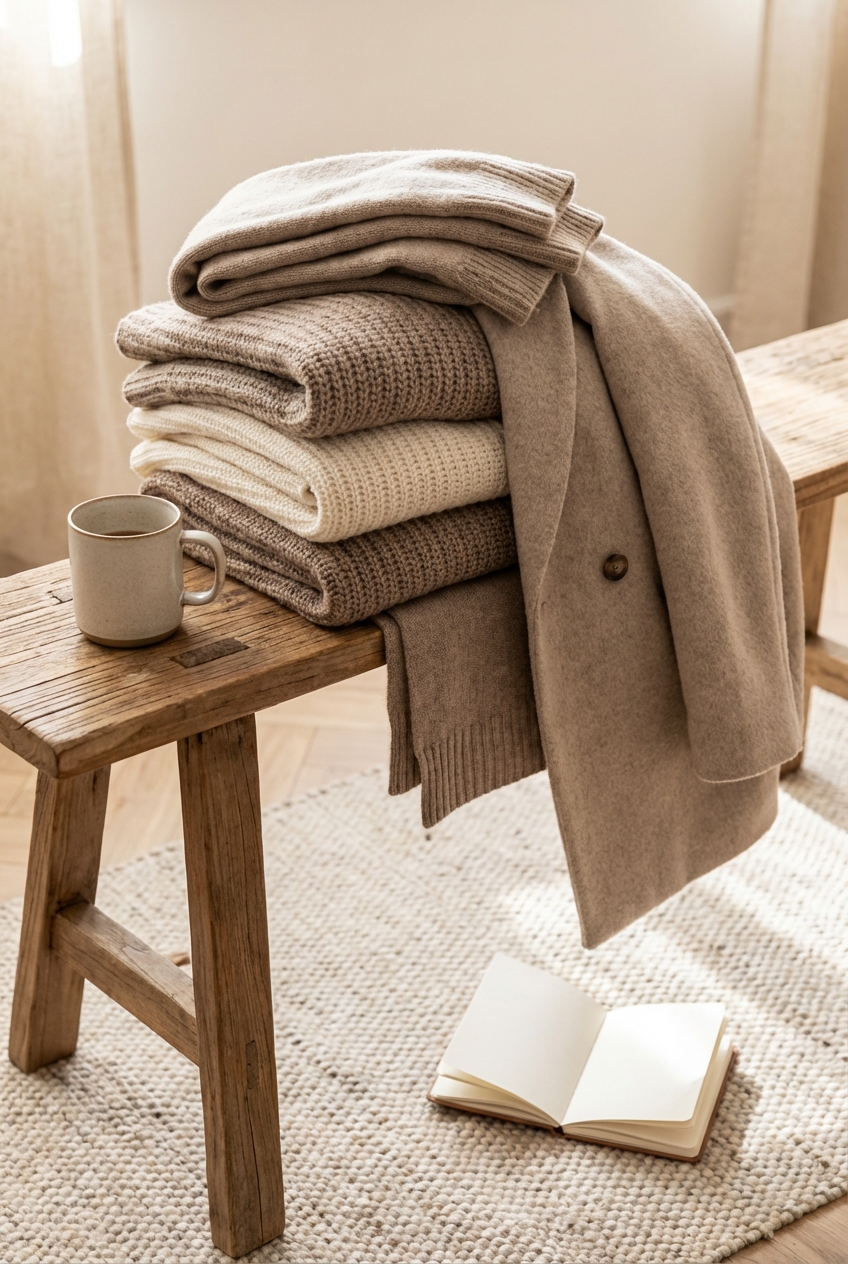
Chic Taupe And Ivory Layering Ideas For Cozy Outfits
There is a pervasive myth in the fashion world that neutrals are the easy way out. I often hear people say that dressing in beige, taupe, or ivory is “safe.” As a stylist who has curated wardrobes for high-profile clients for over a decade, I can tell you that executing a flawless monochromatic or tonal neutral look is actually more challenging than wearing bold prints. When you remove color as a distraction, the focus shifts entirely to the quality of the fabric, the precision of the cut, and the harmony of the layering.
My love affair with the taupe and ivory combination started early in my career during a winter buying trip in Milan. I saw a woman walking near the Duomo wearing five different shades of white and beige, ranging from a stark vanilla scarf to a deep mushroom coat. She looked expensive, comfortable, and incredibly chic. It was a masterclass in texture and tone. Since then, I have dedicated a significant portion of my styling philosophy to teaching women how to replicate that “quiet luxury” aesthetic without looking washed out.
The secret lies in the tension between the pieces. It is about mixing the roughness of wool with the slip of silk, and understanding that “taupe” is not a single color but a massive spectrum. If you are looking for visual inspiration to guide your shopping, remember that a curated Picture Gallery is at the end of the blog post.
1. Understanding the Undertones: The Foundation of Layering
Before we even touch a garment, we have to talk about color theory. The biggest mistake I see when clients try to layer neutrals is mixing clashing undertones. Taupe is generally a dark gray-brown, but in the fashion industry, it can lean towards pink (warm) or green (cool). Ivory is traditionally yellow-based, which makes it warm.
If you pair a green-based “cool” taupe sweater with a yellow-based “warm” ivory skirt, the outfit will look dirty. The grays will make the creams look stained, and the creams will make the grays look lifeless.
Designer’s Note: The White Paper Test
To determine the undertone of your clothes, do not trust the lighting in your closet. Take the garment near a window with natural light and hold it against a piece of standard white printer paper.
- If the item brings out pink or rosy hues, it is warm.
- If it looks greenish or gray, it is cool.
- If it looks yellow or buttery, it is warm.
Common Mistakes + Fixes
Mistake: Thinking all neutrals match automatically.
Fix: Commit to one temperature per outfit. If you are wearing a warm, buttery ivory coat, pair it with a warm, pink-based taupe trouser. If you are wearing a cool, icy white, pair it with a greige (gray-beige) knit. Consistency creates intention.
2. The Texture Hierarchy: Avoiding the “Flat” Look
When you are wearing high-contrast colors, like black and white, the color creates the visual interest. When you are wearing low-contrast colors like taupe and ivory, the texture must do the heavy lifting. If you wear a cotton ivory tee with cotton taupe chinos, you will look like a safari guide. Flat fabrics absorb light in the same way, making the outfit look one-dimensional.
I follow a strict “Rule of Three” when styling cozy winter looks. Every outfit needs at least three distinct textures to feel complete. This catches the light differently and gives the eye somewhere to travel.
My “Real Project” Texture Formula
Here is a combination I recently used for a client’s winter capsule wardrobe:
- Base: Silk or satin (e.g., an ivory slip skirt or camisole). This reflects light and adds a sleek element.
- Mid-Layer: Chunky knit (e.g., a taupe cable-knit sweater). This absorbs light and adds visual weight.
- Outer/Detail: Leather, Suede, or Shearling (e.g., a suede boot or a shearling bag). This adds structural density.
By placing the fuzzy texture of a mohair sweater against the smooth, cold texture of a silk skirt, you create friction. That friction is what makes an outfit look styled rather than just thrown on.
3. Proportion Play: Managing Volume in Cozy Fits
“Cozy” is often a code word for “bulky.” When we start layering heavy knits and coats in light colors, there is a very real danger of the “marshmallow effect.” Dark colors slim you down visually; light colors like ivory and taupe expand. Therefore, managing your silhouette is non-negotiable.
The golden rule here is the “One Volume” mandate. If you are voluminous on top, you must be streamlined on the bottom, and vice versa. You cannot wear an oversized ivory fisherman sweater with wide-leg taupe palazzo pants unless you are six feet tall or plan to belt it aggressively.
Specific Measurements for Layering
When layering a long coat over a skirt or dress in these tones, pay attention to the hem gap.
- The 2-Inch Rule: Ideally, your coat should either be longer than your skirt, or at least 2 inches shorter.
- The Awkward Zone: If your coat ends exactly where your skirt ends, it creates a heavy horizontal line that widens the figure.
- Sleeve Length: Ensure your base layer sleeve extends about 0.5 to 1 inch past your coat or blazer sleeve. This little peek of ivory cuff against a taupe jacket adds a deliberate finish to the look.
What I’d Do in a Real Project
For a petite client, I stick to a column of color. I would style an ivory turtleneck tucked into ivory high-waisted trousers. Then, I would layer a long taupe cardigan or duster coat over it. The unbroken vertical line of ivory elongates the body, while the darker taupe outer layer “shaves” the sides of the waist, creating a slimming effect.
4. The Art of the “Sandwich” Method
If you are struggling to balance the two colors, use the sandwich method. This is a failsafe styling trick that ensures your outfit looks balanced from head to toe. The concept is simple: the color on your top half should match the color on your bottom half (shoes), with a contrasting color in the middle.
Scenario A: The Taupe Sandwich
- Top: Taupe cashmere beanie or scarf.
- Middle: Ivory wool coat and ivory trousers.
- Bottom: Taupe suede boots.
Scenario B: The Ivory Sandwich
- Top: Ivory turtleneck.
- Middle: Taupe pleated midi skirt.
- Bottom: Ivory knee-high boots.
This technique grounds the outfit. With light neutrals, footwear is often the trickiest part. A common error is finishing a beautiful light outfit with heavy black boots. Black acts as a visual black hole, dragging the eye straight to your feet and ruining the ethereal vibe of the cream tones. If you don’t have shoes in the exact shade of taupe, opt for a rich cognac, dark chocolate brown, or a metallic gold.
5. Selecting the Right Outerwear
In the colder months, your coat is the outfit for 90% of the day. If you are investing in a taupe or ivory wardrobe, the coat is the anchor.
For a taupe and ivory palette, I always recommend a “Camel” or “Oatmeal” coat rather than a true white one. True white coats are incredibly difficult to keep clean and often look too clinical for cozy styling. An oatmeal wrap coat looks softer and bridges the gap between your ivory layers and taupe accessories.
Fabric Composition Matters
As an expert, I must insist on checking labels. When buying light-colored coats, cheap synthetic fabrics (like 100% polyester felt) will look shiny and pill within weeks.
- Look for: At least 50% wool or a wool/alpaca blend.
- Why: Natural fibers absorb dye differently, giving the beige or taupe a depth and richness that synthetics cannot mimic. They also drape heavier, which is crucial for that slouchy, effortless “Max Mara” vibe.
Designer’s Note on Hardware
Pay attention to the buttons. High-contrast black buttons on a soft beige coat can look cheap. I often have my tailor swap out plastic buttons for horn or tortoise buttons. It costs about $20 and elevates a $100 coat to look like a $500 coat.
6. Fabric Care and Practicality
We have to address the elephant in the room: wearing ivory and light taupe is risky. It requires a certain lifestyle awareness. You cannot sit on a dirty park bench, and you have to be careful with coffee. However, there are ways to make this practical for everyday wear.
The “Designated” Layers
If you are commuting or have kids, keep the outer layers darker (taupe) and the inner layers lighter (ivory). Your coat and trousers take the most beating from the environment (subway seats, car doors, rain splash). A pair of taupe leather trousers is infinitely easier to wipe clean than cream corduroys. Save the ivory for your sweaters, scarves, and beanies—areas that are less likely to encounter mud.
Maintenance Kit
I tell all my clients who embrace the “vanilla girl” aesthetic to carry a specific tool kit:
- Tide To-Go Pen (or similar): Instant treatment for coffee splashes.
- Cashmere Comb: Light knits show pilling much faster than dark ones. Shave your sweaters once a month to keep the surface smooth.
- Lint Roller: Essential. Dark lint shows up aggressively on ivory wool.
Finish & Styling Checklist
Before you walk out the door, run through this quick mental checklist to ensure your cozy outfit is polished.
- Texture Check: Do I have at least three different fabrics (e.g., knit, leather, denim)?
- Tone Check: Did I check my layers in natural light to ensure the undertones (pink vs. yellow) aren’t clashing?
- Shoe Value: Are my shoes too dark? If they are black, do I have a black bag or belt to balance it, or should I switch to brown?
- Grooming: Since the clothes are neutral, does my face look washed out? A swipe of berry lipstick or a bronzer can prevent the “beige fatigue” look.
- Volume Balance: If I am wearing a chunky scarf, is my bottom half streamlined?
FAQs
Can pale skin tones wear taupe and ivory without looking washed out?
Absolutely. The key is contrast. If you have pale skin, avoid a “nude” taupe that matches your skin tone exactly. Opt for a darker, mushroom taupe near your face, or a crisp, bright ivory. Avoid “greige” if you have cool undertones, as it can make you look tired. Always add a pair of gold hoop earrings or a bright lip to create separation between your skin and the garment.
Is it okay to mix gold and silver jewelry with neutrals?
Yes, but I generally prefer gold with this specific palette. Taupe and ivory are warm, earthy tones. Gold hardware on belts, bags, and jewelry complements that warmth. Silver works better with cool grays, crisp whites, and blacks. If you must wear silver, try mixing it with gold for a modern, curated stack.
How do I stop my ivory jeans from being see-through?
This is a common issue. First, buy denim with a weight of at least 12oz—avoid thin “jegging” material. Second, contrary to popular belief, do not wear white underwear. Wear underwear that matches your skin tone exactly (nude, brown, or tan). White underwear actually highlights the contrast against your skin and shows through the white denim.
Conclusion
Mastering the taupe and ivory layering technique is about more than just picking two colors that sit next to each other on the wheel. It is an exercise in restraint and texture. It allows you to look pulled together on the gloomiest winter days and radiates a sense of calm confidence.
Remember that “cozy” does not have to mean sloppy. By paying attention to your undertones, mixing your materials, and respecting the proportions of your silhouette, you can create outfits that feel like a warm hug but look runway-ready. Start with the basics—a great coat, a quality knit, and the right boots—and build your neutral empire from there.
Picture Gallery


