
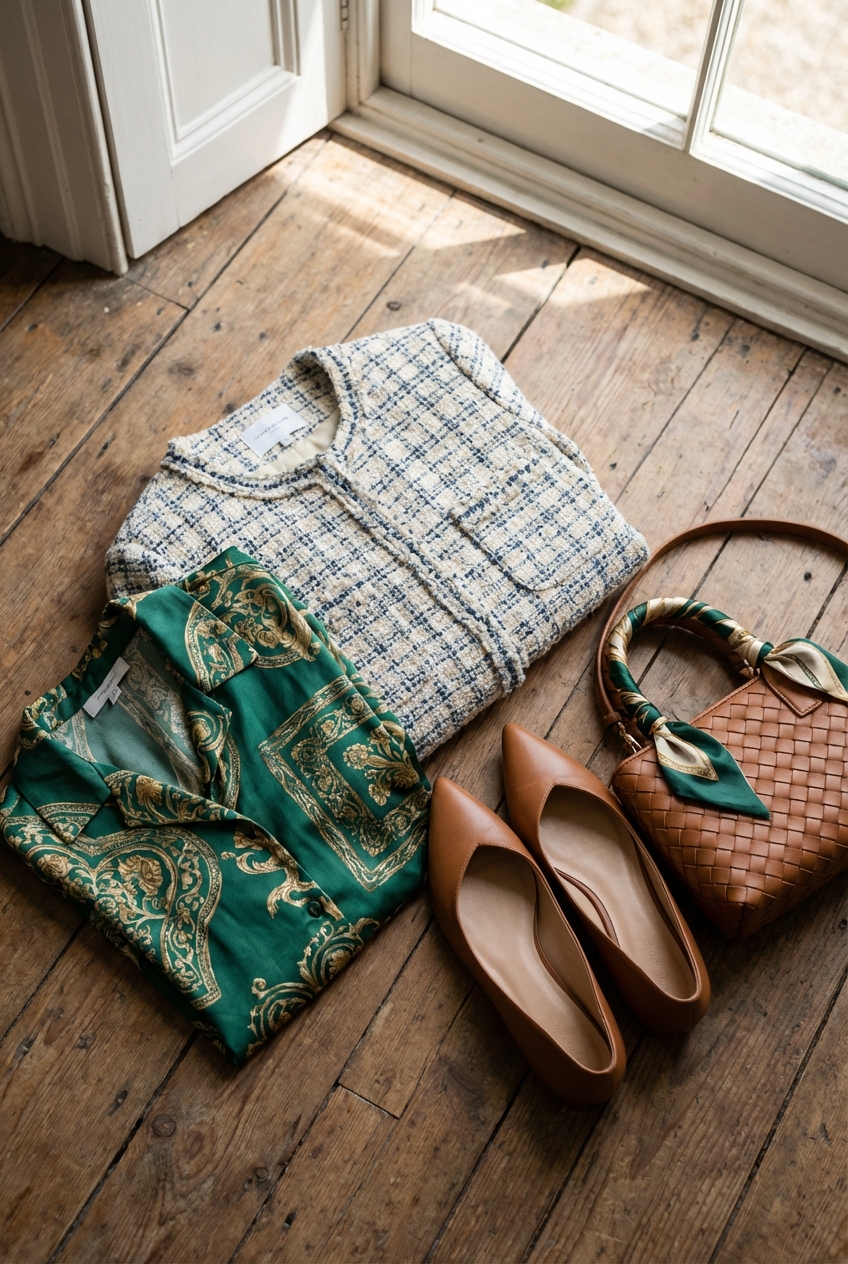
Chic Tweed And Silk Outfits For Polished Daywear
There is a specific kind of alchemy that happens when you pair two opposing textures. In the world of high-end styling, we often look for tension between materials to create visual interest. Tweed, with its nubby, structured, and light-absorbing surface, offers a heritage feel that grounds an outfit. Silk, conversely, is fluid, light-reflective, and undeniably feminine.
I remember styling a client for a series of daytime press junkets in London last autumn. She was hesitant about tweed, fearing it would look too matronly or stiff for her age. We paired a cropped, raw-hemmed bouclé jacket with a liquid silk slip dress in a matching champagne tone. The result was instantaneous. The silk softened the rigidity of the wool, and the tweed gave the slip dress enough structure for daytime appropriateness. It is a combination that speaks of “old money” aesthetics but feels entirely modern when the proportions are correct.
This guide will walk you through the technical aspects of pairing these fabrics, from selecting the right fabric weight to nailing the hem lengths. If you are looking for visual inspiration, you can view our curated Picture Gallery at the end of this blog post.
The Physics of Texture: Why It Works
To master this look, you have to understand visual weight. Tweed is a “heavy” visual fabric. It dominates the eye because of its complex weave and matte finish. If you pair tweed with cotton or wool, the outfit can quickly become heavy and flat.
Silk acts as a “light” visual counterweight. It introduces movement and sheen, breaking up the density of the tweed. This balance is crucial for daywear because it prevents the outfit from looking like a costume or a winter coat.
When styling clients, I use the “70/30 Rule” for texture. If the tweed is the dominant piece (like a suit), 30% of the visible outfit should be silk (the blouse) to lift the look. If the silk is dominant (a dress), the tweed jacket serves as the 30% grounding element.
Designer’s Note: The Lighting Factor
One thing often overlooked is how these fabrics react to daylight versus office lighting. Tweed absorbs light, while silk reflects it. In bright natural light, a cheap satin can look garish next to a high-quality wool. Always test your silk choices near a window, not just in a dressing room, to ensure the sheen level looks expensive, not synthetic.
Selecting the Right Tweed for Daywear
Not all tweeds are created equal, and for daywear, flexibility is key. Traditional Harris Tweed can be too stiff and scratchy for a polished, comfortable office look. I always steer clients toward “fantasy tweeds” or bouclé blends.
These fabrics usually incorporate ribbon, cotton, or softer wool yarns that allow for more movement. For a versatile daywear jacket, look for a fabric weight between 10oz and 12oz. Anything heavier will feel like outerwear; anything lighter may lack the necessary structure to drape well over silk.
Check the lining of the tweed garment. A silk-lined tweed jacket is the gold standard because it reduces friction against a silk blouse. If the jacket is unlined or lined in cheap polyester, it will generate static and cause the silk blouse to bunch up uncomfortably.
Common Mistakes + Fixes
Mistake: Choosing a tweed with too much metallic thread for daytime.
Fix: Reserve high-sparkle metallics for evening. For daywear, look for matte yarns or very subtle lurex threads that only catch the light occasionally.
Mistake: Buying acrylic-heavy tweed blends.
Fix: Check the care label. A high percentage of acrylic (over 30%) will pill quickly and won’t breathe, making you sweat. Stick to wool, cotton, or silk blends for longevity and comfort.
Navigating Silk Varietals
The term “silk” covers a wide range of weaves, and choosing the right one is critical for durability and drape. For daywear, I rarely recommend a high-shine silk satin or charmeuse as a top layer. It can read too formal or “evening.”
Instead, opt for Silk Crepe de Chine. This has a matte finish and a slight pebbled texture. It is incredibly durable, resists wrinkles better than satin, and grips the tweed jacket slightly better, preventing the blouse from sliding around.
Another excellent option is Sandwashed Silk. This process softens the fibers and gives the fabric a velvety, sueded finish that looks incredibly sophisticated against the roughness of tweed. It feels modern and effortless.
What I’d Do in a Real Project
If I were building a capsule wardrobe for a client, I would include:
- One cream Silk Crepe de Chine bow blouse.
- One black silk camisole with a straight neckline.
- One jewel-toned (emerald or navy) sandwashed silk button-down.
These three pieces will work with almost any tweed jacket or skirt in existence.
Mastering Proportions and Hemlines
The success of a tweed and silk outfit relies heavily on scale and measurements. Because tweed adds bulk to the frame, the silk layer must be streamlined to avoid the “marshmallow effect.”
The Jacket Sleeve:
This is the most critical measurement. Your tweed jacket sleeve should end exactly at the wrist bone. Ideally, you want your silk blouse cuff to extend 0.5 to 1 inch beyond the jacket sleeve. This small strip of silk visually separates the heavy tweed from your hand, elongating the arm.
The Neckline:
If you are wearing a collarless tweed jacket (Chanel style), a silk bow blouse is a classic pairing. However, ensure the bow sits high on the neck. If the jacket has lapels, opt for a V-neck silk camisole or a simple shell to keep the chest area uncluttered.
The Hemline Interplay:
If you are wearing a tweed skirt, pay attention to the gap between the skirt and boots. However, regarding the top half, never let a silk shirt tail hang out from under a tweed jacket unless it is a deliberate, oversized fashion statement. For polished daywear, the silk should be tucked in, or the jacket should be longer than the blouse.
Color Coordination Strategies
Tweed is often multicolored, composed of several different colored yarns woven together. This provides a built-in color palette for your outfit.
To choose the perfect silk color, look closely at the tweed. Identify the “minority color”—the thread that appears least frequently in the weave. Match your silk top to that specific color. This pulls the pattern out and makes the outfit look bespoke and intentional.
For example, a navy tweed jacket might have tiny flecks of pale pink and cream. A navy blouse would look fine, but a pale pink silk blouse will make the jacket sing.
A Note on Monochromatic Styling
Wearing the same color head-to-toe elongates the body. A cream tweed suit paired with an ivory silk blouse is the ultimate power move. It suggests you don’t take public transportation (even if you do) and have a very capable dry cleaner.
Practical Constraints: Comfort and Durability
We must address the reality of wearing these delicate fabrics. I often work with clients who have young children or demanding commutes.
Snagging Hazards:
Tweed is a loop fabric; it loves to catch on things. Be wary of wearing pronged jewelry (like engagement rings) or bracelets with clasps that can catch the tweed loops. Similarly, a rough tweed cuff can snag a delicate silk sleeve over time.
The Sweat Factor:
Silk shows moisture instantly. If you are prone to overheating or have a stressful presentation, wear a thin cotton undershirt or camisole beneath the silk blouse. This protects the silk from oils and perspiration.
Wrinkling:
If you sit at a desk all day, a silk skirt will crease at the lap. Tweed, however, is virtually wrinkle-proof. For office workers, I recommend the “Tweed Bottom / Silk Top” formula. The tweed skirt or trousers will look fresh all day, while the silk blouse stays protected by the jacket or remains uncreased on your upper body.
Footwear and Accessories
The heavy-light contrast should extend to your accessories. Because the outfit already has a lot of texture, keep accessories smooth and structural.
Avoid suede shoes, as they compete with the tweed’s texture. Instead, opt for patent leather or smooth calfskin. A pointed-toe pump or a sleek loafer works best.
For bags, structure is key. A slouchy hobo bag looks messy against the tailored lines of a tweed jacket. Choose a box bag or a structured tote.
Jewelry Rules of Thumb
- Pearls: The classic choice. The luster of pearls mimics the sheen of silk.
- Gold: Adds warmth to brown or green tweeds.
- Silver: Cools down navy or black tweeds.
- Avoid: Chunky wooden beads or distressed metals, which look too bohemian for this polished aesthetic.
Finish & Styling Checklist
Before you walk out the door, run through this quick stylist’s check:
- The Cuff Test: Is 0.5 inches of silk showing at the wrist?
- The Tuck: Is the blouse fully tucked in to define the waist, or is the hem intentional?
- The Static Check: Did you use anti-static spray if wearing tights?
- The Luster Balance: Do you have one matte element and one shiny element?
- The Hardware: Does your jewelry metal match the buttons on the tweed jacket?
- The Lint: Have you used a lint roller on the tweed? (Tweed is a dust magnet).
FAQs
Can I wear tweed in the summer?
Yes, but choose your fiber carefully. Look for “summer tweed,” which is usually a cotton-silk or cotton-linen blend. It has the look of tweed but breathes. Pair it with a sleeveless silk shell.
How do I clean a tweed jacket?
Always dry clean. Never attempt to wash a structured tweed jacket at home. The interlining (the stuff inside that gives it shape) will shrink at a different rate than the wool, causing the jacket to bubble and warp permanently.
Is it okay to mix patterns with tweed?
It is advanced styling. If you want to mix patterns, keep the silk pattern subtle—like a faint pinstripe or a tonal polka dot. Ensure the scale of the silk pattern is much smaller or much larger than the weave of the tweed to avoid a dizzying visual effect.
What if I find silk too high-maintenance?
High-quality viscose or cupro are excellent plant-based alternatives. They drape exactly like silk, breathe well, and are often machine washable on a delicate cycle. They offer the same visual contrast without the dry cleaning bill.
Conclusion
Pairing tweed and silk is a masterclass in textural balance. It takes the rugged, historical resilience of wool and marries it with the delicate, luxurious fluidity of silk. When you get the proportions right—balancing the visual weight and ensuring proper fit—the result is a look that commands respect without demanding attention.
It is a uniform for the woman who values quality over trends. Whether you are heading to a board meeting or a brunch, this combination offers a polished armor that feels as good as it looks.
Picture Gallery


