
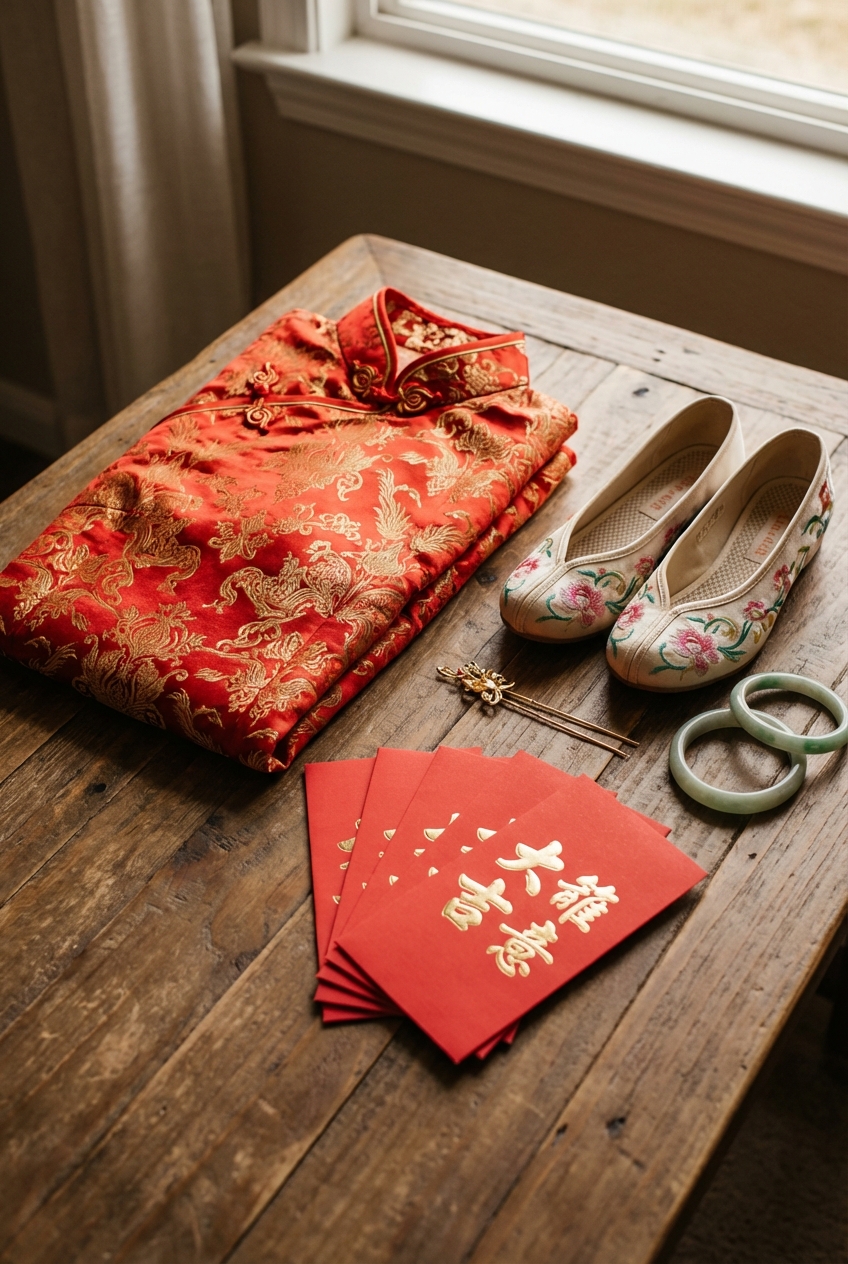
Chinese New Year Attire Traditional Red And Gold Styles
The weeks leading up to the Lunar New Year always bring a specific kind of electric energy to the fashion world. Clients start panicking about finding an outfit that respects deep-rooted traditions without looking like they are wearing a costume. I remember one specific styling session with a client who was meeting her in-laws for the first time during the Spring Festival; she was terrified of wearing red because she thought it clashed with her skin tone. We found a deep ruby silk brocade that transformed her confidence entirely, proving that tradition and personal style can coexist beautifully.
Navigating the rules of “Red and Gold” requires a bit more nuance than simply grabbing the first crimson item you see on the rack. It is about understanding fabric weight, the scale of embroidery, and how metallic accents interact with indoor lighting during family dinners. You want to honor the symbolism of good fortune and prosperity while maintaining a silhouette that feels modern and high-end.
In this guide, I will walk you through the structural elements of traditional attire, how to select the right shade of red for your complexion, and the tailoring secrets that elevate a look from off-the-rack to bespoke. If you are looking for visual inspiration on how to combine these textures, I have curated a comprehensive Picture Gallery at the end of the blog post.
Understanding the Palette: Not All Reds Are Created Equal
The foundation of Chinese New Year attire is the color red, symbolizing luck and joy, paired with gold, representing wealth. However, from a styling perspective, “red” is a spectrum, not a single hue. Choosing the wrong undertone is the most common mistake I see.
If you have cool undertones, stay away from orange-based scarlets or tomatoes. Instead, opt for blue-based reds like cherry, crimson, or a deep wine burgundy. These shades provide contrast without washing you out. Conversely, if you have warm undertones, the vibrant fire-engine reds and orange-reds will make your skin glow.
Gold serves as the neutral in this palette, but texture matters. Avoid shiny, yellow-gold sequins which can look inexpensive. Look for burnished gold threads woven into brocade, matte gold buttons, or champagne-hued silk accents. The goal is a subtle shimmer that catches the light, not a reflective surface.
Designer’s Note: The Lighting Trap
I learned this lesson the hard way early in my career styling for an event. We chose a high-gloss satin red dress for a client. Under the warm, dim lighting of a traditional restaurant, it looked luxurious. However, as soon as the flash photography started, the high-sheen fabric reflected white light, making the red look pink and the client look shiny.
The Fix: Always test your fabric in different lighting. For evening events involving photography, opt for fabrics with a matte finish or a low-luster silk (crepe de chine) rather than high-gloss satin.
The Modern Qipao: Fit and Silhouette
The Qipao (or Cheongsam) is the quintessential garment for this holiday, but the difference between high-fashion and costume lies entirely in the tailoring. A proper Qipao should skim the body, not squeeze it. There should be a smooth line from the armpit to the hip.
When selecting a Qipao, pay close attention to the collar height. A traditional high collar is stunning but can be uncomfortable for a long day of socializing. A modern “mandarin collar” that sits slightly lower on the neck—about 1.5 inches—elongates the neck and is much more wearable.
Sleeve length is another critical variable. Cap sleeves are traditional but can be unforgiving. For a more sophisticated, high-end look, I often recommend a three-quarter sleeve. It highlights the wrists (perfect for displaying gold bangles) and balances the visual weight of the garment.
Qipao Fit Checklist
- The Neck Test: You should be able to fit one finger comfortably between the collar and your neck. If it gapes, it is too big; if it pinches, you will have a headache by noon.
- The Back Smoothing: Check the fabric near the zipper at the small of your back. There should be no horizontal pulling lines (whiskering). If there are, you need to let it out or size up.
- The Slit Height: The side slits are functional, allowing you to walk, but verify the height while sitting. When seated, the slit rises. Ensure it doesn’t expose undergarments or too much thigh for conservative family gatherings.
Separates: The Tang Suit Jacket and Skirts
Not everyone is comfortable in a full dress. Mixing separates is a fantastic way to incorporate traditional aesthetics into a modern wardrobe. The Tang suit jacket (Tangzhuang) is a structured jacket featuring a mandarin collar and frog buttons (pankou).
I frequently style these jackets with modern, wide-leg trousers in a neutral color like cream or black. This creates a balanced silhouette where the jacket is the hero piece. Look for jackets in heavier weights like velvet or jacquard; they hold their shape better and look more expensive than thin cotton blends.
For skirts, a pleated midi skirt in gold or red is a versatile option. Pair a red silk blouse with a gold metallic pleated skirt for a look that feels festive but contemporary. The movement of the pleats adds a nice dynamic contrast to the structure of a traditional top.
Common Mistakes + Fixes
Mistake: Wearing a matching top and bottom set in a loud brocade print. This can overwhelm your frame and look like pajamas.
Correction: Break up the pattern. If you wear a printed brocade jacket, pair it with solid silk trousers. If you wear a patterned skirt, keep the top solid and minimal.
Fabric Selection: Quality Signals
In high-end fashion, the hand-feel of the material is everything. Chinese New Year occurs in late winter, so the fabrics need to provide warmth and structure. Cheap synthetic brocades are stiff, scratchy, and trap heat, leading to discomfort.
Silk is the gold standard. Heavyweight silk satin or silk brocade allows the skin to breathe while offering that characteristic luster. If you are on a budget or prefer vegan options, look for high-quality rayon blends or cupro, which mimic the drape of silk without the plastic shine of polyester.
Velvet is an underutilized fabric for CNY. A deep red velvet dress with gold piping is incredibly chic and seasonally appropriate. It absorbs light rather than reflecting it, which makes the color appear richer and more saturated.
What I’d Do in a Client Project
If I were building a capsule wardrobe for the holiday week, here is exactly what I would buy:
- One Statement Qipao: Custom-tailored in a mid-weight silk jacquard. Deep crimson with subtle tone-on-tone bamboo or floral patterns, not contrasting embroidery.
- One Cashmere Shawl: In a champagne gold tone. This is essential for layering over dresses when moving between heated indoors and cold outdoors.
- Two “Bridge” Pieces: A red silk camisole and a pair of black crepe wide-leg trousers. These allow you to mix and match for less formal lunches.
Accessorizing: The Gold Balance
Gold jewelry is non-negotiable for Chinese New Year, as it symbolizes prosperity. However, in styling, the rule of “less is more” usually applies—except here, where “more is traditional.” The challenge is layering it without looking cluttered.
If your outfit has gold threading or intricate gold buttons, keep the jewelry simple. A pair of 24k gold stud earrings and a single jade bangle is timeless. The green of the jade provides a beautiful, cooling contrast to the heat of the red and gold outfit.
If your outfit is a solid red color, this is your opportunity to wear statement gold pieces. Layered necklaces or a heavy architectural gold cuff can act as the focal point. Ensure the tone of your jewelry matches the hardware on your handbag and shoes.
Shoe and Bag Coordination
- Shoes: Avoid red shoes with a red dress. It is too monochromatic and often the reds will clash. Nude pumps, gold strappy sandals, or even black heels are better choices.
- Bags: A structured clutch is best for formal dinners. Look for materials like mother-of-pearl or hard-shell gold cases. Avoid oversized slouchy leather totes; they ruin the crisp lines of traditional tailoring.
Practical Considerations: Durability and Comfort
Fashion must be functional. During CNY, you will likely be eating rich foods, playing games, and perhaps kneeling or bowing. Your clothing needs to withstand this activity.
Avoid fabrics that wrinkle the moment you sit down. Test the fabric by scrunching a corner in your hand; if it stays wrinkled, skip it. You do not want to look disheveled in family photos after the car ride.
Consider the closure of your garment. Traditional frog buttons can be finicky and time-consuming. For ease of use, I recommend garments that have a hidden side zipper for getting in and out, using the frog buttons merely as decoration.
Designer’s Note: The “Bloat” Factor
Chinese New Year feasts are legendary. A dress that fits perfectly while standing in the fitting room might be torture after an eight-course banquet.
The Fix: I always advise clients to have a little “ease” tailored into the waistline—about half an inch. Alternatively, choose an A-line silhouette rather than a body-con sheath. It is much more forgiving and allows you to relax and enjoy the celebration.
Finish & Styling Checklist
Before you head out the door, run through this final styling check to ensure the look is polished and cohesive.
- Hemlines: If wearing a long Qipao, the hem should skim the top of your shoes, not drag on the floor.
- Undergarments: Check for Visible Panty Lines (VPL). Silk and brocade show everything. Seamless, laser-cut undergarments are mandatory.
- Steam check: Steam your outfit inside out to avoid water spots on the silk. Crispness is a sign of quality.
- Lint check: Velvet and dark fabrics attract lint. Keep a travel-sized roller in your clutch.
- Makeup balance: If you are wearing a bright red dress, a red lip can sometimes compete. Consider a neutral eye and a lip stain that matches the dress undertone perfectly, or go for a bold winged liner and a softer lip.
FAQs
Can I wear black during Chinese New Year?
Traditionally, black and white are associated with mourning and are considered bad luck. However, modern fashion rules are more relaxed. I generally advise avoiding an all-black outfit. If you must wear black trousers, balance them with a vibrant red top and gold accessories to offset the symbolism.
Is it okay to mix gold and silver jewelry?
From a fashion standpoint, mixed metals are trendy. However, for this specific holiday, gold is the dominant symbol of wealth. I recommend sticking to gold tones to keep the look cohesive and culturally aligned.
How do I clean my silk brocade dress?
Do not wash it at home. Brocade fibers can shrink and distort when wet. Always dry clean these garments. If you spill food, blot (do not rub) the stain and take it to a professional immediately.
Can I wear these clothes after the holiday?
Absolutely. The key to re-wearing traditional pieces is deconstruction. Wear your Tang jacket with jeans and loafers for a casual brunch. Wear the silk skirt with a crisp white t-shirt and a denim jacket. High-quality pieces deserve to be worn year-round.
Conclusion
Dressing for Chinese New Year is a beautiful exercise in balancing respect for the past with the aesthetics of the present. By focusing on the quality of fabrics like silk and velvet, nailing the fit of your Qipao, and carefully curating your red and gold palette, you create a look that projects confidence and prosperity.
Remember that the most important aspect of your attire is how you feel in it. When the fit is right and the materials are luxurious, you carry yourself differently. You are not just wearing a color; you are embodying the spirit of the celebration. May your New Year be as stylish as it is prosperous.
Picture Gallery


