
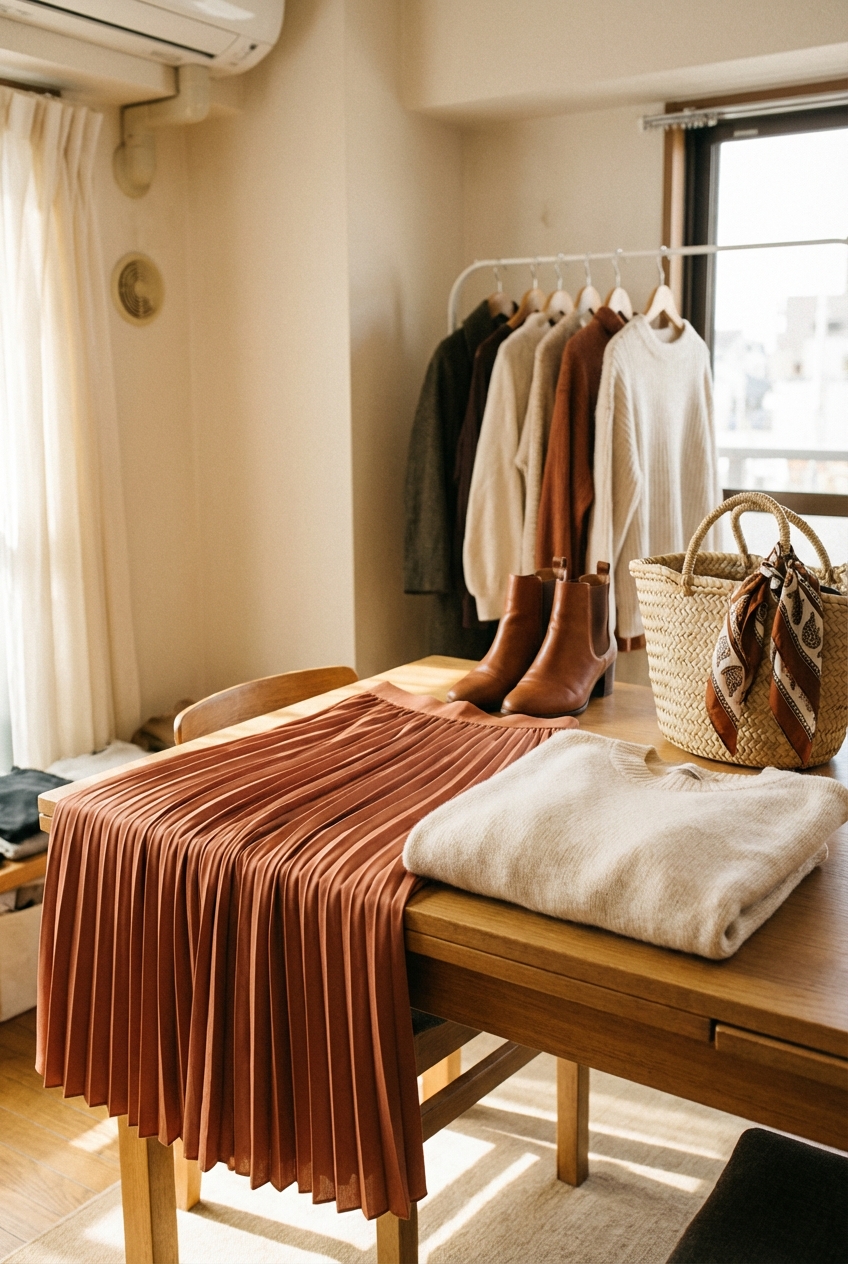
Classic Midi Skirts With Subtle Volume
There is a specific kind of freedom found in a skirt that moves with you but doesn’t overwhelm your frame. For years, the fashion world vacillated between the severe restriction of the pencil skirt and the whimsical, often impractical drama of the full circle skirt. The middle ground—classic midi skirts with subtle volume—is where true style longevity lives.
I recently worked with a client who was rebuilding her wardrobe after a promotion. She needed pieces that commanded respect in the boardroom but felt effortless enough for a dinner reservation at 8:00 PM. We landed immediately on the A-line midi. It is the architectural equivalent of a well-designed room: structured enough to define the space, but open enough to allow for movement.
This silhouette is deceptively simple. It relies entirely on the quality of the fabric and the precision of the cut. When done correctly, it elongates the legs and highlights the waist without demanding the constant adjustment of a tighter garment. If you are looking for real-world examples of these concepts, remember that the curated Picture Gallery is at the end of the blog post.
The Anatomy of Subtle Volume
Subtle volume is not about gathering yards of fabric at the waistband. That technique adds bulk exactly where most women want to minimize it. Instead, we look for skirts that rely on “gores” or panels. These are triangular sections of fabric sewn together to create a shape that is flat against the hips and flares gently toward the hem.
Another method for achieving this look is the bias cut. This technique involves cutting the fabric at a 45-degree angle against the weave. The result is a skirt that skims the body like water, flaring out only as it hits the lower thigh and knee. It offers volume through drape rather than stiffness.
When shopping, check the “ease” measurement. You want the skirt to fit snugly at your natural waist (the smallest part of your torso). However, you need at least two inches of ease around the hip area to ensure the pockets don’t flare open—a dead giveaway of a poor fit.
Designer’s Note: The Pocket Problem
One of the most frequent issues I see in fittings is pockets that disrupt the line of the skirt. If a midi skirt has side pockets, they must lie completely flat. If you see the lining peeking out or the pockets gaping, the skirt is too tight across the high hip, regardless of what the size tag says. Size up and have the waist taken in by a tailor. It is a small alteration that makes a garment look bespoke.
Fabric Selection: Weight and movement
The success of a midi skirt depends almost entirely on the material. To achieve “subtle” volume, the fabric must have enough weight to hang straight when you are standing still. Light, flimsy cottons often poof out uncontrollably or wrinkle the moment you sit down.
For colder months, look for wool crepe or gabardine. These fabrics are dense and hold their shape, creating a clean, architectural line. They resist wrinkling and provide a smooth silhouette over tights. A wool-blend usually offers better movement than 100% heavy wool, which can feel stiff.
In warmer seasons, seek out heavy silk, rayon, or linen blends. Pure linen is difficult because it wrinkles aggressively. However, a linen-viscose blend provides that dry, summery texture while the viscose adds weight and drape, pulling the volume down rather than letting it balloon out.
Common Mistakes + Fixes
- The Mistake: Buying unlined midi skirts in thin fabrics.
- The Fix: Thin fabric clings to legs and tights, ruining the volume. Always wear a separate slip if the skirt is unlined. A weighted silk slip can actually help a cheaper skirt hang like a designer piece.
- The Mistake: Stiff brocades or heavy cottons for everyday wear.
- The Fix: These fabrics create a “bell” shape that can look costumey. Save stiff fabrics for formal evening wear and stick to fluid fabrics for day-to-day.
The Hemline Mathematics
The most terrifying aspect of the midi skirt for many women is the length. There is a myth that midi skirts make you look shorter. This only happens if the hem cuts across the widest part of your calf muscle.
The visual rule is simple: the hem must land on a narrowing part of the leg. This is usually either two inches below the knee (the “Italian length”) or two to three inches above the ankle bone (the “maxi-midi”).
If the hem hits the thickest part of your calf, it creates a horizontal line that widens the leg visually. I always recommend my clients wear their favorite shoes to the tailor. We pin the skirt to see exactly where the leg creates the most elegant line.
What I’d Do in a Real Project
If I am styling a petite client (under 5’4″), I almost always hem the skirt to sit just below the knee cap or go for a longer tea-length that hits just above the ankle. We skip the mid-calf length entirely. I also ensure the skirt is high-waisted to extend the visual length of the lower body.
Structuring the Upper Body
When you introduce volume on the bottom, you must subtract it from the top. This is the golden rule of proportion. A midi skirt with subtle swing requires a fitted or semi-fitted top to anchor the look.
Bodysuits are the secret weapon of the fashion editor. They ensure a perfectly smooth tuck that never bunches at the waist. If you dislike bodysuits, opt for fine-gauge knitwear or silk blouses that are thin enough to tuck in without creating a “muffin top” ridge at the waistband.
If you prefer not to tuck, the top must be cropped. The hem of the top should hit exactly at the waistband of the skirt. This preserves the waistline definition. A long, tunic-style top over a voluminous midi skirt generally looks unkempt unless you are extremely tall.
Pro-Level Styling: The Third Piece
To elevate the look, add a blazer or cardigan, but watch the length. A cropped jacket that hits at the waist is the safest bet. If you choose a longer blazer (boyfriend style), you should belt it over the skirt or leave it open to reveal the waistline underneath. Never button a long blazer over a midi skirt unless you are intentionally going for an avant-garde, shapeless silhouette.
Footwear: Anchoring the Silhouette
The wrong shoe can ruin the proportions of a midi skirt instantly. Because the skirt covers most of the leg, the exposed skin (or stocking) and the shoe become focal points. The goal is usually to elongate the foot to extend the leg line.
Pointed-toe shoes are the most effective tool here. Whether it is a flat, a kitten heel, or a stiletto, the pointed toe physically leads the eye outward. Round-toe ballet flats can sometimes make the leg look stumpy with a midi length, unless the skirt is quite short.
In the fall and winter, the knee-high boot is essential. The boot shaft should disappear underneath the hem of the skirt. This creates a seamless “column of color” that is incredibly elongating. Seeing a slice of skin between the boot top and the skirt hem chops the leg into too many horizontal segments.
Designer’s Note: The Ankle Strap Warning
Be very careful with shoes that have thick ankle straps. An ankle strap cuts off the leg line right at the thinnest point. If you are wearing a midi skirt that ends at the lower calf, and a shoe that cuts the ankle, you have very little “leg” left to show. Choose a nude-colored shoe or a slingback to keep the line uninterrupted.
Outerwear Challenges
The most common question I get regarding midi skirts is: “What coat do I wear?” It is a valid logistical struggle. Wearing a knee-length trench coat over a longer midi skirt often results in a sloppy, tiered look where the skirt hangs out the bottom awkwardly.
I advise my clients to own two types of coats for this silhouette. The first is a cropped jacket—leather, denim, or wool—that hits at the hip bone. This maintains the waist definition and lets the skirt flow freely.
The second option is a longline wool coat or trench that is longer than the skirt. This completely encases the outfit for a clean, streamlined exterior. If you cannot match the length, ensure the coat is significantly shorter. The “almost matching” lengths are what cause visual friction.
Finish & Styling Checklist
Before you head out the door, run through this mental checklist to ensure the look is polished and proportional. This is the same process I use on set during photo shoots.
- Waist Check: Is the skirt sitting at your true natural waist? If it has slipped down to your hips, the proportions will be off. Belt it or tailor it.
- The Tuck: Is your top smoothed down? Raise your arms. If the top pulls out completely, it is too short to tuck. Switch to a bodysuit or a cropped top.
- Static Guard: Walk across the room. Does the skirt stick to your legs? If yes, apply anti-static spray or run a wire hanger over the fabric to discharge the electricity.
- Shoe Gap: Look in a full-length mirror. If wearing boots, is there a gap of skin showing? If yes, switch to taller boots or opaque tights that match the boot color.
- Hemline Audit: Check the back view. Often, our bums lift the back of the skirt, making it shorter than the front. A tailor can “level” the hem to account for curves.
FAQs
Can I wear pleated midi skirts if I have wide hips?
Absolutely. The trick is to look for “stitched-down” pleats. These are skirts where the pleats are sewn flat from the waistband to the hip bone, and then released. This keeps the tummy and hip area flat while giving you volume and movement around the legs. Avoid accordion pleats that start expanding immediately at the waistband.
Are midi skirts professional enough for conservative offices?
Yes, they are often more appropriate than knee-length skirts which can ride up when sitting. Stick to darker neutrals like navy, charcoal, or camel. Pair them with a crisp button-down shirt and a closed-toe heel. The volume should be very subtle—think A-line, not ballroom.
How do I style a midi skirt for a casual weekend look?
Swap the blouse for a high-quality white t-shirt and knot it at the waist or tuck it in loosely. Replace heels with sleek white leather sneakers. Add a denim jacket over the shoulders. The key is keeping the sneakers pristine; dirty gym shoes will clash with the elegance of the skirt.
What is the best underwear for unlined midi skirts?
Seamless, laser-cut options are non-negotiable. Even with “subtle volume,” the fabric often rests against the hip before flaring out. Lace textures or thick seams will show through materials like silk or crepe. Buy skin-tone seamless shorts (often called slip shorts) to prevent chafing and provide a smooth line.
Conclusion
The classic midi skirt with subtle volume is more than just a trend; it is a reliable anchor for a sophisticated wardrobe. It solves the problem of “what to wear” for almost any occasion, bridging the gap between comfort and high polish.
By focusing on the correct fabric weight, respecting the “rule of thirds” in your proportions, and ensuring your hemline hits the sweet spot of your leg, you can master this silhouette. It requires a bit of tailoring and an eye for balance, but the result is a look that feels confident, feminine, and incredibly chic.
Picture Gallery


