
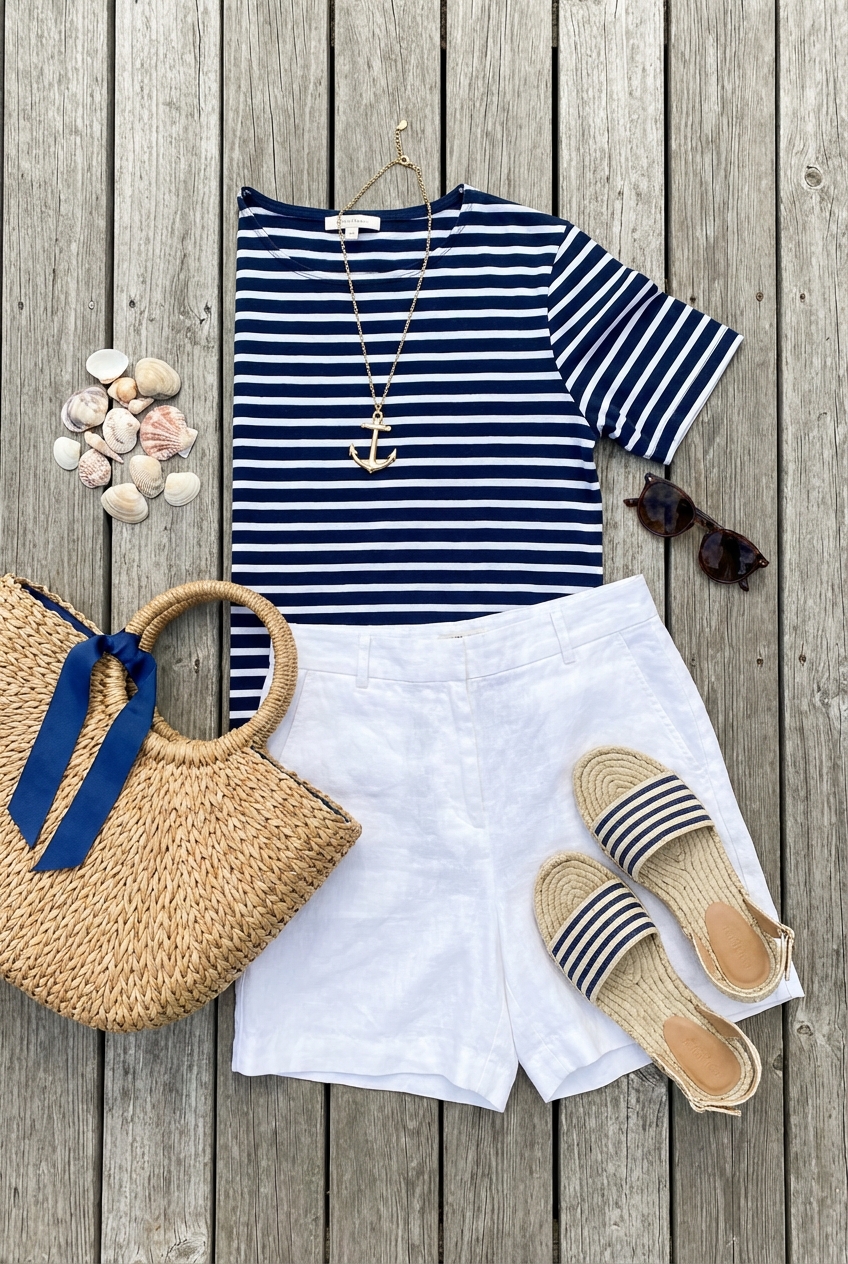
Classic Stripes In Nautical Inspired Summer Outfits
There is something inherently transportive about a crisp navy and white stripe. It immediately calls to mind the rocky coasts of Brittany, the pristine docks of Newport, and the effortless elegance of the French Riviera. As a fashion stylist, I rely on this pattern more than any other print during the warmer months because it acts as a neutral while still providing visual structure.
However, executing a nautical look without veering into “costume” territory requires a delicate hand. It is not about piling on anchor motifs or rope belts; it is about honoring the clean lines and utilitarian roots of the Breton shirt. The goal is to look sophisticated and seaworthy, not like you are attending a themed party.
In this guide, I will break down exactly how to select, style, and care for nautical stripes with a high-fashion sensibility. For visual inspiration on how I style these looks for clients, be sure to scroll to the Picture Gallery at the end of the blog post.
The Architecture of the Stripe: Width and Scale
Not all stripes are created equal, and understanding the scale is crucial for a flattering fit. In high-end design, we look at the “repeat” of the pattern.
For a classic, slimming effect, look for a “Breton” spacing. This traditionally features a 2-centimeter white stripe and a 1-centimeter blue stripe. The dominance of the lighter color keeps the look airy, while the thinner dark line provides direction.
If you are styling a petite frame, avoid wide, blocky stripes (over 2 inches in width). These can overwhelm your stature and chop the body into distinct segments. Instead, opt for a “pinstripe” or a “pencil stripe” width, which creates a vertical illusion of height.
Conversely, if you are tall or want to add volume to a specific area (like the bust or hips), a bold “rugby stripe” is effective. These bands are usually equal in width, often 2 to 3 inches. They command attention and create a sporty, athletic aesthetic.
Designer’s Note:
One thing that always goes wrong with budget brands is the seam alignment. When buying a striped garment, check the side seams. The stripes on the front panel should match perfectly with the stripes on the back panel. If they are misaligned, it distracts the eye and makes the garment look cheap.
Fabric Selection: Materiality Matters
Summer fashion is entirely dependent on breathability. A nautical look falls flat if the fabric is a heavy, sweating polyester blend. You need natural fibers that drape and move.
Cotton Poplin
For button-down shirts and shirt-dresses, look for 100% cotton poplin. It has a crisp hand-feel and holds its shape, which keeps collars looking sharp.
Linen and Linen Blends
Linen is the quintessential summer fabric. However, pure linen wrinkles immediately. I often recommend a cotton-linen blend (usually 55% linen, 45% cotton) to my clients. You get the texture and breathability of linen with the wrinkle resistance of cotton.
Viscose or Silk Knits
For a more evening-appropriate nautical look, swap the cotton tee for a silk or viscose knit sweater. These fabrics have a slight sheen and a fluid drape. They elevate the humble stripe into something suitable for a cocktail hour.
The Color Palette: Beyond Navy and White
While navy and white are the pillars of nautical design, a modern wardrobe requires nuance. Sticking strictly to these two colors can sometimes look too uniform.
Ecru and Cream
Replace stark, optical white with ecru, oatmeal, or heavy cream. Optical white can be harsh in bright summer sunlight. Cream tones soften the contrast and look more expensive.
Driftwood and Tan
Introduce leather accessories in tan, cognac, or driftwood shades. A navy striped dress paired with tan leather sandals looks infinitely more chic than when paired with matching white or navy shoes.
Pop of Red (Use Sparingly)
Red is the traditional accent color for nautical flags, but it is easy to overdo. Limit red to a single element: a bold lip, a manicure, or a small silk scarf tied at the bag handle. Do not wear red shoes, a red belt, and a red bag simultaneously.
Styling the “Marinière” Top
The striped long-sleeve tee, or Marinière, is the cornerstone of this aesthetic. The fit is everything here.
The Oversized Cut
For a casual weekend look, size up. The shoulder seam should drop slightly down the arm. Pair this with slim-fitting bottoms, like cigarette pants or fitted denim shorts, to balance the volume.
The Fitted Cut
If you are tucking the top into a high-waisted wide-leg trouser, choose a fitted bodysuit style. This prevents bunching at the waistline. A smooth silhouette is essential for that polished “old money” aesthetic.
Layering Logic
The Marinière is an excellent layering piece. Wear it under a beige trench coat for a transitional spring look. Or, drape it over your shoulders on top of a solid white button-down for a preppy, textural addition.
Striped Bottoms: Trousers and Skirts
Wearing stripes on the bottom half of the body intimidates many women, but it is a powerful style move when done correctly.
Vertical is Mandatory
For trousers and skirts, vertical stripes are the gold standard. They elongate the legs. Horizontal stripes on trousers are incredibly difficult to pull off unless you are aiming for a very specific avant-garde silhouette.
The Linen Trouser
A wide-leg, vertical stripe linen trouser is a summer essential. Look for a high rise that hits at your natural waist (the smallest part of your torso). The hem should skim the top of your foot.
Common Mistakes + Fixes:
Mistake: Sheer trousers showing pocket linings.
Fix: Check the “opacity” in natural light before buying. If you can see the outline of the pockets through the fabric, the trousers are too thin. Look for lined linen or a heavier weight cotton drill.
Footwear Pairings for Coastal Looks
The wrong shoe can ruin a nautical outfit instantly. Avoid heavy black boots, office pumps, or athletic running sneakers.
Espadrilles
The wedge espadrille is the perfect partner for stripes. The jute texture mimics the ropes found on sailboats. Choose a neutral canvas or suede upper.
Leather Slides
For a minimal approach, a flat leather slide in Hermes orange, tan, or gold is effortless. It keeps the vibe relaxed and grounded.
White Canvas Sneakers
For days with lots of walking, a clean white canvas sneaker works well. Ensure they are pristine. Scuffed, dirty sneakers will downgrade the elegance of the stripes.
Accessorizing: The Finishing Touches
Accessories determine the final tone of the outfit. In nautical fashion, we want to lean into natural materials and metallic hardware.
Straw and Raffia
A basket bag or a structured raffia tote adds texture. The natural warmth of the straw breaks up the cool tones of the blue and white.
Gold Jewelry
Gold hardware complements navy blue beautifully. Think chunky gold hoops, a chain-link bracelet, or a layered coin necklace. Silver can sometimes look too cold against the high contrast of the stripes.
Eyewear
Oversized tortoiseshell sunglasses are the best choice. The flecks of amber and brown in the tortoise pattern tie in well with tan leather accessories and gold jewelry.
What I’d Do in a Real Project: A Styling Checklist
When I am packing a client for a summer yacht trip or a coastal vacation, I follow a strict checklist to ensure versatility.
1. The “Third Piece” Rule
An outfit of just a shirt and shorts is “clothes.” Adding a third piece makes it “fashion.”
Action: Add a lightweight navy blazer, a denim jacket, or a sweater tied around the shoulders.
2. The Fabric weight Test
I hold fabrics up to the window.
Action: If a summer dress is unlined, I pack a nude slip. Transparency is only chic when intentional, not accidental.
3. The Hemline Audit
I measure trousers with the shoes the client intends to wear.
Action: For flats, the hem should be 1/2 inch off the ground. For wedges, the hem should cover the top half of the heel. Nothing looks messier than dragging hems.
4. The Hardware Match
I check the metals on the clothing.
Action: If the blazer has gold buttons, I ensure the bag hardware and jewelry are also gold tones. Mixing metals can work, but matching them looks cleaner for this specific aesthetic.
Designer’s Note: Longevity and Care
High-quality striped garments are investments. The contrast between the dark and light dyes presents a laundry challenge: color bleeding.
I always advise clients to wash new nautical items in cold water with a “color catcher” sheet. This traps any loose navy dye that might bleed into the white stripes.
Never put high-end cotton or linen in the dryer. The heat breaks down the fibers and causes shrinkage, which distorts the straight lines of the pattern. Hang dry or lay flat, then steam to refresh the shape.
FAQs
Do horizontal stripes actually make you look wider?
This is the most common myth in fashion. Narrow horizontal stripes (under 1 inch) actually have a blurring effect that does not widen the frame. It is only wide, blocky stripes that expand the silhouette. The fit of the garment matters more than the direction of the stripe. A tight garment reveals contours; a draped garment conceals them.
Can I mix stripes with other prints?
Yes, but scale is key. You can mix a thin Breton stripe with a large-scale floral print. The difference in size helps the eye distinguish between the two. However, for a classic nautical look, I prefer mixing stripes with textures (like eyelet lace or denim) rather than other prints.
Is navy and black a fashion faux pas?
Absolutely not. Navy and black is a very chic, Parisian color combination. A navy striped shirt looks incredibly sharp tucked into black tailored trousers. The key is to make the distinction intentional. The navy should be blue enough that it doesn’t look like a faded black.
How do I wear stripes to a formal event?
Focus on fabric and cut. A floor-length silk gown with diagonal stripes is stunning. Alternatively, a structured wide-leg jumpsuit in a navy pinstripe reads as formal evening wear. Accessories should be elevated—think clutch bags and heeled sandals rather than totes and wedges.
Conclusion
Embracing nautical stripes is about more than just following a summer trend; it is about adopting a mindset of effortless functionality. Whether you are navigating a busy city street or lounging on a deck, this pattern provides a sense of order and timeless style.
By focusing on the quality of the fabric, the scale of the stripe, and the precision of the fit, you elevate a simple pattern into a personal signature. Remember to balance the graphic nature of the stripes with organic textures like linen, straw, and leather.
Use the guidelines above to curate a wardrobe that feels fresh yet historically grounded. When you prioritize fit and fabric, the nautical look serves you well beyond a single season.
Picture Gallery


