
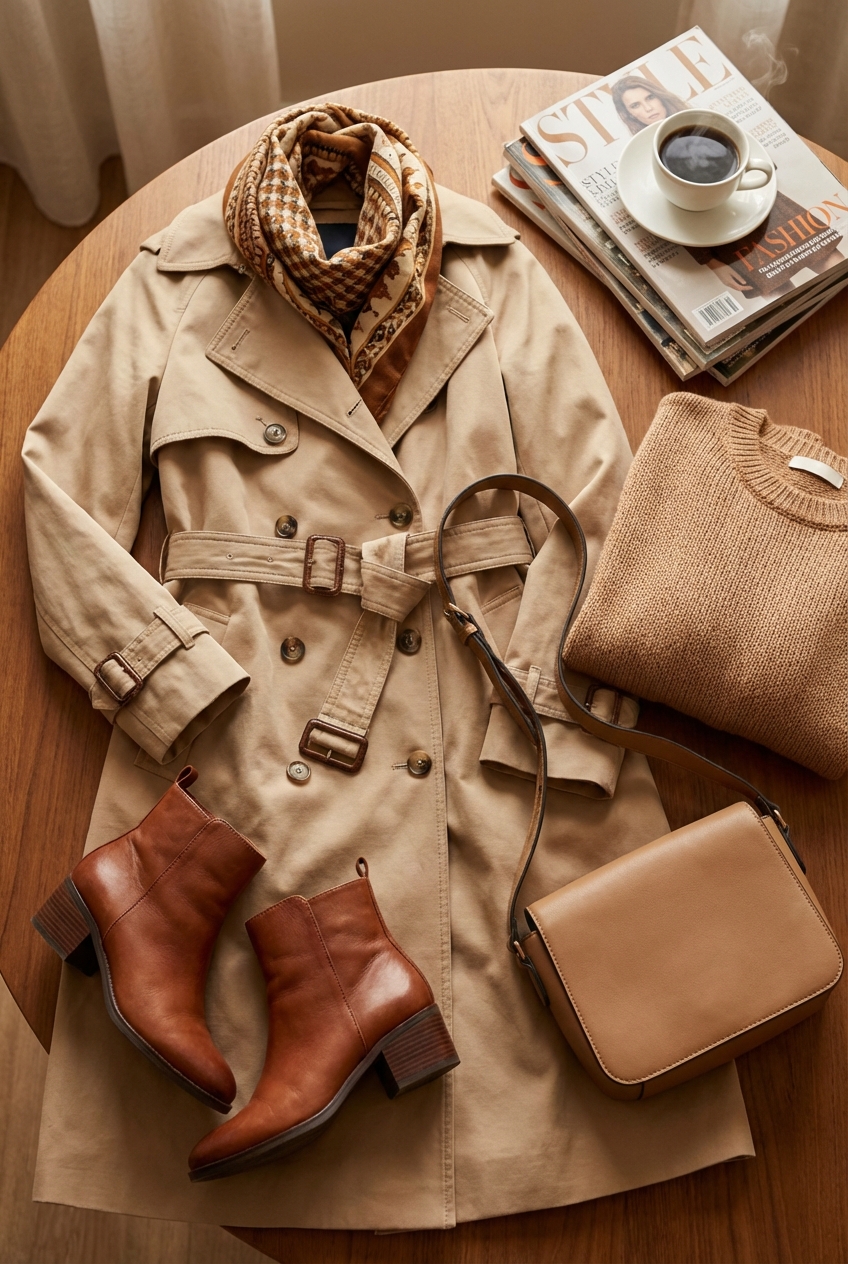
Classic Trench Coat The Ultimate Outerwear Piece
There are very few items in a wardrobe that can claim the title of “perfect.” In my fifteen years of styling high-end clients, the classic trench coat is the only piece that bridges every gap. It works for the CEO heading to a board meeting, the creative director on a photoshoot, and the busy mother running weekend errands. It is the ultimate equalizer in fashion, instantly elevating whatever is worn underneath it.
I vividly remember my first investment trench. It wasn’t just a raincoat; it was a suit of armor that made me feel polished even when I was wearing sweats underneath. The weight of the gabardine fabric and the sharp line of the collar gave me an immediate confidence boost. That is the power of functional, historical design. It does the work for you so you do not have to try so hard.
In this guide, I am going to break down exactly how to buy, fit, and style this essential piece. We will cover specific measurements, fabric weights, and the subtle details that separate a high-quality coat from a fast-fashion throwaway. For visual inspiration on how to tie belts and layer textures, make sure to visit our Picture Gallery at the end of the blog post.
The Anatomy of a Perfect Trench
To choose the right coat, you must understand the architecture behind it. The trench coat was originally designed for military officers, meaning every flap and strap has a functional purpose. Understanding these details helps you spot quality construction immediately.
First, look at the storm flap. This is the extra piece of fabric found on the upper back and sometimes the shoulder. On high-quality coats, this should not just be a decorative patch; it acts as a water shield. When rain hits your shoulders, the flap directs water away from the body so it doesn’t soak through to your blouse or blazer.
Next, examine the epaulets on the shoulders. While originally used to hold military rank or gloves, in modern styling, they are crucial for silhouette. They add visual structure to the shoulder line. If you have narrow shoulders or a pear shape, epaulets balance your proportions by drawing the eye upward.
Finally, check the collar hook and throat latch. A true investment trench will have a metal hook-and-eye closure at the neck and a detachable fabric latch stored under the collar. You may rarely use them, but their presence indicates that the manufacturer respected the garment’s heritage and construction integrity.
Fabric and Fit: The Investment Fundamentals
The fabric is where most people make mistakes. You want 100% cotton gabardine or a very high-quality cotton-poly blend that is tightly woven. Avoid 100% polyester or flimsy nylon, as they lack the structure to hang correctly. The coat should have a distinct weight to it; it should drape heavily rather than flutter in the wind.
The Fit Rules of Thumb
When fitting a client, I use very specific “rules of thumb” to ensure the coat will be wearable for years.
The Shoulder Seam: The seam should sit exactly at the edge of your shoulder bone. If it droops, you look sloppy. If it pulls, you cannot layer.
The Layering Test: Always try a trench coat on while wearing a blazer or a chunky knit sweater. There must be enough room in the armholes to move your arms forward without the fabric pulling tight across the back.
Sleeve Length: The sleeve should end right at the first knuckle of your thumb. This is longer than a shirt sleeve because it needs to cover your layers and protect your hands from the elements.
Designer’s Note: The “Back Vent” Mistake
One specific issue I see constantly is the back vent. When you buy the coat, the vent is usually stitched shut with a small “X” of thread. You must cut this thread before wearing it. If you leave it sewn shut, the coat will pull weirdly across your hips and bunch up when you walk. It ruins the line of the coat instantly.
Styling for the Office vs. Weekend
The versatility of the trench lies in its ability to adapt to the environment. For a corporate setting, the goal is clean lines and zero bulk. I recommend wearing the coat open to showcase the tailoring of your suit or dress underneath.
For the office, keep the belt neatly tied in the back. Do not use the buckle; it looks too rigid. Instead, tie a “stylist’s knot” (a soft double knot) behind you. This cinches the waist of the coat slightly, giving you a shapely silhouette even when the coat is unbuttoned. It prevents the belt from dangling and getting caught in doors.
On the weekend, you can lean into the “high-low” aesthetic. This is where the trench truly shines. Pair it with a high-quality grey hoodie, leggings, and vintage dad sneakers. Pull the hood of the sweatshirt out over the collar of the trench.
The juxtaposition of the structured, rigid coat against the soft, athletic leisurewear creates that “off-duty model” vibe. For this look, button the coat but leave the belt loose, or tie it messy in the front. It should look effortless, not studied.
The Color Palette: Beyond Beige
While honey or camel beige is the classic choice, it is not the only option. In fact, for certain skin tones, traditional beige can wash you out. It is important to know your undertones before investing.
If you have cool undertones (veins appear blue), a yellow-based “honey” beige might make you look tired. Instead, look for a “stone” or “putty” color. These greige (grey-beige) tones are cooler and will make your skin look brighter.
Navy blue is the unsung hero of the trench world. It is arguably more practical than beige because it does not show dirt or coffee spills as easily. A navy trench looks incredibly expensive and pairs beautifully with black trousers, which is a combination many women are afraid to try but looks very chic.
Black is an option, but be careful. A black trench can sometimes look a bit like a matrix costume or a security uniform if the fabric is too shiny. If you choose black, ensure the fabric is matte and the hardware (buttons and buckles) is high-contrast, like tortoise or brass, to break up the darkness.
Petite, Tall, and Curvy: Finding Your Proportions
Scale is everything in design, and it is everything in outerwear. A coat that is too long swallows you; one that is too short cuts you in half.
For Petite Frames (Under 5’4″)
You need to be careful with volume. Avoid “oversized” fits. Look for a coat that hits slightly above the knee or mid-thigh. If the coat goes past your knees, it drags your visual height down.
Pro Tip: Ensure the belt loops sit at your natural waist. Often on standard sizing, the loops are too low for petites, making the torso look incredibly long and legs short. A tailor can raise these loops for about $20.
For Tall Frames (Over 5’8″)
Embrace the drama of length. A coat that hits mid-shin or even ankle-length looks incredible on you. Avoid coats that stop right at the knee, as they can look like they shrunk in the wash.
Pro Tip: Check the sleeve length carefully. You usually need at least 25 inches from the shoulder seam. Many brands offer “Tall” specific sizing which adds those crucial two inches to the sleeves.
For Curvy Figures
Avoid double-breasted styles if you have a large bust, as the double layer of fabric and buttons adds bulk exactly where you might not want it. A single-breasted trench (often called a “mac”) creates a long, clean vertical line down the center of the body.
Pro Tip: Tie the belt slightly off-center rather than directly in the middle. This breaks up the waistline visually and is more flattering than a horizontal line cutting straight across.
Care and Maintenance for Longevity
A good trench coat is an investment that should last a decade. However, cotton gabardine requires specific care to maintain its water-resistance and crispness.
First, strictly follow the dry-clean only rule for structured coats. Washing machines will destroy the fusing (the internal layer that gives the collar and lapels their stiffness). However, do not dry clean it too often. Once a season is usually enough unless you spill something on it. Over-cleaning degrades the fabric fibers.
Waterproofing
The water-repellent coating on cotton wears off over time. At the start of every autumn, I do the “water test.” Flick some water onto the sleeve. If it beads up and rolls off, you are good. If it soaks in and creates a dark spot, it is time to reproof. You can buy high-end fabric waterproofing sprays (like those used for outdoor gear) to refresh the coating at home.
Wrinkle Management
Gabardine wrinkles. It is a fact of life. Do not iron a trench coat directly on the right side of the fabric; you will create “shine marks” at the seams that cannot be removed. instead, use a handheld steamer. Steam relaxes the fibers and releases wrinkles without crushing the fabric texture. If you must iron, do it from the inside out or use a pressing cloth.
Finish & Styling Checklist
Before you head out the door, run through this mental checklist to ensure your look is polished.
The Collar Pop: Pop the back of the collar slightly, but leave the front lapels flat. It frames the face.
The Sleeve Push: Push the sleeves up to the elbow for a lived-in look. Use a rubber band hidden in the fold to keep them in place if the fabric is slippery.
The Knot: Never use the buckle. Tie the belt in a square knot. It shows you know the rules but choose to break them.
The Hem Check: Ensure your skirt or dress hem is either shorter than the coat or significantly longer (midi/maxi). A skirt that peeks out just one inch below the coat looks messy.
* Hardware Check: Ensure no buttons are dangling loosely. A missing button on a trench is instantly noticeable.
FAQs
Q: Can I wear a trench coat to a formal event?
A: Absolutely. A silk or satin trench is ideal for evening wear. However, a classic cotton trench also works over a cocktail dress if you drape it over your shoulders like a cape. This is a classic “editor” trick that looks very elegant.
Q: What shoes work best with a trench coat?
A: This coat is incredibly versatile. For a classic look, go with loafers or pointed-toe pumps. For rain, Wellington boots or Chelsea boots are practical and stylish. For a modern edge, white leather sneakers are the standard. The only shoe to avoid is a mid-calf boot that hits exactly where the coat ends, as this makes your legs disappear.
Q: Is a Burberry trench worth the money?
A: As an expert, I would say yes, but with a caveat. The vintage market is excellent for these. The construction of a 1980s or 1990s Burberry coat is often superior to modern mid-range brands. If you buy new, you are paying for heritage and resale value. If that is out of budget, brands like minimal luxury retailers offer excellent gabardine options at a fraction of the price.
Q: How do I stop the belt from falling out?
A: This is a common annoyance. To prevent losing the belt, tie a small, loose knot in the belt strap just after it passes through the final belt loop on each side. This acts as a stopper so the belt cannot slide out when you take the coat off.
Conclusion
The classic trench coat is more than just a layer of protection against the rain; it is a sartorial safety net. It creates a silhouette of competence and grace, regardless of what is happening underneath. By focusing on the right fabric weight, nailing the hem length for your height, and mastering the art of the belt knot, you transform a standard garment into a personal signature.
When you invest in quality and care for it properly, this coat will witness years of your life. It will accompany you on travels, to interviews, and on quiet Sunday walks. It is the ultimate piece of outerwear because it demands nothing from you but offers everything in return.
Picture Gallery


