
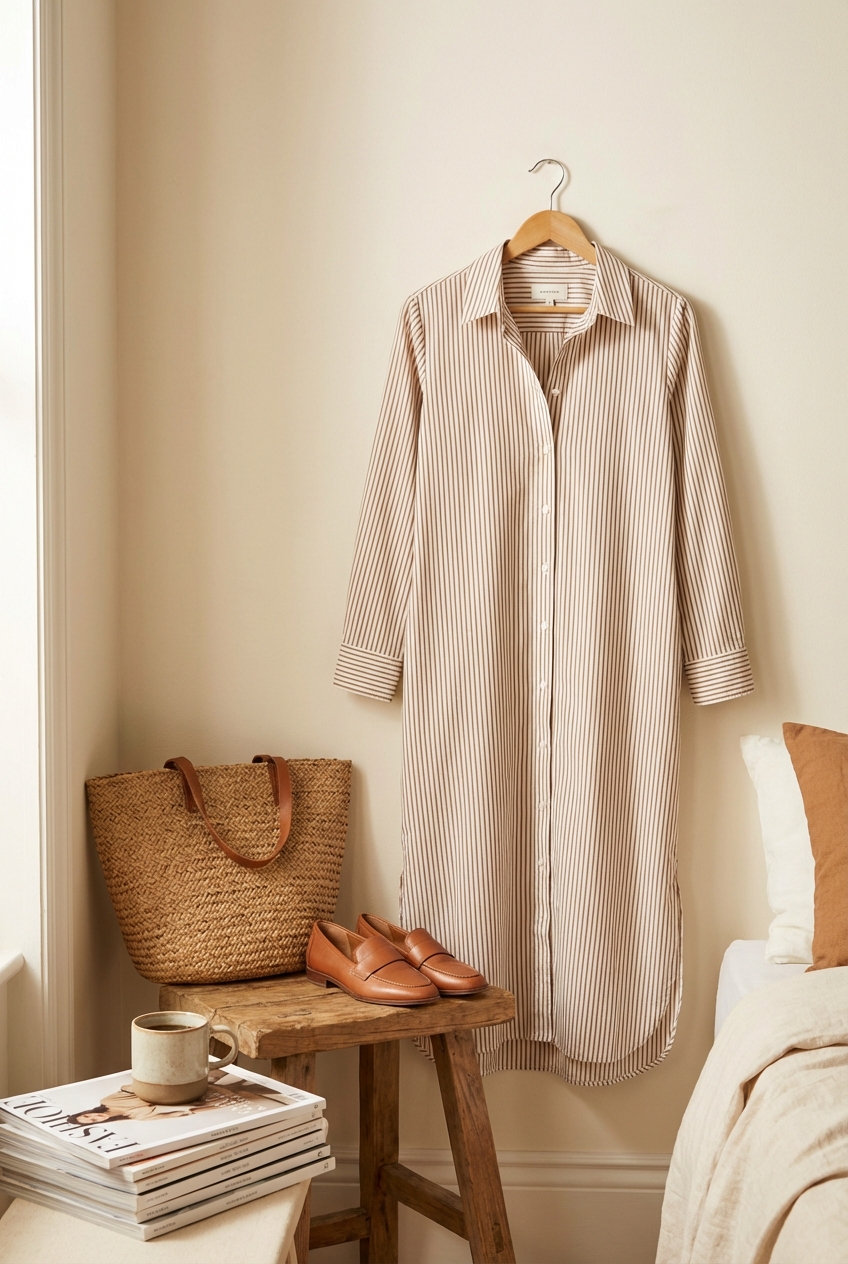
Collared Shirt Dresses For Polished Everyday Style
Introduction
The shirt dress is the unsung hero of a functional, high-end wardrobe. It borrows the sharp tailoring of menswear and fuses it with a distinctly feminine silhouette. This duality allows you to project authority in a boardroom while maintaining an air of effortless elegance at a brunch.
I vividly remember styling a client who had just been promoted to a C-suite role in a creative tech firm. She needed to look polished but not stuffy, and she had zero time for dry cleaning. We built her capsule wardrobe around five high-quality shirt dresses. They solved her morning decision fatigue instantly because they are a complete outfit in one zip or button-up motion.
Whether you prefer crisp cotton poplin or fluid silk, the key lies in the details of the fit and how you accessorize. I have curated a specific selection of looks to inspire you in the Picture Gallery at the end of this blog post.
The Architecture of Fit: Silhouette and Proportion
The difference between looking like you are wearing a painting smock and looking like a fashion editor is entirely in the tailoring. When I fit a client, I start at the shoulders. The seam must sit exactly at the edge of your shoulder bone (the acromion).
If the seam droops down your arm, the dress looks ill-fitting and sloppy. If it sits too high toward the neck, it will pull across the back and restrict your movement. This is the one measurement you generally cannot alter easily, so buy for your shoulders first.
Determining the Correct Hemline
Length dictates formality. For a polished everyday look, aim for a midi length. However, “midi” is a range, not a fixed point.
Designer’s Note: The most flattering hemline hits the narrowest part of your leg. This is usually just below the knee or just below the calf muscle. Never let a hem cut across the widest part of your calf; it visually thickens the leg and shortens your silhouette.
The Volume Rule
Balance is critical in interior design, and it is equally critical in fashion. If your shirt dress is voluminous and A-line, keep your accessories streamlined. If the dress is a slim, column fit, you can get away with chunkier footwear or a statement bag.
Fabric Composition: Identifying Quality
Not all shirt dresses are created equal. As a fashion expert, I urge you to read the care label before you even try the garment on. The fiber content dictates how the dress hangs, how it breathes, and how long it lasts.
Cotton Poplin
This is the gold standard for a crisp, architectural look. It holds its shape well, allowing for popped collars and structured sleeves. Look for 100% cotton or a blend with no more than 3% elastane for comfort.
Linen blends
Pure linen is beautiful but wrinkles the moment you look at it. For a polished look that lasts past 10:00 AM, look for a linen-viscose or linen-cotton blend. The blend adds weight and reduces the severity of creases while keeping the fabric breathable.
Silk and Viscose
These fabrics offer drape and movement. They are excellent for evening transitions or softer body types that feel boxed in by stiff cotton. However, they require careful undergarment selection to avoid visible lines.
Common Mistake: Buying 100% polyester shirt dresses for summer.
The Fix: Polyester traps heat and retains odors. If you want a synthetic for durability, look for high-quality Tencel or Lyocell, which are breathable semi-synthetics derived from wood pulp.
Defining the Waist: The Belt Swap
Most shirt dresses come sold with a “self-belt”—a strip of matching fabric with flimsy loops. My first move on almost any project is to remove this belt. It rarely stays tight, and it tends to look cheap.
Replace the self-belt with a structured leather belt to instantly elevate the price point of the look. This introduces a contrasting texture and firmly anchors the waistline.
Pro-Level Belt Rules
- Short Torso: Use a skinny belt (0.5 to 1 inch). A wide belt will eat up your midsection and make you look shorter.
- Long Torso: You can handle a wider belt (2 to 3 inches) or a corset-style belt to visually break up the length.
- Color Coordination: Match your belt leather to your shoes or bag for a cohesive, “old money” aesthetic.
Layering Strategies for Transitional Weather
A shirt dress is a four-season garment if you understand layering mechanics. The goal is to add warmth without adding bulk that ruins the line of the dress.
The Base Layer
During colder months, I style clients with a thin, tissue-weight turtleneck underneath the dress. Unbutton the dress to the sternum to show the turtleneck. This adds depth and sophistication. Stick to merino wool or cashmere blends for warmth without the bulk.
The Outer Layer
When adding a jacket, pay attention to the collar interaction. You do not want the dress collar and the jacket lapel fighting for space.
What I’d do in a real project:
- With a Blazer: Pop the collar of the shirt dress so it stands up against the back of the blazer neck.
- With a Trench Coat: Ensure the coat hem is longer than the dress hem by at least one inch. Seeing a dress peek out unevenly from under a coat ruins the visual clean lines.
- With a Sweater: Layer a chunky knit over the dress to turn it into a skirt. Use a belt over the dress, then tuck the hem of the sweater up into the belt to crop it at the waist.
Shoe Pairings: Grounding the Look
Your shoe choice dictates the genre of the outfit. Because shirt dresses are inherently preppy, you can lean into that or contrast against it.
The Office Commute
A pointed-toe flat or a loafer is practical yet sharp. Avoid round-toe ballet flats with midi lengths, as this can look juvenile. The pointed toe extends the leg line.
Weekend Polish
Clean white leather sneakers work beautifully with cotton poplin dresses. The structure of the sneaker matches the structure of the fabric. Avoid athletic running shoes; stick to fashion sneakers (like Vejas or Common Projects).
Evening Transition
Swap the flats for a knee-high leather boot. The boot shaft should disappear under the hem of the dress. This creates a seamless, continuous line that is very high-fashion. Do not leave a gap of skin between the boot top and the hem unless you are wearing a mini length.
Troubleshooting Fit: The Gaping Button
The “boob gap” is the nemesis of the button-down silhouette. It happens when the bust measurement is slightly larger than the pattern allowance, causing the placket to pull open between buttons.
The Solutions
1. The Placket Tape Trick:
Use double-sided medical tape (fashion tape) between the buttons. This is a temporary fix but works for a day.
2. The Size-Up Strategy:
Always buy the size that fits your largest measurement (usually the bust or hips). It is inexpensive to have a tailor take in the waist, but it is impossible to let out a tight bust.
3. The Permanent Fix:
For clients with larger busts, I often have my tailor sew the placket shut from the waist up to the mid-chest. We leave the buttons on top for show, but the dress becomes a pullover or zips from the side. This guarantees zero gaping, ever.
Finish & Styling Checklist
Before you walk out the door, run through this mental checklist. These are the final touches that separate a “performer” from a “pro.”
- Collar Check: Is the collar crisp? If it is flimsy, use magnetic collar stays to keep it sharp.
- Sleeve Roll: Don’t just push sleeves up. Fold the cuff back once, then roll from the bottom up to the elbow, leaving the cuff exposed. It looks intentional, not messy.
- Opacity Test: Stand in front of a window. Can you see the outline of your legs? If yes, you need a slip. A nude, laser-cut slip is mandatory for white or light-colored dresses.
- Hardware Match: If your dress has gold buttons, try to wear gold jewelry. Mixing metals can be done, but matching them looks more curated.
- Steam, Don’t Iron: Poplin can get shiny if ironed too hot. A vertical steamer gives a softer, more professional finish without the risk of scorch marks.
FAQs
How do I stop my shirt dress from wrinkling when I sit down?
You cannot completely prevent it with natural fibers like cotton or linen. However, before sitting, smooth the skirt beneath you with your hands to ensure you aren’t sitting on a fold. Choosing a patterned fabric or a seersucker texture also helps camouflage wrinkles better than a solid flat color.
Can I wear a shirt dress to a black-tie event?
Generally, no. A shirt dress is daywear or cocktail attire at most. However, a floor-length silk or taffeta shirt dress with jeweled buttons and evening accessories can work for “creative black tie,” but it is a risky high-fashion move.
What is the best sleeve length for petite women?
Avoid sleeves that cut off exactly at the elbow, as they disrupt the visual flow. Opt for a 3/4 sleeve that shows the wrist and forearm. This exposes skin and makes the limbs look longer.
How do I wash a structured shirt dress?
Always wash on cold and hang dry. Never put a tailored shirt dress in the dryer. The heat breaks down the interfacing in the collar and cuffs, causing them to bubble and lose their stiffness.
Conclusion
The shirt dress is a testament to the idea that you do not need to sacrifice comfort for style. It is a garment that respects your time by being easy to wear, while respecting your image by offering sharp lines and classic tailoring.
By focusing on the shoulder fit, upgrading your belt, and choosing the right fabric weight, you can turn this simple staple into your most powerful style ally. It is the ultimate canvas for your personal style—clean, classic, and always polished.
Picture Gallery


