
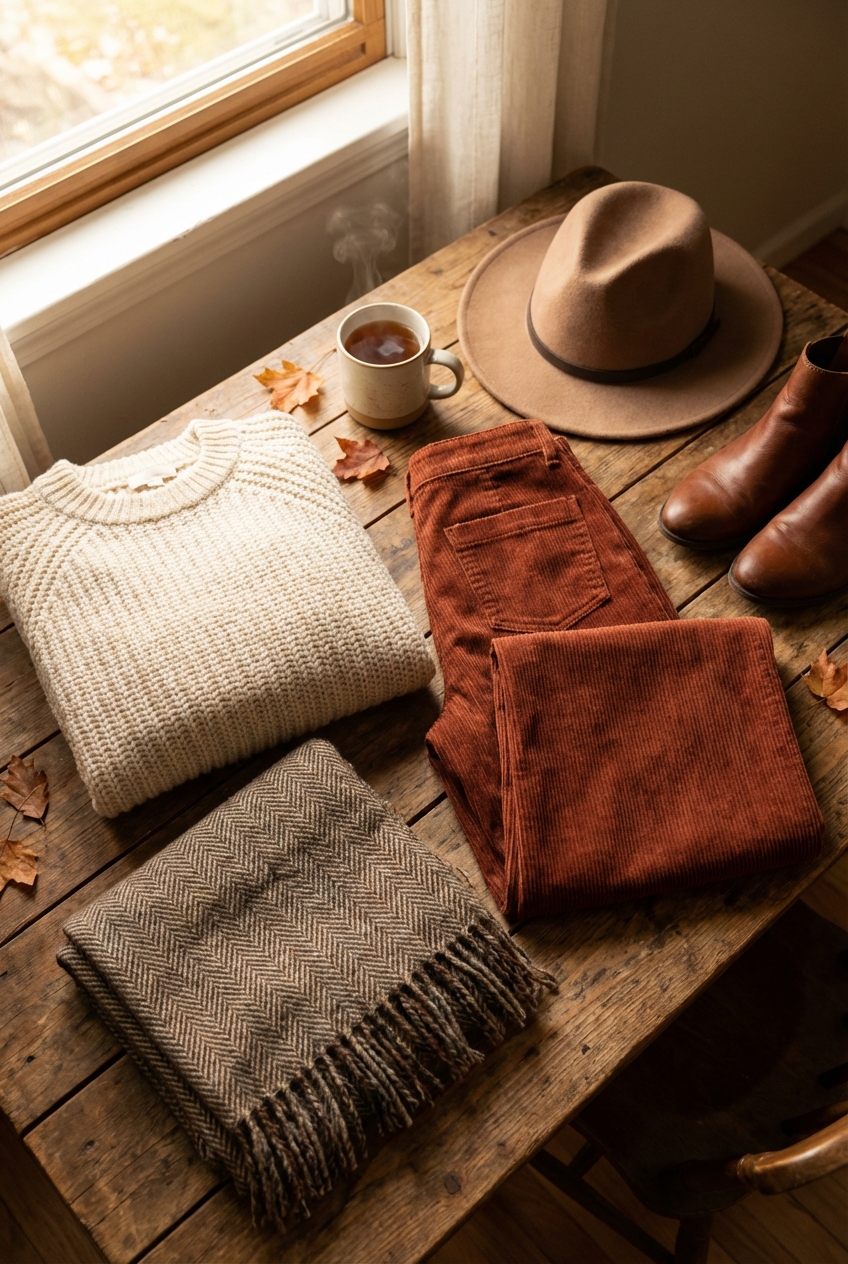
Combining Corduroy And Wool For Cozy Fall Looks
1. Introduction
As the air turns crisp and the leaves begin to change, my mind immediately shifts to texture. Just as we swap our linen dresses for cashmere sweaters, our homes require a sartorial shift to match the season. There is something deeply nostalgic and comforting about the combination of corduroy and wool. These two fabrics, staples in any high-end fall fashion wardrobe, bring that same sense of tailored luxury and warmth into our living spaces.
I remember working on a project in the Hudson Valley where the client wanted the living room to feel like “a warm hug from a vintage grandfather.” We achieved this not by painting the walls dark, but by layering a cognac wide-wale corduroy sofa with heavy, boiled wool throws. The result was tactile, acoustic, and incredibly inviting. It wasn’t just about how the room looked; it was about how the room felt against the skin.
Integrating these heavy textures requires a delicate balance to avoid the space looking heavy or dated. You want the room to feel curated and chic, not like a dusty library from the 1970s. To give you plenty of visual inspiration, I have curated a dedicated Picture Gallery at the end of this blog post.
Understanding the Architecture of Fabric: Wale and Weave
Before we start buying pillows or reupholstering chairs, we need to speak the language of these textiles. In high-end fashion and interior design, the success of a pairing often comes down to scale.
Corduroy is defined by its “wale,” which is the width of the cord. A lower number indicates a wider ridge. For a modern, bold statement, I almost always lean toward a wide wale (think 4-wale to 8-wale). It feels architectural and plush. A “pin wale” (fine corduroy) can read a bit too formal or traditional for a cozy fall refresh.
Wool acts as the grounding element. I prefer using wools with a visible weave structure to complement the linear nature of corduroy. Bouclé, herringbone, or a chunky felted wool adds necessary complexity. The goal is to create tension between the structured lines of the corduroy and the organic, matte finish of the wool.
Designer’s Note: The Direction Matters
One specific lesson I learned the hard way involves the “nap” of corduroy. Just like velvet, corduroy looks different depending on which way the fibers lay. When upholstering a piece, you must ensure the nap runs down the back and over the seat. If the fabric is applied sideways (railroaded) without careful consideration, the light hits the ridges differently, often making the furniture look two different colors. Always verify the nap direction with your upholsterer before cutting.
Color Palettes: Moody, Earthy, and sophisticated
When combining two light-absorbing fabrics like wool and corduroy, color selection is paramount. Unlike silk or polished cotton, these fabrics do not reflect light; they swallow it. This creates a rich, saturated look, but it can also darken a room significantly.
For a high-fashion approach, I recommend monochromatic layering with distinct tonal shifts.
- The Camel Coat Aesthetic: Pair a honey-toned corduroy accent chair with cream and oatmeal wool throws. This mimics the classic camel coat and creates a sense of airy warmth.
- English Countryside: Deep olive green corduroy looks incredible against charcoal grey or navy wool. This is a very masculine, savory palette that works well in dens or libraries.
- Terracotta and Rust: For a true autumnal punch, use burnt orange or rust hues. However, ground them with neutral greys or browns to prevent the room from looking like a Halloween decoration.
Common Mistake: The “Muddy” Effect
The Mistake: Pairing dark brown corduroy with dark grey wool in a room with low natural light. The textures merge into a black hole.
The Fix: Introduce a “bridge” element with a sheen. Add a leather ottoman or brass lighting fixtures to bounce light around and separate the heavy textures.
Furniture Selection: Scale and Upholstery
If you are ready to commit to larger pieces, corduroy is a powerhouse for durability and comfort. A sectional sofa in a soft, wide-wale corduroy is incredibly family-friendly. The texture hides crumbs and withstands the wear and tear of daily life better than a flat weave linen.
When selecting a sofa for this look, pay attention to the frame. Because corduroy and wool are bulky fabrics, they look best on furniture with clean lines or substantial weight.
- Avoid: Delicate, spindly French antiques upholstered in heavy corduroy. The scale will feel off.
- Choose: Low-slung, boxy silhouettes or mid-century modern frames with wood accents.
Practical Constraint: Durability
In the design industry, we measure durability in “double rubs” (the Wyzenbeek test). For a main living area sofa, I never specify a fabric with fewer than 30,000 double rubs. High-quality wool and corduroy blends often exceed 50,000 double rubs, making them excellent investments for high-traffic homes.
Layering Soft Goods: Pillows and Throws
If you are renting or working with a strict budget, you do not need to buy a new sofa to get this look. You can transform a space entirely through “soft goods”—the fashion accessories of the home.
I follow a strict rule of three when styling a sofa with these heavy textures:
- The Base: Start with two large square pillows (22″ or 24″) in the corners. These should be your solid wool or felt.
- The Texture: Layer a slightly smaller pillow (20″) in front. This is where your corduroy comes in. The ridges add immediate visual interest.
- The Accent: Finish with a lumbar pillow or a patterned wool (plaid or houndstooth) to bridge the colors.
Styling Secret: The “Karate Chop”
To make heavy fabrics look luxurious rather than stiff, use down-filled or down-alternative inserts that are 2 inches larger than the pillow cover. For a 20-inch corduroy cover, use a 22-inch insert. This allows you to give the pillow a “chop” in the center, creating a lived-in, inviting shape.
Rug Sizing and Floor Textures
Grounding a room filled with heavy textures requires a rug that can stand up to the visual weight. A thin, printed vintage rug might feel too flimsy next to a chunky corduroy sofa.
I prefer using high-pile wool rugs or dense, looped Berber styles. These echo the coziness of the furniture. However, sizing is critical. A common error is buying a rug that is too small, making the furniture look like it is floating on an island.
The Golden Rules of Rug Sizing:
- Living Room: The rug should be large enough that at least the front two legs of every furniture piece sit on it. Ideally, all four legs should be on the rug.
- Clearance: Leave 12 to 18 inches of bare floor visible around the perimeter of the room. This negative space keeps the room from feeling suffocated by texture.
- Spacing: Ensure your coffee table is roughly 14 to 18 inches from the edge of the sofa. This allows for comfortable legroom while keeping the table within reach for a drink.
Lighting: enhancing The Texture
Texture is invisible without proper lighting. Corduroy and wool rely on shadow and highlight to show off their depth. Flat, overhead lighting will wash out the ridges of the corduroy and flatten the weave of the wool.
To maximize the cozy factor, you need to layer your lighting.
- Color Temperature: Swap your bulbs to 2700K or 3000K (Warm White). Anything higher (4000K+) will look clinical and cold, clashing with the warmth of the fabrics.
- Angle of Incidence: Place floor lamps or table lamps to the side of your textured pieces. Side lighting casts shadows across the corduroy wales, exaggerating the texture and making the piece look richer.
- Dimmers: Install dimmers on every switch. In the evening, dimming the lights emphasizes the silhouette and softness of the wool, creating that moody lounge atmosphere.
Finish & Styling Checklist: What I’d Do In A Real Project
If I were styling your living room tomorrow to embrace this corduroy and wool trend, here is the exact mental checklist I would run through.
The “High-End Home” Checklist:
- Audit the Mix: Ensure there is a 60/40 split. If the sofa is corduroy (60%), the pillows and rug should be wool (40%). Don’t do 100% of either.
- Check the Flow: Is there a heavy wool throw within arm’s reach of the favorite reading spot?
- Verify Texture Contrast: Have I included something smooth (wood, glass, leather) to break up the fuzziness?
- Test the Lighting: Turn off the big overhead light. Is the room still illuminated enough by lamps to read a book?
- Scent Scaping: This look begs for a scent. Add a candle with notes of cedar, tobacco, or amber to complete the sensory experience.
FAQs
Is corduroy furniture dated?
Not at all. While it had a peak in the 70s, it has returned as a major trend in “Grandpa Chic” and eclectic modern design. The key is the silhouette of the furniture. Put corduroy on a sleek, modern sofa, and it feels very current. Put it on a frilly, skirted sofa, and it might feel old-fashioned.
Can I use these fabrics if I have pets?
Yes! In fact, they are some of the best options. Corduroy’s ridges hide claw marks and scratches exceptionally well. Wool is naturally stain-resistant due to the lanolin in the fibers, and it is anti-static, meaning it repels dust and dirt better than synthetics.
Does this look work in the summer?
Wool is actually temperature-regulating, so it isn’t strictly for winter. However, visual weight matters. To transition to spring, I usually swap the heavy boiled wool throws for lighter merino wool or cotton blends and remove some of the extra throw pillows to let the room breathe.
What about cleaning?
Always check the cleaning code. “S” means solvent-based cleaner (dry clean only), while “W” means water-based. Many wools are “S” codes. For corduroy, vacuuming is the most important maintenance step. Use the upholstery attachment to suck dust out from between the ridges to keep the color vibrant.
Conclusion
Bringing the combination of corduroy and wool into your home is an exercise in tactile luxury. It transforms a sterile space into a sanctuary that feels safe, warm, and sophisticated. Just as you layer a heavy wool coat over a textured ensemble for a fall walk, layering your home with these materials prepares it for the season of gathering and resting.
Trust your hands as much as your eyes. When you walk into the room, you should want to touch everything. If you achieve that, you have successfully mastered this look.
Picture Gallery


