
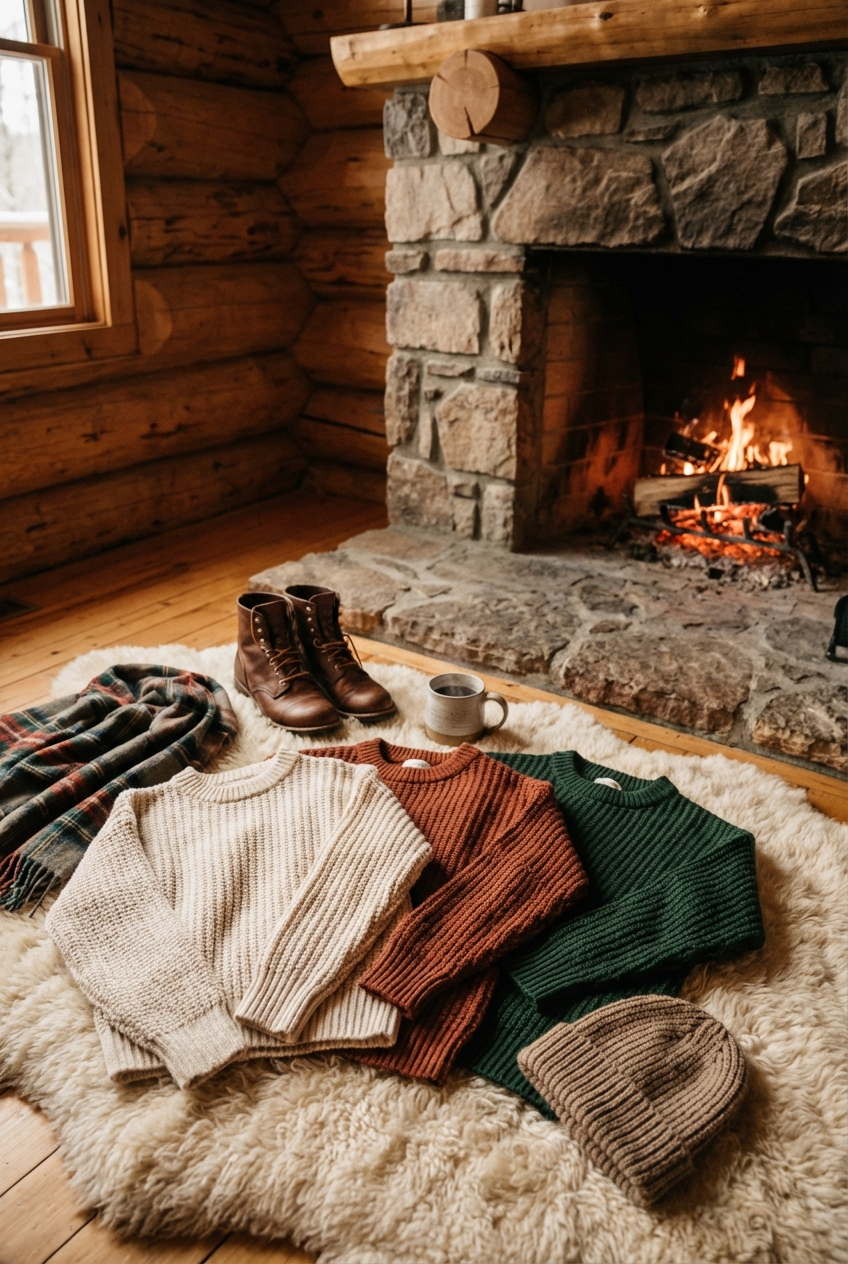
Cozy Winter Lodge Styles With Knit Sweaters
There is a specific feeling we all chase when the temperature drops and the first frost settles on the windows. It is that moment you pull your favorite oversized cable-knit sweater over your head, instantly feeling protected, warm, and stylish. As a fashion expert, I believe your home should evoke that exact same emotion.
Translating the “winter lodge” aesthetic into interiors isn’t about turning your living room into a kitschy cabin theme park. It is about studying the construction of high-end knitwear—the ply of the wool, the tension of the weave, and the warmth of the palette—and applying those principles to your furniture and layout. We are curating a space that feels like a cashmere embrace.
In this guide, I will walk you through how to layer your home like you layer your winter wardrobe, focusing on textures, scale, and lighting. For visual inspiration on how these textures come together, be sure to check out the Picture Gallery at the end of the blog post.
1. The Fabric of the Room: translating Knitwear to Upholstery
When curating a winter lodge look, the “hand” of your textiles is the most critical element. In fashion, we look for chunky gauges and natural fibers; in interiors, we look for tactile upholstery that demands to be touched.
Start with your primary seating. A boucle sofa or an armchair upholstered in a heavy-weight wool blend acts as the “chunky knit” of the room. You want fabrics that absorb light rather than reflect it, creating a soft, matte finish that feels visually quiet and physically warm.
Don’t be afraid to mix weave sizes. Just as you might pair a fine-gauge turtleneck with a heavy cardigan, you should pair a tight-weave linen sofa with an oversized, hand-knitted throw blanket. This contrast prevents the room from looking messy or overwhelming.
Designer’s Note: The durability factor
A common issue with “cozy” fabrics like loose-weave wool or boucle is that they can snag easily, especially if you have pets or zippers on your clothing. If this is a high-traffic family room, look for “performance boucle” or cryptic fabrics. These mimic the high-end look of natural wool but offer snag resistance and stain protection.
2. The Palette: Earth Tones and Undyed Wools
The most sophisticated winter lodge styles rely on a restraint of color. Think about the most luxurious winter sweaters you own; they are likely in shades of oatmeal, charcoal, camel, or deep forest green. These colors are timeless because they mimic the natural landscape.
I recommend using the “60-30-10” rule to balance this palette effectively. Use a neutral shade like warm cream or soft greige for 60% of the room (walls and large furniture). Use a secondary color like warm cognac leather or slate gray for 30% (accent chairs, rugs). Finally, use a rich accent like burgundy or hunter green for the final 10% (pillows, art).
Avoid “stark white” paint at all costs in this aesthetic. It feels too sterile and cold. Instead, opt for whites with warm undertones—look for paint names that include words like “dove,” “milk,” or “linen.”
Common Mistake + Fix
Mistake: Using cool-toned grays that make the room feel icy and industrial.
Fix: Swapping your wall color for a “greige” (gray-beige) with a yellow or red undertone. If painting isn’t an option, wash the room with warm lighting (2700K bulbs) to counteract the blue tones in the gray paint.
3. Grounding the Space: Rugs as the Foundation
In a winter outfit, your boots ground the look. In a room, the rug serves that purpose. To achieve that cozy lodge vibe, you cannot skimp on rug size or texture. A postage-stamp-sized rug makes a room feel disjointed and cold.
For a living room, aim for a high-pile Moroccan wool rug or a thick jute layered with a sheepskin. The texture underfoot should feel substantial. If you are renting or on a budget, layering is your best friend. Start with a large, inexpensive flat-weave jute rug to cover the floor, and layer a smaller, plush vintage rug on top in the center.
What I’d do in a real project: Sizing rules
I never specify a rug that floats in the middle of the room. Here is my non-negotiable checklist for sizing:
- The Front Leg Rule: At minimum, the front legs of the sofa and all armchairs must sit on the rug. They should overlap by at least 6 to 10 inches.
- The Border Rule: Leave 12 to 18 inches of bare floor visible around the perimeter of the room to keep the space from feeling cramped.
- Bedroom Sizing: In a bedroom, the rug should extend 24 to 36 inches on either side of the bed so your feet land on softness when you wake up.
4. Lighting: Creating the “Fireplace” Glow
You cannot have a lodge atmosphere with overhead can lighting. It is the equivalent of wearing neon gym clothes to a formal dinner—it ruins the mood completely. You need to create pockets of light that mimic the glow of a fire.
Layer your lighting at three levels. First, use floor lamps to illuminate dark corners. Second, use table lamps at eye level for reading and conversation. Third, use focused accent lights, like a picture light over artwork or a small sconce.
Pay close attention to your lightbulbs. The “temperature” of light is measured in Kelvins. For a cozy winter vibe, you must stick to 2700K (Warm White). Anything above 3000K will look blue and clinical, destroying the warmth of your wood and wool textures.
Designer’s Note: The dimmer switch essential
Every client I work with gets dimmer switches installed. It is the single most effective upgrade for changing the mood of a room. If you are a renter, you can buy plug-in dimmers for your floor and table lamps. It allows you to drop the light levels low in the evening, instantly making the room feel intimate and enclosed.
5. Draping and Layering: The Accessories
This is where the “knit sweater” concept truly comes to life. Accessories are the jewelry of the room. Just as you might accessorize a sweater with a scarf and beanie, you accessorize a sofa with throws and pillows.
When selecting throw blankets, look for cable knits, faux fur, or heavy cashmere. Do not fold them neatly over the back of the sofa; drape them casually to suggest ease and comfort. We want the room to look “lived in,” not staged for a catalog.
Window treatments are also vital for insulation and style. Velvet or heavy linen drapes add a layer of thermal protection against drafty winter windows. They also soften the acoustics of the room, making it sound quieter and more private.
Pro-Tip: Curtain hanging measurements
To maximize the feeling of height and luxury:
- Rod Placement: Mount the curtain rod 4 to 6 inches above the window frame, or all the way to the ceiling molding if possible.
- Width: The rod should extend 8 to 12 inches past the window frame on each side. This allows the curtains to stack against the wall when open, letting in maximum natural light during short winter days.
- Length: The fabric should “kiss” the floor. It should touch the floor barely, or puddle slightly (1-2 inches) for a romantic, lodge-like look. It should never hover above the floor.
6. Bringing the Outdoors In: Winter Biophilia
A true lodge style connects with the landscape. Even if you are in a city apartment, you need organic elements to bridge the gap between inside and out. In the summer, we use fresh flowers; in the winter, we use structural branches and evergreens.
For styling surfaces, fill a heavy ceramic vase with tall branches—birch, cotton stems, or preserved eucalyptus. These architectural elements add height and drama without the maintenance of fresh blooms. They also last all season.
If you have a patio or balcony, the design shouldn’t stop at the glass door. Place a weather-resistant plaid rug outside and drape a heavy wool blanket over an outdoor chair (bringing it in when it rains, of course). Seeing a cozy setup through the window psychologically expands your living space.
Common Mistake + Fix
Mistake: Using fake, plastic-looking greenery or “snow-covered” fake trees that look cheap.
Fix: Stick to dried naturals or real clippings. If you go artificial, invest in high-quality “real touch” magnolia leaves or pine. It is better to have an empty vase than cheap plastic plants.
Finish & Styling Checklist
Ready to transform your space? Use this checklist to ensure you have hit all the right notes for a high-end lodge aesthetic.
- Texture Audit: Do you have at least three distinct textures (e.g., leather, wool, wood) in the main living area?
- Lighting Check: Are all bulbs 2700K warm white? Do you have at least three sources of light excluding the ceiling fixture?
- Rug Sizing: Does your rug sit under the front legs of your furniture by at least 6 inches?
- Palette Review: Have you removed or stored away bright, summery colors? Is the palette grounded in neutrals and earth tones?
- Drapery: Are curtains hung high and wide to maximize light?
- Scent: Have you added a sensory layer? A candle with notes of cedar, ember, or vanilla rounds out the experience.
FAQs
How do I clean heavy knit blankets and pillow covers?
Treat your home textiles exactly like your fashion textiles. Read the care label first. Most heavy wool knits should be dry-cleaned to prevent shrinking or felting. If they are synthetic blends, you can often wash them on a delicate cycle with cold water and lay them flat to dry. Never hang a wet heavy knit, as it will stretch out of shape.
Can I pull off this look in a small apartment without it feeling cluttered?
Absolutely. The key is “fewer, bigger” pieces. Instead of five small throw blankets, have one oversized chunky one. Instead of a gallery wall of small frames, use one large landscape painting. Large scale pieces actually make small rooms feel grander, whereas clutter makes them feel smaller.
Is the “Lodge” look only for winter?
While the heavy knits and faux furs are winter-specific, the foundation of this style—natural woods, leather, and neutral palettes—works year-round. To transition to spring, simply swap the heavy wool throw for a lightweight linen one and replace the dried branches with fresh greenery.
Conclusion
Creating a cozy winter lodge style is an exercise in fashioning a home that cares for you. It draws on the same principles we use when building a winter wardrobe: investing in quality materials, layering for warmth, and trusting in neutral classics that never go out of style.
By focusing on the tactile experience—the roughness of a jute rug against the softness of a cashmere throw—you create a space that engages the senses. It isn’t just about how the room looks; it is about how the room feels when you walk in from the cold, kick off your boots, and settle in.
Remember that like a great outfit, a room is never truly “finished.” It evolves with the seasons and your personal taste. Start with the foundation of good lighting and correct scale, then layer on the personality with your favorite knit textures. Stay warm.
Picture Gallery


