
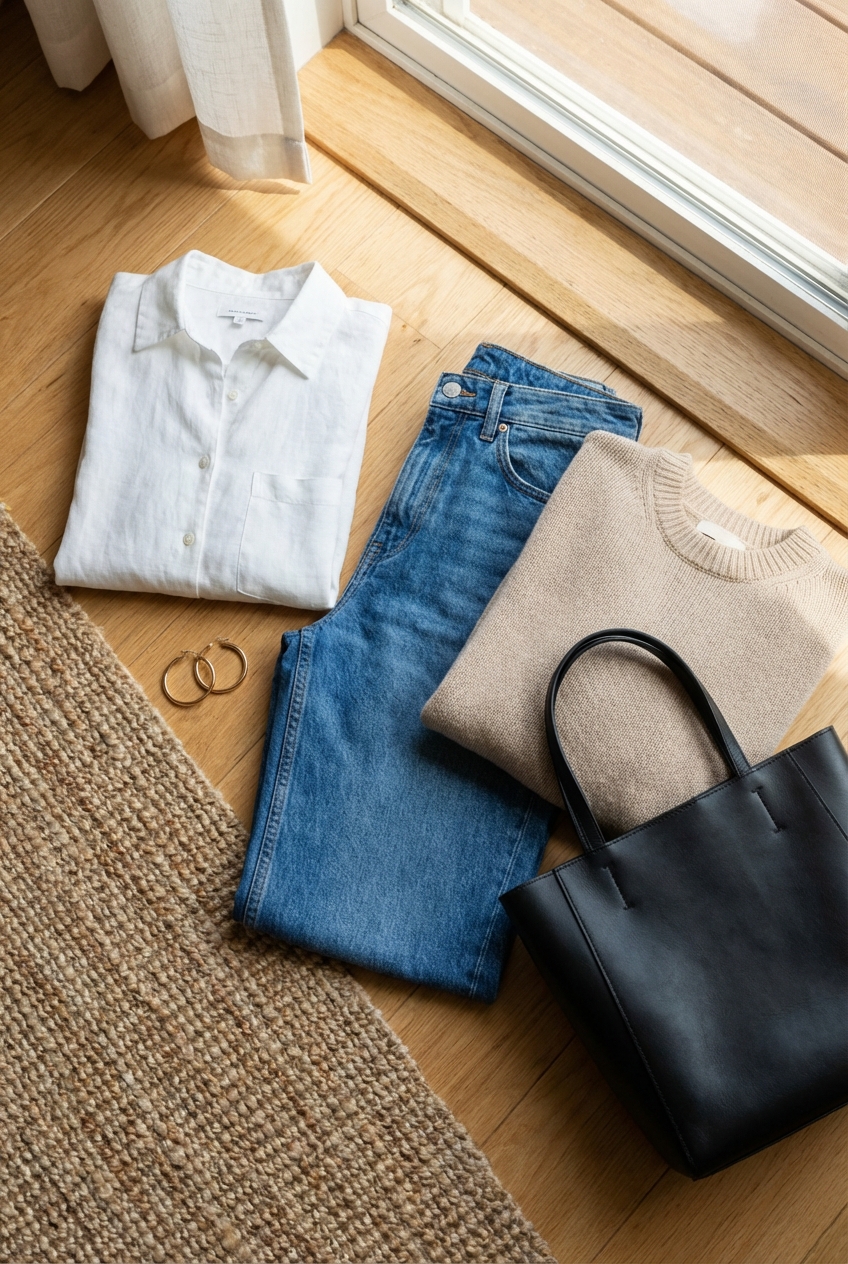
Creating A Minimalist Wardrobe Essentials For Everyday Wear
Introduction
Opening your closet in the morning should feel like walking into a perfectly appointed boutique, not a chaotic storage unit. Yet, so many of us stare at racks bursting with clothes and feel like we have absolutely nothing to wear. This paralysis usually stems from a lack of cohesion, much like a room filled with beautiful furniture that doesn’t actually fit the floor plan.
A minimalist wardrobe isn’t about deprivation or wearing the same boring outfit every day. It is about architectural precision, curating pieces that work together to create a functional, high-end aesthetic with minimal effort. When I style a client, we approach their wardrobe with the same rigor used in interior design: focusing on lines, textures, color theory, and structural integrity.
In this guide, I will walk you through the structural blueprint of a high-functioning minimalist closet. We will cover fabric weights, tailoring rules, and the essential pieces that serve as the foundation of your personal style. For visual inspiration on how these pieces come together in real life, be sure to check out the Picture Gallery at the end of the blog post.
The Foundation: Understanding Fabric and Texture Logic
Before we buy a single garment, we must address the “materials palette.” In design, you wouldn’t pair a flimsy synthetic rug with a heavy velvet sofa; the visual weight would be off. The same logic applies to your clothing. A minimalist wardrobe relies on texture to replace the excitement usually provided by loud prints.
Focus on natural fibers. They breathe better, drape more elegantly, and generally last longer than synthetics. For your core essentials, you want fabrics that have “guts”—a density that smoothes over the body rather than clinging to it.
Designer’s Note: The GSM Rule
One lesson I learned early in my career is that not all cotton is created equal. When shopping for t-shirts—the workhorse of the minimalist wardrobe—pay attention to the GSM (grams per square meter).
A standard cheap tee is usually around 120-140 GSM. It will twist in the wash and become sheer quickly. For a high-end look, aim for 180-200 GSM. This weight is opaque, holds its structure at the neckline, and drapes without clinging to undergarments.
Common Mistakes + Fixes
Mistake: Buying 100% polyester blouses that mimic silk.
Fix: Polyester traps heat and retains odors. Look for Cupro or Tencel if silk is out of budget. These semi-synthetic fibers breathe like cotton but drape like silk, offering that luxurious, fluid movement essential for a polished look.
The Core Color Palette: The 60-30-10 Rule
Minimalism often gets confused with “monochrome,” but a lack of color isn’t a requirement. However, a restricted palette is essential for mix-and-match capability. Just as we use the 60-30-10 rule in living room design, we apply it here.
Your wardrobe should consist of 60% base neutrals. These are the heavy lifters: black, navy, charcoal, camel, or ivory. This is your canvas.
30% of your wardrobe should be bridging colors. These are softer tones that connect the darks and lights, such as sage green, slate blue, taupe, or denim blue.
The final 10% is your accent. This can be a red lip, a leopard print shoe, or a silk scarf. It provides the personality without overwhelming the architecture of the look.
What I’d Do in a Real Project
If I were building a capsule from scratch today, this is the exact color breakdown I would use:
- The Base (60%): Black trousers, white button-downs, camel coat, indigo denim.
- The Bridge (30%): Grey cashmere sweater, cream silk camisole, olive trench coat.
- The Accent (10%): Burgundy leather handbag, gold jewelry hardware.
Silhouette Architecture: The Top Layers
The tops in a minimalist wardrobe act as the “lighting” of the outfit—they draw attention to the face and set the mood. The fit here is non-negotiable. Even an expensive shirt looks cheap if the shoulder seam slides down your arm (unless it is intentionally dropped-shoulder).
The Perfect White Button-Down
This is your most versatile tool. Look for a “boyfriend” or slightly relaxed fit rather than a fitted darted shirt, which can look dated. The fabric should be crisp poplin.
The cuffs should hit right at the wrist bone when your arms are at your sides. If you wear a blazer over it, half an inch of cuff should be visible. This tiny detail signals intention.
The Structured Blazer
A blazer provides the framework for soft layers. For a modern minimalist look, avoid cropped, tight blazers. You want a slightly elongated silhouette that hits at the low hip.
Check the buttons. Cheap plastic buttons ruin a great wool blazer. Swapping them out for horn or metal buttons is a ten-dollar fix that makes a jacket look ten times more expensive.
Fit Check: The Shoulder Seam
Stand naturally. The seam where the sleeve attaches to the body of the jacket should sit exactly at the corner of your shoulder bone. If it indents, the jacket is too small. If it droops (and isn’t oversized by design), it looks like a hand-me-down.
The Bottom Line: Trousers, Denim, and Skirts
Pants are the flooring of your outfit. They ground everything else. If the length or proportion is wrong, the whole structure feels unstable.
The Tailored Trouser
You need one pair of high-waisted, wool or wool-blend trousers. The rise is critical here. For most women, a rise of 10 to 12 inches hits the true waist, elongating the legs.
The hem determines the shoe. If you mostly wear flats, the hem should have a “quarter break” or just graze the top of the shoe. If you wear heels, the hem should fall 1/2 inch from the floor while you are wearing the shoes.
Straight Leg Denim
Skinny jeans are dated, and wide-leg can be tricky for everyday wear. The straight leg is timeless. Look for a wash that is uniform—no aggressive whiskering or fading on the thighs.
Rigid vs. Stretch
For that high-end vintage look, aim for denim with 98% to 100% cotton. It takes time to break in, but it holds you in and doesn’t bag out at the knees by 3 PM.
Common Mistakes + Fixes
Mistake: Ignoring the “drag.”
Fix: Buying pants that are too long and letting them drag on the ground destroys the hem and looks messy. If you buy off the rack, factor in an extra $15-$25 for a tailor to hem them to your specific heel height. It is the most important money you will spend.
Outerwear and Layering Pieces
Your coat is the exterior of your home. For six months of the year, it is the only part of your outfit people see. Do not treat it as an afterthought.
The Wool Coat
Invest in a coat with at least 70% wool or cashmere content. Synthetics pill rapidly and don’t provide warmth without bulk. A camel or black coat in a wrap style or a structured Chesterfield style works over everything from gym clothes to evening wear.
The Trench Coat
This is your transitional hero. Look for a cotton gabardine fabric which is water-resistant and durable. The length should hit below the knee. A trench that stops at the hip cuts the body in half and ruins the line of your outfit.
Designer’s Note: The Third Piece Rule
If your outfit feels boring, you are likely missing a “third piece.”
1. Top
2. Bottom
3. The Third Piece
The third piece is a jacket, a cardigan, or a substantial accessory like a structured vest. It adds dimension and completes the visual thought. In interior design, we call this layering. A sofa and a coffee table are functional, but add a throw blanket, and suddenly it is styled.
Footwear and Accessories: The Hardware
Shoes and bags are the hardware of your wardrobe—the cabinet pulls and light fixtures. They can modernize a classic look or date it instantly.
The Loafer or Mule
A black leather loafer is the ultimate minimalist shoe. It is polished enough for the office but cool enough for the weekend. Look for almond or slightly squared toes; round toes can sometimes look juvenile.
The Ankle Boot
When choosing a boot, pay attention to the shaft width. A minimalist ankle boot should have a narrow shaft that fits under your straight-leg jeans without creating a bulky bulge at the ankle.
The Structured Bag
Slouchy bags can look messy. A structured leather tote or crossbody bag adds geometric lines to your silhouette. Stick to your leather neutral (black, tan, or oxblood) and ensure the hardware matches your jewelry preference (gold vs. silver).
Quality Signal: The Stitching
Inspect the stitching on leather goods. It should be consistent in length and color. Contrast stitching is risky—if it gets dirty or frays, the bag looks ruined. Tonal stitching (black thread on black leather) hides wear and tear much better.
Finish & Styling Checklist
You have the pieces; now you need the polish. Before leaving the house, run through this mental checklist to ensure the design holds up.
- The Steam Check: Wrinkles make expensive clothes look cheap. Never wear linen, cotton, or silk without a quick steam.
- The lint Roll: Black wool and denim attract dust. A quick roll is essential.
- The Tuck: Are you doing a full tuck or a half-tuck? Ensure the fabric is smoothed flat inside your waistband to avoid lumps.
- The Shoe Condition: Are your heels scuffed? A quick wipe or a dab of shoe polish maintains the illusion of newness.
- The Proportion Check: If you are wearing a voluminous top, keep the bottom slim. If the pants are wide, keep the top fitted. Balance is key.
FAQs
How do I stop my minimalist wardrobe from feeling boring?
Texture is the answer. If you are wearing a black sweater and black trousers, make sure the sweater is a chunky knit or cashmere and the trousers are a sleek wool or leather. The contrast in light absorption creates visual interest without needing color.
What if I’m on a tight budget?
Spend money on the items you wear 3 times a week: shoes, coats, and jeans. Save money on items you wash frequently, like t-shirts and tank tops. You can find great cotton basics at lower price points, but cheap footwear almost always looks cheap and hurts your feet.
How many pieces do I actually need?
There is no magic number, but a functional capsule usually sits between 30 and 40 items (excluding workout gear and pajamas). Focus on versatility. If an item doesn’t go with at least three other things in your closet, it doesn’t belong there.
How do I handle trends?
Treat trends like throw pillows. They are fun to swap in and out, but they shouldn’t be the sofa. limit trends to accessories or affordable tops. Keep your core investments—coats, boots, bags—classic.
Conclusion
Building a minimalist wardrobe is not about throwing away everything you own; it is about refining your environment. It is the process of quieting the visual noise so that you can focus on quality and silhouette.
By applying these design principles—paying attention to fabric weight, respecting the rule of thirds, and ensuring proper scale and fit—you create a closet that serves you. You eliminate the decision fatigue of the morning rush and replace it with the confidence of knowing that everything you put on fits, feels, and looks exceptional.
Start with the foundation. Edit ruthlessly. And remember that in fashion, as in design, space and simplicity are often the ultimate forms of luxury.
Picture Gallery


