
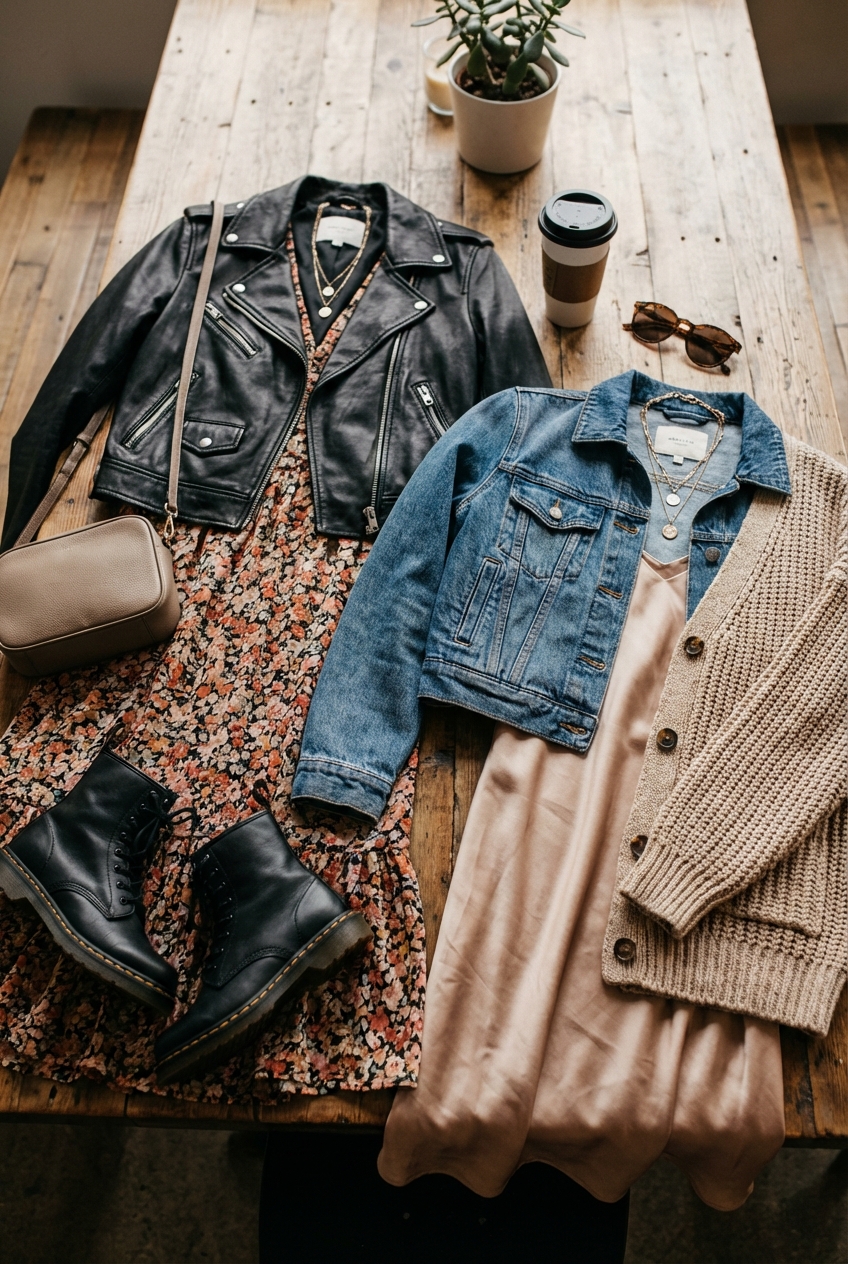
Cropped Jackets For Adding Edge To Dresses
Introduction
There is a moment in almost every fitting where a look feels technically complete but emotionally flat. We often put on a beautiful floral midi or a sleek slip dress and feel just a little too precious. The outfit is polite, but it lacks personality and grit. This is usually where I step in with a pair of shears—metaphorically speaking—to adjust the silhouette, but more often, I reach for a cropped jacket.
The cropped jacket is the great equalizer in a wardrobe. It acts as an architectural tool that redefines the waistline, breaks up vertical monotony, and instantly toughens up a feminine aesthetic. I have saved countless evening looks and casual brunch outfits simply by adding a structured layer that hits exactly at the ribcage. It is about creating tension between the soft drape of a dress and the rigid line of a jacket.
In this guide, I will walk you through the precise mechanics of styling this combination. We will cover proportion rules, fabric weights, and the tailoring secrets that make high-end ensembles look effortless. For visual inspiration on how these combinations come together, be sure to check out the Picture Gallery at the end of the blog post.
The Mathematics of Proportion: The Rule of Thirds
In fashion styling, just as in architecture, the Rule of Thirds is non-negotiable. The human eye finds a 1/3 to 2/3 ratio most visually pleasing. When you wear a dress without a defined waist, you are essentially a single column. If you put a standard hip-length blazer over it, you often cut the body in half (a 1:1 ratio), which can make you look shorter and boxier.
A cropped jacket forces the eye to recognize the top third of your body as one section and the dress below as the remaining two-thirds. This optical illusion elongates the legs and highlights the waist without the need for a belt. This is particularly vital for petite clients or those with a longer torso who want to balance their frame.
The “sweet spot” for a cropped hem is specific. It should hit between the natural waist (the smallest part of your torso) and the high hip bone (iliac crest). Anything higher is a bolero, which can look dated. Anything lower begins to drift into standard jacket territory, losing the leg-lengthening effect.
Designer’s Note:
One lesson I learned early in my career involved a client with a beautiful A-line maxi dress. We paired it with a jacket that ended at her widest hip point. It instantly added ten pounds of visual weight. By switching to a jacket hemmed two inches above her navel, the skirt was allowed to flare freely, and her waist looked snatched. Never suppress the volume of a skirt with a heavy hemline.
Material Contrast: Leather and Suede
The most effective way to add “edge” is through texture. If your dress is silk, chiffon, or cotton poplin, adding a matching cotton jacket reads as a uniform or a suit. You want friction between the materials. This is where leather and suede become your most valuable assets.
A leather moto jacket is the classic choice, but the weight creates a styling challenge. Heavy cowhide can physically crush delicate fabrics like silk or rayon. For lighter dresses, I always source lambskin or soft vegan leathers that drape rather than sit stiffly. The hardware also plays a massive role here; heavy zippers add jewelry-like elements to the look.
Suede offers a softer edge. It absorbs light rather than reflecting it, which creates a rich, matte finish. This is ideal for daytime events where black leather might feel too aggressive. A cropped suede trucker jacket in camel or slate grey over a white eyelet dress creates a sophisticated, textural narrative that feels expensive.
Common Mistakes + Fixes:
- Mistake: Wearing a stiff, heavy leather crop over a bias-cut slip dress.
- Fix: The friction will cause the dress to bunch and twist. Wear a slip underneath the dress to create a smooth buffer, or choose a jacket with a silk lining to reduce static and friction.
- Mistake: Ignoring hardware clashes.
- Fix: If your dress has silver buttons or you are wearing gold jewelry, ensure the jacket hardware matches or is intentionally mixed. Clashing metals can make the outfit look accidental.
Volume Control: Boxy vs. Fitted
The silhouette of the jacket must converse with the silhouette of the dress. You generally have two choices: the boxy crop or the fitted crop. Choosing the wrong one throws off the entire balance of the outfit.
A fitted crop jacket creates an hourglass shape. It should nip in at the ribcage and have higher armholes. This style works best with dresses that have volume in the skirt, such as full A-line midis or pleated maxis. The fitted top balances the voluminous bottom.
Conversely, a boxy cropped jacket—think a chopped tweed blazer or an oversized denim cut-off—hangs away from the body. This looks incredibly chic over body-skimming dresses like a ribbed knit column or a satin slip. The boxy shape hanging over a slim dress implies a sense of ease, like you just threw on a boyfriend’s jacket, but the cropped length keeps it feminine.
What I’d do in a real project:
- For a Slip Dress: I select a boxy, oversized cropped leather jacket. The structure hangs off the shoulders, making the slip dress underneath look even more delicate.
- For a Fit-and-Flare: I choose a tailored, darted cropped blazer. It follows the line of the bodice and releases exactly where the skirt begins to volume out.
The Sleeve Length Variable
While we focus heavily on the hem of the jacket, the sleeve length is equally critical for adding edge. A full-length sleeve can sometimes look heavy, especially on a cropped garment. It creates a “blocky” effect.
I almost always recommend a bracelet-length sleeve or a strong cuff roll. Showing the wrist bone and forearm is one of the oldest tricks in styling to add lightness to a look. It also provides a dedicated space to showcase stacked bracelets or a luxury watch, which elevates the “edge” from grunge to high-fashion.
If you are buying a jacket off the rack, pay attention to the sleeve opening. A wide sleeve opening on a cropped jacket creates a bell shape that feels retro and whimsical. For a sharper, edgier look, you want a tapered sleeve or a functional zipper at the wrist that keeps the silhouette streamlined.
Specific Measurements to Watch:
- Full Length: Should hit exactly at the wrist bone. Any longer and it looks like a hand-me-down.
- Bracelet Length: Should hit 2 inches above the wrist bone.
- The Push-Up Test: A good jacket should have enough give or a soft enough lining that you can push the sleeves up to the elbow and have them stay. This casual styling move instantly modernizes a dress.
Navigating Occasions: Day to Night
The versatility of the cropped jacket lies in its ability to shift the formality of a dress. A floor-length gown is strictly evening wear—until you add a cropped denim jacket. Suddenly, it is acceptable for a lunch date. This high-low mix is the cornerstone of modern American sportswear.
For daytime, denim and canvas are your go-to materials. A raw-hem cropped denim jacket adds texture and an unfinished quality that feels cool and relaxed. It grounds floral prints and bright colors, making them feel less “Easter Sunday” and more “Saturday in SoHo.”
For evening, we look at texture and sheen. A cropped velvet jacket, a tuxedo-style bolero with satin lapels, or a sequined trophy jacket changes the narrative. Even a black leather moto jacket works for evening if the leather is fine-grain and clean. The key is to ensure the jacket looks like part of the outfit, not just something you wore to stay warm in the car.
Designer’s Note:
Weddings and black-tie events are tricky. I generally advise against denim or heavy leather for formal weddings. However, a cropped jacket in silk shantung, heavy crepe, or even a structured feather finish adds edge without violating dress codes. It provides coverage for churches or cool evenings without hiding the shape of the gown.
Investment and Tailoring
Achieving the perfect “edge” often requires a trip to the tailor. Off-the-rack jackets rarely hit everyone at the perfect 1/3 ratio mark because torso lengths vary wildly. If you find a jacket with perfect shoulders but a hem that sits at your hip, crop it.
I frequently buy vintage men’s blazers or standard women’s jackets and have my tailor chop them. This allows for a raw hem (very edgy) or a clean, finished hem exactly where I want it. When altering, ensure the tailor preserves the pocket bags if possible, though often pockets must be sacrificed for the perfect length.
When investing in a permanent wardrobe piece, look for shoulder construction. A cropped jacket needs a strong shoulder to anchor it. If the shoulder is droopy, the whole jacket looks like a shrug. Look for padding or strong seaming at the shoulder cap to ensure the jacket retains its architectural integrity.
Budgeting for Alterations:
- Shortening a lined jacket: Expect to pay between $45 and $80 depending on the lining and vents.
- Shortening sleeves with buttons/zippers: This is complex and can run $50 to $100. It is often cheaper to take the sleeve up from the shoulder, though that is a master-level alteration.
- Taking in the sides: Essential for the “fitted” look. Usually $40 to $60.
Finish & Styling Checklist
Before you head out the door, run through this mental checklist. These are the final touches I verify before sending a model onto the set or a client to an event.
- The Hem Check: Does the jacket end at your natural waist or high hip? If it covers your bum, it is not a crop.
- The Volume Check: If the dress is loose, is the jacket structured? If the dress is tight, is the jacket boxy? Ensure you have contrast.
- The Neckline Space: Ensure the jacket collar doesn’t fight the dress neckline. A high-neck dress needs a collarless or open jacket. A deep V-neck dress pairs well with a lapel.
- The Sleeve Roll: Have you exposed the wrists? Push up the sleeves or cuff them to add that lived-in, effortless vibe.
- The Hardware Match: Do the zippers and buttons on the jacket clash with your bag or earrings? Harmony here signals a high-end look.
- The Movement Test: Lift your arms. Does the jacket pull the dress up with it? If so, the armholes are too low or the fabrics are sticking. Use anti-static spray or a slip.
FAQs
Can I wear a cropped jacket if I have a large bust?
Absolutely. In fact, it is often more flattering than a long jacket. A long blazer can tent out from the bust, making you look larger than you are. A cropped jacket that nips in right under the bust or at the waist highlights your narrowest point. Look for collarless styles or narrow lapels to avoid adding extra bulk to the chest area.
What is the best cropped jacket for a maxi dress?
For a maxi dress, you want to maximize leg length. A denim jacket cut at the natural waist is a classic choice. For a sharper look, a cropped leather biker jacket works beautifully. Avoid anything that hits below the hip bone, as a maxi dress already has a lot of fabric volume; you don’t want to add more length to the torso.
How do I stop my jacket from ruining my silk dress?
Friction is the enemy. Inspect the inside of the jacket, specifically the hem and cuffs. If there are rough zippers, raw leather edges, or embroidery backing, it will snag satin or silk. I recommend having a tailor add a thin strip of facing or lining to these high-contact areas. Alternatively, wear a synthetic slip over the dress bodice but under the jacket to act as a shield.
Are cropped jackets appropriate for the office?
Yes, but the material dictates professionalism. Save the distressed denim and heavy hardware leather for the weekend. For the office, opt for cropped jackets in tweed, boucle, or suit wool. A cropped blazer paired with a sheath dress is a modern power suit alternative that looks professional but fashion-forward.
Conclusion
Adding a cropped jacket to a dress is one of the most efficient ways to elevate your personal style. It moves a wardrobe away from “plain” and into the realm of “styled.” It allows you to manipulate your silhouette, extending the life of summer dresses into fall and turning evening gowns into approachable dinner outfits.
The secret lies in the rigor of the fit. It is about the precise millimetre where the hem hits your waist and the tension between the fabrics. Don’t be afraid to take a pair of scissors to a thrifted blazer or invest in high-quality leather that will soften over decades.
By mastering the balance of proportion and texture, you gain control over your image. You stop letting the dress wear you and start using clothing as a tool to project confidence and edge. Fashion is architecture for the body, and the cropped jacket is your most versatile blueprint.
Picture Gallery


