
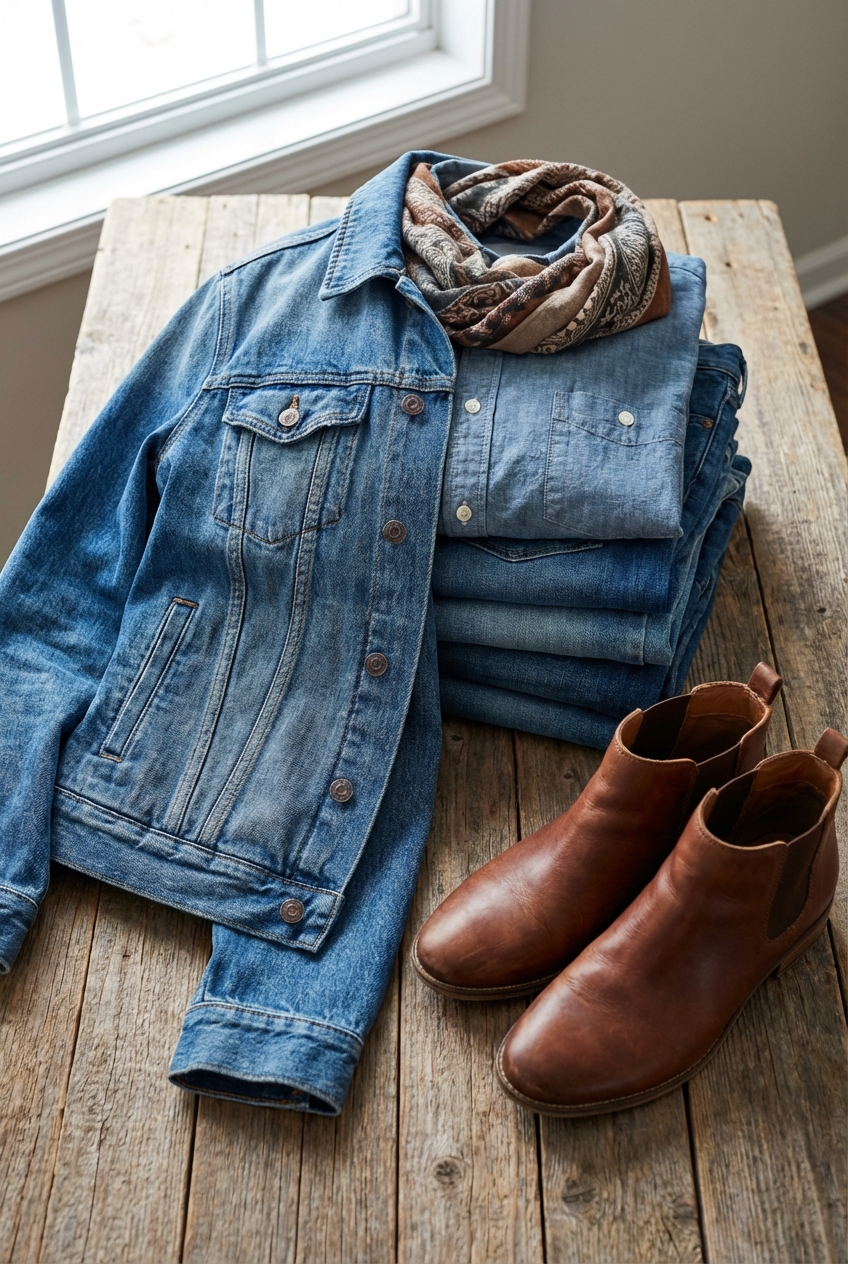
Denim On Denim Done Right Styling Tips For The Double Denim Trend
For decades, the “Canadian Tuxedo” was the punchline of the fashion world. It conjured images of awkward styling mishaps or that infamous red carpet moment from the early 2000s. However, in the high-end fashion sector, double denim has evolved into one of the most sophisticated, utilitarian, and enduring trends we see on the runway.
As a stylist, I treat denim not just as a fabric, but as a neutral foundation that supports almost any aesthetic. When done correctly, pairing denim with denim creates a look that is effortless and architectural. It signals that the wearer understands texture, tone, and silhouette well enough to break the old rules.
The secret lies in the details, specifically how you manage the weight of the fabric and the graduation of color. If you are looking for visual inspiration to guide your next outfit, be sure to check out the Picture Gallery at the end of the blog post.
Understanding The Tonal Spectrum
The most common mistake I see clients make is pairing two pieces of denim that are too similar in wash but not an exact match. When the tones are almost identical but slightly “off,” the outfit looks accidental rather than intentional.
To master this, you need to work with high contrast. The easiest entry point into double denim is pairing a light chambray shirt with dark, raw indigo jeans. This creates a natural visual break at the waistline, mimicking the traditional white-shirt-and-black-pants combination but with more texture.
If you want a monochromatic look, the washes must match perfectly. This usually means buying a “co-ord” set where the jacket and jeans were cut from the same bolt of fabric. If you cannot verify they are a set, opt for at least two shades of difference on the color wheel.
Designer’s Note:
In my styling appointments, I often use the “squint test.” Stand back from the mirror and squint your eyes. If the top and bottom blend into one indeterminate blob of blue, you need more contrast. If you can clearly see where the shirt ends and the pants begin, you have succeeded.
The Importance of Fabric Weight and Drape
In interior design, we talk about “hand” and “drape” regarding curtains; the same physics apply to your body. You generally do not want to wear two heavy, rigid fabrics simultaneously unless it is a structured outerwear moment.
For a comfortable and flattering look, keep the heavier denim on the bottom and the lighter denim on top. A pair of vintage 14-ounce Levis has structure and holds you in. Pair this with a 4-to-6-ounce Tencel-blend denim shirt. The shirt will drape softly over your shoulders and tuck easily without creating bulk at the waist.
If you wear a heavy denim jacket with heavy jeans, break it up with a non-denim layer underneath, like a crisp white cotton tee or a silk camisole. This prevents the fabric from bunching up and restricting your movement.
Common Mistakes + Fixes:
- The Mistake: Wearing a stiff, thick denim shirt tucked into tight, thick jeans.
- The Fix: Swap the top for a chambray or lyocell blend. These fabrics look like denim but behave like silk, allowing for a french tuck that doesn’t add inches to your waistline.
Playing With Proportions and Silhouettes
Double denim can look heavy, so playing with volume is essential to keep the look modern. If you are wearing a voluminous, oversized denim trucker jacket, keep your bottom half fitted. A straight-leg or skinny jean balances the visual weight of the jacket.
Conversely, if you are embracing the wide-leg trend, keep your denim top fitted. A tailored denim vest or a cropped denim jacket works beautifully here. The goal is to ensure the eye can still find your waist or vertical line amidst the fabric.
I also pay close attention to where the hemlines hit. For a denim maxi skirt paired with a denim jacket, ensure the jacket is cropped at the natural waist. If the jacket hits at the hip—the widest part of many women’s bodies—it cuts the figure in half and creates a blocky silhouette.
What I’d Do In A Real Project:
- For Petites: I avoid wide-leg jeans with oversized jackets. I would style a high-waisted, straight-leg crop with a fitted denim shirt tucked in to elongate the legs.
- For Curvy Figures: I emphasize the waist. I would use a belted denim safari jacket over bootcut jeans. The belt creates shape, and the bootcut balances the hips.
Breaking The Blue: The Power of Accessories
When you wear head-to-toe blue, your accessories become the punctuation marks of the outfit. They are necessary to stop the eye from becoming overwhelmed by the monochrome palette.
I recommend avoiding blue accessories entirely. Instead, look for rich, warm earth tones. A cognac leather belt and matching loafers look incredibly expensive against indigo denim. The orange undertones in brown leather are complementary to blue, making both colors pop.
Metals also play a huge role. Gold jewelry tends to warm up the cool tones of blue denim, adding a touch of luxury. Silver hardware can look sleek and industrial, fitting for a more edgy, “rock and roll” aesthetic.
Specific Measurements for Accessories:
- Belts: Aim for a width of 1 to 1.5 inches. Anything wider can look costumey with double denim.
- Bag Drop: If wearing a crossbody bag, ensure it hits at the hip bone, not below. This breaks up the block of denim at the side of your body.
The Non-Blue Option: Black and White Denim
Double denim does not strictly mean blue on blue. In fact, mixing colored denim is often the most approachable way to try the trend for the first time.
Black denim jeans with a blue denim jacket is a classic combination that technically counts as the trend but feels much safer for beginners. It gives you the texture of the trend without the “tuxedo” vibe.
White denim is incredibly chic, especially in warmer months. A white denim skirt paired with a light blue denim shirt is fresh and crisp. The textures match, tying the look together, but the colors provide high contrast.
Designer’s Note:
Be careful with black denim that has faded to grey. If you are pairing it with blue, the grey undertones can sometimes clash with certain indigo washes. Deep, saturated black is usually the safest bet for a polished look.
Layering: The Third Piece Rule
The “Third Piece Rule” is a stylist’s secret weapon. A top and pants are just clothes; add a third piece, and it becomes an outfit. In the context of double denim, this usually means a jacket, a vest, or an exposed layer underneath.
Try wearing a denim shirt unbuttoned over a white tank top, paired with jeans. The vertical strip of white creates a “column” effect that lengthens the body and breaks up the blue.
Alternatively, throw a camel trench coat over a denim jacket and jeans. The classic trench elevates the rugged denim, making the outfit appropriate for “casual Friday” in many creative offices.
Footwear Selection To Ground The Look
Your choice of shoe dictates the vibe of the outfit. Because denim is inherently casual, contrasting it with a sophisticated shoe is a high-fashion move.
A pointed-toe stiletto or a sleek ankle boot instantly dresses up double denim. It says you are going to dinner, not a rodeo. The sharp lines of a pointed toe cut through the heaviness of the fabric.
For a daytime look, avoid running sneakers, which can make the outfit look sloppy. Instead, opt for a clean white leather sneaker or a trendy loafer. The structure of leather footwear matches the weight of the denim better than mesh athletic shoes.
Styling Tip:
If you are wearing wide-leg jeans, ensure the hem breaks just above the top of your shoe, or covers the shoe leaving about 0.5 inches from the ground. Dragging denim hems ruins the polished aesthetic we are aiming for.
Styling Checklist for The Perfect Look
Before you head out the door, run through this quick mental checklist to ensure your proportions and tones are on point.
- Contrast Check: Are the washes distinct enough, or do they look like a mismatched suit? Go for high contrast or a perfect match.
- Texture Balance: Is one piece softer and lighter than the other? Ensure you are not restricted by two rigid fabrics.
- Waist Definition: Can you see where your waist is? Use a belt, a tuck, or a cropped cut to define your shape.
- Accessory Pop: Are you wearing a non-blue belt or shoe to break up the color block?
- Hemlines: Are your jeans the right length for your shoes? No dragging hems allowed.
- Grooming: Since denim is casual, keep hair and makeup polished to elevate the overall look.
FAQs
Can I wear a denim jacket with denim shorts?
Absolutely. This is a staple summer look. The key is balance. If the shorts are fitted and short, go for a slightly oversized or relaxed jacket. If the shorts are long Bermudas, keep the jacket cropped or fitted.
How do I prevent the dyes from transferring?
Raw, dark denim is notorious for “crocking” (rubbing off) on lighter fabrics. If you are wearing a light denim shirt with new dark jeans, wash the jeans inside out with cold water and a cup of vinegar before wearing them. This helps set the dye.
Is ripped denim okay for this trend?
In a high-fashion context, use distressing sparingly. If your jeans are ripped, keep the jacket clean and tailored. If both pieces are heavily distressed, the look can veer into grunge territory, which is fine if that is your goal, but less polished for general wear.
Can I mix black and blue denim?
Yes, and I highly recommend it. Black jeans with a blue denim shirt is one of the most flattering and easiest ways to execute this trend. It is slimming and breaks up the “uniform” look.
Conclusion
Embracing the double denim trend requires a shift in perspective. Stop viewing denim as just a pair of pants and start viewing it as a beautiful, textural fabric that can be layered like linen or wool.
By focusing on contrast, ensuring the proper fit, and accessorizing with intention, you can turn this utilitarian staple into a chic, head-turning ensemble. Fashion is about experimentation, so do not be afraid to pull every denim piece out of your closet and see what shapes you can create.
Picture Gallery


