
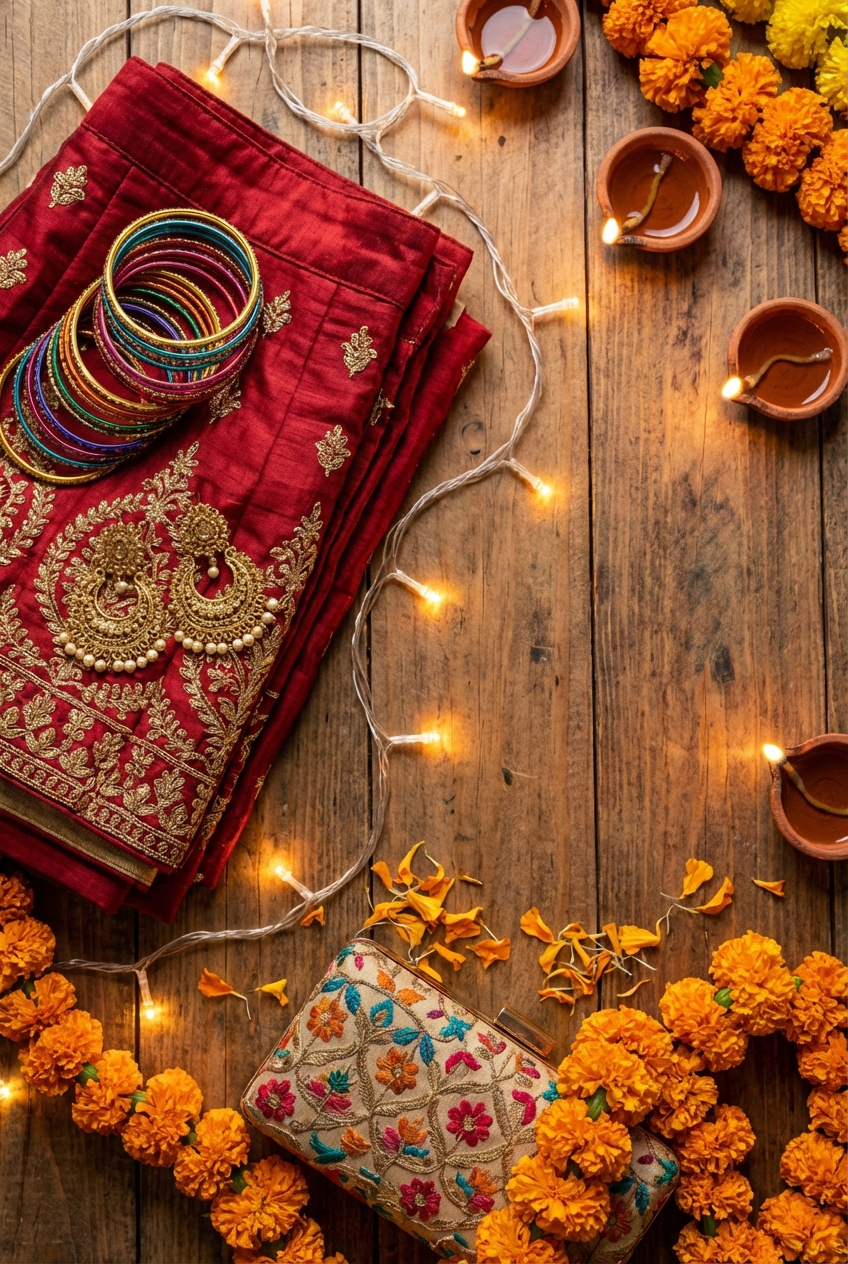
Diwali Fashion Inspiration Vibrant Styles For The Festival Of Lights
For me, the Festival of Lights has always been as much about the textiles as it is about the traditions. I remember my first high-stakes Diwali party as a stylist; the challenge wasn’t just looking good, but finding an outfit that could withstand a night of moving through crowded rooms, managing sparklers, and sitting cross-legged for the puja without compromising the silhouette. It is a delicate balance of reverence and high-octane glamour.
Diwali fashion sits at a unique intersection where heritage craftsmanship meets contemporary cuts. Whether you are hosting an intimate card party at home or attending a lavish gala, your ensemble needs to reflect the joy of the season while allowing you to breathe and move. We are moving away from stiff, heavy costumes into fluid luxury that prioritizes fabric movement and light reflection.
In this guide, I am breaking down the architecture of a perfect Diwali look, from fabric selection to the structural engineering of a draped saree. If you are looking for visual examples of these color palettes and silhouettes, make sure to scroll down to the Picture Gallery at the end of the blog post.
The Foundation: Selecting High-Impact Fabrics
Before we discuss silhouettes, we must talk about the canvas. In high-end fashion, the fabric dictates the fit. For Diwali, you are often contending with varying temperatures—cool November evenings mixed with the heat of crowded rooms and oil lamps. The right material manages this micro-climate while catching the light beautifully.
Silk remains the gold standard, particularly Banarasi or Kanjeevaram, because of how its inherent sheen interacts with candlelight. However, pure silk can be rigid. For a more modern, fluid look, I often steer clients toward silk-georgette blends or crepe. These fabrics drape close to the body, creating a slimming column effect that pure, stiff silk cannot always achieve.
Velvet is having a massive resurgence this season. It absorbs light rather than reflecting it, creating a deep, rich visual texture that looks incredible in photographs. A midnight blue or emerald velvet absorbs the flash, making gold embroidery pop with high contrast. If you choose velvet, ensure it is silk velvet, not synthetic, to ensure breathability.
Designer’s Note: The “Scratch Test”
A common issue with heavily embroidered festive wear is the “underarm scratch.” Sequins or zari work under the armpit can ruin your night. Before buying, rub the underarm fabric against your inner wrist. If it is abrasive, you will have a rash by hour two. I always have tailors replace the underarm patch with plain fabric to ensure comfort.
The Contemporary Saree: Structure and Draping
The saree is timeless, but the way we style it evolves every season. This year, the focus is on “structured fluidity.” We are moving away from the perfectly pleated, stiff school-teacher drape toward styles that look almost accidentally perfect. The pre-stitched saree has graduated from a convenience item to a high-fashion staple, offering silhouettes that involve thigh-high slits or pant-saree hybrids.
If you are draping a traditional saree, play with the pallu. Instead of pleating it narrow and pinning it down (which can look dated), leave it open or loosely gathered. A floating pallu shows off the craftsmanship of the textile. To keep it practical for a party, cinch the waist with a belt. An embroidered fabric belt or a metallic waist chain (kamarbandh) keeps the fabric secure while adding a focal point that defines your waist.
For the blouse, the rules have vanished. We are seeing blazers, crop tops, and corsets replacing the traditional choli. A structural corset blouse provides immense support and creates a sharp contrast against the flowing yardage of the saree. It brings an architectural element to the outfit that feels very current.
What I’d do in a real project:
When styling a client for a Diwali dinner, I almost always use a “can-can” skirt or a shapewear petticoat underneath. The traditional cotton petticoat adds bulk at the waist and restricts stride length. A shapewear skirt (like a mermaid cut) smooths the hip line and allows the saree to fall straight, adding visual height.
Lehengas: Volume Management and Mobility
A lehenga is the ultimate festive statement, but it is often the most cumbersome. The difference between a high-end designer lehenga and a mass-market one is usually the weight distribution. A well-constructed lehenga carries the weight on the hip bone, not the waist, and uses tulle netting (can-can) strategically rather than excessively.
When selecting a lehenga for a house party, avoid the massive ballroom circumference. Look for an A-line cut or a straight cut. These silhouettes are easier to maneuver through furniture and crowds. If you love volume, limit the heavy embroidery to the border. A skirt that is fully encrusted with stone work will weigh 10 to 15 pounds, which becomes exhausting after an hour.
Length is the most critical technical measurement here. Your lehenga hem should not sweep the floor like a western bridal gown. In an Indian context, you need clearance for walking and to protect the hem from dirt or oil spills.
Common Mistakes + Fixes:
Mistake: The hem length catches under the heel.
Fix: The “Two-Finger Rule.” When wearing your heels, the lehenga hem should hover exactly two finger-widths above the floor. This allows the shoes to peek through (vital for the look) and prevents you from tripping.
Fusion Wear: The Indo-Western Silhouette
For the modern hostess who needs to run to the kitchen or manage guests, fusion wear is the most practical choice. This category has matured significantly. We aren’t just talking about jeans with a kurti anymore. We are looking at co-ord sets, dhoti pants with capes, and structural gowns with ethnic embroidery.
The cape set is the MVP of Diwali fashion. A floor-length sheer cape worn over a crop top and palazzo pants offers the drama of a dupatta without the hassle of constantly adjusting it. It leaves your hands free for cocktails, cards, or hugs. Look for capes in organza or sheer silk that have weighted hems; the weight helps the cape hang beautifully rather than flying off your shoulders.
Sharara sets are another excellent option for balance. They offer the visual volume of a lehenga but the freedom of pants. For a high-fashion edge, look for a “peplum” style short kurta paired with the sharara. The peplum silhouette highlights the waist before flaring out, creating an hourglass shape that is very flattering.
Expert Tip on Proportions:
If you are wearing a voluminous bottom (like a sharara or wide-leg palazzo), the top must be fitted. If you wear a loose kurta with loose pants, the silhouette looks sloppy. Follow the rule of opposites: Loose bottom = Fitted top. Fitted bottom = Voluminous top.
Color Theory: Lighting and Skin Tones
Diwali lighting is unique. It is a mix of warm yellow candlelight, harsh fairy lights, and often dim ambient lighting. Your color choice needs to work in this specific environment. Pastels, while trendy in daylight, can often wash out or look grey in dim evening light unless they have a metallic sheen.
Jewel tones are the safest and most striking bet for Diwali. Deep ruby, sapphire blue, emerald green, and amethyst purple look luxurious under warm yellow light. These colors have a depth that holds up against the visual noise of festive decor. If you prefer lighter colors, opt for “hot” pastels—colors with a saturated undertone, like hot pink or lime green, rather than dusty rose or sage.
Metallics are also neutral in this season. Gold, copper, and bronze are classic, but silver and pewter are making a comeback. Mixing metals is also acceptable now. A silver saree with gold jewelry is a chic, modern combination. The trick is to match the “finish”—pair matte silver with matte gold, or high-shine silver with high-shine gold.
Designer’s Note: The “Photo Flash” Check
Before finalizing an outfit, take a picture with the flash on. Some synthetic fabrics have a plastic-like shine under flash that looks cheap. High-quality silk or velvet will have a soft, diffused glow. Avoid fabrics that reflect light like a mirror unless it is a deliberate sequin choice.
Accessorizing: The Balance of Power
Accessories can make or break a high-end look. The tendency during Diwali is to wear everything at once—necklace, earrings, maang tikka, bangles, and rings. In high fashion, we practice editing. You want one “hero” piece.
If your neckline is heavy with embroidery, skip the necklace entirely and focus on statement chandelier earrings (chaandbalis). If your blouse is deep-cut and simple, wear a heavy choker or a layered necklace (satlada). The goal is to guide the eye, not overwhelm it.
Don’t forget the practical accessories. A potli bag is traditional, but a structured metallic clutch often looks sharper with fusion wear. Ensure your bag is big enough for your phone and a lipstick touch-up kit. Nothing ruins a look faster than holding a phone in your hand all night because it doesn’t fit in your bag.
Technical Rule: Earring Weight
Heavy earrings can cause earlobe droop, which ruins photos. Use “ear lift” patches (invisible stickers) behind the lobe to support the weight. Alternatively, look for earrings with a “sahara” chain—a decorative chain that goes over the ear to distribute the weight.
Finish & Styling Checklist
Before you step out, run through this final checklist to ensure your look is polished and practical.
- Hemline Check: Put on your shoes. Is the hem 1-2 fingers off the floor? Does it catch when you take a long stride?
- Lingerie Audit: Are straps visible? Does the bra color match the blouse tone? In flash photography, a white bra under a red blouse will show through.
- Dupatta Security: If wearing a dupatta, have you pinned it securely at the shoulder? Use safety pins inside the fabric so the metal head doesn’t show.
- Shoe Grip: New heels can be slippery on tiled floors. Scuff the soles with sandpaper or add anti-slip pads to prevent a fall.
- Fabric Steam: Silk and organza wrinkle easily. Steam your outfit an hour before wearing it and let it hang to cool. Never sit in a hot, freshly steamed outfit or you will set deep wrinkles immediately.
- Comfort Kit: Do you have a few safety pins, a band-aid, and bobby pins in your clutch?
FAQs
1. Can I repeat an outfit from a wedding for a Diwali party?
Absolutely. The key is to dress it down. If you have a heavy wedding lehenga, pair the skirt with a simple white button-down shirt or a plain silk crop top. Skip the heavy dupatta and jewelry. This repurposes the garment into something chic and manageable for a party.
2. What are the best shoes for an indoor house party where shoes might be removed?
This is a common dilemma. If you anticipate taking shoes off, focus on your pedicure and perhaps wear an anklet (payal). If shoes stay on, opt for block heels or wedges. Stilettos can snag on rugs or sink into lawns if the party spills outside. Juttis are a great flat alternative, but ensure they are broken in.
3. How do I wear organza without looking bulky?
Organza is stiff and adds volume. The trick is to pleat it efficiently. When pleating an organza saree, make fewer, wider pleats rather than many thin ones. Use your hands to press the creases firmly. Avoid flared petticoats under organza; stick to a satin mermaid-cut skirt to reduce bulk at the hips.
4. Is black appropriate for Diwali?
Traditionally, black was considered inauspicious for puja rituals. However, in the context of fashion parties and card nights, black is incredibly chic and popular. A black saree with gold embroidery is a classic evening look. If you are attending a religious ceremony, you might want to stick to color, but for the social aspect, black is approved.
Conclusion
Diwali fashion is about celebrating light, and your outfit should be an extension of that celebration. Whether you choose the regal weight of velvet, the sheer drama of organza, or the practical elegance of a fusion cape set, the most important element is your confidence in wearing it. True style comes from comfort and the knowledge that your outfit is structurally sound.
Remember that these trends are guidelines, not rigid laws. The best outfit is one that respects the occasion but also reflects your personal aesthetic. Don’t be afraid to mix heirloom jewelry with a modern jumpsuit, or a vintage saree with a blazer. Experiment with textures, prioritize your mobility, and let your personal style shine as brightly as the diyas around you.
Picture Gallery


