
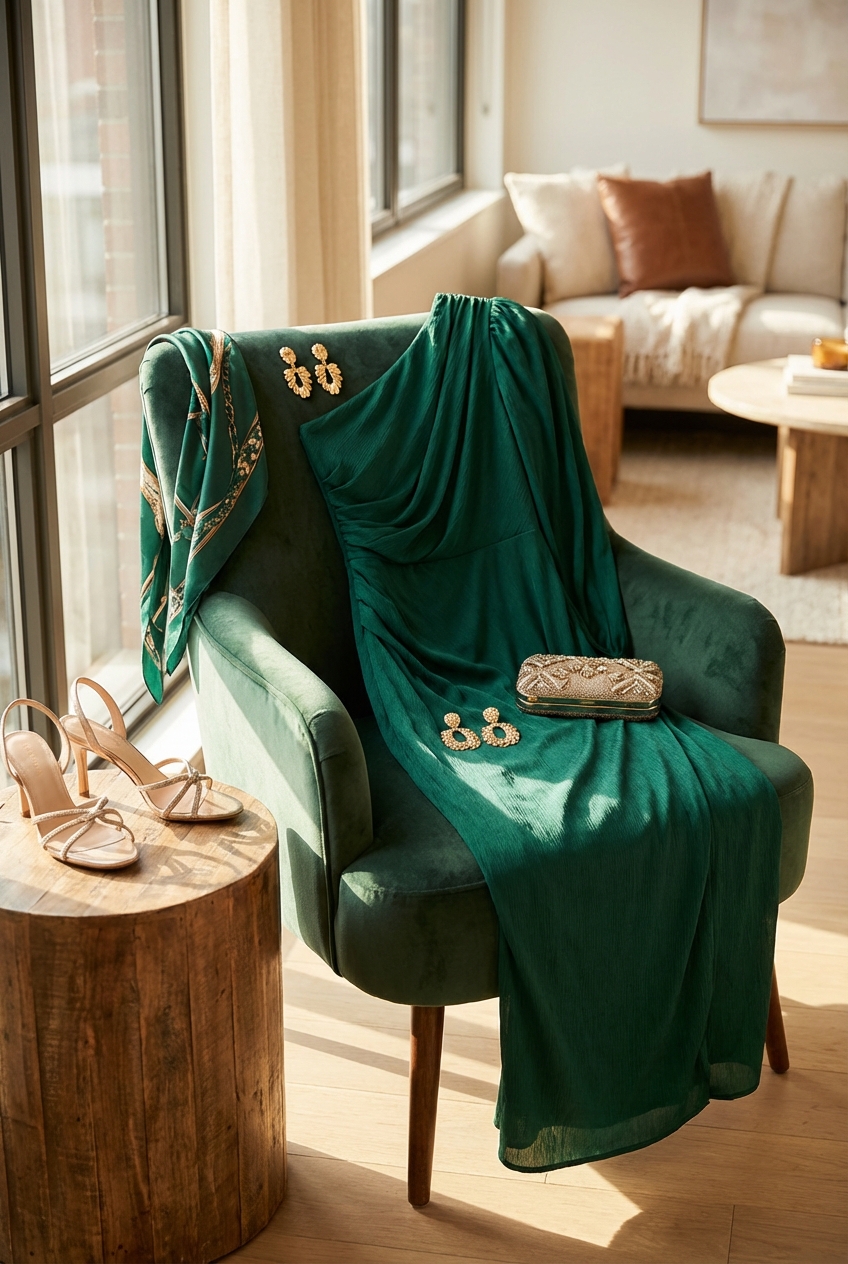
Dramatic One Shoulder Dresses For Bold Statements
There is something undeniably powerful about asymmetry in fashion. While a symmetrical gown offers safety and tradition, a one-shoulder silhouette commands attention by disrupting the expected visual line. I often tell my private clients that choosing a one-shoulder dress is an architectural decision as much as a sartorial one; you are essentially turning your body into a canvas for modern art.
I recall a specific fitting with a client who felt “boxed in” by traditional strapless gowns for a charity gala. We switched her into a structural, one-shoulder crepe gown in emerald green. The transformation was immediate; her posture improved, her neck looked longer, and the diagonal line created an instant hourglass illusion that standard necklines simply couldn’t achieve.
In this guide, I will walk you through the structural mechanics, styling rules, and tailoring secrets required to pull off this look with high-fashion confidence. If you are looking for visual inspiration, please note that we have curated a comprehensive Picture Gallery at the end of the blog post.
The Architecture of the Diagonal: Why It Works
The magic of a one-shoulder dress lies in the diagonal line it draws across the torso. This line visually cuts the width of the upper body, making it universally flattering for broad shoulders and petite frames alike. However, the angle of the cut matters immensely.
For a sharper, more aggressive fashion statement, look for a strap that cuts close to the neck, almost like a halter. This emphasizes the deltoids and creates a “power shoulder” aesthetic. It is perfect for high-stakes cocktail hours or corporate formal events.
Conversely, a strap that sits wider on the shoulder creates a romantic, Grecian effect. This softness is ideal for weddings or resort wear. When selecting a dress, pay close attention to where the strap originates; it dictates the entire mood of the garment.
Designer’s Note: The Strap Tension Rule
In my experience styling for red carpets, the most common failure point is strap tension. If the single strap is not tight enough, the dress will list to the opposite side, requiring you to constantly hike it up.
During alterations, I always instruct the tailor to shorten the strap by a quarter-inch more than feels “comfortable” standing still. Gravity and the weight of the fabric will stretch it within twenty minutes of wear. That extra tension keeps the bodice flush against the skin.
The Mechanics of Support: What Goes Underneath
The number one question I receive regarding asymmetrical gowns concerns undergarments. The reality of high-end dressing is that the foundation garment is more important than the dress itself. You cannot simply wear a strapless bra and hope for the best.
For smaller busts (A-C cups), adhesive silicone cups are often sufficient, provided they clasp in the center to create shape. However, ensure you apply them to clean, dry skin without lotion. Lotion is the enemy of adhesion.
For larger busts (D+), you require structural engineering. I recommend a convertible long-line corset or a bodysuit specifically designed for one-shoulder cuts. The long-line structure anchors the bra to your waist, preventing the dreaded “bra slip” throughout the evening.
Common Mistakes + Fixes
- The Mistake: Relying on clear plastic straps.
- The Fix: Never wear clear straps; they catch the light and cheapen the look. If you need support, use professional fashion tape or a proper bustier.
- The Mistake: Visible back hardware.
- The Fix: Have a seamstress sew bra cups directly into the lining of the gown. This costs roughly $40-$60 but changes the entire drape of the bodice.
Balancing Volume and Proportion
Because one shoulder is bare, you are working with significant negative space. To maintain high-fashion proportions, you must balance the exposed skin with the volume of the dress. The rule of thumb is simple: if the top is architectural and minimal, the skirt can handle volume.
If the single shoulder features a massive puff sleeve, bow, or ruffle—a major trend this season—the rest of the silhouette should remain sleek. A column skirt or a slight mermaid flare works best here. You do not want to look like you are being swallowed by fabric.
For petite women (under 5’4″), be wary of oversized shoulder details. A massive ruffle on one side can visually tip you over. Opt for a sleek, single long sleeve instead to elongate the arm without adding horizontal bulk.
Fabrication: Structured vs. Fluid
The fabric choice dictates how “unforgiving” the dress will be. As a stylist, I categorize one-shoulder dresses into two camps: Liquid and Structural. Knowing the difference helps you choose the right dress for your comfort level.
Liquid Fabrics (Silk Charmeuse, Satin, Jersey):
These cling to every curve. They are incredibly sexy but require seamless undergarments (laser-cut edges are non-negotiable). They are best for evening galas where standing and posing are the main activities.
Structural Fabrics (Scuba, Heavy Crepe, Mikado, Velvet):
These fabrics have their own integrity. They hold you in and smooth over the body. A heavy crepe one-shoulder dress is my go-to recommendation for clients who want to feel secure and “held” without wearing shapewear.
What I’d Do in a Real Project
If I am styling a client for an event where she will be eating and dancing, I almost exclusively pull bonded crepe or scuba knit. Here is why:
- It does not wrinkle when you sit down.
- The weight of the fabric helps the single strap stay in place.
- It provides a matte finish that looks expensive in flash photography.
The Jewelry Equation: Earrings vs. Necklaces
This is where many well-intentioned outfits fall apart. The neckline of a one-shoulder dress is already the statement. Adding a necklace usually creates visual clutter and intersects the beautiful diagonal line you have established.
The Golden Rule: Skip the necklace. Embrace the negative space of the décolletage.
Instead, focus your energy on earrings. This is the moment for drama. Since the neck is bare, you have plenty of room for shoulder-dusting chandelier earrings. If the dress has a lot of embellishment on the shoulder (like sequins or feathers), opt for a large, architectural stud or an ear crawler.
Jewelry Pairing Guide
- Clean, Minimal Dress: oversized gold sculptural earrings or long diamond drops.
- Ruffled/Puff Sleeve Dress: simple diamond studs or pearls to avoid tangling with the fabric.
- Velvet/Heavy Texture: mixed metal cuffs on the bare arm to balance the weight.
Hair and Beauty: Counter-Balancing the Look
Your hairstyle acts as the counter-weight to the dress. If you wear your hair down and centered, you hide the asymmetry that makes the dress special. You must be intentional with your hair placement.
The most polished look is typically a sleek chignon or high ponytail. This keeps the neckline completely visible and elongates the neck. It is a “clean” look that signals confidence.
If you prefer wearing your hair down, sweep it to the side opposite the strap. If the strap is on your left shoulder, sweep your Hollywood waves over your right shoulder. This creates a pleasing visual “X” shape that balances the total look.
Outerwear: The Styling Conundrum
One of the most frustrating aspects of asymmetrical dressing is figuring out how to keep warm. A standard blazer or cardigan creates awkward bunching around the shoulder detail and ruins the silhouette.
For a high-end finish, you have two primary options. The first is “shoulder robing” your coat—draping it over your shoulders without putting your arms in the sleeves. This allows for volume underneath without crushing the fabric.
The second, and more practical option, is a cape or a faux-fur stole. A stole can be wrapped around the elbows, leaving the shoulders exposed while keeping the torso warm. It feels vintage, glamorous, and intentional.
Styling Checklist: The Final 15 Minutes
Before you step out the door, run through this mental checklist. These are the final touches that separate a novice from a fashion expert.
1. The Side-Boob Check
Lift your arms to shoulder height. Does the dress cut too low on the side? If so, apply a strip of double-sided fashion tape to the side hem of the bodice, securing it to your ribcage.
2. The Sit Test
Sit down on a low chair. Does the fabric pool awkwardly at the stomach? If you are wearing satin, you may need to adjust your posture to sit taller. If you are wearing crepe, smooth the fabric down over your hips before sitting.
3. Body Glow
Because you are exposing one specific shoulder and arm, the skin needs to look hydrated. Use a dry oil or a shimmer lotion on the clavicle and the “cap” of the exposed shoulder. This catches the light and adds dimension.
4. The Deodorant Audit
Check the underarm area of the dress for white marks. This is common with tight-fitting bodices. Use a fast-drying makeup sponge to buff out any white residue instantly.
Frequently Asked Questions
Can I wear a watch with a one-shoulder dress?
Generally, no. A wristwatch feels too utilitarian for such a dramatic, evening-leaning silhouette. If you must wear something on your wrist, opt for a stacked bangle set on the bare arm to balance the visual weight of the sleeve on the other side.
Is this silhouette appropriate for business formal?
It depends on the cut. A wide-strap, modest neckline in a solid navy or black is acceptable for black-tie corporate galas. However, avoid thin spaghetti straps or cut-outs, which skew too “nightclub” for professional settings.
How do I store a one-shoulder dress?
Never hang it by the single strap. The weight of the gown will stretch that strap out over time, ruining the fit. Always use the internal ribbon hanger loops that come inside the dress to distribute the weight, or fold it with tissue paper in a box.
What shoes work best?
Because the dress draws the eye upward, keep the shoe sleek. A strappy sandal or a classic pointed-toe pump is best. Avoid heavy ankle boots or chunky platforms, as they fight for attention with the neckline.
Conclusion
Wearing a dramatic one-shoulder dress is an exercise in confidence. It requires you to embrace asymmetry and showcase your shoulders with pride. By paying attention to the structural details—strap tension, fabric weight, and proper undergarments—you elevate the look from “just a dress” to a true fashion moment.
Remember that the goal is not just to fit into the dress, but to have the dress work for you. Whether you choose a sculptural scuba fabric for a gala or a flowing silk for a summer wedding, the principles of balance and proportion remain the same. Trust the diagonal line, skip the necklace, and let the architecture of the gown speak for itself.
Picture Gallery


