
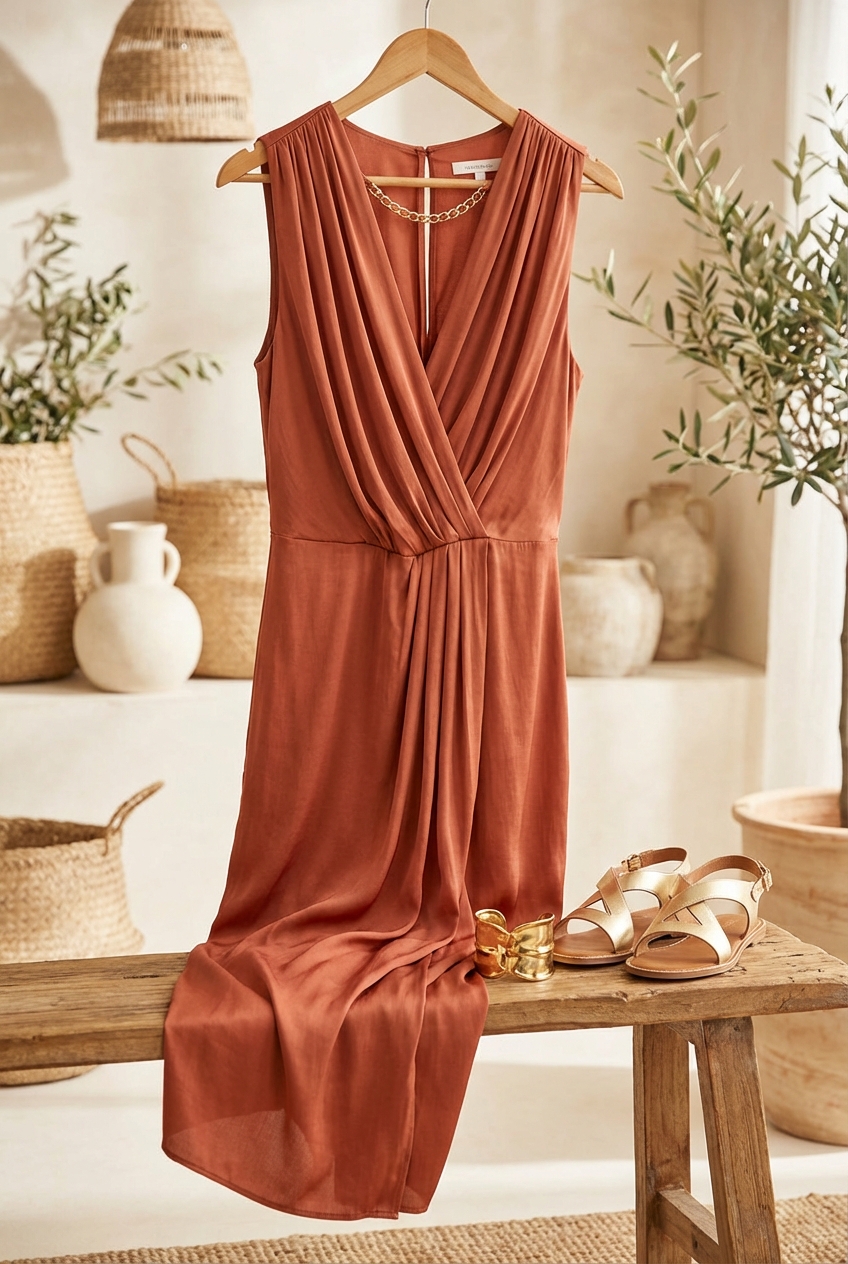
Draped Dresses For Grecian Inspired Elegance
There is something undeniably timeless about the Grecian aesthetic. I remember a specific fitting with a client who was terrified of evening wear. She felt structured gowns were too constricting and modern cuts were too revealing. We pulled a vintage-inspired, one-shoulder draped gown in a heavy silk jersey. The moment the fabric settled against her frame, her posture changed. She didn’t just look elegant; she looked like a statue come to life, yet completely comfortable.
That is the power of a Grecian-inspired dress. It relies on the manipulation of fabric—pleating, folding, and draping—rather than rigid corsetry or complex tailoring. It honors the natural human form while offering a level of forgiveness that few other styles can match. Whether you are attending a black-tie gala or a beachside dinner, the fluid lines of a draped dress create instant sophistication.
However, achieving this look isn’t just about wrapping yourself in a sheet. It requires a keen eye for fabric weight, precise tailoring, and the right undergarments to ensure the drape falls exactly where it should. For those seeking visual inspiration, I have curated a comprehensive Picture Gallery at the end of this blog post.
The Architecture of the Drape: Understanding Silhouettes
When we talk about Grecian elegance, we are discussing the architecture of the garment. The silhouette usually falls into two categories: the column and the A-line. The key is in how the fabric is gathered.
Most Grecian styles utilize a technique called “bias cutting” or strategic ruching. This allows the fabric to stretch and mold over curves without pulling tight. If you are shopping for this style, look for asymmetry. A one-shoulder neckline or a waistline that gathers to one side draws the eye diagonally across the body, which is universally elongating.
I often tell clients to look for “fixed” versus “fluid” drape. Fixed drape involves stitched-down pleats, usually at the waist or shoulder. This adds structure and is excellent for hiding a midsection. Fluid drape is loose and moves with you, which is stunning but requires more confidence and careful undergarment selection.
Designer’s Note: The Volume Rule
A common issue I see is clients drowning in fabric. If you have a dress with significant draping or volume on top (like a cowl neck or batwing sleeve), the skirt should be slimmer. Conversely, if the skirt is voluminous and flowing, keep the bodice fitted. Balance is non-negotiable.
Fabric Selection: Weight and Movement
The success of a Grecian dress relies entirely on the fabric. In interior design, we talk about the “hand” of a textile, and the same applies here. You need a material that has weight but remains fluid.
Silk Jersey
This is the gold standard for Grecian styles. It has a heavy, liquid quality that clings slightly but falls straight down. It feels cool against the skin and resists wrinkling better than woven silks.
Silk Chiffon or Georgette
These are lighter, sheerer options often used in layers. They create an ethereal, floating effect. However, they lack the weight to smooth over the body, so they often require a structured lining or slip underneath.
Crepe
Matte crepe is fantastic for a more modern, architectural take on the trend. It holds a pleat beautifully and doesn’t have the high shine of satin, making it more forgiving on texture or bumps.
Common Mistakes + Fixes:
- Mistake: Choosing stiff synthetics like taffeta or heavy organza.
- Fix: Grecian styles require “collapse.” Stick to fabrics that puddle when they hit the floor. Avoid anything that stands up on its own.
- Mistake: Wearing high-shine poly-satin.
- Fix: High shine highlights every seam and curve. Opt for matte jersey or low-luster silk for a more expensive, flattering look.
The Fit: Tailoring and Hemlines
Tailoring a draped dress is trickier than tailoring a structured suit. You cannot simply take it in at the side seams without potentially disrupting the flow of the drape.
When altering a Grecian dress, focus on the anchor points. These are the shoulders and the waist. If the shoulder strap is too long, the entire bodice will sag, and the drape will sit too low on the bust. Shortening the strap is often the most effective way to lift the whole dress.
Hem length is critical here. Unlike a standard cocktail dress, a Grecian maxidress should almost graze the floor.
Pro Rules of Thumb for Hemming:
- Floor Length: The hem should be 0.25 to 0.5 inches off the floor while you are wearing your shoes. You want the effect of floating, not dragging.
- The “Break”: Some stylists prefer a “break” where the fabric slightly puddles. This is romantic but dangerous for tripping. I only recommend this for photo shoots or events where you will mostly be standing still.
- Shoe Selection: You must bring the exact heel height to the tailor. A draped dress that is two inches too short looks like it shrank in the wash.
Undergarments and Structural Support
The illusion of effortless draping often requires significant effort underneath. Because these dresses often feature bias cuts or clingy jersey, standard cotton underwear will show lines immediately.
Seamless Solutions
Laser-cut, seamless thongs or boyshorts are mandatory. Look for “raw edge” finishes rather than folded elastic hems. The color should match your skin tone, not the dress, especially if the dress is white or cream.
The Bra Dilemma
Grecian necklines are notoriously difficult for bras. They are often one-shouldered, deep-V, or backless.
- Adhesive Cups: For smaller busts, high-quality silicone adhesive cups are best.
- Tape: For lift and security, especially with plunging necklines, breast tape is a stylist’s secret weapon. It allows you to customize the support based on the cut of the dress.
- Sewn-in Cups: Ask your tailor to sew cups directly into the lining. This prevents them from shifting and eliminates the need for a separate bra entirely.
Designer’s Note: The Slip Factor
Static is the enemy of drape. If your dress is clinging to your legs, it ruins the silhouette. I always recommend wearing a lightweight, anti-static slip if the dress allows, or using a static guard spray on the inside of the garment before leaving the house.
Accessorizing: The Gold Standard
Grecian style naturally calls for metallic accents. Gold is the traditional choice, mimicking the jewelry of antiquity. However, the scale of your accessories is important to keep the look modern.
The Arm Cuff
Nothing screams “Grecian Goddess” quite like an upper arm cuff. It draws attention to the bare arms that usually accompany these dresses. Look for hammered gold finishes for a museum-quality aesthetic.
Earrings vs. Necklaces
If your dress has an asymmetrical neckline or elaborate draping near the face, skip the necklace. It competes with the fabric. Instead, opt for long, linear drop earrings or a statement gold cuff on the wrist.
Belts and Cinching
Many draped dresses come with a self-fabric sash. Replacing this with a metal belt or a structured leather belt can elevate the outfit instantly. Position the belt at your natural waist (the smallest part of your torso) to anchor the fabric and define your shape.
What I’d Do in a Real Project:
- Jewelry: Hammered gold cuff on the right wrist, simple gold hoops, no necklace.
- Bag: A hard-shell clutch in a metallic tone or mother-of-pearl. Avoid slouchy bags which compete with the dress’s drape.
- Hair: A low, messy bun or soft waves tucked behind the ears to expose the neckline.
Footwear: Grounding the Ethereal
The wrong shoe can dismantle a Grecian look instantly. Because the dress is often flowy and soft, you have two choices: lean into the theme or create contrast.
The Gladiator Sandal
For casual or resort wear, a strappy gladiator sandal is the obvious choice. It is historically accurate and incredibly chic. Look for thin leather straps in gold, tan, or metallic snake print. Avoid heavy, chunky rubber soles.
The Minimalist Heel
For formal events, you want a shoe that disappears. A “naked” sandal with thin straps in nude or metallic is ideal. It extends the leg line and lets the dress be the focal point.
Avoid Platforms
Heavy pumps or chunky platforms often look too clunky against the fluid lines of a draped dress. You want the foot to look light and delicate.
Finish & Styling Checklist
Before you head out the door, run through this stylist-approved checklist to ensure your look is polished and secure.
1. The Sit Test
Sit down in a chair for 5 minutes. Does the fabric wrinkle aggressively across the lap? If so, you may need a handheld steamer for touch-ups or a different fabric choice for long events.
2. The Security Check
Raise your arms. Does the bodice stay in place? If you are wearing a strapless or one-shoulder style, ensure you have used fashion tape along the neckline to prevent wardrobe malfunctions.
3. The Hemline Audit
Walk across the room. Do you step on the front of the dress? If yes, you need higher heels or a quick hem. Tripping is not elegant.
4. Static Control
Rub the fabric against your legs. If it clings, spray static guard on the inside of the dress and on your legs. Alternatively, rub a dryer sheet over your tights or skin.
5. Jewelry Catch
Check that your jewelry (bracelets or rings) doesn’t snag the delicate fabric of the dress. Pave settings are notorious for pulling threads on silk jersey.
FAQs
Can I wear a Grecian dress if I am petite?
Absolutely. The key is proportion. Avoid overwhelming amounts of fabric. Look for a column silhouette rather than a full A-line. A deep V-neckline and a high waistline will elongate your frame. Ensure the hem is floor-length to create a continuous vertical line.
Is this style appropriate for the office?
Generally, a full-length draped gown is too formal. However, a draped blouse in silk or jersey tucked into a pencil skirt brings that same elegance to a work setting. Look for cowl necks or wrap-front tops in neutral tones.
How do I clean a silk draped dress?
Most high-end draped dresses require dry cleaning. The bias cut can distort if washed in water. If you must hand wash, use cold water and lay flat to dry—never hang a wet jersey dress, as the weight of the water will stretch it out of shape permanently.
Can I wear a belt with an empire waist dress?
Be careful here. Empire waists sit right under the bust. Adding a wide belt there can shorten your torso. It is usually better to let the fabric flow from the empire seam or use a very thin, delicate chain belt if you need sparkle.
Conclusion
Embracing the Grecian draped dress is about more than just following a fashion trend; it is about embracing a silhouette that has celebrated the female form for thousands of years. It balances structure with fluidity and modesty with allure.
Whether you choose a heavy silk jersey for a winter gala or a light chiffon for a summer wedding, the principles remain the same: prioritize fabric quality, ensure the fit allows for movement, and accessorize with restraint. When executed correctly, this look projects a confidence that is both commanding and serene.
It serves as a reminder that sometimes, the most complex-looking elegance comes from the simplest of concepts: fabric, gravity, and the human form working in harmony.
Picture Gallery


